
 Worksheets
10 Analogue and digital input devices Quiz
Total questions: 18
Worksheet time: 3mins
What type of signals are most input signals connected to a PLC likely to be?
Analog
Digital
Continuous
Variable
What does it mean when a signal is described as binary?
It can have multiple states
It is always on
It is either on or off
It is always off
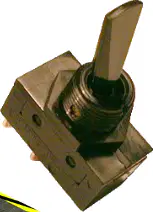
How are digital input signals typically produced?
By a sensor
By a switch mechanism
By a motor
By a light source
What type of output do analogue sensors produce?
Discrete output
Continuously variable output
Digital output
Binary output
What device is used to monitor the position of a motor and produces an analogue output?
Thermistor
Resistor
Potentiometer
Capacitor
What is required for a PLC to read an analogue signal?
Standard wiring
Analogue to Digital convertor
Digital to Analogue converter
Basic software
What capability might a PLC have built-in as standard?
Digital input capability
Analogue input capability
Wireless communication capability
Output capability
What does ADC stand for in the context of signal conversion?
Analogue to Digital Conversion
Advanced Data Control
Automatic Data Conversion
Analogue Data Coding
Which factor affects the numeric value returned from the conversion of an analogue input signal?
The color of the signal
The converter’s resolution (the number of bits used)
The type of cable used
The temperature of the environment
Which of the following is NOT a factor affecting the numeric value from an analogue signal conversion?
The level of signal applied
The type of signal modulation
Any scaling performed by the PLC
The range of input signal supported
What determines the numeric value returned by a converter?
The number of bits used in the conversion process
The color of the converter
The size of the converter
The speed of the conversion process
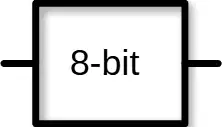
How many discrete output values does an 8-bit converter provide?
128
256
512
1024
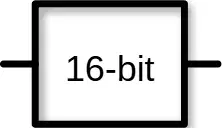
What is the resolution of a 16-bit converter in terms of discrete output values?
1024
4096
65536
32768
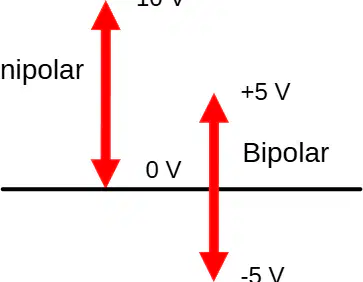
What is the input range for an 8-bit converter as shown in the diagram?
0 to 10 V
0 to 5 V
0 to 255 V
0 to 100 V
What happens when the input signal is at its minimum?
The converter returns its maximum value
The converter returns zero
The converter returns a random value
The converter returns a negative value
What is the purpose of scaling the output of a converter in a PLC system?
To provide an output value within a set range
To increase the voltage of the output
To decrease the current of the output
To change the frequency of the output
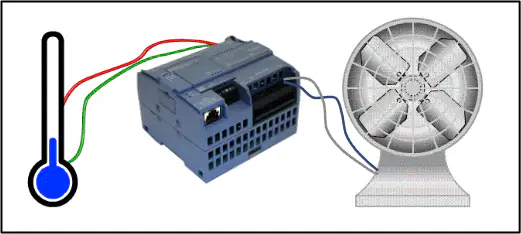
What action can a PLC take if the temperature is too high?
Turn off the fan
Switch on the fan
Lower the temperature
Increase the temperature
What is one of the key differences between analogue and digital sensors?
Analogue sensors are more accurate than digital sensors.
Digital sensors can only measure temperature.
Analogue sensors provide continuous data, while digital sensors provide discrete data.
Digital sensors are always cheaper than analogue sensors.

