
 Worksheets
science kayenne
Total questions: 125
Worksheet time: 2hrs 2mins
Chimpanzees
Fossey
Goodall
Schwann
Carson
Hippocratic Oath
Hippocrates
Aristotle
Galen
Socrates
Greek philosopher; classification
Aristotle
Plato
Socrates
da Vinci
Roman physician, surgeon, and philosopher; most accomplished medical researcher
Aristotle
Galen
da Vinci
Versalius
Describe in the systemic circulation and properties of blood being pumped to the body from the heart
Versalius
Harvey
Malpighi
Galen
Founder of modern human anatomy
Versalius
Harvey
Malpighi
Galen
Vitruvian man; sketches of human body
da Vinci
Malpighi
Harvey
Aristotle
Discovered and named the cell
Schleiden
Schwann
Virchow
Hooke
Plants are made of cells
Schleiden
Schwann
Virchow
Hooke
Animals are made of cells
Schleiden
Schwann
Virchow
Hooke
Cells come from preexisting cells
Schleiden
Schwann
Virchow
Hooke
HE IS THE FATHER OF MODERN GENETICS
GREGOR MENDEL
JOHN DALTON
MARIE CURIE
ISAAC NEWTON
HE FORMULATED THE LAWS OF MOTION
GREGOR MENDEL
ISAAC NEWTON
JOHN DALTON
MARIE CURIE
HE PROPSED THE ATOMIC THEORY
GREGOR MENDEL
ISAAC NEWTON
JOHN DALTON
MARIE CURIE
A SCIENTIST WHO DISCOVERED URANIUM AND POLONIUM
GREGOR MENDEL
ISAAC NEWTON
JOHN DALTON
MARIE CURIE
HE DISCOVERED PENICILLIN
ALEXANDER FLEMING
ALEXANDER GRAHAM BELL
CHARLES GOODYEAR
ALBERT EINSTEIN
A BUSINESS MAN WHO PATENTED THE USE OF YOYO
PEDRO FLORES
RICARDO LANTICAN
FE DEL MUNDO
JULIAN BANZON
A PATENTHOLDER OF THE KARAOKE SYSTEM
ANGEL ALCALA
GREGORIO ZARA
ROBERTO DEL ROSARIO
FRANCISCO QUISUMBING
A FILIPINO SCIENTIST WHO IMPROVISED THE INCUBATOR
PEDRO FLORES
RICARDO LANTICAN
FE DEL MUNDO
JULIAN BANZON
HE IS CREDITED FOR HIS RESEARCH ON ALTERNATIVE FUEL
PEDRO FLORES
RICARDO LANTICAN
FE DEL MUNDO
JULIAN BANZON
HE LEAD THE DEVELOPMENT OF THE ARTIFICIAL CORAL REEF
ANGEL ALCALA
GREGORIO ZARA
ROBERTO DEL ROSARIO
FRANCISCO QUISUMBING

called a ___________.
The scientific name for a kangaroo is Macropus rufus, which indicates the kangaroo’s
Class and genus
Genus and species
Kingdom and class
Class and species
The scientific name for a kangaroo is Macropus rufus, which indicates the kangaroo’s
Class and genus
Genus and species
Kingdom and class
Class and species
Organisms in which domain can live in hot springs and other extreme conditions?
Archae
Bacteria
Eukarya
Fungi
How many species does Felis domesticus contain?
1
2
3
4
Members of the animal kingdom depend on bacteria and fungi because bacteria and fungi
Which of the following is a term used to describe all the chemical reactions that take place in a living thing?
all living things may reproduce
all living things obtain and use energy
all living things adapt to the environment
Which of the following list the levels of classification of life in the correct order?
Kingdom, class, order, phylum, Domain, family, genus, species
Domain, Kingdom, phylum, class, order, family, genus, species
Kingdom, Domain, family, class, species, phylum, genus, order
Domain, Kingdom, phylum, order, class, family, species, genus

In the diagram, what level of organization is represented by the "X"?
cell
tissue
organ
organ system
The primary function of a plant's roots is to...
absorb water.
preform photosyntheisis.
produce seeds.
exchange gases.

Which phrase best describes the two organisms in the diagram?
same kingdom, same species
same kingdom, different species
different kingdom, different species
different kingdom, same species
A plant growing towards a light source is an example of which of the following?
attracting a mate
destroying infectious germs
responding to a stimuli
obtaining moisture from the air
A person steps on a Legotm left lying on the ground, perceives the pain and then pulls up their foot. Which of the following describes the response in this situation?
stepping on the Lego
preceiving the pain
pulling up ones foot
buying more Legos
Infants will often smile when they hear a parent’s voice. In this situation, the parent’s voice is considered
stimulus
response
adaptation
resource
The smallest living unit is...
a cell.
an organelle.
a virus.
a tissue.

This image best represents which of the following characterists of life?
growth
levels of organization
ability to reproduce
composed of cells
respond to the environment

This image best represents which of the following characterists of life?
growth
levels of organization
ability to reproduce
composed of cells
respond to the environment

This image best represents which of the following characterists of life?
growth
levels of organization
ability to reproduce
composed of cells
respond to the environment

This image best represents which of the following characterists of life?
growth
levels of organization
ability to reproduce
composed of cells
respond to the environment

This image best represents which of the following characterists of life?
growth
levels of organization
ability to reproduce
composed of cells
respond to the environment
For our purposes, how do we define the term "species"?
a group of organisms that could possibly exchange genetic information
a group of organisms that live in a particular area
a group of organisms that obtain energy in the same manner
a group of organisms that compete to resources

It is where we look into to observe the specimen.
Body Tube
Eyepiece
Objective Lens
Mirror

It is used to hold the microscope while putting from one place to another.
Arm
Base
Body Tube
Coarse Adjustment Knob

This is the part that holds two or more objective lenses and can be rotated to easily change power.
Condenser
Diaphragm
Fine Adjustment Knob
Revolving Nosepiece

It is the part that supports the whole microscope.
Arm
Base
Body Tube
Stage

It is where specimens to be observed is kept.
Base
Glass Slide
Stage
Stage Clips

It holds the slide in place.
Base
Condenser
Stage
Stage Clips

It separates the objective and the eyepiece and assures continuous alignment of the optics
Body Tube
Eyepiece
Objective Lenses
Mirror

It is used to direct light from the light source to the microscopic field.
Eyepiece
Mirror
Objectives
Objective Lenses

It is a large knob that is used for moving the body tube down and up for bringing the object to be examined under exact focus.
Coarse Adjustment Knob
Condenser
Diaphragm
Fine Adjustment Knob

It is the smaller knob, which is used for sharp and fine focusing of the object.
Coarse Adjustment Knob
Condenser
Fine Adjustment Knob
Mirror

It collects the light rays from the specimen and forms an inverted and magnified real image of the object.
Eyepiece
Condenser
Mirror
Objective Lenses

It is made up of a system of convex lenses, which focus light from the illuminating source on the plane of the object.
Condenser
Diaphragm
Eyepiece
Revolving Nosepiece

It regulates the amount of light.
Condenser
Diaphragm
Eyepiece
Revolving Nosepiece

It is used to tilt the microscope.
Arm
Base
Inclination Joint
Stage
After focusing to LPO, you were asked by your teacher to shift to HPO (high power objective)
but the view of the specimen is blurred. What part are you going to manipulate for the specimen to
have a sharper focus?
Mirror
Inclination Joint
Stage clips
Fine Adjustment Knob
After focusing to LPO, you were asked by your teacher to shift to HPO (high power objective)
but the view of the specimen is blurred. What part are you going to manipulate for the specimen to
have a sharper focus?
Mirror
Inclination Joint
Stage clips
Fine Adjustment Knob
Forceps are used to hold and fix the specimen on the glass slide. What household material can
be used if you don’t have any forceps?
Tong
Tweezers
Fork
Spoon
The formula of total magnification (MT) is the product of
magnification of the eyepiece (ME) and
magnification of the objective lenses (MO) like LPO, MPO, or HPO. Which equation represents the
statement?
MT = ME X MO
MT = ME + MO
MT = ME- MO
MT = ME/MO
In moving the glass slide to the left side, what direction will you observe the specimen under the microscope?
It is still to the left side.
It goes to the right side (opposite).
It goes to the north side (above).
It goes to the south side (below).
The following materials are breakable like glass slides, cover slips, lenses, and mirrors. Which
scientific term describes materials that are easily broken?
Malleable
Fragile
Ductile
Flexible
Staining agents like iodine make the parts of the specimen more visible. What natural indicator
can you use if you run out iodine?
Amplaya
Ginger
Carrots
Purple Camote
. __________ refers to a sample of a plant, animal or microorganism
placed in a glass slide,
water as its magnifying liquid and covered by a very thin cover slip.
Wet Mount Slide
Dry Mount Slide
Iodine Solution
Glass Slide
.The onion bulb skin is the best plant specimen to be viewed under the microscope because of its
observable properties like _____ and _________.
small, thin
small, thick
big, thin
big, thick
Under the low power objective, the small letter “e” that is placed in an upright position on the glass
slide is seen as magnified and inverted. This is best represented in the image __________.


Under the high-power objective, the small letter “e” as seen under the microscope is inverted
and ________ in the magnification view.
air bubbles are seen
smaller
only portions are seen
just the same under the LPO

What is NOT a part of cell theory:
all cells come from existing cells
all cells have a nucleus
all living things are made of cells
cells are basic unit of structure and function in living things

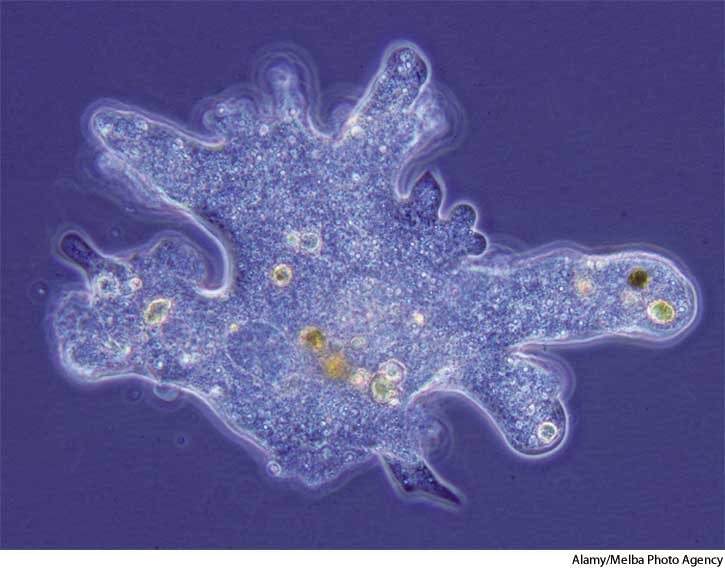


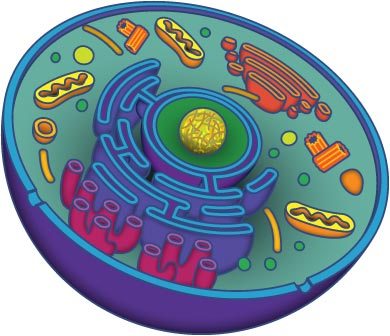

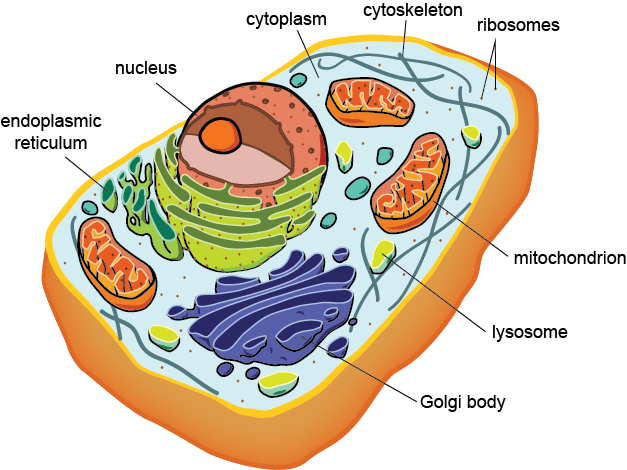


Which of the following organelles can be found in a plant cell but NOT in an animal cell?
Chloroplast
Mitochondria
Nucleus
Vacuole

Which of the following is a correct list of structures found in both plant and animal cells?
Mitochondria, vacuole, nucleus, cell membrane, cell wall
Mitochondria, vacuole, nucleus, cell membrane, Golgi Body.
Mitochondria, vacuole, nucleus, cell membrane, cell wall, chloroplasts
Mitochondria, nucleus, cell membrane, cytoplasm, cell wall, chloroplasts
Under a microscope, a student observes a specimen containing a cell wall, nucleus, and chloroplasts. Which of the following specimen being observed belong to?
Bacteria
Cat hair
Human
Mango tree leaf
What is the name of the organelle that contains chlorophyll and is only found in plant cells?
Cell Wall
Centriole
Chloroplasts
Cytoplasm
Which of these structures helps plant cells maintain their rectangular shape?
Cell Wall
Chloroplast
Cell Membrane
Nucleus
Which organelles are involved in energy conversion?
Mitochondria and ribosomes
Mitochondria and chloroplasts
Golgi apparatus and chloroplasts
Smooth and rough endoplasmic reticulum
Which of the following statements is FALSE?
All cells have centrioles.
Animals lack chloroplasts
Plant cells have a boxlike shape.
All cells have a cell membrane.
Why are lysosomes considered as the “Suicide Bags” of the cell?
They digest damage cell parts.
They support and protect the cell.
They pump materials that enter the cell
They transport materials from one cell to another.
Which of the following best describes the function of centrioles?
It manufactures proteins in animal cells.
It produces small proteins in the cells of all living organismsIt transfers smaller cells during cell division in plant cells
It produces small proteins in the cells of all living organisms
It organizes the microtubules during cell division in animal cells.
A cell is observed to contain a nucleus, mitochondria and chloroplasts. From this information you can conclude that the cell is _______.
a plant cell
an animal cell
a bacterial cell
a prokaryotic cell
Which of the following is a prokaryote?
A cell with no nucleus
A cell with a nucleus
An animal cell
A plant cell
SELECT ALL the parts of the Cell Theory.
All living things are composed of cells
The cell is the smallest unit of structure & function in living things
All cells come from pre-existing cells
Cells have organelles that are considered alive
Which organelle selects what enters and leaves the cell?
Nucleus
Cell membrane
Golgi
Ribosome
___________ are internal structures inside a cell that carry out a specific function.
Organelles
Organs
Lipids
Proteins
Which of the following is an example of a prokaryotic cell?
Bacteria
Animal cell
Plant cell
Red blood cell
What does the chloroplast do?
Makes food for the animal cell
Makes food for the plant cell
Makes lipids
Ships proteins
Where is DNA located in a cell?
Nucleus
Ribosome
Cell Membrane
Mitochondria
Which of the following organelles are in plant cells but NOT in animal cells? SELECT ALL THAT APPLY
Chloroplast
Mitochondria
Cell Wall
Cell membrane
Choose the correct order of the levels of organization in the body from smallest to largest.
Cells - Tissues - Organs - Organ Systems - Organism
Tissues - Cells - Organ Systems - Organs - Organism
Organism - Organ Systems - Organs - Tissues - Cells
Organs - Tissues - Cells - Organism - Organ Systems
A ________ is the basic unit of structure and function in a living thing.
Tissue
Organ
Cell
Organelle
Two or more organs working together to perform a function is called a(n):
Organ System
Organism
Tissue
Organelle
SELECT ALL of the following organisms that are made of eukaryotic cells.
Plants
Animals
Bacteria
Fungi
What does the Golgi do in the cell?
Packages and ships proteins
Holds the DNA
Makes energy
Does photosynthesis
Which organelle has the very important job of making proteins?
Nulceus
Cell Membrane
Mitochondria
Ribosomes
What does the mitochondria do for the cell?
Converts food into energy
Photosynthesis to make food
Makes proteins
Tells the other organelles what to do

