
 Worksheets
5 Themes of Geography
Total questions: 39
Worksheet time: 21mins
Select the Theme of Geography that correlates with the Definition: What is it like there?
Location
Place
Human-Environment Interaction
Movement
Region
The exact location of a place on earth using coordinates or an address -
Location
Time
Weather
Population
The location of a place compared to another place using direction -
Relative Location
Absolute Location
Geographic Coordinates
Exact Position
Give an example of Absolute Location -
40.7128° N, 74.0060° W (New York City)
Near the Eiffel Tower
Next to the big oak tree
In the northern hemisphere
Give an example of Relative Location -
Next to the post office
45 degrees north latitude
100 miles south of the city
123 Main Street
Physical or Human - The most commonly spoken languages in the US are English and Spanish.
Physical
Human
Physical or Human - The most common religion worldwide is Christianity.
Physical
Human
Physical or Human - The United States has a variety of landforms such as The Rocky Mountains, Coastal Plains, The Great Plains, and Interior Lowlands.
Physical
Human
Physical or Human - The population in the US is over 331.9 million people and has the third-largest population.
Physical
Human
Physical or Human - The largest region in Canada is the Canadian Shield which has an extremely cold climate due to its short summers and long dark winters and its location being so far north.
Physical
Human
Which of the following is a physical characteristic of a place?
Landforms
Religion
Language
Buildings
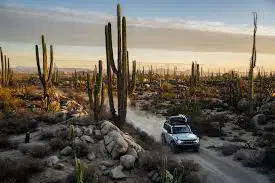
Name all of the Themes of Geography that are seen in the following image (Choose All That Apply): Movement, Region, Human-Environment Interaction, Location, Place
Movement
Region
Human-Environment Interaction
Location
Place
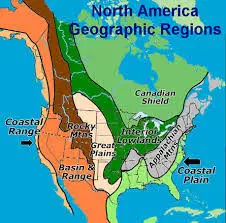
Choose the type of region shown on each map - Human Regions or Physical Regions:
Human Region
Physical Region
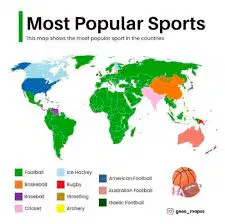
Choose the type of region shown on each map - Human Regions or Physical Regions:
Human Region
Physical Region
Which of the following is a physical characteristic of a region?
Climate
Population
Language
Economy
Identify the human characteristic of a region from the options below:
Climate
Language
Vegetation
Wildlife
Adapt or Modify: Changing clothing based on climate
Adapt
Modify
Adapt or Modify: Adding an irrigation system to your farm
Adapt
Modify
Adapt or Modify: Cutting down trees to make space for the new subdivision
Adapt
Modify
Adapt or Modify: Adding an A/C system to the old house for relief from the summer heat
Adapt
Modify
Adapt or Modify: Mining, Deforestation, Irrigation, Urbanization
Adapt
Modify
Adapt or Modify: Clothing, Food, Activities, Homes
Adapt
Modify
Urban or Rural: Densely populated - high population density, Buildings are close together and often built higher, Public transportation such as busses, trains, subway
Urban
Rural
Urban or Rural: Sparsely populated, Large amounts of land Rural areas such as farmland, forests, plains, deserts, prairies
Urban
Rural
Why would people be pulled to move to an urban area?
For better job opportunities
To experience rural life
To escape pollution
For lower cost of living
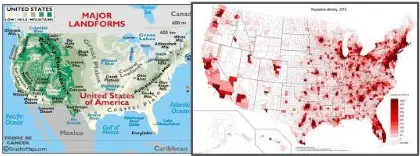
Compare the physical map on the left to the population map on the right. Why the population is so high in the areas seen.
Mountainous areas to the west prevent population from being so dense.
Areas near the oceans and plains are sparsely populated.
Population is dense near the mountains in the west.
Population is sparse in areas with a better climate.
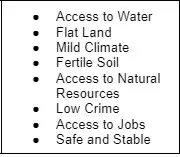
The list shows Push Factors or Pull Factors:
Push Factors
Pull Factors
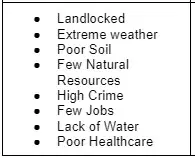
The list shows Push Factors or Pull Factors:
Push Factors
Pull Factors
__________________ __________________ is the spreading of a culture’s beliefs, practices, and items around the world.
Cultural diffusion
Cultural isolation
Cultural assimilation
Cultural stagnation
Identify the example of cultural diffusion from the options below:
The spread of sushi from Japan to the United States
The adoption of democracy in various countries
The use of the internet worldwide
The invention of the wheel
Which of the following are negative effects of cultural diffusion?
Understanding of other cultures
Spread of harmful ideas and items
Loss of unique cultures
Cooperation between nations
Which of the following are positive effects of cultural diffusion?
Understanding of other cultures
Spread of harmful ideas and items
Loss of unique cultures
Cooperation between nations
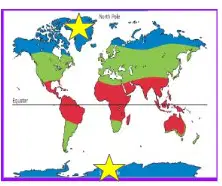
Label each with either Polar, Temperate, or Tropical:
Polar
Temperate
Tropical
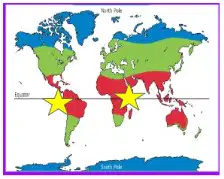
Climate zone with hot and humid temperatures and lots of rain.
Polar
Temperate
Tropical
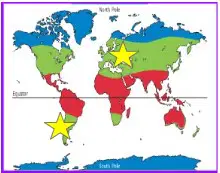
Climate zone with warm summers and cool winters with various plants and animals.
Polar
Temperate
Tropical
Select the Theme of Geography that correlates with the Definition: Where is it?
Movement
Region
Human-Environment Interaction
Location
Place
Select the Theme of Geography that correlates with the Definition: What is the relationship between people and their environment?
Movement
Region
Human-Environment Interaction
Location
Place
Select the Theme of Geography that correlates with the Definition: How is an area similar in land, language, environment, or historical background
Movement
Region
Human-Environment Interaction
Location
Place
Select the Theme of Geography that correlates with the Definition: How and why people travel from place to place? and How do people exchange goods and ideas?
Movement
Region
Human-Environment Interaction
Location
Place

