
 Worksheets
Immigration and Industrialization 1880s-1910
Total questions: 90
Worksheet time: 59mins
How did laissez-faire government contribute to the Second Industrial Revolution?
It increased labor costs in the factories and industry.
It decreased crop production by using mechanization.
It left businesses unregulated by the federal government.
It introduced the system of capitalism, private control of business and industry.
Which group of immigrants is described by the following:
Push Factors: severe religious and political persecution in Eastern Europe and Russia
Pull Factors: jobs and economic opportunities, religious freedom to open their synagogues and openly practice their religion
Germans
Irish
Chinese
Jewish Immigrants
“We are going to a great country,” [I said,] “where a great people will look at us with creative eyes, making the beautiful out of the ugly, the big and generous out of the little and mean, the headstone out of the rock that the builders rejected.” —Stephen Graham, With Poor Immigrants to America
Which statement is best supported by the excerpt?
Immigrants expected to find a better life in the United States.
Immigrants sometimes faced prejudice and discrimination in the United States.
Immigrants came to the United States to escape poverty, religious persecution, and political unrest.
Immigrants who came to the United States in the late 1800s and early 1900s were often poor with limited skills
What law limited Chinese immigration as a result of the competition between American and Chinese workers for jobs?
The Asian Immigration Agreement of 1882
The Chinese Exclusion Act of 1882
The Asian American Workforce Act 1882
What is the pull factor that contributed to urbanization?
economic opportunities in factories
more land for farming
religious persecution
political unrest
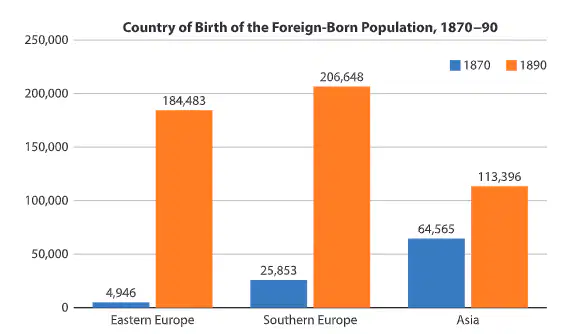
What was one consequence (result) of the data shown in the chart?
growth in the number of skilled workers in the United States
persistence of nativism and anti-immigrant prejudice and violence
legal segregation of cities according to people’s ethnic and religious affiliations
increase in the number and type of social services provided by the government
The group that actively campaigned against immigrant workers because they feared the competition for jobs were known as ___.
Americanists
Opportunists
Industrialists
Nativists
Which group of immigrants is described by the following:
Push Factors: poor farming conditions, political unrest in their home country
Pull Factors: jobs and economic opportunities as unskilled labor in the mines and railroads
Characteristics: hardworking, heavily discriminated against- laws banning their immigration and citizenship were passed, denied citizenship
Germans
Irish
Chinese
Jewish Immigrants
Which group of immigrants is described by the following:
Push Factors: failed democratic revolution
Pull Factors: jobs and economic opportunities as skilled craftsmen, doctors, lawyers, factory supervisors
Characteristics: educated, came to the USA with money to buy farms in the Midwest or start businesses. Started the idea of Kindergarten in the USA.
Germans
Irish
Chinese
Jewish Immigrants
TRUE OR FALSE: Urbanization IMPROVED the quality of life in cities.
True- with more people came more opportunities.
False-it worsened the quality of life because it contributed to sanitation issues, overcrowding and pollution.
Neither of these- Urbanization has to do with machines and factory work.
What technology made the building of skyscrapers possible?
Oil and Gas industry expands, creating new wealth.
Transportation technology expands, so more raw materials end up in the cities for building.
Steel is developed for construction.
Electrically operated elevators.
How did America's economy change from before the Civil War to the 1910s?
The USA became the world's largest exporter of farm products.
The USA went from largely agricultural to largely industrial and produced 1/3 of the world's goods.
The USA went from largely agricultural to both industrial and agricultural.
Which group of immigrants is described by the following:
Push Factors: potato blight, widespread malnutrition and famine, collapse of farming, religious persecution, extreme poverty
Pull Factors: jobs and economic opportunities in factories or other unskilled work, religious freedom
Characteristics: poor, uneducated, few skills, willing to work hard, discriminated against for getting jobs.
Germans
Irish
Chinese
Jewish Immigrants
Describe the differences between Angel Island and Ellis Island for the immigrants.
Angel Island was primarily for Asian immigrants, while Ellis Island was for European immigrants.
Ellis Island was located on the West Coast, while Angel Island was on the East Coast.
Both islands processed immigrants from the same regions.
Angel Island was known for its quick processing times, unlike Ellis Island.
Ellis Island processed people quickly, while Angel Island made it difficult and lengthy, for people to be processed.
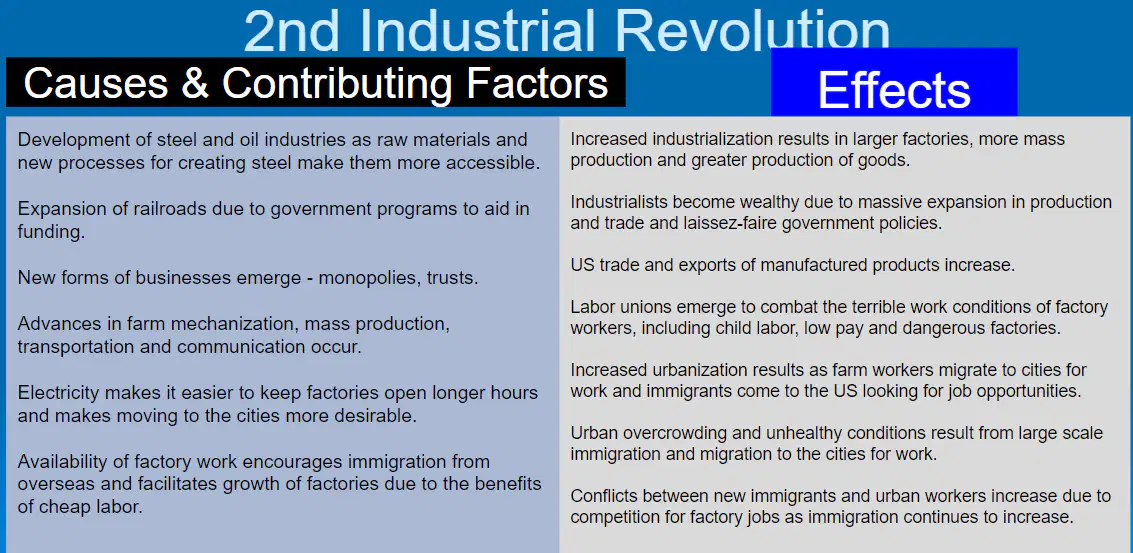
How comfortable are you with sorting the statements in the image into the appropriate categories?
**you should probably look it over really well
These statements are all in the correct categories
The Effects are all correct but some of the Causes are wrong
The Causes are all correct but some of the Effects are wrong
Both the Causes and Effects are scrambled

What were the challenges of living in these types of buildings?
They were expensive to build.
They lacked sufficient plumbing.
They were overcrowded and poorly built.
They were made of bricks.
They had little fresh air or sunlight.
Which of the following ARE correct/true about the immigrant experience in the Gilded Age?
Immigrants frequently had to settle in tenement housing because they were poor.
Immigrants were offered land and jobs in order to get them to move to states with low populations.
Immigrants were paid less than other workers and frequently did the worse jobs.
Settlement houses assisted immigrants with assimilation through language and culture classes.
Immigrants experienced discrimination and sometimes violence when they competed for jobs.
Explain ways in which immigrants tried to navigate their new society, assimilate and make connections.
They sent their children to public schools.
They moved into ethnic neighborhoods that offered stores and religious services from their homelands.
They attended nativist meetings to learn about American culture.
They took classes at Ellis Island to learn to assimilate into American society.
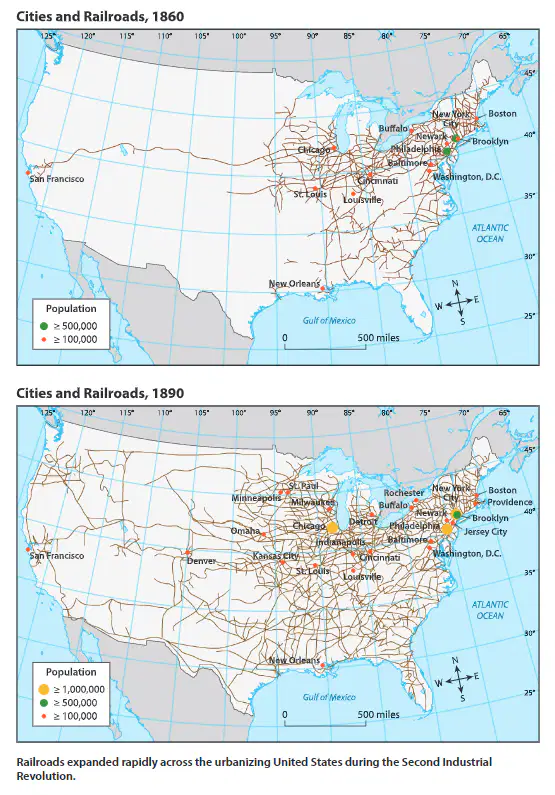
How did the changes shown in the maps contribute to industrialization?
They made transportation faster.
They created new markets across the country.
They encouraged local lines.
They opened new markets for the transfer of goods and new settlement.
They were major consumers of lumber, steel and coal.
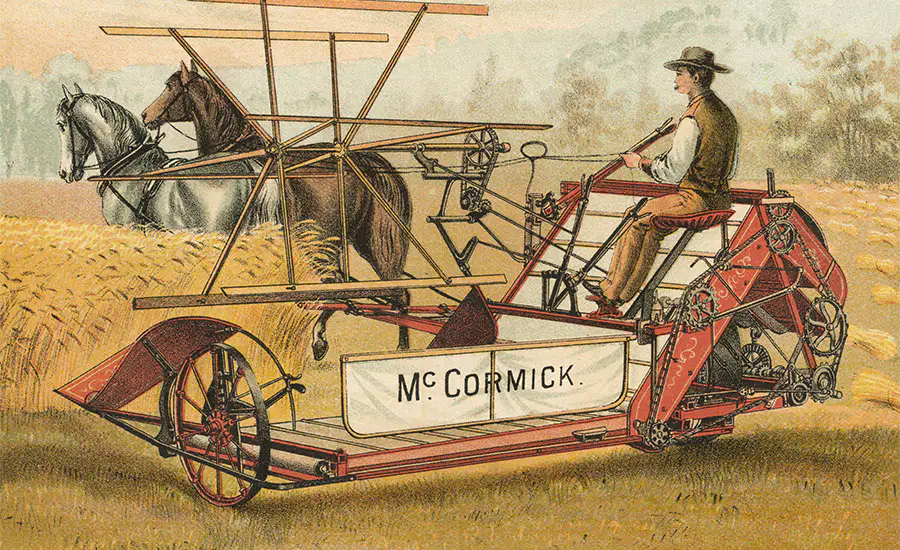
How did the mechanization of farming impact urbanization in the Gilded Age?
Now that machines were doing a lot of the farm work, you didn't need many farm workers anymore.
More people moved from the country to the city to find new jobs.
More food was available and we began exporting grain all over the world.
Increased agricultural production leads to environmental issues like soil erosion and dust storms.
Only exporting grain and workers moving to the city were affected by this.
How did mass production and industrialization change life for urban dwellers?
It resulted in fewer jobs for people and greater costs.
It resulted in greater availability of ready-made clothing and home supplies for people.
It resulted in increased jobs for immigrants and city workers.
It resulted in New York being the 'hub' of exporting goods to the rest of the world.
It resulted in improved transportation and electricity for urban dwellers.
True or False?
MECHANIZATION led to the widespread adoption of ASSEMBLY LINES in factories.
True
False
True or False?
The SECOND Industrial Revolution was an ECONOMIC revolution that included the growth of AGRICULTURE, FACTORIES, MILLS AND MINING.
True
False, it was not growth of Agriculture
True or False?
The expansion of RAILROADS across the country led to new markets, speedy transportation and the DESTRUCTION OF THE NATIVE AMERICAN WAY OF LIFE THROUGH DESTRUCTION OF THE BUFFALO.
True
False
True or False?
LAISSEZ-FAIRE government allowed businesses to GROW RAPIDLY, because there were few rules or regulations.
True
False
How did industrialization improve transportation in the US?
Railroads merged and expanded to increase the movement of people and goods all over the country.
New inventions like subways, electrified streetcars and commuter trains popped up in cities.
The invention of the cars allowed people to live in the suburbs and commute into work.
Only railroads and streetcars were improved.
Airplanes were invented and improved the transportation of goods.
Something that would make immigrants want to leave their home country is known as a (a) factor.
What was the purpose of the Chinese Exclusion Act?
To levy a head tax on Chinese immigrants
To block the entry of Chinese laborers
To enforce immigration law at the state level
To regulate immigration from all countries

The illustration demonstrates the change in American society from -
one with a mostly rural society to an urban society
a nation that relied on enslavement of people
a nation that isolated itself from others to one that intervenes in the affairs of other nations
an oligarchy to a direct democracy

Which sentence best completes this diagram?
Cities grew rapidly.
Demand for artisans increased.
Farms experienced a shortage of labor.
Government regulation of factories increased.
How did industrialization help the American economy?
The country had numerous modern factories that could produce desired goods
More markets available tor the to BUY goods
Cash Crops become highly sought after World War 1
More markets available for them to SELL goods
Which Amendment was successfully used to guarantee the children of immigrants citizenship if they were born on US soil?
13th Amendment
15th Amendment
True or False?
The introduction of assembly lines in factories increased the efficiency of mass production during industrialization.
False
True
Americans who opposed increased immigration to the US were called
imperialists
industrialists
old immigrants
nativists

Which of the following best describes Industrial Revolution?
A change from products made by hand to products made by machines in factories
An industry of revolving around the country
People moving from all around the world to look for gold in California
a place in which everything is perfect

What was a consequence of the Industrial Revolution?
More people moved to the cities to work in factories
More people became farmers
Immigrants were treated equally because there was a work shortage
There were less slaves because plantations weren't profitable anymore

How did mass production help people's everyday lives?
Made it easier to own companies & build corporations
It organized labor in the factories
Made products cheaper & more available
Made communication easier

Angel Island was:
the immigration processing center on the West Coast
the immigration processing center on the East Coast
Where prisoners of war were sent on the West Coast
Where prisoners of war were sent on the East Coast
Laissez-Faire is when
the government is highly involved in businesses
the government is not involved in businesses
Lazy people go to the fair
Government makes all business decisions

Bessemer Steel Process
increased shipping
improved steel production
removed seeds from cotton efficiently
connected the North with the West


What is a metaphor for the mixture of people of different cultures and races together into Americans?
Mixing Bowl
Angel Food Cake
Fish Tank
Melting Pot


Who invented the 1st practical light bulb?
George Washington Carver
Henry Ford
Thomas Edison
Eli Whitney
What term describes crowded, usually run-down buildings with many cheap, small apartments?
Assimilation
Nativism
Refugees
Tenements
What is the process through which individuals and groups of differing heritages acquire the basic habits, attitudes, and mode of life of an embracing culture?
Assimilation
Nativism
Refugees
Tenements
There are places in cities where people from the same countries or ethnic groups lived; examples are Chinatown and Little Italy in New York City
cities
immigrant neighborhoods
areas
reservations
The idea that immigration to America should be limited or stopped completely is called -
capitalism
patriotism
nativism
Americanism
Between 1890 and 1915 the "new immigrants" were hightly discriminated against because
Americans feared that these immigrants would refuse to assimilate into American culture.
The industrial workforce was made up of mostly
men
women
children
all of the above

Which institutions helped immigrant children learn to be more like native-born Americans?
neighborhood churches
foreign language newspapers
public schools
political machines
What is the rapid growth of cities called?

Inventions helped fuel industrialization because...
More jobs were available for inventors and also for processing patents
Innovations led to better technology in order to produce goods faster and cheaper
Factories were able reduce the emissions from pollution
Inventors served as advisors to the industrial capitalists
What kinds of jobs did MOST new immigrants perform in the 1880s-1910s?
unskilled jobs for low pay
servants,
street sweepers,
hauling trash,
selling food from carts
factory work,
mining,
steel mill work,
textile mill work
university professors,
teachers,
owned industries

Invented the telephone
Elisha Otis
Alexander Graham Bell
Henry Ford
George Eastman
developed a safety elevator that would not fall if the lifting rope broke
Elisha Otis
Wright Brothers
Henry Ford
George Eastman
when people from other cultures assimilate to the point where their original identities and culture disappear- they become a uniform culture
New Immigrants
Old Immigrants
Melting Pot
Nativism
Which invention made the transmission of news and other almost instant?
railroads
the telegraph
the cotton gin
the steamboat
Which of the following made home life easier in the 1800s? (Pick 3)
Ice Box
Sewing Machine
Internet
Matches
What two farm machines were developed by John Deere and Cyrus McCormick?
Steel Plow
Automatic Corn Husker
Soil Disker
Mechanical Reaper
What was the first communication device called?
Rotary Phone
Telegraph
Pay Phone
Carrier Pigeon
The _______________ was one invention that improved daily life at home.
steel plow
water frame
sewing machine
mechanical reaper
Which of the following explains a continuity in the effect of technological innovation on the production of goods in the late 1800s?
Improved manufacturing practices gradually reduced reliance on immigrant workers.
Improved quality of manufacturing steadily decreased demand for consumer goods.
New types of transportation increasingly shifted industrial centers from the North to the South.
New industrial machines increased the number of goods that factories could make.
Which of the following best explains a key reason for rapid economic development during the Gilded Age?
The adoption of beliefs of Social Darwinism helped justify inequalities of wealth.
The creation of the sharecropping system improved agricultural production.
The consolidation of large industries facilitated mass production.
The growth of Populist political platforms encouraged economic reform.
What invention by Alexander Graham Bell furthered the improvements in communication and connectivity?
Telephone
Telegraph
Television
Radio
Why did factory owners employ children during the Industrial Revolution?
Children were paid less
Children were more skilled
Children demanded better conditions
Children worked fewer hours
The development of the Bessemer process helped the city of _____ to become the center of the steel industry.
Pittsburgh, Pennsylvania
Cleveland, Ohio
Detroit, Michigan
Omaha, Nebraska
The migration of African Americans from jobs as sharecroppers in the agricultural south to factory work in the industrial north is called....
super motivation
the Great Immigration
the Great Migration
this didn't happen
______ is when immigrants get established in a new place and write home to tell their family and friends to come join them in their new communities (Little Italy, Chinatown).
The Great Migration
Secondary Immigration
Ellis Island Migration
Nativism
Telegraph lines were replaced by ____________ during the 1890s for communication.
the radio
the telephone
the cell phone
television

