Wayground logo

Free Printable Worksheets

Font size

S
M
L
XL
Worksheets

Classification of Matter

Total questions: 50

Worksheet time: 41mins

Name
Class
Date
1.
Matter is...
a)
a substance made up of only one kind of element
b)
anything that has mass and takes up space
2.
Physical properties are...
a)
characteristics of a substance that can be observed or measured without changing the substance into something else
b)
two or more atoms linked together
3.
Which is NOT a physical property?
a)
mass
b)
volume
c)
density
d)
time
4.
What are the three states of matter?
a)
solid, volume, mass
b)
density, volume, mass
c)
solid, liquid, gas
d)
density, gas, volume
5.
The amount of space something takes up
a)
density
b)
volume
c)
mass
d)
matter
6.
Water in its solid form is _____________.
a)
a vapor
b)
ice
c)
a liquid
d)
boiling
7.
A combination of substances that are not chemically combined is called a(n)____________. 
a)
mixture
b)
compound
c)
physical
8.
Mixtures are separated through ___________changes.
a)
mixture
b)
compound
c)
physical
9.
A physical property can be observed with your
a)
Eyes
b)
Ears
c)
Tastes
d)
All of the above
10.
Cutting an orange is a physical change.
a)
True
b)
False
11.
What causes a change in the state of matter?
a)
physical properties
b)
chemical energy
c)
temperature
12.
Changing the way matter looks without changing it into NEW matter is a:
a)
Chemical change
b)
Physical change
c)
Energy change
d)
BOTH a chemical and a physical change
13.
Chopping wood is an example of a:
a)
Physical change
b)
Chemical change
14.
Burning wood to ash is an example of a:
a)
Physical change
b)
Chemical change
15.

A ________ is a form of matter that has its own shape.

a)

Gas

b)

Solid

c)

Liquid

d)

Matter

16.

Which is an example of a physical change?

a)

Baking cookies

b)

A campfire

c)

A rotting banana

d)

A crumpled sheet of paper

17.

A substance made of one type of atom is called ________.

a)

compound

b)

mixture

c)

element

18.

Has a definite shape and volume

a)

solid

b)

liquid

c)

gas

d)

matter

19.

Has a definite volume, but not a definite shape

a)

solid

b)

liquid

c)

gas

d)

ice

20.

Has neither a definite shape or volume

a)

solid

b)

liquid

c)

gas

d)

water

21.

How many states of matter are there?

a)

1

b)

2

c)

3

d)

10

22.

Liquids take the shape of their

a)

container

b)

mass

c)

matter

d)

water

23.

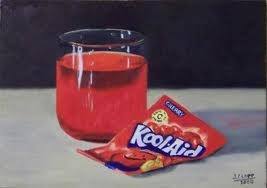
How would you classify this image?

a)

homogeneous mixture

b)

heterogeneous mixture

24.

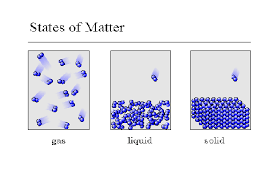
How would you classify this image?

a)

homogeneous mixture

b)

heterogeneous mixture

25.

What is a pure substance made of 2 or more elements chemically combined in a specific ratio (Ex. Water)?

a)

Element

b)

Compound

c)

Mixture

d)

Solution

26.

What is a type of mixture in which different parts can easily be seen (Ex. Vegetable soup)?

a)

Heterogeneous mixture

b)

Homogeneous mixture

c)

Solution

d)

Colloid

27.

What is a type of mixture that is evenly mixed so you cannot see the parts and it looks all the same (Ex. Paint)

a)

Element

b)

Compound

c)

Heterogeneous mixture

d)

Homogeneous mixture

28.

What is a pure substance that cannot be broken down into any other substances by chemical or physical means (Ex. Oxygen)?

a)

Element

b)

Compound

c)

Colloid

d)

Suspension

29.
If you change a substance into a new substance...
a)
Partial Change
b)
Physical Change
c)
Chemical Change
d)
Freezing
30.
Changing the phase, size or shape of something....
a)
Chemical change
b)
Physical Change
c)
Suspension
d)
Colloid
31.
Which is NOT a chemical change?
a)
Leaves changing colors in the fall
b)
Iron rusting
c)
Digesting Lunch
d)
Ice Melting
32.

What are examples of Chemical Change?

a)

melting of sugar

b)

Chopping wood.

c)

rotting of fruits

d)

Breaking a bottle

33.

which of the following is a clue a chemical change has occurred

a)

Size shape

b)

Change of shape

c)

Change in temperature

d)

The state of matter changes

e)

none

34.

When a paper is crumpled it is a ....

a)

chemical

b)

physical

35.
Condensation is . . . .
a)
gas to liquid
b)
liquid to gas
c)
gas to solid
d)
solid to liquid
36.
Freezing (or solidification) is . . . .
a)
liquid to solid
b)
solid to liquid
c)
solid to gas
d)
solid to plasma
37.
________________________ is the temperature at which a solid begins to liquefy.
a)
boiling point
b)
condensation point
c)
melting point
d)
evaporation point
38.
At higher temperatures
a)
particles in an object have less energy
b)
particles in an object move faster
c)
a gas contracts
39.

Letter "C" represents which state of matter on the phase change diagram shown.

a)

Solid

b)

Liquid

c)

Gas

40.
Electrically charged state of matter similar to a gas.
a)
temperature
b)
liquid
c)
plasma
d)
gas
41.
Which box has a greater density?  
a)
Box A
b)
Box B
42.
What two types of measurements make up DENSITY? 
a)
Mass and Volume
b)
Temperature and Mass
c)
Grams and Centimeters
d)
Volume and Weight
43.

A cubic centimeter (cm3) is equal to

a)

1 milliliter (mL)

b)

1 liter (L)

c)

1 foot

d)

1 meter (M)

44.

What unit is used to measure mass?

a)

cm3/g

b)

g

c)

g/cm3

d)

cm3

45.
What units are used to measure Density?
a)
cm3/g
b)
g
c)
g/cm3
d)
cm3
46.

An irregularly shaped rock was lowered into a graduated cylinder holding a volume of water equal to 50 ml. The height of the water rose to 75 ml. If the mass of the stone was 250 g, what was its density?

a)

15 g/mL

b)

3.3 g/mL

c)

10 g/mL

d)

20 g/mL

47.
Calculate the density of the cube.
a)
2 g/cm3
b)
4 g/cm3
c)
6 g/cm3
d)
8 g/cm3
48.
A mechanical pencil has the density of 3.000 g/cm3.  The volume of the pencil is 15.8 cubic centimeters.  What is the mass of the pencil?
a)
47.4 g
b)
50 g
c)
0.190  g
d)
5.27 g
49.

What is the density of an object that has a mass of 85g and a volume of 5mL?

a)

8.5 g/mL

b)

17 g/mL

c)

80 g/mL

d)

90 g/mL

50.

What is the density of an object that has a mass of 100g and a volume of 25mL?

a)

125 g/mL

b)

4 g/mL

c)

125 g/cm3

d)

4 g/cm3