wayground logo

Free Printable Worksheets

NEW

Font size

S
M
L
XL
Worksheets

HUMAN IMPACT ON CLIMATE CHANGE

Total questions: 50

Worksheet time: 36mins

Name
Class
Date
1.

The greenhouse effect is caused by

a)

more heat arriving at the Earth from the sun

b)

the Earth releasing more heat at night

c)

gases in the air trapping heat released by the Earth

2.
 Which of the following activities contributes the most to carbon emissions globally?
a)
Deforestation
b)
Agriculture
c)
Burning fossil fuels
d)
Respiration
3.
Which of the following are greenhouse gases?
a)
Carbon dioxide
b)
Methane
c)
Water vapor
d)
All answers are correct
4.
Melting of glaciers and polar ice caps....
a)
will result in cooler temperatures in the Arctic
b)
will result in sea-levels rising
c)
Will have no effect on ecosystems
d)
None of the above
5.
When humans burn fossil fuels, most of the carbon quickly enters the _______ as carbon dioxide
a)
water
b)
atmosphere
c)
sun
d)
air
6.
Which of these does not add CO2 to the atmosphere
a)
cooking with gas
b)
planting trees
c)
burning wood
d)
riding in a bus
7.

Which natural process removes carbon dioxide from the atmosphere?

a)

forest fires

b)

volcanic eruptions

c)

cellular respiration

d)

photosynthesis

8.
Which of the following is the best conclusion that can be made from this graph?
a)
atmospheric carbon dioxide levels have been decreasing since 1960
b)
Hawaii has a lot of carbon dioxide
c)
humans have been working hard to decrease carbon dioxide levels
d)
atmospheric carbon dioxide levels have increased steadily since 1960
9.

What is the definition of climate?

a)

The condition of the air around the Earth

b)

The rainforest

c)

The pattern of weather over time

d)

How hot it is in a certain place

10.
The main human activity that releases greenhouse gases is
a)
using bottled water
b)
burning fossil fuels
c)
texting on cellphones
d)
eating meat
11.
Which of the following is contributing to an increase in carbon dioxide in the atmosphere?
a)
deforestation
b)
photosynthesis
c)
oceans
d)
all of the above
12.
Melting of glaciers and polar ice caps....
a)
will result in cooler temperatures in the Arctic
b)
will result in sea-levels rising
c)
Will have no effect on ecosystems
d)
None of the above
13.
What is the definition of weather?
a)
a period of abnormally dry weather that lasts at least 2 years
b)
the specific condition of the atmosphere at a particular place and time
c)
a complex community of organisms and the community's environment
d)
a release of toxic gas
14.
The warming of the atmosphere by the trapping of heat being radiated to space is called
a)
evaporation
b)
condensation
c)
the greenhouse effect
d)
radiation
15.
Global warming refers specifically to an increase in 
a)
the number of storms on Earth.
b)
precipitation from Earth’s atmosphere.
c)
temperatures everywhere on Earth.
d)
Earth’s average surface temperature.
16.
What is the difference between climate and weather?
a)
 Climate averages the weather conditions in a specific place over a long period of time, while weather describes the state of the atmosphere at a specific moment in time.
b)
Weather averages the weather conditions in a specific place over a long period of time, while Climate describes the state of the atmosphere at a specific moment in time.
c)
Climate describes the weather conditions at night, while weather describes the conditions during the daytime.
d)
There is not a difference between climate and weather.
17.
Wich of the following is NOT a greenhouse gas?
a)
water vapor
b)
carbon dioxide
c)
nitrogen
d)
methane
18.
_______________ is the clearing of forests on a massive scale.
a)
Delimbing
b)
Reforestation
c)
Deforestation
d)
Detreeing
19.
Deforestation _______________ climate change because ______________ COis absorbed from the atmosphere.
a)
increases, more
b)
decreases, less
c)
increases, less
20.

The largest threat to biodiversity is

a)

bacteria

b)

fungi

c)

humans

d)

plants

21.
Most water pollution is the result of
a)
human activities.
b)
drought.
c)
volcanic eruptions.
d)
storms.
22.
What is the major cause for air pollution? 
a)
factories and cars
b)
cigarretes 
c)
deforestation
d)
oil spills
23.

Is the following an example of a positive or negative impact on the earth's ocean systems?


Fertilizers from farms runoff into rivers and create dead zones at the mouth of rivers in our world's oceans.

a)

Positive Human Impact on Ocean Systems

b)

Negative Human Impacts on Ocean Systems
24.

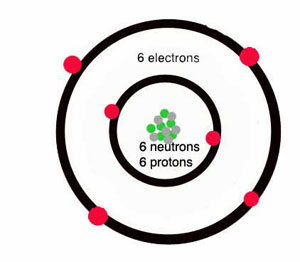
The circulation of the element Carbon among Earth's atmosphere, land, oceans, and organisms is called _____________.

a)

the Carbon Cycle

b)

the Oxygen Cycle

c)

the Carbon dioxide Cycle

d)

the Water Cycle

25.

Carbon is used in the process called __________ by plants and algae to make food and the building blocks for growth.

a)

carbon cycle

b)

life

c)

photosynthesis

d)

decomposition

26.

In the oceans; algae, plants, and other organisms use carbon from the atmosphere for ________________.

a)

respiration

b)

decomposition

c)

transpiration

d)

photosynthesis

27.

Where can you find carbon?

a)

Only in the Earth's atmosphere.

b)

Inside all water molecules.

c)

Inside the sun.

d)

Inside every living thing on Earth.

28.

Carbon moves from fossil fuels to the atmosphere when fuels are burned.

a)

True

b)

False

29.

What are fossil fuels made from?

a)

Plants and animals that are buried underground for millions of years.

b)

They absorb it from the atmosphere.

c)

Water

d)

Wind

30.

When plants and animals die they are buried and converted into fossil fuels (oil, gas, etc.) over time.

a)

True

b)

False

31.

The process of carbon cycling from the atmosphere, into living organisms and back is called the ____.

a)

Water Cycle

b)

Citric Cycle

c)

Rock Cycle

d)

Carbon Cycle

32.
When humans burn fossil fuels, most of the carbon quickly enters the                       as carbon dioxide.
a)
Water
b)
Atmosphere
c)
Sun
d)
Air
33.
Which of the following removes carbon from the atmosphere?
a)
Combustion
b)
Respiration
c)
Photosynthesis
d)
Death
34.
Organisms that do not decompose can be buried and become what?
a)
water
b)
nutrients
c)
air
d)
fossil fuels
35.
If the plant population decreased, the amount of carbon would _________.
a)
Stay the same
b)
Increase
c)
Decrease
36.

Which is a true statement?

a)

Humans depend on oxygen, plants depend on carbon dioxide

b)

Plants produce carbon dioxide

c)

Humans depend on carbon dioxide, plants depend on oxygen

d)

Humans don't depend on plants for the air they need

37.
TRUE or FALSE?
All of the carbon in existence is continually recycled in the carbon cycle.
a)
True
b)
False
38.

How is the carbon cycle similar to the water cycle?

a)

Both involve liquid substances falling to the Earth from the atmosphere?

b)

Neither process works at low temperature.

c)

Both involve the transfer of substances between animals, plants, and the Earth.

d)

Both involve the transfer of substances between the earth and outer space.

39.
Carbon can be found in...
a)
The atmosphere
b)
Soil
c)
Fossil fuels
d)
All of the above
40.

Which of the following processes does NOT move carbon to the atmosphere?

a)

Animal respiration (Breathing)

b)

Volcanic eruption

c)

Photosynthesis

d)

Burning fossil fuels

41.

Why does cutting down trees increase global warming?

a)

trees soak up carbon dioxide and removing them causes more carbon to stay in the atmosphere

b)

trees provide shade which counteracts global warming

c)

trees absorbs the sun's energy without radiating back into the atmosphere

d)

trees drain greenhouse gases like methane from soil

42.

Why is burning fossil fuels harmful?

a)

they cause cancer

b)

They can get extremely hot

c)

it increases the amount of carbon dioxide in the atmosphere

d)

this would destroy fossils

43.
When we discuss greenhouse gases what is the main one we discuss?
a)
Methane (CH4)
b)
Carbon Dioxide (CO2)
c)
Nitrous oxide (N2O)
d)
Flourinated gases
44.
T/F: Water vapor is a greenhouse gas
a)
True
b)
False
45.
The warming of the atmosphere by the trapping of heat being radiated to space is called
a)
evaporation
b)
condensation
c)
the greenhouse effect
d)
radiation
46.
Which layer in the atmosphere protects us form harmful UV radiation?
a)
Ozone
b)
Troposphere
c)
Ionosphere
d)
Exosphere
47.
What is the greenhouse effect?
a)
The warming of a planet due to trapped radiation.
b)
The cooling of Earth due to air pollution.
c)
The heating of a solid, such as a rock.
48.
Which of the following natural events would be most likely to contribute to the cooling of Earth's atmosphere?
a)
Earthquake
b)
Hurricane
c)
Volcanism
d)
Monsoon
49.
The Earth acts like a greenhouse that catches and traps heat from the sun.
a)
true
b)
false
50.

Which natural process leads to the greatest productions of atmospheric particulates?

a)

volcanic eruptions

b)

plant respiration

c)

hurricane

d)

erosion