
 Worksheets
LESSON 1-3 COLOR THEORY
Total questions: 53
Worksheet time: 53mins
Give one element of art
(a)
An extended point with length and direction
LINE
FORM
COLOR
SPACE
SHAPE
refers to the space within a form
VOLUME
FORM
COLOR
SPACE
SHAPE
the effect and degree of bulk, density, and weight of matter in space
VOLUME
FORM
COLOR
SPACE
MASS
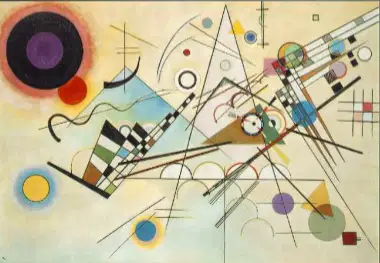
A Russian born artist (1866-1944), one of the first creators of pure abstraction in modern painting.
Wassily Kandinsky
Wasilly Kadinsky
Wassilly Kandisky
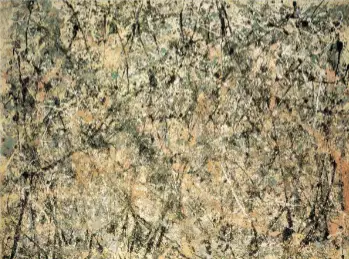
An American painter (1912-1956), the commanding figure of the Abstract Expressionist movement.
JACKSON POLLOCK
JACKSONN POTLOCK
JACKSON POLOCK
JACKSONN POLOCK
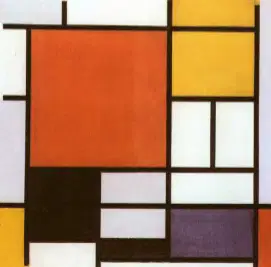
A Dutch abstract painter (1872-1944), the real artist of geometry, "abstract purity"
PIET MONDRIAN
PIETRO MONDARION
PIET MONDTION
PIET MONDRION
the types of line
OUTLINE
CONTOUR LINE
GESTURE LINE
SCRIBBLE LINE
characteristics of shape
a closed line
2d
can be geometric
can be organic
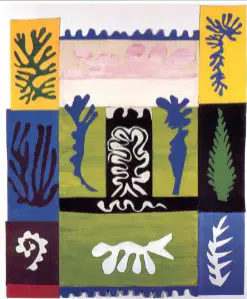
a French Fauvist artist (1869-1954)
HENRI MATISSE
HENRY MATRISSE
HENRI MATRISSE
HENRY MATISSE
a 3-d object having volume and thickness
FORM
LINE
SHAPE
COLOR
"tone", the lightness or darkness of an color, has the parts:
highlight
area of illumination
half shade
deep shade
cast shadow
FORM
VALUE
COLOR
SHAPE
surface quality, either tactile or visual, the degree of roughness or smoothness
TEXTURE
VALUE
COLOR
SHAPE
the area between and around objects, positive/negative space
TEXTURE
VALUE
COLOR
SPACE
Chroma: purity or intensity of _____
intensity: bright/dull
Value: light/dark
TEXTURE
VALUE
COLOR
SPACE
techniques of value
blended
crosshatch
hatch
stipple
scumble
color schemes
monochromatic
analogous
complementary
triadic
triadic
Principles of design
(a)
focal point
area that first attracts attention in a composition
EMPHASIS
BALANCE
RHYTHM
HARMONY
MOVEMENT
feeling of visual equality in shape, form, value, color, etc...
EMPHASIS
BALANCE
RHYTHM
HARMONY
MOVEMENT
a visual tempo or beat
regular repetition of elements of art to product the look and feel of movement
EMPHASIS
BALANCE
RHYTHM
HARMONY
MOVEMENT
a way of combining elements of art to accent their similarities and bind the picture parts into a whole
EMPHASIS
BALANCE
RHYTHM
HARMONY
MOVEMENT
a way of combining visual elements to produce a sense of implied action
EMPHASIS
BALANCE
RHYTHM
HARMONY
MOVEMENT
size relationship of parts to a while and to one another
PROPORTION
BALANCE
RHYTHM
HARMONY
MOVEMENT
the quality of wholeness or oneness; when the components of a work of art are perceived as harmonious, giving the work a sense of completion
UNITY
BALANCE
RHYTHM
HARMONY
MOVEMENT
adds interest by using contrasting elements within the composition; an assortment
VARIETY
BALANCE
RHYTHM
HARMONY
MOVEMENT
element occurring more than once, without variation, this can become monotonous
REPETITION
BALANCE
RHYTHM
HARMONY
MOVEMENT
the repetition of anything, also called a motif in a design
PATTERN
BALANCE
RHYTHM
HARMONY
MOVEMENT
when two related elements are different, using opposing qualities next to each other. For example: black and white. Adds variety to the total design and creates unity
CONTRAST
BALANCE
RHYTHM
HARMONY
MOVEMENT
artists develop color theories in order to create rules for harmonious color relationships, to understand how colors relate to one another, and to visualize how colors mix.
TRUE
FALSE
Our standard color wheel includes twelve pieces, made up of three primary colors, three secondary colors, and six tertiary colors
TRUE
FALSE
are colors associated with fire, colors tend to be stimulating
WARM COLORS
COOL COLORS
these colors suggest water and trees, they tend to be soothing and relaxing
WARM COLORS
COOL COLORS
developed a theory of colors based on observing color in nature. He believed color was perceived through combinations of light and dark, and represented how the elements of nature behaved in the physical world.
(a)
developed his own palette of basic hues, each hue relating to the natural world. His palette was a spiritual manifestation of the physical world through paint
(a)
the first color theorist to approach color from a scientific, rather than spiritual standpoint. He created the first color wheel
(a)
Reacted against Newton's theories because they didn't translate to mixing pigments. He theorized that color phenomenon happened in the human eye, rather than in white light.
Johann Wolfgang von Goethe
Johan Wolfgang von Goathe
Johann Wolvgang von goate
Johan Wolvgang von goate
attempted a three-dimensional depiction of color, to demonstrate that color was not only a function of hue, but also value and saturation
OTTO RUNGE
AUTO RUNGE
OTTO GRUNGE
AUTO GRUNGE
was a teacher at the Bauhaus school in Germany prior to World War II
JOHANNES ITTEN
JOHANN ITTEN
JOHANNES LITTEN
JOHANN LITTEN
epanded on Runge's three-dimensional color model with his color tree
Albert Munsell
Alberto Munshell
Albert Munshell
Alberto Munsell
TYPE OF COLOR SCHEMES:
applies a single color with variations in shades and tints. This kind of scheme is often found in house paint palettes, and the overall effect in consistency.
MONOCHROMATIC
ANALOGOUS
COMPLEMENTARY
RACTANGLE/TETRADIC
TRIADIC
TYPE OF COLOR SCHEMES:
works with a pairing of the main color and the two directly next to it in the color wheel.
MONOCHROMATIC
ANALOGOUS
COMPLEMENTARY
RACTANGLE/TETRADIC
TRIADIC
TYPE OF COLOR SCHEMES:
creates an impactful contrast, uses two colors directly across the color wheel
MONOCHROMATIC
ANALOGOUS
COMPLEMENTARY
RACTANGLE/TETRADIC
TRIADIC
TYPE OF COLOR SCHEMES:
defines a rectangle area where the four corners are the selected colors for the palette.
MONOCHROMATIC
ANALOGOUS
COMPLEMENTARY
RACTANGLE/TETRADIC
TRIADIC
TYPE OF COLOR SCHEMES:
trendy in flyer design and is also known to produce the best colors for presentations.
MONOCHROMATIC
ANALOGOUS
COMPLEMENTARY
RACTANGLE/TETRADIC
TRIADIC
TYPE OF COLOR SCHEMES:
a bolder version of the rectangle color scheme.
SQUARE
ANALOGOUS
COMPLEMENTARY
RACTANGLE/TETRADIC
TRIADIC
TYPE OF COLOR SCHEMES:
Resembles a tree structure, picks a primary color instead of selecting its direct complementary, it opts for a split in which the two colors are chosen on each side of the complementary color
SQUARE
SPLIT COMPLEMENT
COMPLEMENTARY
RACTANGLE/TETRADIC
TRIADIC
IDENTIFY THE COLOR SCHEME:
Red - Green
ANALOGOUS
COMPLEMENTARY
RECTANGLE OR TETRADIC
TRIADIC
SQUARE
IDENTIFY THE COLOR SCHEME:
Orange - Blue
ANALOGOUS
COMPLEMENTARY
RECTANGLE OR TETRADIC
TRIADIC
SQUARE
IDENTIFY THE COLOR SCHEME:
Red - Orange - Blue - Green
ANALOGOUS
COMPLEMENTARY
RECTANGLE OR TETRADIC
TRIADIC
SQUARE
IDENTIFY THE COLOR SCHEME:
Red - Blue - Yellow
ANALOGOUS
COMPLEMENTARY
RECTANGLE OR TETRADIC
TRIADIC
SQUARE
IDENTIFY THE COLOR SCHEME:
Red Orange - Violet - Blue Green - Yellow
ANALOGOUS
COMPLEMENTARY
RECTANGLE OR TETRADIC
TRIADIC
SQUARE
IDENTIFY THE COLOR SCHEME:
Yellow - Red Violet - Blue Violet
SPLIT COMPLEMENTARY
COMPLEMENTARY
RECTANGLE OR TETRADIC
TRIADIC
SQUARE

