
Font size
 Worksheets
Cells Warm Up 10/1/24
Total questions: 13
Worksheet time: 12mins
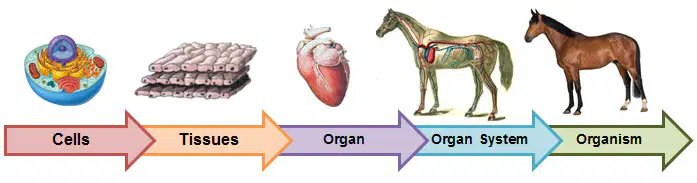
Which part of the Cell Theory explains this image?
All living things are made of one or more cells
The cell is the basic unit of structure and function
All cells come from other cells
All cells have the same basic chemical composition
Match the organelle with its function in the cell
Golgi body
Packages materials for transport
Nucleus
Stores genetic information
Mitochondria
Produces ATP energy for the cell
Ribosome
Synthesizes proteins
Chloroplast
Conducts photosynthesis
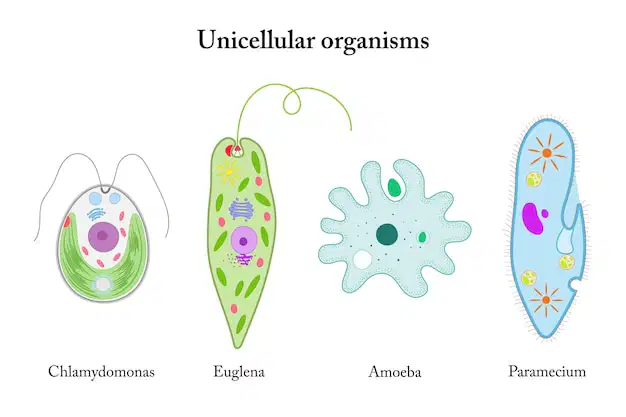
The unicellular organisms pictured carry out the activities needed to maintain homeostasis by using specialized organelles.
Which statements describe the organelles in a cell?
Organelles must work together and their activities must be coordinated
No membrane-bound organelles
No nucleus
Simple
Small
Bacteria
Archea
Unicellular
Cytoplasm
Ribosomes
DNA
Cell Membrane
Complex
Large
Protist
Plant
Animal
Fungi
Multicellular
Nucleus
Membrane-bound organelles
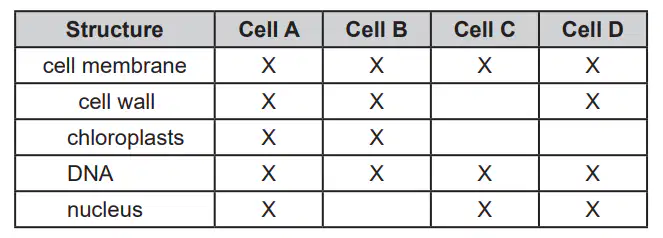
Using a microscope, a student observed four different types of cells. For each structure he observed, he placed an X in the chart to indicate the cells where the structure was observed.
Which of the cells he viewed were most likely from heterotrophs? Choose all that apply.
A
B
C
D
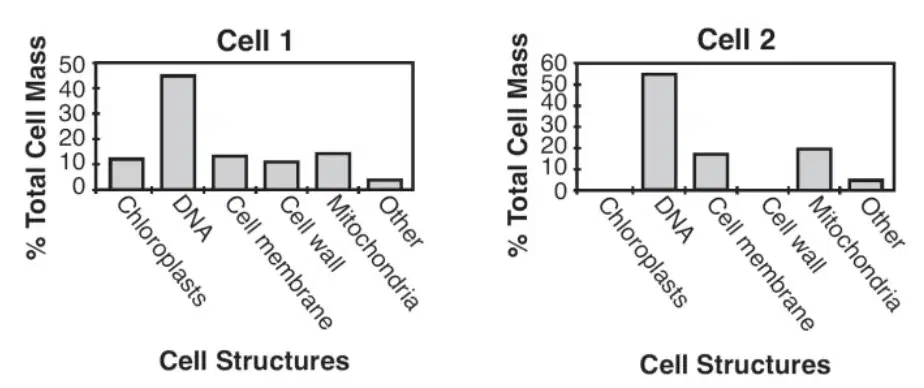
View the data charts from two different cells. Which cell is most likely a plant cell?
Cell 1
Cell 2
Both are plant cells
Neither are plant cells
The swordfish contains a heat generating organ that warms its brain and eyes up to 14oC above the temperature of the surrounding ocean water. Which structures are most likely to be found at relatively high concentrations within the cells of this heat generating organ that has a high demand for energy?
Nuclei
Chloroplasts
Mitochondria
Vacuole
Which organelle supports cells structure & drives cell movement and is composed of microfilaments, microtubules, & centrioles?


Does cellular respiration
Uses oxygen and glucose
Produces CO2, H2O, and ATP
Does photosynthesis
Uses solar energy, CO2, and H2O
Produces glucose and oxygen
In plants and animals
In plants only
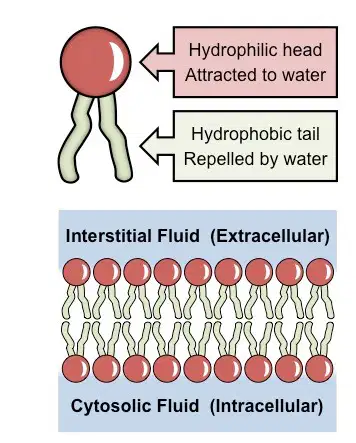
Which macromolecule is the main component of the cell membrane and the membranes of all membrane-bound organelles?
Carbohydrate
Lipid
Protein
Nucleic Acid
Endosymbiotic Theory is the idea that (a) cells could have evolved from (b) cells.
The Endosymbiotic Theory suggests that eukaryotic cells evolved when an ancient cell engulfed another, forming a permanent symbiotic relationship. Choose the evidence that best justifies this claim.
Both mitochondria and chloroplasts perform energy functions
Eukaryotic cells have many mitochondria
Eukaryotic cells have traits in common with archaea
Mitochondria and chloroplasts contain circular loops of unique DNA
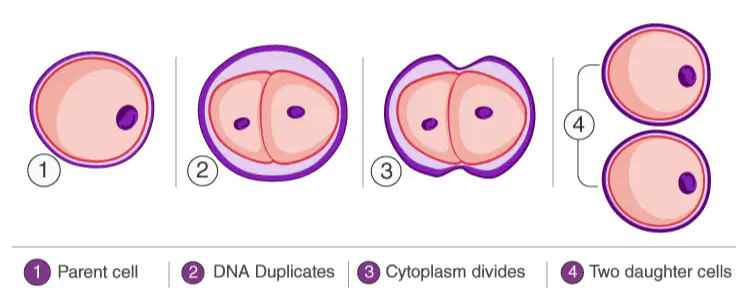
What part of the Cell Theory explains this picture?
All living things are made of one or more cells.
Cells are the basic unit of structure and function
All cells come from other cells
Cells are formed from spontaneous generation

