wayground logo

Free Printable Worksheets

NEW

Font size

S
M
L
XL
Worksheets

05 Chemical Reactions 1

Total questions: 20

Worksheet time: 10mins

Name
Class
Date
1.

The process by which one or more substances change to produce one or more different substances

a)

Chemical Process

b)

Reactant

c)

Chemical Reaction

2.

A solid that is deposited from a solution

a)

Solid

b)

Liquid

c)

Product

d)

Precipitate

3.

A substance produced during a chemical reaction

a)

Product

b)

Reactant

c)

Properties

4.

Physical and chemical characteristics of matter used to describe or identify a substance

a)

Chemical Reaction

b)

Properties

c)

Product

5.

A substance that takes part in and undergoes change during a reaction

a)

Product

b)

Molecule

c)

Reactant

6.

A change in the shape of an object is an example of _________________.

a)

a chemical change

b)

energy

c)

an endothermic change

d)

a physical change

7.
Which of the following is an example of a chemical change?
a)
rusting of a bicycle
b)
painting a house
c)
washing a dog
d)
tearing up a newspaper
8.

Which one shows that a chemical reaction has occurred?

a)

dissolving

b)

melting

c)

formation of a gas

d)

bending

9.
a copper penny turning greenish after a few years.
a)
Chemical Change
b)
Physical Change
10.
In a ___________change, a substance changes into a different substance.
a)
Physical
b)
Chemical
11.

The Law of Conservation of Mass says that matter can neither be __________ or __________.

a)

created; destroyed

b)

recycled; renewed

c)

subtracted; added

d)

joined; separated

12.

According to the Law of Conservation of Mass, what happens to the wood and oxygen when it is burned?

a)

The wood disappears.

b)

It stays the same chemically.

c)

The atoms in the wood and oxygen rearrange and form smoke and ash.

d)

Nothing.

13.
A 55-gram egg is placed in a pot. After the egg is boiled, which is most likely the mass of the egg?
a)
50 
b)
55 
14.
What does the principle of conservation of mass mean?
a)
The total mass of the reactants is more than the products
b)
Matter is not created or destroyed
c)
The total mass of the reactants is less than the products
15.
In a reaction A + B ----> C,  reactant A has 5g and product  C has 9g. How many grams does reactant B should have? 
a)
4g
b)
5g
c)
9g
d)
14g
16.
12g of Carbon react with 16g of Oxygen, how much carbon monoxide (CO) is formed? 
a)
28 g
b)
4g
c)
30g
d)
12g
17.

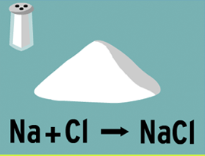
When sodium and chlorine combine to form sodium chloride, sodium chloride is the:

a)

Originator

b)

Reactant

c)

Product

d)

Produce

18.
Is melting butter for popcorn a chemical or physical change?
a)
chemical
b)
physical
19.
A student notices that an inflated balloon gets larger when it is warmed by a lamp. Which best describes the mass of the balloon as a result of this change?
a)
The mass of the balloon increases because the size of the balloon has increased.
b)
The mass of the balloon increases because the temperature of the balloon has increased.
c)
The mass of the balloon stays the same because the gas inside the balloon still has the same mass after it warms up.
20.
Rodney tears a piece of paper weighing 1 oz into small pieces. What most likelyhappens to the weight of the sheet of paper after Rodney tears it into pieces?
a)
The 
b)
The weight is cut in half.
c)
The weight stays the same.