
 Worksheets
Networking Protocols Quiz
Total questions: 54
Worksheet time: 27mins
What is a set of rules used for communication?
Protocol
Network
Ethernet
IMAP
Which suite of protocols is used with wireless networks to enable data transmission through radio signals?
Ethernet
Wifi
IMAP
Cloud computing
What suite of protocols is used with wired networks, ensuring compatibility between different hardware?
Wifi
IMAP
Ethernet
Protocol
What term describes two or more computers connected together, sharing resources?
Protocol
Network
Server
Centralised
What is the term for software and storage used through the internet?
IMAP
Ethernet
Cloud computing
Wifi
Which protocol is used with email to retrieve messages from the server while leaving a copy on the remote server?
IMAP
Protocol
Ethernet
Network
What protocol is used to identify, request, and transfer web pages securely across the internet?
IMAP
Wifi
Securely
Ethernet
What type of network has a central point for sending out communication?
Network
Centralised
Protocol
Server
Which protocol deals with uploading and downloading files from a server?
IMAP
Ethernet
Server
Protocol
Which of the following is NOT one of the four layers of the TCP/IP model?
Link
Internet
Transport
Session
At which layer do the HTTP, HTTPS, SMTP, IMAP, and FTP protocols operate?
Link layer
Internet layer
Transport layer
Application layer
Which protocols operate at the transport layer of the TCP/IP model?
HTTP and HTTPS
TCP and UDP
IP and FTP
SMTP and IMAP
What is the primary function of the IP protocol in the TCP/IP model?
Operates at the link layer
Operates at the internet layer
Operates at the transport layer
Operates at the application layer
What is TCP/IP used for?
To create websites
To transmit data over the internet
To store data locally
To design user interfaces
What does TCP do in the TCP/IP protocol suite?
Encrypts data
Breaks data into packets, distributes them, and reorders them at the destination
Compresses data
Monitors network traffic
What is the role of IP in the TCP/IP protocol suite?
To ensure data is encrypted
To make sure the data arrives at the correct destination
To compress data for faster transmission
To manage user access
How many layers are there in the TCP/IP model?
Two layers
Three layers
Four layers
Five layers
What does each layer of the TCP/IP model do before sending data to the next layer?
Encrypts the data
Performs a series of jobs and packages the data
Compresses the data
Deletes unnecessary data
What is the top layer of the TCP/IP model?
Transport layer
Network layer
Application layer
Data link layer
Which layer of the TCP/IP model is used by applications such as web browsers?
Network layer
Application layer
Transport layer
Physical layer
What is the function of the application layer in the TCP/IP model?
Routing data packets
Preparing data for sending
Error checking
Establishing connections
What do protocols in the application layer help with?
Encrypting data
Decoding received data into a meaningful form
Compressing data
Managing network traffic
What is the role of the transport layer in the TCP/IP model?
It provides physical connections.
It accepts messages from the application layer as application data.
It routes data between networks.
It encrypts data for security.
What does the transport layer do with the data it receives?
It deletes the data.
It encrypts the data.
It splits the data into segments.
It compresses the data.
What information is contained in the header of each segment in the transport layer?
IP address and port number.
Segment number and number of segments.
Encryption key and checksum.
Data type and size.
What is the purpose of a port number in the TCP/IP model?
To identify the physical location of a device
To allocate memory for applications
To specify the sending and receiving of data
To determine the speed of data transfer
Ports in the TCP/IP model can be:
Only physical
Only logical
Both physical and logical
Neither physical nor logical
What role does the operating system play regarding ports in the TCP/IP model?
It creates new ports for each application
It allocates ports for applications to use
It deletes unused ports automatically
It encrypts data sent through ports
What is the third layer of the four-layer TCP/IP model?
Application layer
Transport layer
Internet layer
Network layer
What does the internet layer do in the TCP/IP model?
It sends data to the application layer.
It packages segments into IP packets.
It encrypts data for security.
It manages user sessions.
What information do IP packets include?
Usernames and passwords
Sender and receiver's IP addresses
Data encryption keys
File names and sizes
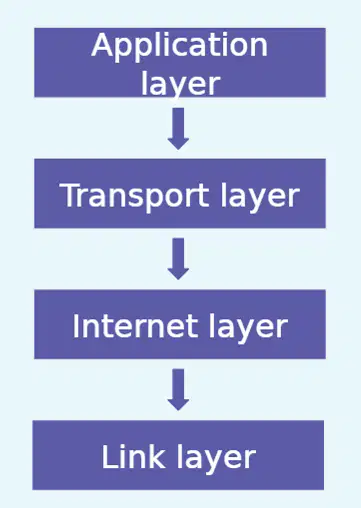
What is the fourth layer in the TCP/IP model?
Application layer
Transport layer
Internet layer
Link layer
What is the primary responsibility of the link layer in the TCP/IP model?
Managing user sessions
Transporting IP packets across links
Encrypting data
Routing data between networks
What determines the protocols used at the link layer?
The type of application
The operating system
The technology used to transmit data
The size of the data packets
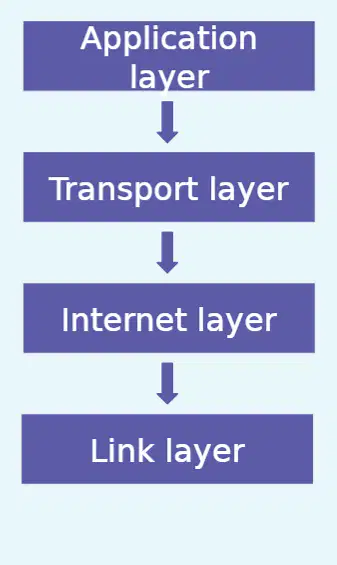
What is the correct order of the four layers in the TCP/IP model from top to bottom?
Application layer, Transport layer, Internet layer, Link layer
Link layer, Internet layer, Transport layer, Application layer
Internet layer, Link layer, Application layer, Transport layer
Transport layer, Application layer, Link layer, Internet layer
Which technology might be used to transmit data from a device to a home router?
WiFi
Bluetooth
Infrared
Satellite
What is the purpose of the link layer in the TCP/IP model?
To encrypt data
To attach a header with the physical location of the next node
To manage user sessions
To route data between networks
What is the physical location in a network known as?
IP address
Domain name
Media Access Control (MAC) address
Subnet mask
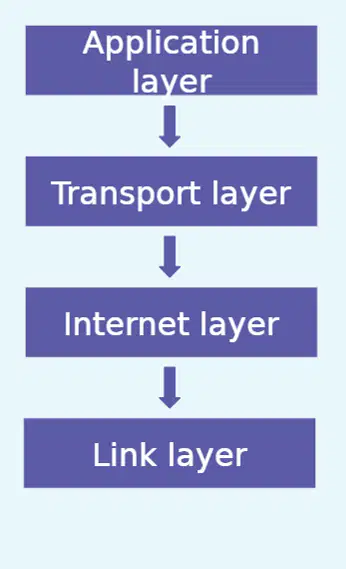
Which layer in the TCP/IP model is responsible for the application services?
Link layer
Internet layer
Transport layer
Application layer
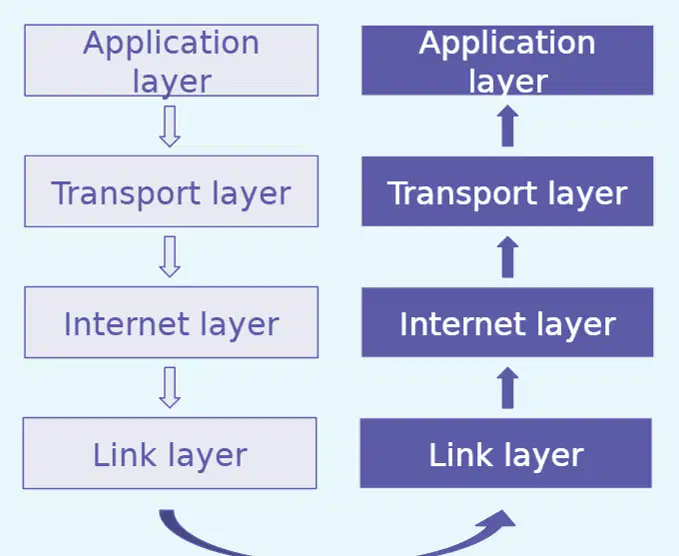
What is the correct order of the layers in the four-layer TCP/IP model when data is received by an end device?
Application layer, Transport layer, Internet layer, Link layer
Link layer, Internet layer, Transport layer, Application layer
Internet layer, Link layer, Application layer, Transport layer
Transport layer, Application layer, Link layer, Internet layer
Which layer of the TCP/IP model is responsible for the actual transmission of data over a physical medium?
Application layer
Transport layer
Internet layer
Link layer
In the TCP/IP model, which layer is directly above the Internet layer?
Application layer
Transport layer
Link layer
Network layer
What is the process called when data is 'wrapped up' with the appropriate header before passing it onto the next layer in the TCP/IP model?
Encryption
Encapsulation
Compression
Decryption
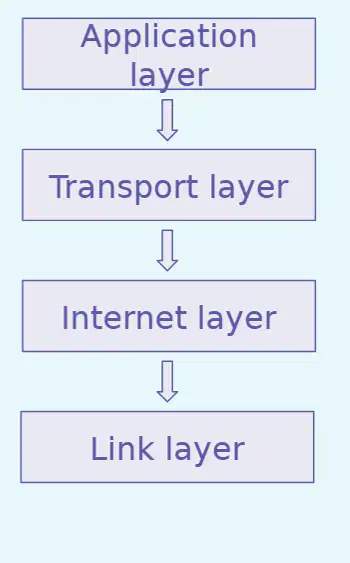
Which layer is the first in the four-layer TCP/IP model?
Transport layer
Internet layer
Application layer
Link layer
In the TCP/IP model, which layer comes directly after the Transport layer?
Application layer
Link layer
Internet layer
Physical layer
What is the process called when data moves up the layers and is unwrapped by each layer?
Encapsulation
Decapsulation
Encryption
Compression
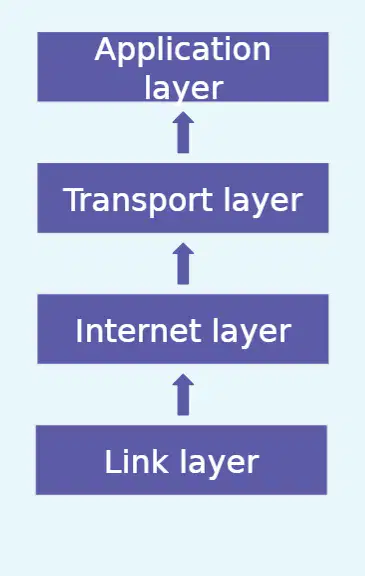
Which layer is at the top of the four-layer TCP/IP model?
Link layer
Internet layer
Transport layer
Application layer
Which layer of the TCP/IP model does the HTTP protocol operate in?
Application layer
Transport layer
Internet layer
Link layer
In which layer of the TCP/IP model does the TCP protocol operate?
Application layer
Transport layer
Internet layer
Link layer
Which layer of the TCP/IP model is responsible for routing packets across networks?
Application layer
Transport layer
Internet layer
Link layer
What layer of the TCP/IP model handles physical network hardware?
Application layer
Transport layer
Internet layer
Link layer
Which layer do the protocols HTTP, HTTPS, IMAP, SMTP, POP, and FTP operate in?
Application layer
Transport layer
Internet layer
Link layer
Which layer do the protocols TCP and UDP operate in?
Application layer
Transport layer
Internet layer
Link layer
Which layer does the IP protocol operate in?
Application layer
Transport layer
Internet layer
Link layer

