
 Worksheets
5.6A Properties of Matter
Total questions: 165
Worksheet time: 3hrs 40mins
The amount of space an object takes up.
Volume
Density
Mixture
Mass
How tightly packed matter is in an object.
Volume
Density
Mass
Mixture
When two or more substances are put together.
Volume
Density
Mixture
Mass
When one substance dissolves into another.
Volume
Mixture
Density
Solution
Sometimes when mixing two substances something new will be created because of a ____________________.
Volume
Chemical Reaction
Physical Reaction
Mass
The measure of the force of gravity on an object.
Weight
Mass
Mixture
Density
If you traveled from Earth to the moon, your weight would change due to __________ gravity than the Earth’s gravity.
more
less
If you traveled from Earth to the moon, your mass would NOT change.
True
False
The measurement of how much matter is in an object.
Weight
Density
Mass
Volume
The unit of measurement used for mass in physics.
Newton
Kilograms
The unit of measurement used for weight in physics.
Newton
Kilograms
_____________ stays the same no matter where you are.
Mixture
Mass
Weight
Volume
What is a physical property?
A force of attraction of a magnet
A material that allows electricity or heat to flow through it
A characteristic of matter that can be observed or measured and can be changed without changing the matter itself
The ability to float
What does classify mean?
Dissolve a substance in another
Organize a group of things or people into categories based on shared qualities or characteristics
The amount of matter an object has
The force of attraction of a magnet
What is matter?
A state of matter that has a fixed volume, but its shape changes
Anything that has mass and occupies space
The amount of space an object occupies
A state of matter that does not have a fixed shape or volume
Which term best describes a solid?
A state of matter that has a fixed shape and volume
A state of matter that does not have a fixed shape and its volume changes
A state of matter that does not have a fixed shape or volume
A material that does not allow electricity or heat to flow through it
What is relative density?
The ability of an object to float
The amount of space an object occupies
Determines whether a substance will sink or float in another substance
The ability of a substance to dissolve in another substance
What is solubility?
The amount of matter an object has
The ability of a substance to dissolve in another substance
The force of attraction of a magnet
A material that does not allow electricity or heat to flow through it
What does dissolve mean?
Change the shape of a liquid to match the shape of its container
Break into pieces so small that they can no longer be seen
Have a fixed shape and volume
Not allow electricity or heat to flow through a material
What is a conductor?
A material that does not allow electricity or heat to flow through it
A material that allows electricity or heat to flow through it
The amount of space an object occupies
The ability of an object to float
What is an insulator?
A material that allows electricity or heat to flow through it
A material that does not allow electricity or heat to flow through it
The amount of matter an object has
The ability of a substance to dissolve into another substance
What is state of matter?
form of matter (solid, liquid, gas)
a state of matter that has a fixed shape and volume
a state of matter that has a fixed volume, but its shape changes to match the shape of its
container
anything that has mass and takes up space
Which term best describes a liquid?
a state of matter that has a fixed volume, but its shape changes to match the shape of its
container
a state of matter that has a fixed shape and volume
a state of matter that does not have a fixed shape or volum
the amount of matter an object has
Which term best describes a gas?
a state of matter that does not have a fixed shape or volume
a state of matter that has a fixed volume, but its shape changes to match the shape of its
container
a state of matter that has a fixed shape and volume
What is mass?
the amount of matter an object has
the amount of space an object takes up
it determines whether one substance will sink or float in another substance
the ability to float
What is volume?
the amount of space an object takes up
the ability of a substance to dissolve in another substance
a state of matter that has a fixed shape and volume
form of matter (solid, liquid, gas)
What is buoyancy?
pulling force of magnet
the ability of a substance to dissolve in another substance
the ability to float
material that allows electricity or heat to flow through
What is magnetism?
material that does not allow electricity or heat to flow through
pulling force of magnet
to break up into tiny pieces you can no longer see
material that allows electricity or heat to flow through

Bobby is investigating magnets. He wants to find out whether a magnet can pick up a paper clip through paper, glass, and other materials.
He may not remember what materials he tested.
No one will be able to understand his hypothesis.
His results won’t be accurate.
Someone else can replicate the experiment to check his results.
Scientists conducting research found a new type of plastic. They are doing experiments to learn about its properties. Why would the scientists want to repeat their experiments?
to check that this plastic is the same as another plastic
to make sure the data they collect are accurate
to test different plastics
to try to color the plastic different colors
Ally is making a graph to show the length of time different brands of batteries lasted in a flashlight. Which type of graph would best show the data?
bar graph
circle graph
line graph
picture graph
Carina thinks that there are more frogs in the pond by her house when the water temperature is higher. She is making a chart to use as she gathers data to see whether she is correct. What data should Dora record on her chart?
date, air temperature, wind speed, number of frogs
date, time, air temperature, number of frogs
date, time, water temperature, number of frogs
time, air temperature, water temperature
Thomas and Michael are comparing the properties of different samples of sand. They have recorded the colors and described the sizes of the particles. They will use a beaker to measure each sample. Which property of matter are they recording?
mass
temperature
texture
volume
Robert and Sammy are comparing some substances. They are using the properties of texture, hardness, flexibility, and magnetic attraction. Which types of substances are they comparing?
liquids and gases
only liquids
only solids
solids and liquids
A substance can be identified based on its physical properties. Which of the following is a physical property of a liquid?
It has no mass.
It has a rough texture
It has indefinite volume.
Its shape can change.
Scientists have spent many decades developing a theory about what makes up all matter. Which of the following statements is true?
All matter is made of small particles.
All matter has color.
All matter is alive.
All matter has an odor.
Richard knows that matter has mass and takes up space. Which of these is NOT an example of matter?
Orange juice
Soft pillow
Cloud in the sky
Beam of light

Carlos is comparing magnets by counting the number of steel paper clips each will pick up. He concludes that some magnets are stronger than others. Which of these observations provides evidence to support his conclusion?
All of the magnets were different sizes.
None of the magnets picked up all the paper clips.
Some magnets picked up more paper clips than other magnets.
The magnets were not all the same color.

Jill and Carissa are doing a class demonstration to show that solids, liquids, and gases all have mass. They use a balance for the solids and the liquids. Which is the best way for them to show that air has mass?
Compare the masses of full and empty balloons
Use a fan to make a current of air
Put an empty bottle on the balance
Heat water to show it changing to water vapor

According to the scientific theory of atoms, every atom is made up of even smaller particles.
Which of the following statements is true?
Solids are made of atoms, but gases are not.
Gases are made of atoms, but liquids are not.
Gases and liquids are made of atoms, but solids are not.
Solids, liquids, and gases are all made of atoms.

Caroline watched her father boil some water to make tea and realized that this was an example of a physical change.
Which property of water does NOT change when it boils?
Mass
Volume
Shape
Temperature
Sean knows that a liquid has a definite volume, but changes shape very easily. He is drawing a picture to show this idea. Which picture should he draw to best show his understanding of liquids?
rain falling from the sky
a pot of boiling water
a snowman melting
juice being poured into a glass
Evelyn poured some milk into a glass. How does this action show that milk is a liquid and not a solid?
The milk does not evaporate after it is poured
The milk takes the shape of the container
The milk changes temperature after it is poured
The amount of milk changes as it is poured into the glass
Melting is a physical change. How does the mass of a melted ice cube compare to the
mass of the solid ice cube.
The mass is the same.
The mass of the ice cube is greater.
The mass of the melted ice is greater.
There is no way to measure mass.
Which of the following is not a physical property of matter?
temperature
mass
volume
burning
Which of the following is NOT a state of matter?
Solid
Liquid
Mass
Gas
A heavy brick weighs more than a fluffy cushion, but the cushion takes up more space. Which object has more matter?
The brick because it has a greater volume.
The brick because it has a greater mass.
The cushion because it has a greater volume.
The cushion because it has a greater mass.
Is Goop a Solid or a Liquid?
Solid
Liquid
Both a solid and a liquid
Neither a solid or a liquid

_____ have molecules that are packed together and hardly move.
solids
liquids
gases
plasma
____ have a definite volume and molecules that are spread out and can move past one another.
solids
liquids
gases
plasma
____ have molecules that can spread out far from each other and move quickly.
solids
liquids
gases
plasma
____ keep their size but not their shape.
solids
liquids
gases
plasma
Which phase of matter has a definite volume and definite shape?
solid
liquid
gas
___ is anything that takes up space and has mass.
Density
Weight
Volume
Matter
____ is the amount of space an object takes up.
Matter
Volume
Density
Mass
Which tool would you use to measure the volume of a liquid?
balance
thermometer
ruler
graduated cylinder
Which tool would you use to measure the temperature of a cup of sand?
thermometer
balance
graduated cylinder
ruler
_____ determines whether an object will sink or float in water.
Mass
Weight
Density
Volume
Which property of matter would stay the same after a crayon is melted.
shape
state
texture
mass
Atoms always have the same form.
True
False
Which phase of matter has no definite shape and no definite volume?
solid
liquid
gas
Which phase of matter has a definite volume but not a definite shape?
solid
liquid
gas
Atoms are a basic unit of matter.
True
False
Atoms are too small to see without magnification.
True
False
Atoms combine to form molecules.
True
False
Atoms help us understand the nature of all matter.
True
False
A material's ___ does not change if you cut it up or change its shape.
weight
mass
volume
density
Which tool should you use to measure the mass of pencil?
thermometer
balance
graduated cylinder
ruler
What material can conduct heat and electricity, can be hammered into a shape, or drawn into a wire.
metal
plastic
fabric
glass
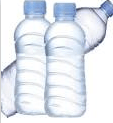
What is this material?
Plastic
Metal
Glass
Cardboard

Which of these are properties of glass?
Bendy
Transparent
Dull

Mass is -
the amount of matter in an object
the density of a material
the amount of force a material has
the concentration of matter in an object.
Bob found a metal can of soup. Which list describes the most likely physical property of the can?
shiny, hard, reflective
very soft, conducts heat
conducts electricity, square
magnetic, flexible, very soft

Weight is -
the force of gravity on an object
the amount of matter in an object
never changes
is how much a material can move
Which object has a physical property that conducts electricity?
foam cup
metal fork
plastic knife
wooden spoon
Anything that has mass or takes up space.
mass
matter
volume
state
The amount of space something takes up.
volume
mass
weight
state
Whether something is attracted to a magnet
solubility
conductivity
mass
magnetism
Measured using a thermometer.
mass
volume
temperature
atmospheric pressure
Measured in grams.
mass
volume
A property of matter that can be measured or observed using the 5 senses.
states of matter
physical properties of matter
Measured using a graduated cylinder.
mass
volume
Whether something is a solid, liquid, or gas.
properties of matter
states of matter
How much matter is in something.
mass
volume
Whether something will sink or float.
mass
volume
density
solubility
How hot or cold something is.
volume
mass
temperature
Measured using a balance.
mass
volume
density
Measured in degrees Celsius.
temperature
mass
volume
Measured in liters (or milliliters).
mass
volume
Students have two blocks that are the same size. They drop each block into a beaker of water. Why does Block 1 float and Block 2 sink?
Block 1 is made of a different material than Block 2
Block 1 is smaller than Block 2
Block 1 absorbs more water than Block 2
Block 2 has less mass than Block 1

A student makes a table to classify substances as solids, liquids, or gases. The student's table is shown. How many substances listed can be identified as solids, liquids, or gases?
1 solid, 1 liquid, 2 gases
2 solids, 1 liquid, 1 gas
1 solid, 2 liquids, 1 gas
2 solids, 2 liquids, 0 gases

Four students sort materials into two groups: Conductors and Insulators. Which student correctly sorted the materials?
Student 1
Student 2
Student 3
Student 4
Which of these materials would NOT be a good insulator of electricity?
metal
glass
plastic
wood
As an object melts, what happens to it's temperature?
it increases
it decreases
it stays the same
Which substance is NOT soluble in water?
powdered drink mix
sugar
salt
sand

During a science investigation, a student determined how objects could be classified. Based on the properties, which of the following materials has the same physical properties as Object B?
iron nail
salt
sand
penny

The table shows how a student sorted objects by properties. Based on the information collected for both groups, which is the best title for Group 1?
Objects That Conduct Electricity
Objects That Make Good Insulators
Objects That Are Magnetic
Objects That Float
Which tools are best for separating a mixture of sand, iron filings, and water?
hot plate and filter
tweezers and filter
filter and magnet
magnet and hot plate
Which substances, when mixed together, maintain their original physical properties?
gravel and water
wood chips, water, and sand
sand and water
all of these
As a liquid evaporates, what happens to the volume of the liquid?
it increases
it decreases
it stays the same

Students create a mixture using the ingredients shown. Could a coffee filter be used to separate the mixture?
Yes, because when the mixture is poured into the filter, the beans will remain in the filter and the rice will pass through the filter
Yes, because both the beans and the rice will pass through the filter
No, because both the beans and the rice will remain in the filter
No, because both the beans and rice will pass through the filter

The picture shows a solution. Which of the following pieces of equipment should be used to separate this mixture?
hot plate
magnet
balance
filter

Based on the information in the table, which substances could be sugar?
1 and 2
2 and 4
1 and 3
2 and 3
A student stirs lemon juice and sugar into a glass of water. Why is this drink considered a solution?
the lemon juice and sugar change the taste of the water
the water changes color
the lemon juice and sugar dissolve in the water
the student stirs the mixture
A beaker contains a mixture of salt, sand, gravel, and iron filings. Which substance is soluble in water?
salt
sand
iron filings
gravel
Which process can be used to separate the ingredients in a solution?
you can't separate solutions
pouring the solution through a filter
evaporating the solid
evaporating the liquid
A mixture of oil and water is placed in a glass beaker and stirred. What is the student most likely going to see after the beaker sits for 3 minutes?
the oil mixed with the water
the oil sinking in the water
the oil floating in the water
the water floating in the oil

Which solid has the highest density?
bolt
ping pong ball
cherry tomato
popcorn kernel

Which liquid has the highest density?
honey
lamp oil
water
maple syrup

Jennifer made a milkshake using 110g of ice cream, 250g of milk, and 10g of chocolate syrup. What is the total weight?
310g
350g
370g
385g
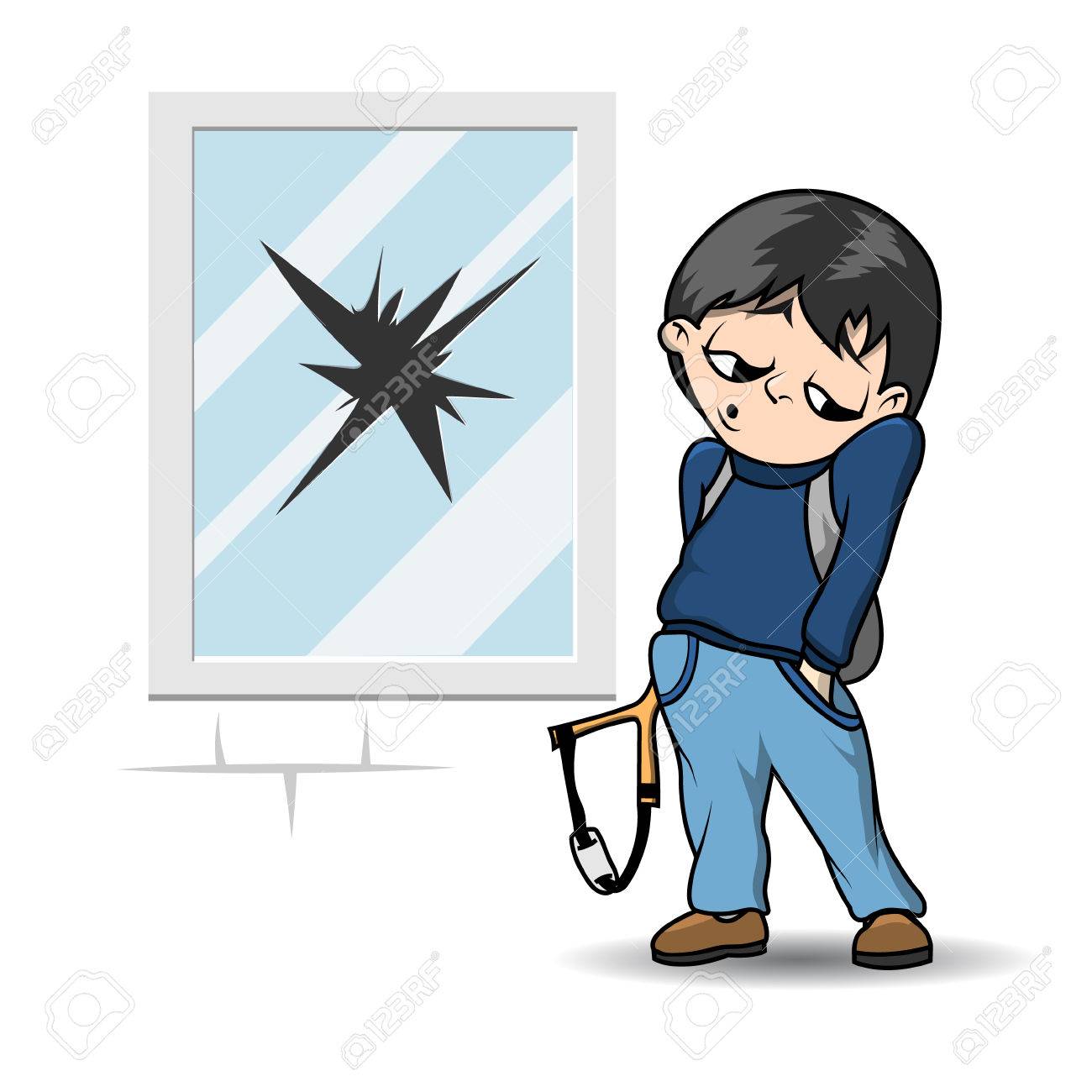
What kind of change is breaking a window?
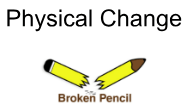
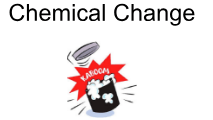
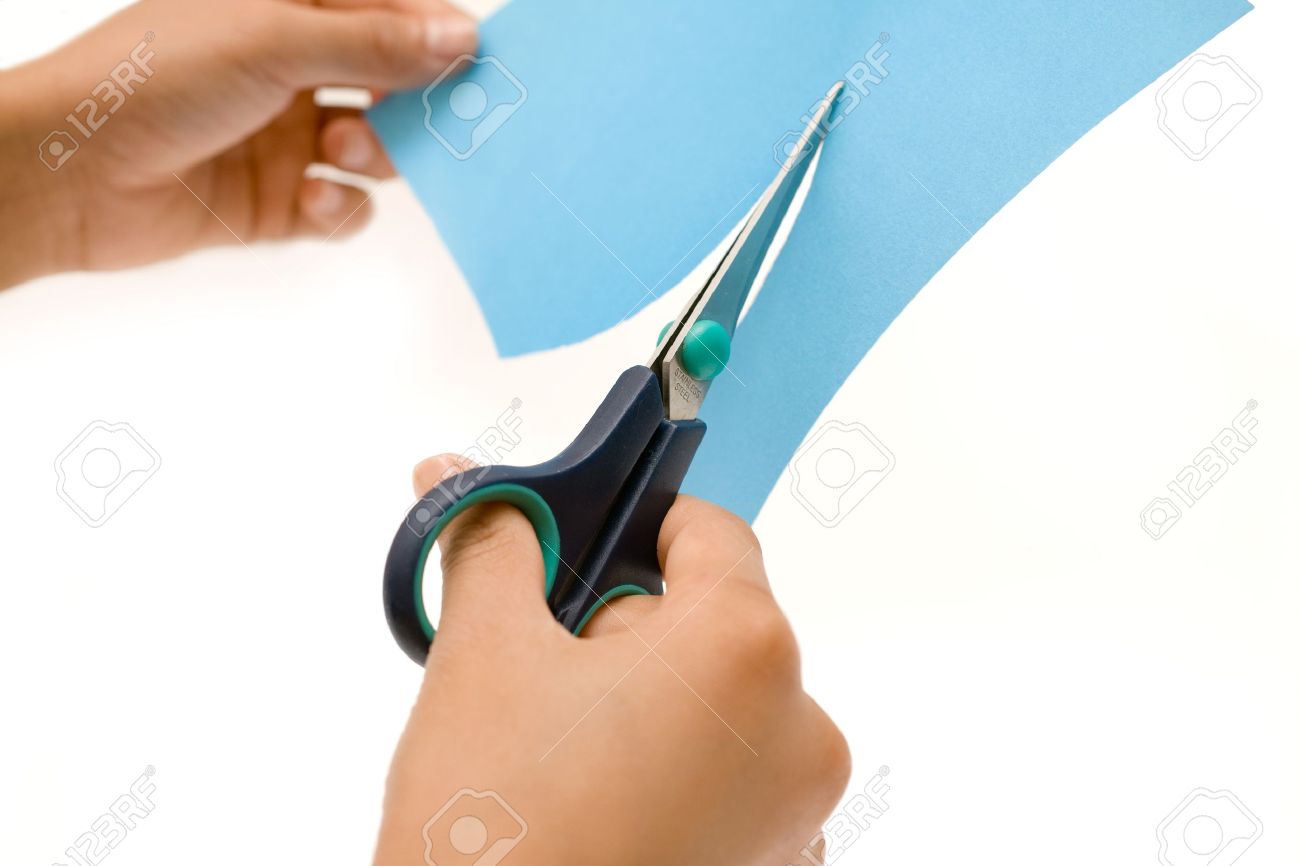
What kind of change is cutting paper?

What kind of change is exploding fireworks?
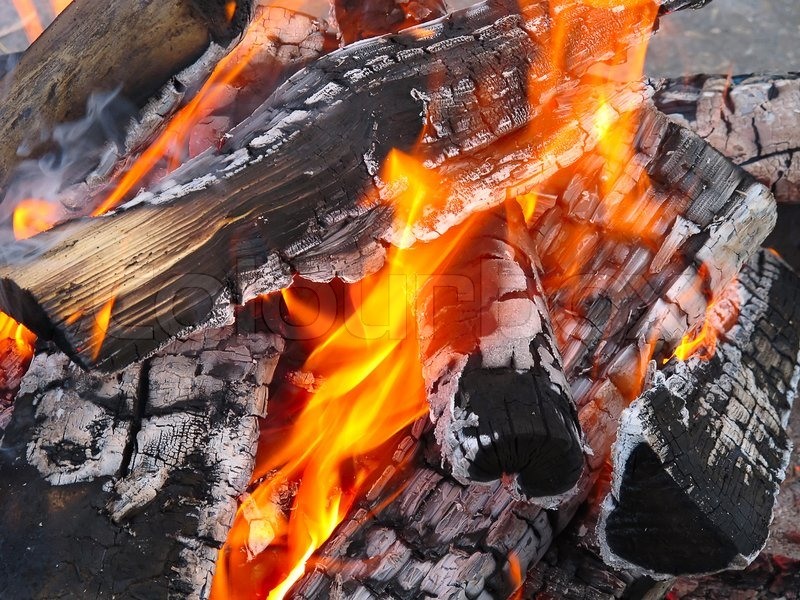
What kind of change is burning wood?

Grant cuts a one-pound cake into 8 slices. How much does the cake weigh after he cuts it?
1/4 pound
1/8 pound
1 pound
8 pounds
Metal rusting is an example of
a chemical change
physical change
neither physical or chemical change

Peggy makes a clay flower vase that weighs 5 lb. How much clay did she have to use?
5 lb
5.5 lb
6 lb
10 lb
In which of the following states of matter does a substance have a definite shape?
liquid
ion
solid
gas
Which of the following is NOT a physical change?
explosion of fireworks
drying of wet laundry
freezing of water
shattering of glass

Awa made vegetable soup using 10g of carrots, 25g of onions, 2g of potatoes, and 20g of water. What is the weight of the soup?
60g
20g
37g
57g
Burning paper is an example of
physical change
chemical change
neither physical or chemical change
What key words, when present in a question about chemical reactions, might indicate a chemical change is occuring? Check all that apply.
Bubbling
Fizzing
Dissolving
Evaporating
What are the three states of matter?
solid, liquid and gas
water, liquid gas
gas, dust, liquid
water, solid, ice

Mrs. Job does an experiment with 7 oz of vinegar and 4 oz of baking soda. The container weighs 5 oz. What is the weight?
10 oz
12 oz
16 oz
17 oz
The particles in a solid are...
loose and have high energy
tightly packed and have very little energy
move freely and have lots of energy
I dont know Ms. Turner, I didnt take notes
The particles in a liquid are...
loose and have high energy
tightly packed and have very little energy
move freely and have lots of energy
I dont know Ms. Turner, I didnt take notes
The particles in a gas are...
loose and have high energy
tightly packed and have very little energy
move freely and have lots of energy
I dont know Ms. Turner, I didnt take notes

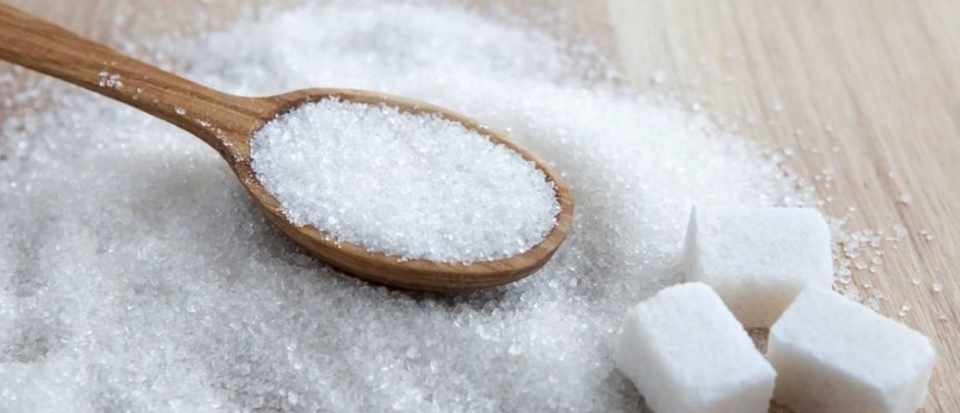
What happens when sugar dissolves in water?
Physical change because a new substance is formed
Chemical change because a new substance is formed
Physical change because the sugar is just getting smaller
Chemical change because the sugar is just getting smaller



