
 Worksheets
8th Grade Science Q1
Total questions: 60
Worksheet time: 2hrs 40mins
The relationship between electricity and magnetism
Electricity
Magnetism
Electromagnetism
Gravitational Pull
A physical phenomenon produced by the motion of electric charge, resulting in attractive and repulsive forces between objects.
electricity
magnetism
electromagnetism
Gravitational pull
A soft metal core made into a magnet by the passage of electric current through a coil surrounding it.
Generator
Solenoid
Tesla Coil
Electromagnet
A machine for converting mechanical energy into electricity.
Generator
Transformer
Motor
Turbine
An electrical machine that converts electrical energy into mechanical energy.
Windmill
Turbine
Electric Motor
Electric Generator
A region around a magnetic material or a moving electric charge within which the force of magnetism acts.
Magnetic Field
Magnetic Forcefield
Magnetic Force
Zone of Magnetism
A push or a pull
Force
Inertia
Domain
Velocity
A force applied to an object by another body that is not in direct contact with it.
Contact Force
Noncontact Force
Magnetic Force
Attractive Force
The sum of all of the forces acting on an object. If it is in the same direction, you will add; if it is in opposite directions, you will subtract.
Force
Total Force
Net Force
Air Force
A property of matter by which it continues in its existing state of rest or uniform motion in a straight line, unless that state is changed by an external force.
Inertia
Acceleration
Attraction
Velocity
The amount of matter within an object.
Weight
Mass
Atomic Number
Density
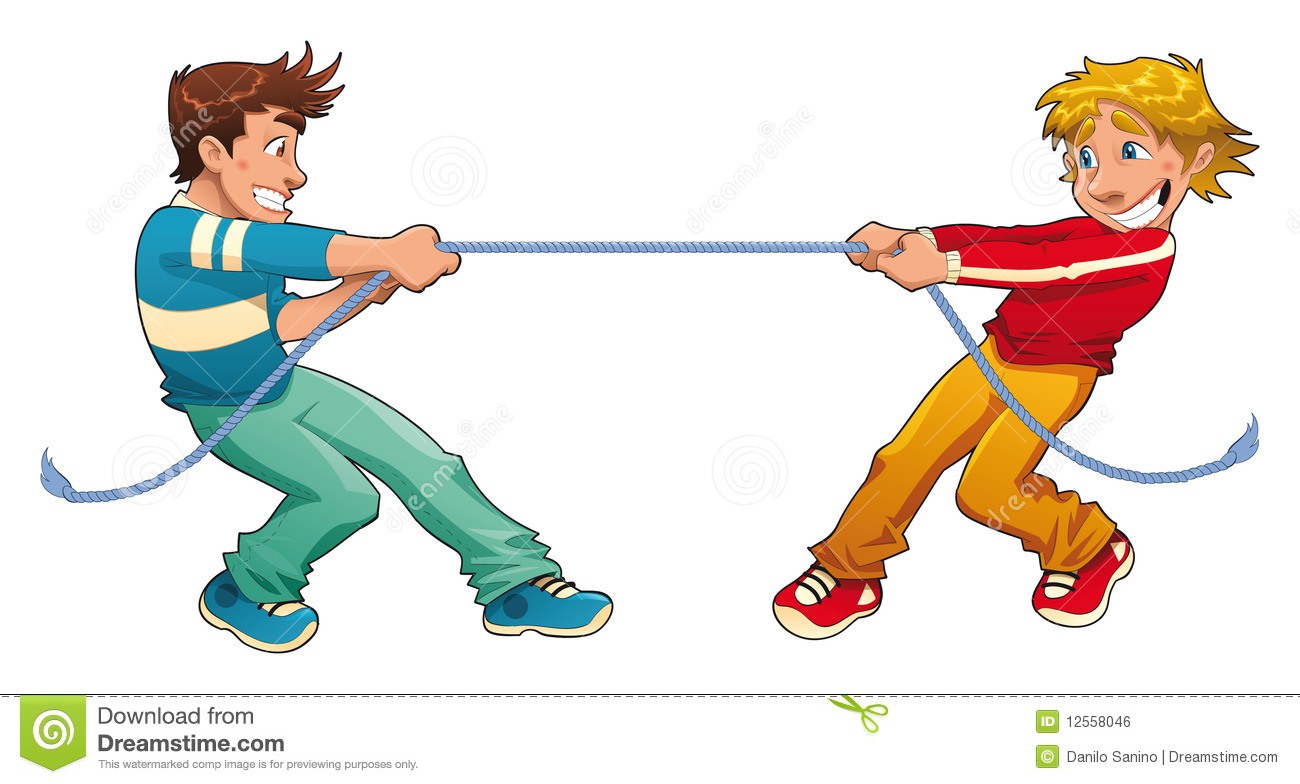
What causes objects to move?
Balanced forces
Unbalanced forces
Zero Gravity
Inertia
A rocket's action is to push down on the ground with the force of its powerful engines. The reaction is that the ground pushes the rocket upwards with an equal force, but opposite in direction. Which law best explains this event?
1st Law - The Law of Inertia
2nd Law - The Law of Acceleration
3rd Law - The Law of Action/Reaction
The Law of Gravity
What unit is used to measure force?
inches
centimeters
grams
Newtons
Which law of motion?
It is harder to push a full grocery cart than an empty grocery cart.
1st Law - Law of Inertia
2nd Law - Law of Acceleration
3rd Law - Law of Action/Reaction
Law of Gravity
Which law of motion?
A car stops suddenly. The passengers are thrown forward until they are caught by their seatbelts.
1st law - Law of Inertia
2nd Law - Law of Acceleration
3rd Law - Law of Action/Reaction
Law of Gravity
Any change in an object's speed or direction
Inertia
Force
Acceleration
Reaction

Speed is how fast an object is moving while velocity is
speed with acceleration
speed with a direction
speed of an object plus the mass
speed of an object plus the gravity


What is this?
A car is traveling 50 mph.
Speed
Velocity
Acceleration

What is this?
"This airplane is traveling at 500 mph, West"
Speed
Velocity
Acceleration

What is this?
"Rocky is running 8mph North"
Speed
Velocity
Acceleration
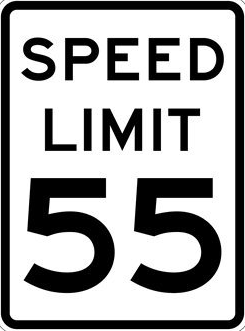
What is this?
Speed
Velocity
Acceleration

What is this?
Speed
Velocity
Acceleration
You push a couch to the right with a force of 20N. Your dad helps you push the couch to the right with a force of 40 N. What is the net force on the couch?
60 N right
20N left
60 N left
20 N right
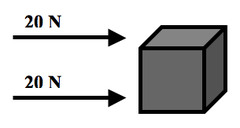
What is the net force?
20 N left
0 N Balalnced
20 N right
40 N right

How will this object move?
0 N Left
20N Right
80N Right
80N Left


What is the net force?
400 N Up
400 N Down
800 N Up
800 N Down

How much force is needed to accelerate a 25kg bowling ball at 2m/s2.
50N
5N
12.5N
100N

If a 2kg bird is pushed by the wind with a force of 2N, how fast does the bird accelerate?
1 m
2 m/s2
4m/s2
1 m/s2
An object with a force of 12N is accelerating at 6m/s2. What is the mass of the object?
2Kg
72Kg
0.5Kg
18Kg
What is the equation for Force?
mass times acceleration
force divided by mass
force dividied by acceleration
mass divided by acceleration
What is the equation for Mass?
mass times time
force divided by mass
force dividied by acceleration
mass divided by acceleration
What is the equation for Acceleration?
mass times time
force divided by mass
force dividied by acceleration
mass divided by acceleration


Subatomic particles with a negative charge
Electrons
Neutrons
Protons
Quarks

Which part of the diagram represents the proton?
a
b
c
d


Which TWO particles can be changed within an element without changing what the element is?
Neutrons
Electrons
Protons

