
 Worksheets
Static & Direct Current Electricity (E1)
Total questions: 19
Worksheet time: 30mins
What is static electricity and how does it work?
The flow of electric current through a conductor, typically involving a continuous movement of electrons.
The energy produced by the movement of protons within an atom, causing a magnetic field.
The build-up of electric charge on the surface of objects, which occurs when electrons are transferred from one object to another, often through friction.
The result of chemical reactions that produce heat and light, similar to combustion.
What natural phenomenon is an example of static electricity discharge?
Earthquake
Tornado
Lightning bolt
Rainfall

What is shown in Figure 1.66?
Magnetic field lines
Radial electric field lines from an isolated point charge
Gravitational field lines
Thermal field lines
In the formula I = q/t, what does 'q' represent?
Voltage
Resistance
Charge
Power
What is the relationship between the force and the distance between two charged objects according to Coulomb's law?
Directly proportional
Inversely proportional
No relationship
Exponentially proportional

What is the nature of the force between two unequal and opposite charges?
Positive
Neutral
Negative
Zero
What is the value of the permittivity of free space (ε0)
8.85×10⁻¹⁰
8.85×10⁻¹²
8.85×10⁻¹⁴
8.85×10⁻⁶
What is the unit of distance in Coulomb's law?
Newtons (N)
Meters (m)
Coulombs (C)
Farads (F)
What is the equation for permittivity of free space (ε₀)?
ε₀ = D/E
ε₀ = E/D
ε₀ = D²/E
ε₀ = E²/D
What does the variable 'V' represent in the formula E = V / d?
Velocity
Voltage
Volume
Viscosity
What does the variable 'd' represent in the formula E = V / d?
Density
Diameter
Distance
Displacement
What is the potential difference measured in?
Amperes
Volts
Ohms
Farads
What is the role of the dielectric in a parallel plate capacitor?
It increases the capacitance by increasing permittivity.
It decreases the capacitance by decreasing permittivity.
It increases the distance between the plates.
It decreases the area of the plates.
Which material is NOT an electrical conductor?
Steel
Silver
Dry wood
Sea water
Which of the following is a property of insulators?
Allow free flow of electrons
Tightly bound electrons
Conduct electricity
Convert electricity to heat
Match the correct Symbol and component name

Capacitor

Variable Capacitor
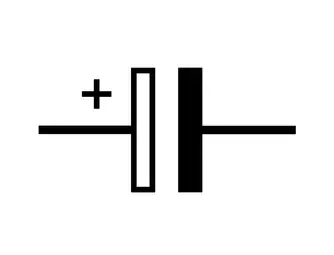
Polarized Capacitor
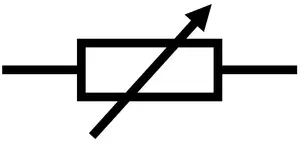
Variable Resistor
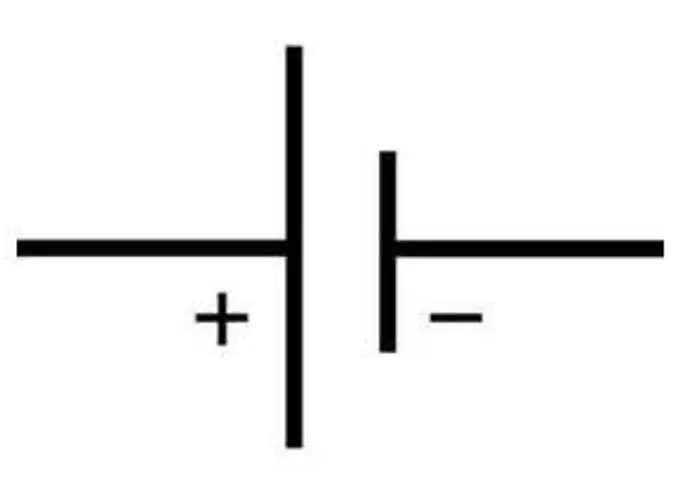
Battery
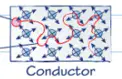
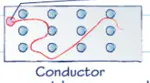
Which diagram represents a conductor at a higher temperature
Resistance & resistivity should not be confused. The (a) of a given sample of material is dependent on the (b) of the sample. (c) is a (d) of the material itself and so is the same for that sample of that material of any (e)
Organize these options into the right categories
often used in relation to liquids
constant for a material
depends on how easily the free electrons can move
symbol sigma (σ)
often used in relation to solids
depends on how easily the free electrons can move
units ohm meters (Ωm)

