
 Worksheets
Astro 1500 Trivia October 3 (Lecture 11)
Total questions: 9
Worksheet time: 6mins
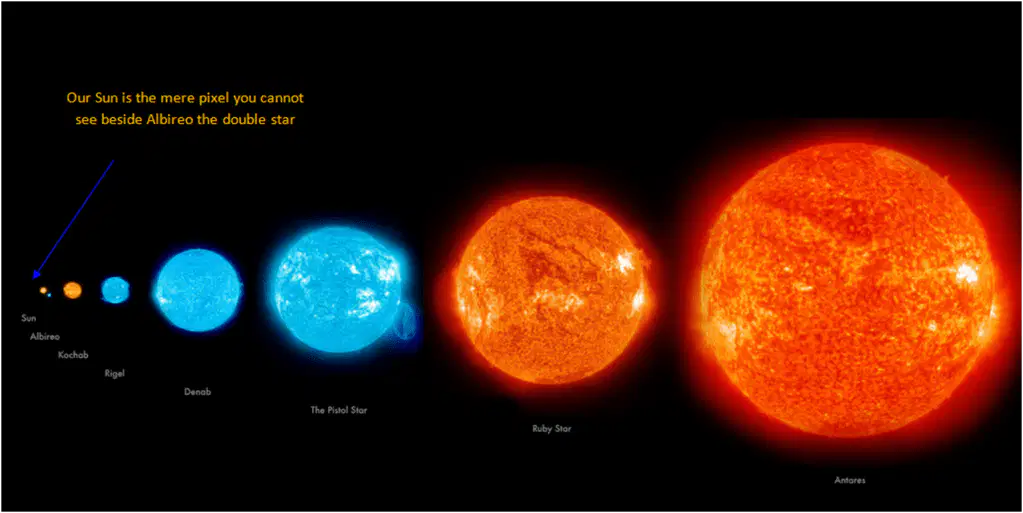
The spectral classes, O B A F G K M, are an analogue for...
Temperature
Mass
Radius
Distance

Why don't O-type stars have hydrogen lines in their spectra?
They aren't made of hydrogen
They're too cold to excite hydrogen atoms
They're so hot they ionize the hydrogen
They're blocked out by other atoms' lines
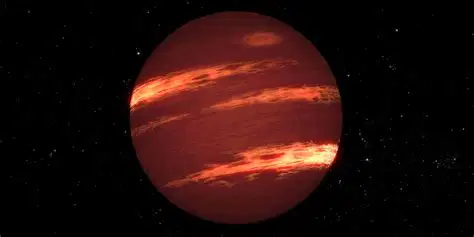
Which of the following is FALSE about brown dwarfs?
They're all nearly the same size
They slowly cool off and move through the L, T, and Y spectral types
They fuse regular hydrogen
The have masses between 13 and 80 times that of Jupiter
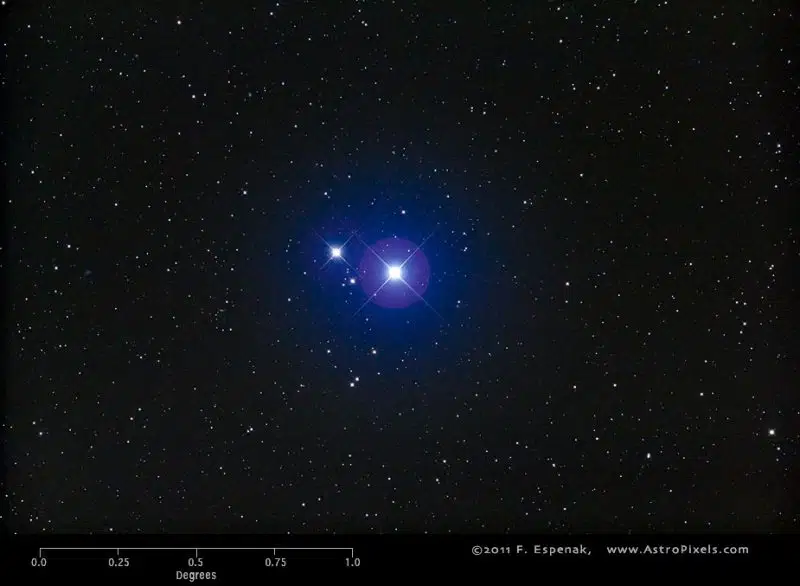
Which kind of binary does not actually have the stars orbiting each other?
Spectroscopic binary
Visual binary
Optical double

Why are binary stars important in astronomy?
They are rare and interesting
They help us learn stellar spectral types
They help us learn stellar masses
They're not important unless you study binary stars
Most stars masses are...
Less than the Sun's mass
Similar to the Sun's mass
Greater than the Sun's mass
There are about as many stars with masses less than and greater than the Sun's
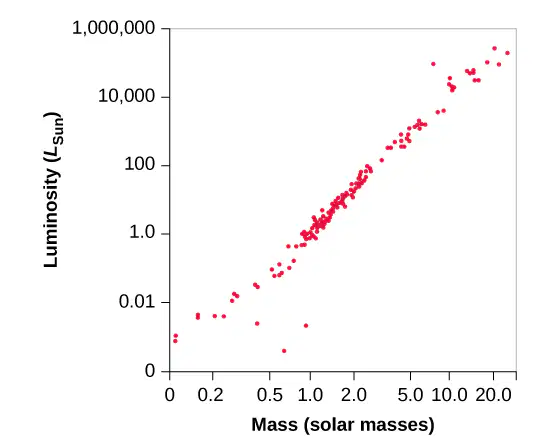
The mass luminosity relation is that a star's luminosity is proportional to its mass to about the fourth power ( L∝M4 ). If a star has twice the mass of the sun, its luminosity compared to the Sun's luminosity is...
2x greater
4x greater
8x greater
16x greater
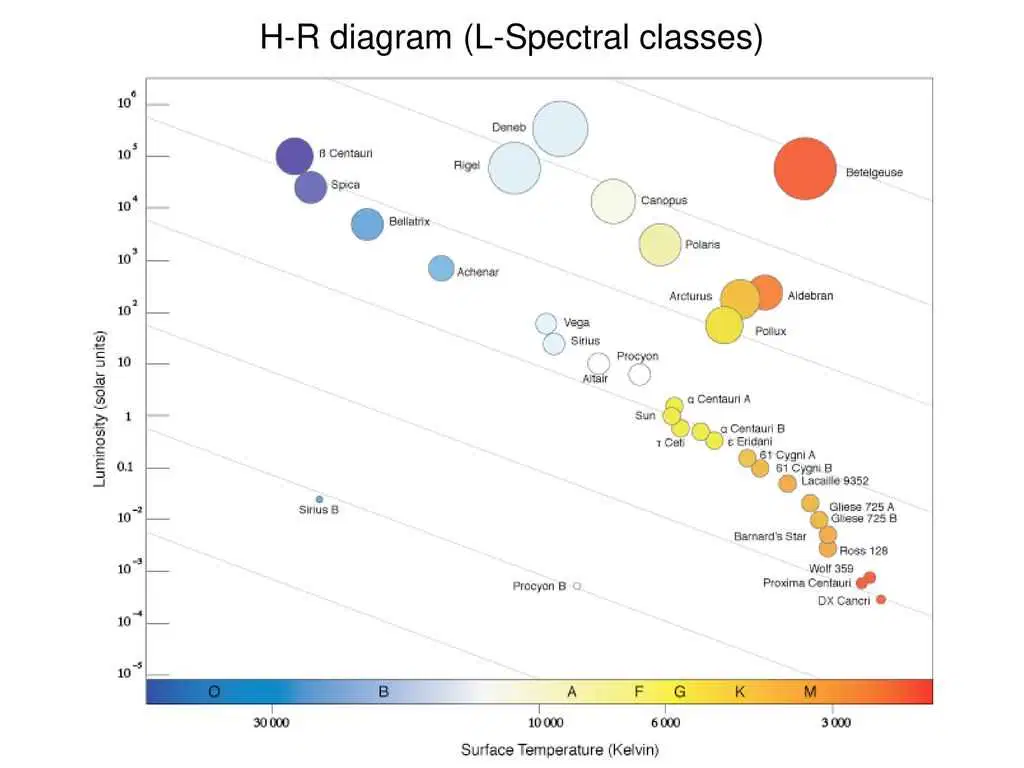
The top right of the HR diagram has _______ stars, the long middle band has _______ stars, and the bottom left has ________ stars.
White dwarf, giant, main sequence
White dwarf, main sequence, giant
Giant, white dwarf, main sequence
Giant, main sequence, white dwarf
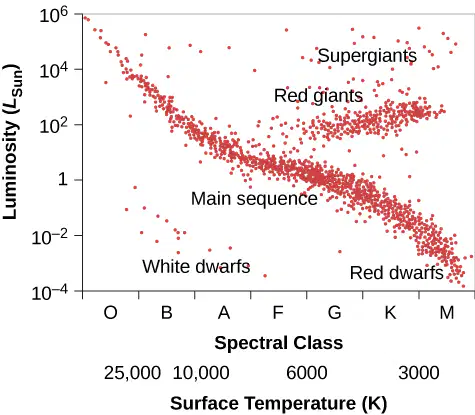
If an ambitious astronomer is making an HR diagram of all stars that they can see with the unaided eye, which stars will be underrepresented?
Red dwarfs
Sun-like stars
Red giants
Blue giants

