

wayground logo

Free Printable Worksheets

NEW

Font size

S
M
L
XL
Worksheets

College A&P Biochemistry

Total questions: 37

Worksheet time: 23mins
Name
Class
Date
1.
Glucose is a _____.
a)
carbohydrate
b)
lipid
c)
protein 
d)
nucleic acid
2.
Proteins are composed of what smaller building blocks?
a)
amino acids
b)
nucleic acids
c)
fatty acids
d)
nucleotides
3.
Which group of organic molecules serve as long-term energy storage and make the cell membrane is?
a)
proteins
b)
carbohydrates
c)
lipids
d)
nucleic acids
4.
The primary purpose the body uses monosaccharides for is?
a)
Building muscles
b)
Helping the Immune System
c)
Immediate Energy
d)
Generating Heat
5.
Also known as simple sugars, these are the monomers of carbohydrates.
a)
lipids
b)
nucleotide
c)
monosaccharide
d)
monomer
6.
Building blocks of polymers.
a)
monomer
b)
polypeptide
c)
monosaccharide
d)
glycerol
7.
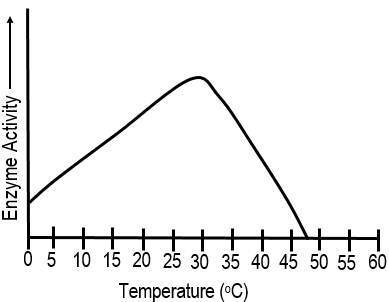
Based on the graph, what temperature does this enzyme work best? 
a)
15 C
b)
40 C
c)
30 C
8.
Which of the following binds to the active site of an enzyme? 
a)
substrate
b)
product
c)
codon
d)
none of the above
9.
Letter D...
a)
active site
b)
enzyme
c)
substrate
d)
products
10.
Letter C...
a)
active site
b)
enzymes
c)
substrate
d)
products
11.
Enzymes are
a)
nucleic acids
b)
proteins
c)
lipids
d)
carbohydrates
12.
Which of the following is NOT a biomolecule?
a)
Water
b)
Nucleic Acid
c)
Protein
d)
Lipid
13.

Which group contains only molecules that are each assembled from smaller organic compounds?

a)

proteins, water, DNA, fats

b)

proteins, starch, carbon dioxide, water

c)

proteins, DNA, fats, starch

d)

proteins, carbon dioxide, DNA, starch

14.

The diagram below represents a sequence of events that occurs in living things. Letter X represents

a)

inorganic molecules

b)

organic molecules

c)

biological catalysts

d)

simple sugars

15.

Proteins, starch, and DNA are similar in that they are all

a)

organic compounds

b)

parts of genes

c)

made of amino acids

d)

made of simple sugars

16.

The accompanying diagram illustrates a biochemical process that occurs in organisms. The substance labeled “catalyst” is also known as

a)

hormones

b)

antibodies

c)

enzymes

d)

an inorganic compound

17.

Which substances are necessary for the synthesis of most materials in an organism?

a)

carbohydrates

b)

enzymes

c)

hormones

d)

antibodies

18.

Which statement describes all enzymes?

a)

They control the transport of materials.

b)

They provide energy for chemical reactions.

c)

They affect the rate of chemical reactions.

d)

They absorb oxygen from the environment.

19.

Which characteristic allows enzymes to function in a specific way?

a)

Enzymes are complex compounds composed of starch.

b)

Each enzyme has a characteristic shape.

c)

Enzymes are long, complex fats.

d)

Each enzyme is made up of four subunits.

20.

An enzyme and four different molecules are shown in the accompanying diagram. The enzyme would most likely affect reactions involving

a)

molecule A, only

b)

molecule C, only

c)

molecules B and D

d)

molecules A and C

21.

The diagram below represents a beaker containing a solution of various molecules involved in digestion. Which structures represent products of digestion?

a)

A and D

b)

B and E

c)

B and C

d)

D and E

22.

Which statement describes starches, fats, proteins, and DNA?

a)

They are used to store genetic information.

b)

They are complex molecules made from smaller molecules.

c)

They are used to assemble larger inorganic materials.

d)

They are simple molecules used as energy sources.

23.
Good fats -
a)
cholesterol
b)
unsaturated
c)
saturated
d)
trans fats
24.
Good fats - 
a)
Hamburger
b)
Pizza
c)
Brocolli
d)
Fish
25.
Which of the following does water NOT do?
a)
lubricant
b)
dissociates substances
c)
energy molecule
d)
essential component of metabolism
26.

Enzymes function by -

a)

lowering activation energy

b)

lock & key model

c)

essential component of metabolism

d)

can be reused/recycled

e)

all of the above

27.

Which sugars are best providing consistent energy over time?

a)

monosaccharides

b)

disaccharides

c)

polysaccharides

28.

The pH of most of your body fluids would be -

a)

6.5-7.5

b)

3-4

c)

9-11

d)

12-14

29.
The human body stores sugar (in muscles & liver) in the form of -
a)
cellulose
b)
glucose
c)
starch
d)
glycogen
30.
pH is the measure of ___________ in solution.
a)
OH-
b)
H+
c)
NaCl
d)
Electrons
31.
Which of the following is organic?
a)
H2O (water)
b)
O2 (oxygen gas inhaled)
c)
C6H12O6 (glucose)
d)
CO2 (carbon dioxide)
32.
Which of the following are true regarding enzymes?
a)
catalysts
b)
proteins
c)
lock and key
d)
all of the above
33.
Your body's first energy source.
a)
carbohydrates
b)
lipids
c)
proteins
d)
water
34.
Which of the following is true regarding lipids?
a)
2nd energy source
b)
padding & protection
c)
keeps you warm
d)
all of the above
35.
These substances resist changes in pH.
a)
acids
b)
bases
c)
buffers
d)
enzymes
36.

What is the role of lipids in the cell membrane?

a)

Provide energy

b)

Store genetic information

c)

Act as a barrier

d)

Catalyze reactions

37.

Which of the following is a characteristic of enzymes?

a)

They are consumed in reactions

b)

They increase activation energy

c)

They are specific to substrates

d)

They are made of lipids
