
 Worksheets
Unit 3 Study Guide: U.S. and Canada
Total questions: 46
Worksheet time: 24mins
A member of a tribe of people that live in Northern regions of Canada.
Inuit
Maori
Zulu
Apache
The uncontrolled expansion of urban areas.
Urban Sprawl
Urban Planning
Rural Development
City Management
Characterized by a severe lack of water or precipitation, which leads to a lack of plant growth.
Arid Climate
Tropical Climate
Temperate Climate
Polar Climate
A system that elects a leader and representatives to make political decisions for the masses.
Republic
Monarchy
Dictatorship
Oligarchy
The movement in Quebec to separate from Canada threatening the unity.
Quebec Separatism
Alberta Independence
British Columbia Secession
Ontario Autonomy
Part of the economy where raw materials are obtained.
Primary Sector
Secondary Sector
Tertiary Sector
Quaternary Sector
Free trade agreement between the U.S., Canada, and Mexico.
NAFTA/ USMCA
EUFTA
ASEAN
MERCOSUR
When humans change their environment to suit their needs.
Modification
Adaptation
Conservation
Preservation
An American policy that was implemented in the 1920s to limit the number of immigrants coming from Europe based on the idea of nativism.
Immigration Law
Prohibition Act
New Deal
Civil Rights Act

Countries that have experienced one of these tend to be more developed.
Industrialization
Colonization
Isolation
Deforestation
The final level of the economy that focuses on research.
Quaternary Sector
Primary Sector
Secondary Sector
Tertiary Sector
Refers to the Northeast region of the United States that is losing jobs due to their older manufacturing jobs.
Rustbelt
Sunbelt
Silicon Valley
Great Plains
When many different cultures or ethnic groups are in one society, state, nation, etc.
Multiculturalism
Monoculturalism
Assimilation
Segregation
What is the land bridge that allowed people to populate the Americas.
Bering Strait
Panama Isthmus
Suez Canal
Strait of Gibraltar
Refers to the tertiary sector of the economy. Examples: teachers, doctors, plumbers, maids, lawyers, clerks.
Service Industries
Agriculture
Manufacturing
Mining
The section of the economy where value is added and items are manufactured into something else.
Secondary Sector
Primary Sector
Tertiary Sector
Quaternary Sector
A non-renewable resource such as coal or gas.
Fossil Fuel
Solar Energy
Wind Power
Hydroelectric Energy
When farmers grow mass amounts of crops for sale.
Commercial Agriculture
Subsistence Farming
Organic Farming
Urban Agriculture
Refers to WHERE people are locating or settling themselves.
Population Distribution
Population Density
Urbanization
Migration Patterns
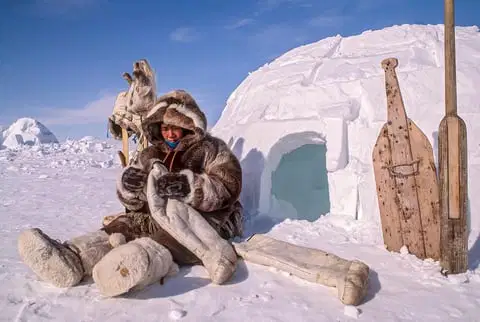
When human change themselves in order to survive their environment.
Adaptation
Migration
Evolution
Mutation
The spreading of goods, ideas, technologies, etc.
Cultural Diffusion
Cultural Isolation
Technological Stagnation
Economic Contraction

A very large metropolitan area that has expanded to the point that it reaches/touches other metropolitan areas.
Megalopolis
Urban Sprawl
City-State
Suburb
What major river runs down to the Gulf of Mexico through the Midwest region of the U.S.?
Mississippi River
Colorado River
Ohio River
Columbia River

Identify 3 physical features/bodies of water within Canada.
Amazon River
Rocky Mountains
Sahara Desert
Great Lakes
Hudson Bay
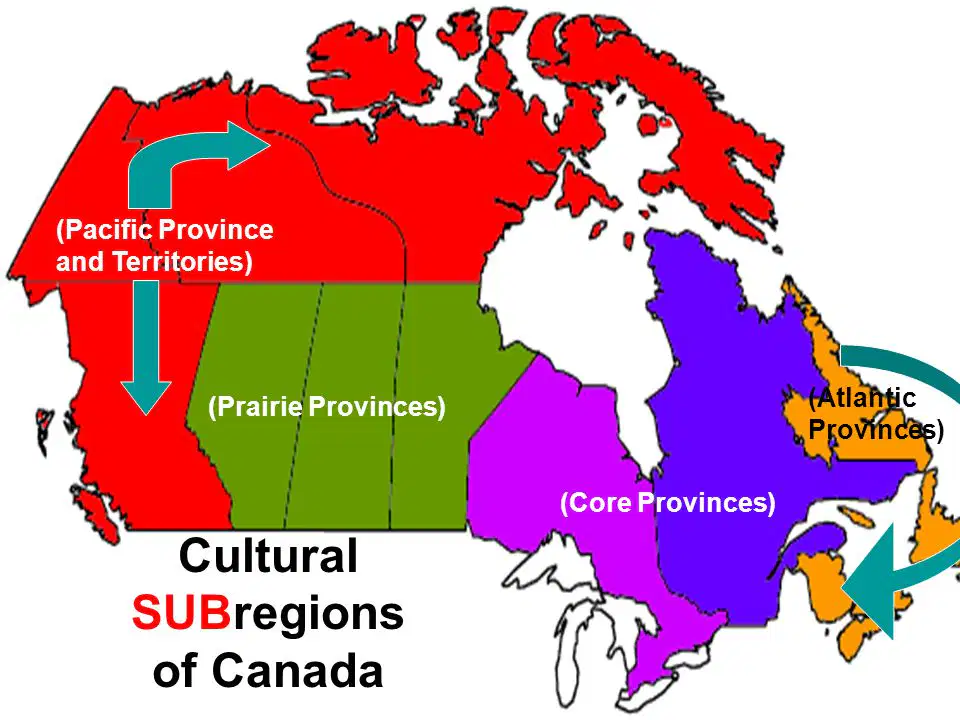
Which region of Canada has the highest population?
Core Provinces
Quebec
British Columbia
Alberta

Nunavut and the Inuit tribe are located in which region, and why is it so cold there?
Northern Arctic region; due to its high latitude, far from the equator
Tropical region; because of its proximity to the equator
Temperate region; because of its moderate climate
Desert region; due to its dry and hot conditions
Which region in the U.S is called the Breadbasket?
The Great Plains
The Amazon Rainforest
The Sahara Desert
The Himalayas
Where do most people live in British Columbia?
Areas like Vancouver in the low elevation location
Victoria and high altitude
Kelowna next to equator
Detroit, Michigan
Canada officially recognizes which two languages?
English and French
English and Spanish
French and Spanish
English and German
What is NAFTA? What did NAFTA accomplish? (Pick 2 answers)
A three-way trade agreement
Eliminates tariffs/taxes between US, Canada, Mexico
USMCA
U.S. Constitution
Describe the differences between how the U.S. government was formed and how the Canadian government was formed.
The U.S. government was formed through a revolution, while the Canadian government was formed through peaceful negotiations.
Both governments were formed through revolutions.
The Canadian government was formed first, followed by the U.S. government.
Both governments were formed through peaceful negotiations.
Which of the following best defines a Constitutional Monarchy in Canada and a Republic in the US?
A system where the monarch has absolute power in Canada and the President in the US.
A system where the monarch is the head of state in Canada and the President is the head of state in the US.
A system where both Canada and the US have a monarch as the head of state.
A system where both Canada and the US have a President as the head of state.
How are US and Canada's political systems similar?
Both are Democratic systems where people vote for representatives
Both have a parliamentary system with a Prime Minister as the head of government.
Both countries have a single-party system.
Both have a monarch as the head of state.
Sketch how continental location affects a landlock location.
It influences the climate and weather patterns.
It determines the availability of natural resources.
It affects the economic activities and trade opportunities.
It has no significant impact.
What shape is this population pyramid on P.4?
Triangular
House
Pentagonal
Hexagonal
Based on the Population Pyramid on P. 4, what age group and group was the largest in the U.S. in 2016 ?
Children, 0-4
Teenagers, 15-19
Workers, 25-25
Retirees, 95-100
based on the Population Pyramid on page 4 of your study guide which of the following services should the U.S invest in?
Healthcare and jobs
Technology and entertainment
Education and food
Real Estate and oil/gas

Which region in Canada is known as the Breadbasket region?
What is the sunbelt?
South & Southwest part of US because of warm climate
North & Northwest part of US because of aging, rusty factories
East part of the US because of beaches
West part of the US because of hollywood & celebrities
What is the rustbelt?
South & Southwest part of US because of warm climate
North & Northwest part of US because of aging, rusty factories
East part of the US because of beaches
West part of the US because of hollywood & celebrities
Speaking or using two languages.
Bilingual
Socioeconomic Status
Literacy Rate
Patriotism
The South is a major retirement and tourism center because of its
planned cities.
varied population.
growing industries.
mild climate.
True or False: The Rustbelt has experienced an exodus of people and loss of jobs in recent years.
True
False
A country sometimes places __________ on imports to protect industries from foreign competition.
trade deficits
tariffs
freee markets
trade surpluses

