
 Worksheets
IPC Midterm Review
Total questions: 70
Worksheet time: 35mins
Name
Class
Date
1.
The four fundamental forces of nature are:
a)
Electromagnetism, Gravity, Strong Nuclear, Weak Nuclear
b)
Gravity, Strong Nuclear, Weak Nuclear, Medium Nuclear
c)
Normal Force, Force due to gravity, Magnetism, Nuclear
d)
Nuclear, Electricity, Gravity, Atomic
2.
A natural resource that cannot be remade or re-grown at a scale comparable to its consumption.
a)
Nonrenewable
b)
Renewable
c)
Slownewable
d)
Fastnewable
3.
Natural resources that can be replenished in a short period of time
a)
Nonrenewable
b)
Renewable
c)
Slownewable
d)
Fastnewable
4.
Gravity is due to
a)
the pull between Earth and the moon.
b)
the pull between the Sun and Earth.
c)
the pull between any objects with mass.
d)
the pull between atomic nuclei.
5.
The strongest of the four fundamental forces is
a)
Gravity
b)
Electromagnetism
c)
Strong Nuclear
d)
Weak Nuclear
6.
_____________ is the force that binds protons together in the nucleus of an atom.
a)
Gravity
b)
Electromagnetism
c)
Strong Nuclear
d)
Weak Nuclear
7.
What is distance?
a)
How fast you travel
b)
study of motion
c)
How long you take
d)
How far you have traveled
8.
What is Speed?
a)
How fast you travel
b)
study of motion
c)
How long you take
d)
How far you have traveled
9.
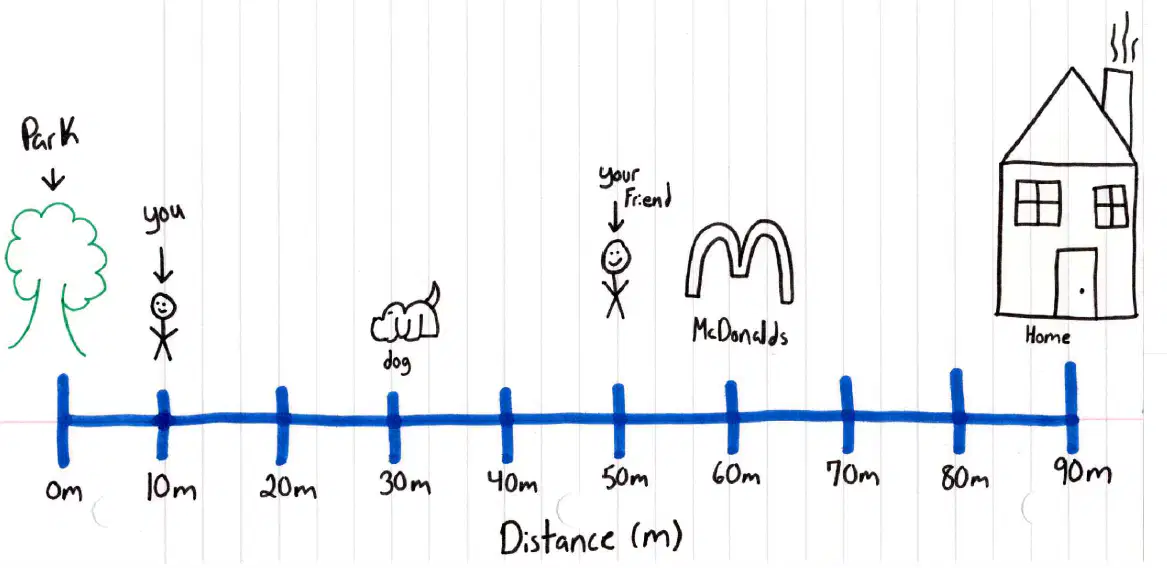
How far away is the dog from the house?
a)
90m
b)
60m
c)
40m
d)
50m
10.
What is a hypothesis?
a)
An educated guess
b)
A factor in a experiment that is kept the same in all trials
c)
A factor in a experiment that changes
d)
What is observed
11.
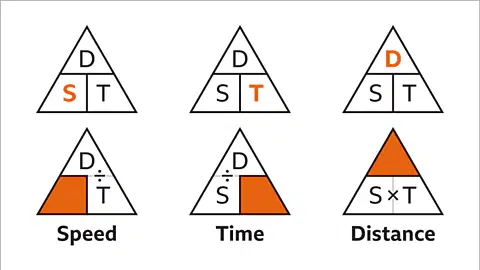
Kevin runs for 400 meter in 50 seconds. What is his speed?
a)
2m/s
b)
4m/s
c)
6m/s
d)
8m/s
12.
Who made the Laws of Motion?
a)
Einstein
b)
Columbus
c)
Isaac Newton
13.
What is Friction?
a)
a push or a pull
b)
a force that opposes motion between 2 objects that are touching
c)
tendency of all objects to stay at rest or in motion
d)
the amount of matter an object is made of
14.
What is Force?
a)
a push or a pull
b)
a force that opposes motion between 2 objects that are touching
c)
tendency of all objects to stay at rest or in motion
d)
the amount of matter an object is made of
15.
What is acceleration?
a)
a push or a pull
b)
the rate at which velocity changes
c)
tendency of all objects to stay at rest or in motion
d)
the amount of matter an object is made of
16.
What is Mass?
a)
a push or a pull
b)
a force that opposes motion between 2 objects that are touching
c)
tendency of all objects to stay at rest or in motion
d)
the amount of matter an object is made of
17.
What is Newton 1st Law of Motion?
a)
F=ma
b)
For every force, there is an equal and opposite force
c)
An object at rest remains at rest and an object in motion remains in motion
18.
What is Newton 2nd Law of Motion?
a)
F=ma
b)
For every force, there is an equal and opposite force
c)
An object at rest remains at rest and an object in motion remains in motion
19.
What is Newton 3rd Law of Motion?
a)
F=ma
b)
For every force, there is an equal and opposite force
c)
An object at rest remains at rest and an object in motion remains in motion
20.
What is Force measure in?
a)
grams
b)
meters
c)
Newtons
21.
What does the F mean in the equation F=ma?
a)
acceleration
b)
mass
c)
Force
22.
What does the m mean in the equation F=ma?
a)
acceleration
b)
mass
c)
Force
23.
What does the a mean in the equation F=ma?
a)
acceleration
b)
mass
c)
Force
24.
How many laws does Newton have?
a)
1
b)
2
c)
3
25.
Is it easier to push a heavier object or a lighter object?
a)
Lighter
b)
Heavier
c)
Both
26.
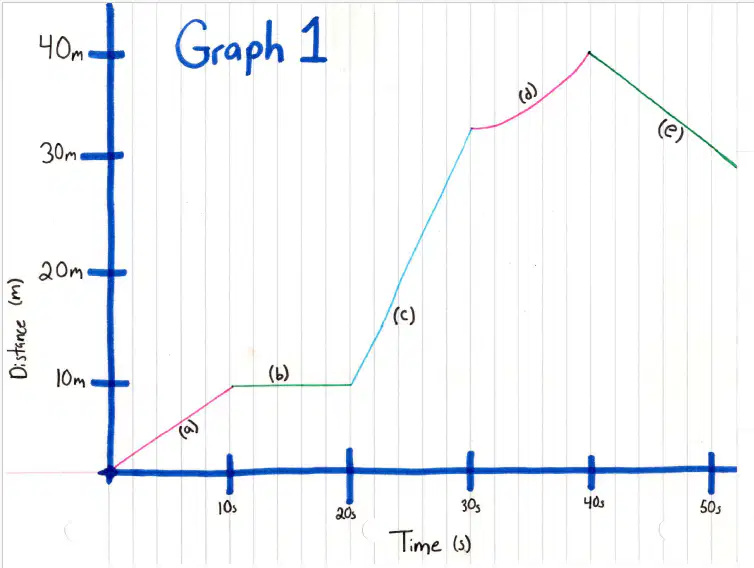
Between which two times is the Distance constant?
a)
0s -10s
b)
10s - 20s
c)
20s - 30s
d)
30s - 40s
27.
What is used in a Hydroelectric power plant to transform it in to electrical energy?
a)
Water
b)
Chemicals
c)
Wind
d)
Nuclear
28.
What are 2 types of circuits?
a)
Series and Parallel
b)
Perpendicular and Parallel
c)
ON and OFF
d)
definite and indefinite
29.
Which of these is a form of energy?
a)
Chemical Potential Energy
b)
Radiant Energy
c)
Electrical Energy
d)
All of the Above
30.
What do waves carry?
a)
water
b)
surfers
c)
useful information and energy
d)
very important weather
31.
A disturbance that travels through a medium from one location to another is called a ...
a)
Disturbance
b)
Water
c)
Wave
d)
Electron Microscope
32.
In the Anatomy of a Wave, What are the TOP points called?
a)
Crest
b)
Troughs (Trawf)
c)
Amplitude
d)
Wavelength
33.
In the Anatomy of a Wave, What are the Bottom points called?
a)
Crest
b)
Troughs (Trawf)
c)
Amplitude
d)
Wavelength
34.
In the Anatomy of a Wave, What is the distance between two consecutive similar points called?
a)
Crest
b)
Troughs (Trawf)
c)
Amplitude
d)
Wavelength
35.
In Wave Interactions, wave bounces off material and goes in a new direction is called?
a)
Reflection
b)
Diffraction
c)
Absorption
36.
In Wave Interactions, a wave bends around and goes through a hole is called?
a)
Reflection
b)
Diffraction
c)
Absorption
37.
In Wave Interactions, a wave is absorbed by the material and may disappear?
a)
Reflection
b)
Diffraction
c)
Absorption
38.
Light is a stream of NEUTRONS and Travels in bent line.
a)
True
b)
False
39.
Energy that travels perpendicular direction of motion is called?
a)
Transverse Wave
b)
Longitudinal wave
c)
Long Wave
40.
Color that you can see is being __________, and all other color is being absorbed?
a)
Scattered
b)
Transmitted
c)
painted
d)
Refracted
41.
Color that you CANNOT see is being __________, and all other color is being transmitted?
a)
Scattered
b)
Absorbed
c)
Transmitted
d)
Refracted
42.
How do you see, Nerves cells in the retina that are very sensitive to light and dark are called?
a)
Cones
b)
Rods
c)
Retina
43.
How do you see, when light sends light to the _________, nerves transmit the image.
a)
Cones
b)
Rods
c)
Retina
44.
What are the two types of lenses?
a)
UP and Down lenses
b)
Black and White lenses
c)
Concave and Convex lenses
d)
Glasses and Contacts lenses
45.
Black objects REFLECT all colors..
a)
True
b)
False
46.
A convex mirror curves outward and enlarges the image.
a)
True
b)
False
47.
Energy is the ability to cause change.
a)
True
b)
False
48.
Due to position, energy stored and ready to use later is called
a)
energy
b)
stored energy
c)
kinetic energy
d)
motion
49.
Energy due to motion is called
a)
Solar Energy
b)
Stored Energy
c)
Kinetic Energy
d)
Power
50.
Mechanical Energy is the sum of an objects KE and ____ .
a)
Potential Energy (PE)
b)
Energy
c)
Kinetic Energy
d)
Solar Energy
51.
Energy that is caused by vibration of particles in a medium such as a steel, water, or air is called?
a)
Strong Energy
b)
Kinetic Energy
c)
Sound Energy
d)
Potential Energy
52.
Thermal Energy means particles move faster the higher the ________.
a)
Speed
b)
Temperature
c)
Energy
d)
Solar Power
53.
Which of these is NOT a mechanism of Heat Transfer?
a)
Radiation
b)
Conduction
c)
Convection
d)
Cooling
54.
What is the basic unit of measurement for energy?
a)
Miles Per Hour
b)
Newtons
c)
Joules
d)
Watt
55.
Heat moves in MORE than one direction
a)
True
b)
False
56.
Heat Energy will move from one substance to another until the two substances have the ________ temperature.
a)
different
b)
same
c)
opposite
d)
energy
57.
The transfer of heat from one particle of matter to another by direct particle to particle CONTACT is called
a)
Conduction
b)
Convection
c)
Radiation
d)
Heat
58.
Convection is the transfer of thermal energy through the bulk movement of _______.
a)
Energy
b)
Matter
c)
Heat
d)
Speed
59.
________ occurs in fluids and produces currents.
a)
Conduction
b)
Convection
c)
Heat
d)
Energy
60.
Thermal energy in the form of ________ can move in three ways. Conduction, Convection, and Radiation.
a)
Energy
b)
Heat
c)
Radiation
d)
Nuclear Power
61.
A spoon directly sitting on a hot stove starts to heat up due to...
a)
Radiation
b)
Convection
c)
Conduction
62.
A fire warming you up from a distance is due to...
a)
Radiation
b)
Convection
c)
Conduction
63.
What are the 2 types of electrical current?
a)
AB and CD
b)
Positive and Negative
c)
Stationary and Moving
d)
Alternating and Direct Current
64.
What is something you should do in lab?
a)
Eat and drink
b)
Follow all instructions
c)
Play around with my friends
d)
Do whatever I want
65.
What is something you should not do in lab?
a)
Follow all instructions
b)
Wear Safety Equipment
c)
Play around with my friends
d)
Be careful around chemicals
66.
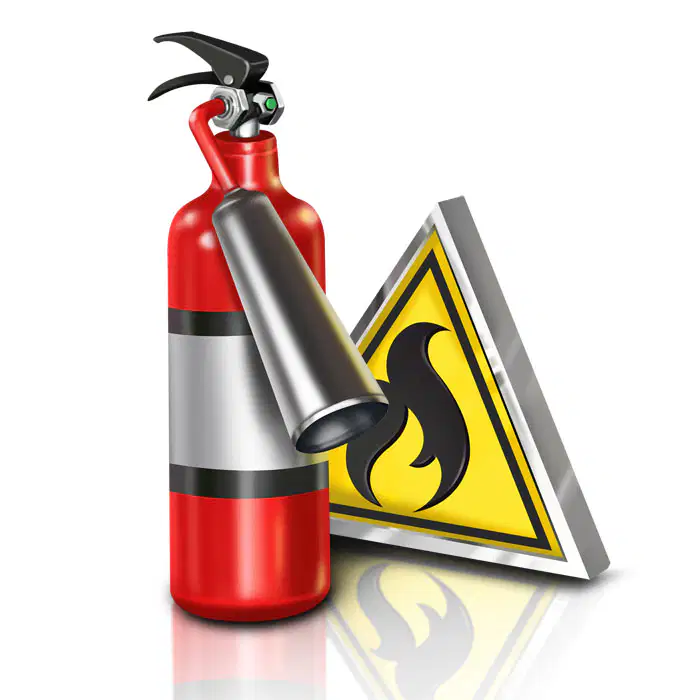
What safety equipment is this?
a)
Fire Blanket
b)
Fire Extinguisher
c)
Fire Shield
d)
Fire Hydrant
67.
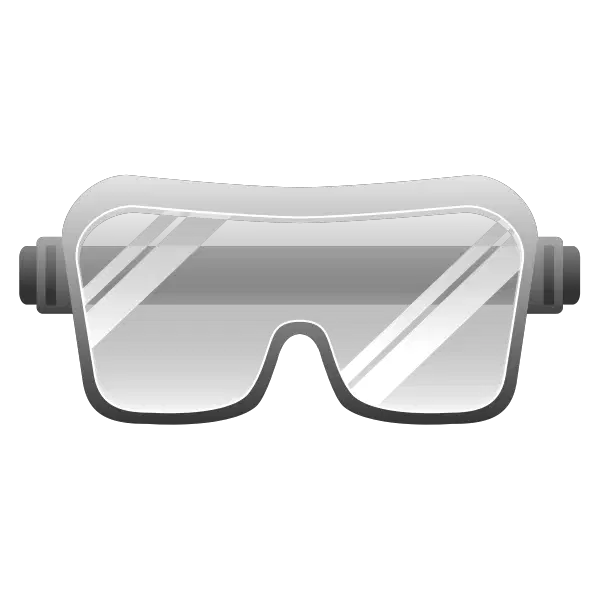
What safety equipment is this
a)
Lab coat
b)
Gloves
c)
Goggles
d)
Face mask
68.
How many significant figures does 76 have?
a)
1
b)
2
c)
3
69.
How many significant figures does 104 have?
a)
1
b)
2
c)
3
70.
Why are scientist important?
a)
Because they are smart
b)
Because they make important discoveries
c)
Because they are old
d)
Because the went to college
100 %

