
Font size
 Worksheets
Practicing Measuring: Density Hands-On
Total questions: 19
Worksheet time: 15mins
What two quantities do you need to know find the density of a substance, material or object?
mass
volume
length
time
temperature
Given the necessary quantities, how do you find the density of a substance, material or object?
mass/volume
volume/mass
l x w x h
πr2h
volume x mass
What units are often used to express the volume of liquids?
milliliters
milligrams
cubic centimeters
deciliters
decigrams
What units are often used to express the volume of solids?
milliliters
milligrams
cubic centimeters
deciliters
decigrams
Which of the following units express equivalent volumes?
milliliters
ounces
cubic centimeters
cc
teaspoons
Which of these are valid density units?
kg/m3
grams/milliliters
grams/cc
ml/g
cm3/kg
Why is it important to consider temperature when problem-solving issues involving density?
It isn't.
Density varies with temperature.
Warmer temperatures always cause mass to be lost.
Warmer temperatures always cause mass to be gained.
What does “density is a characteristic property of substances” mean?
Density for a given substance is always the same regardless of sample size.
As the volume of a given substance changes the density of that substance changes.
As the mass of a given substance changes the density of that substance changes.
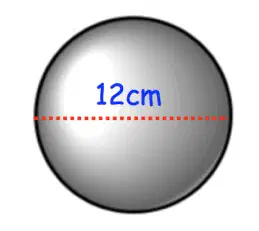
The density of Object B is (a) g/cc? Do not round the volume calculation. Round the density calculation to the second decimal place.
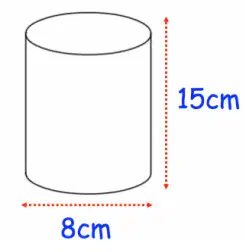
The density of Object A is (a) g/cm3? Do not round the volume calculation. Round the density calculation to the second decimal place.
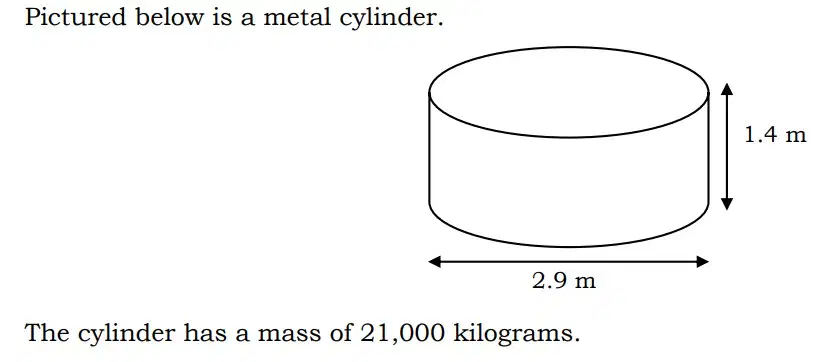
The density of Object C is (a) kg/m3. Do not round the volume calculation. Round the density calculation to the nearest whole number.
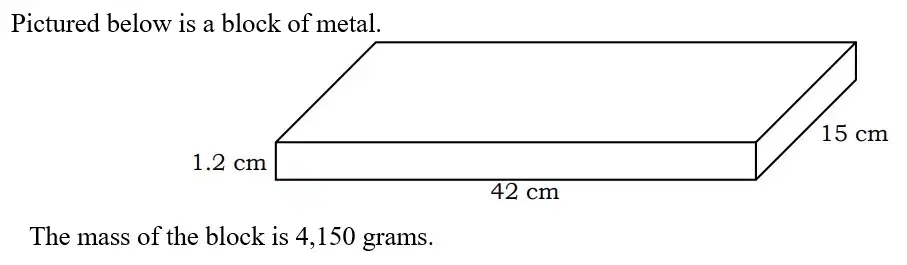
The density of Object D is (a) g/cc. Do not round the volume calculation. Round the density calculation to the second decimal place.
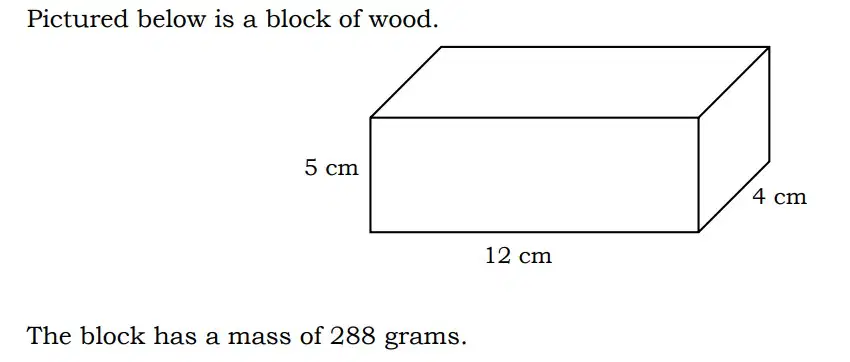
The density of Object E is (a) g/cm3. Do not round the volume calculation. Report the density calculation to the first decimal place.
A piece of wood has a mass of 7g and a volume of 10cm³. The density of the piece of wood is (a) g/cm3. Report the density calculation to the first decimal place.
The density of a rod of aluminium which has a mass of 575.4g and a volume of 21cc is (a) g/cm3. Report the density calculation to the first decimal place.
2.1m³ of oil has a mass of 175kg. Therefore, it has a denisty of (a) kg/m3. Round the density calculation to the whole number.
The density of a cube with a side length of 8 cm and a mass of 960 grams is (a) g/cm3. Round the density calculation to the second decimal place.
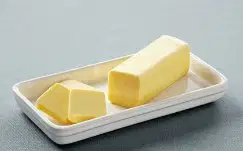
Your sister left the butter out on the kitchen counter overnight. You measure its volume at 280.00cm³ and its mass at 255.08g. The density of the butter is (a) g/cc. What will the butter do if placed in water in its current condition? Round the density calculation to the second decimal place.
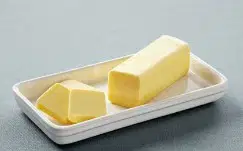
Your sister left the butter out on the kitchen counter overnight. You measure its volume at 280.00cm³ and its mass at 255.08g. The density of the butter is ___ g/cc. What will the butter do if placed in a container of water in its current condition? Round the density calculation to the second decimal place.
float at or very near the surface of the water
sink to the bottom of the container
sink about half-way down in the water

