
 Worksheets
ANCIENT RIVER VALLEY CIVILIZATIONS (ALL OF THEM)
Total questions: 100
Worksheet time: 1hrs 9mins
China is on which continent?
Asia
Africa
North America
Europe

China's civilization developed between which two rivers?
Yin and Yang
Chang Jiang and Yangtze
Shang and Zhou
Huang He (Yellow River) and Yangtze (Long River)


What is the belief that a ruler is chosen by the gods?
Mandate of Heaven

What is the name of the trade network that started in X'ian, China and extended into Europe?

The knowledge of making this product was a closely guarded secret. Telling others how to make this textile could result in severe punishment by the Chinese government. What is this fabric?
How did the Yellow River get its name?
First Chinese emperor named it.
Soil from the Sahara Desert turns the river yellow.
Soil from the Gobi Desert turns the river yellow.
A native fish named the yellowfin tuna lives there.
What makes ancient Chinese civilizations different than other ancient civilizations?
They invented things we still us.
They made bronze tools.
Their civilization has an unbroken history.
They produced more great thinkers than other civilizations.
The Shang Dynasty was
China's longest dynasty.
China's oldest dynasty.
China's most studied dynasty.
China's first dynasty.
China's golden age was during which dynasty?
Zhou
Shang
Ming
Han
What are yin and yang?
two Chinese emperors
opposing natural forces
a type of ancient Chinese jade carving
the force of evil in the world
Calligraphy is a form of
sculpture
landscape painting
virtue
writing
What did the ancient Chinese use to try to predict the future?
oracle bones
oracle beads
Confucius
Taoism
Why does the Huang River have a distinctive yellow color?
Yellow flowers grow on its banks.
Yellow silt is dissolved in the river water.
It reflects the yellow light of the sun.
It reflects the yellow light of the moon.
Why has the Huang River been called "China's Sorrow"?
The river runs through both the desert and the loess valley.
The river's tributaries pick up and carry large amounts of silt.
The river is light blue, the same color as human tears.
The river's flooding has wiped out crops and left people homeless.
Why was Emperor Qin buried with the Terrra Cotta Army?
To protect him from foreign invaders
To protect him from tomb raiders
To protect him in the afterlife
To support him in his transition to the afterlife
Where did civilization FIRST begin in China
Huang He (Yellow) River
Yangtze River
Indus River
Tigris and Euphrates Rivers
Mountain ranges and rivers acted as a natural source of protection for ancient Chinese civilizations
TRUE
FALSE
What geographical features of China kept it separated from the rest of the word? (pick 3)
The Gobi Desert
Rainforests
The Himalayas
Pacific Ocean
Who did the "mandate of heaven" refer to?
gods
The emperor
peasants
officials and the emperor
In the Mandate of Heaven, where did the kings' right to rule come from?
the people
the army
the bureaucracy
the gods
Who were the least respected in Ancient China's social hierarchy?
merchants
artisans
bureaucrats
nobles
What is the definition of an ancestor?
a royal family
An ancestor is a person from whom one is descended. Usually, it refers to a remote person, rather than the immediate parents or grandparents
Great Wall of China
a person who is next in line to rule the government
Which river is not part of the great 3 rivers that flow through China
Yellow River (Huang He)
Euphrates River
Yangtze River
Xi River
The Mandate from Heaven was
right to rule decided by god.
directions on how to get to heaven.
A recipe for bread.
was written by Confucius.
What is a dynasty?
A series of rulers from the same family
A series of rulers from the same continent
A series of rulers from the same country
A series of rulers
How is Ancient China's government SIMILAR to Ancient Egypt's?
They both have governments
They both use dynasties to rule.
They both were developed near a great river
They both are civilizations


Ancient Mesopotamia was separated into smaller independent kingdoms called what?
City-States
Provinces
Counties
Territories
Writing in Mesopotamia was called what?
Cuneiform
Hieroglyphics
Sanskrit
Phoenecian
What were temples called in Mesopotamia?
Ziggurat
Pyramid
Cathedral
Mosque
Which civilization invented paper?
Egypt
China
Neither of These
Both of These
The kings and queens of Ancient Egypt were called what?
Pharaoh
Emperor
Sir
Majesty
The belief in many gods is called what?
Polytheism
Monotheism
Decatheism
Prototheism
The process of preserving a body in Ancient Egypt was called what?
Mummification
Cremation
Funeral Pyre
Burial
Which of the following is the main river system that runs through Egypt?
Nile
Tigris/Euphrates
Indus/Ganges
(Huang He/Yellow)/(Chang Jiang/Yangtze)
Which civilization invented the wheel?
Mesopotamia
Egypt
Indus Valley
China
Which civilization was the first to invent indoor plumbing?
Indus Valley
Mesopotamia
Ancient Egypt
Ancient China
Rulers of Ancient China were called what?
Emperor
Pharaoh
King
President
A language that uses pictures or symbols instead of letters is called a what?
Pictograph
Symbology
Phonetics
Alchemy
The idea that a ruler has the blessings of the gods as long as they are good to their people is called what?
Mandate of Heaven
Mandate of the Gods
Mandate of Divinity
Mandate of the Pantheon
Match the following definition:
"a government where the leader is believed to be divine."
Theocracy
Monarchy
Neolithic Revolution
Reincarnation


Which ancient river valley civilization is shown at D?
Ancient Mesopotamia
Ancient Egypt
Ancient India
Ancient China

Which ancient river valley civilization is shown at A?
Ancient India
Ancient Greece
Ancient India
Ancient Egypt

Letter C is know as the
Nile River Valley civilization (Egypt)
Indus River Valley civilization (India)
Yellow River Valley civilization (China)
Tigris/Euphrates River Valley civilization (Mesopotamia)

The Yellow (Huang He) River is a part of
Ancient Egypt
Ancient Mesopotamia
Ancient India
Ancient China

Which civilization has the world's longest river?
Nile River Valley-Egypt
Tigris/Euphrates River Valley-Mesopotamia
Indus River Valley-India
Yellow (Huange He) River Valley-China

Which of the following river valley civilizations is shown at letter B?
Indus River-Ancient India
Tigris/Euphrates Rivers-Ancient Mesopotamia
Yellow (Huang He) River-Ancient China
Nile River-Egypt

Select the river valley civilizations on the continent of Asia.
Ancient Egypt-Nile River
Ancient Mesopotamia-Tigris/Euphrates Rivers
Ancient India-Indus River
Ancient China-Yellow (Huang He) River

Which ancient river valley civilization is depicted at B?
Ancient Egypt-Nile River
Ancient Mesopotamia-Tigris & Euphrates Rivers
Ancient India-Indus River
Ancient China-Yellow (Huang He) River

Which river is known as the "river of sorrows" due to its unpredictable and dangerous flooding?
Nile River (Egypt)
Tigris/Euphrates Rivers (Mesopotamia)
Indus River (India)
Yellow (Huang He) River (China)

Which rivers have deltas? You may select two (2).
Nile River (Egypt)
Tigris/Euphrates Rivers (Mesopotamia)
Indus River (India)
Yellow (Huang He) River (China)
The writing of Mesopotamia and Sumeria on clay tablets is called what?
Clay tablets
Hieroglyphics
Pictographs
Cuneiform
The major river of ancient Egypt used for farming and trade was the
Euphrates River
Nile River
Tigris River
Indus River
List the 8 features of a civilization
Excess food, advanced cities, specialized workers, trade, social structure, government, religion, writing
Excess food, advanced cities, specialized workers, trade, taxes, welfare, entertainment
trade, social structure, government, religion, writing, education, transportation
Advanced cities, writing, schools, banks, trade, government, taxes, writing
Which civilization was in modern day Iraq?
Mesopotamia/
Sumeria
Egypt
Aztec
Inca
What ancient civilization was in modern day Pakistan?
Indus Valley
Aztec
Inca
China
What is the location of the Mesopotamia civilization?
Modern-day Greece
Modern-day China
Modern-day Iraq, Kuwait, and parts of Syria and Turkey
Modern-day Egypt
Which river is associated with the Indus Valley civilization?
Indus River
Mississippi River
Amazon River
Nile River
What were the key features of the urban planning in the Indus Valley civilization?
Well-planned cities and advanced drainage systems
Well-planned cities and primitive drainage systems
Poorly planned cities and no advanced drainage systems
Randomly scattered cities and no drainage systems
What was the primary form of government in the Ancient Egypt civilization?
Democracy
Monarchy
Communism
Anarchy
What were the major architectural achievements of the Mesopotamia civilization?
Construction of skyscrapers and modern cities
Construction of pyramids and sphinx
Construction of ziggurats and temples
Construction of the Great Wall
The kings and queens of Ancient Egypt were called what?
Pharaoh
Emperor
Sir
Majesty
The process of preserving a body in Ancient Egypt was called what?
Mummification
Cremation
Funeral Pyre
Burial
The social class structure of the Indus Valley was called what?
Caste System
Constructive System
Economic System
Craft System
A family that rules over a kingdom for at least 3 generations is called a what?
Dynasty
Pod
Oligarchy
Pack


- Nile River
- Hieroglyphics
- Pyramids
Sumer

- Tigris and Euphrates
- Cuneiform
- City-States
Sumer

- Huang He (Yellow) River
- Calligraphy writing
- Paper and Silk
Sumer

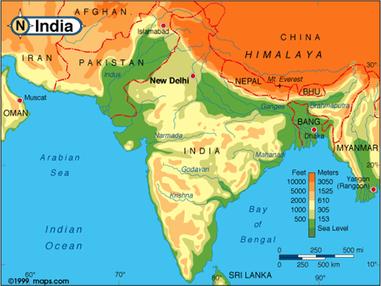
Who was King Menes?
The first Pharaoh
The Grinch
Ronald McDonalds
Your dog
Choose the answers that are true of Sargon (multiple answers)
postal system
1st Empire
Many roads were built
Made a professional full time army

