
 Worksheets
A&P 1 Fall 2024
Total questions: 264
Worksheet time: 4hrs 24mins
What is the term for standing straight with palms forward and feet together?
Anterior
Posterior
Superior
Anatomical Position
cranial
brain
skull
cubital
anterior
posterior
anterior
side
brachial
dorsal, back
lateral
side
back
front
below
cephal-
foot
hand
head
eye
caudal
head
tail
pelvic
ventral cavity
epi-
upon, over
ventral, front
below
skull
anterior
dorsal, back
right upper quad
ventral, front
upon, over
dorsal
back
lateral
ventral
side
inferior
above
below
far
nearest
Armpit
tail
axillary
far away from
swelling
superior
above
below
side
inferior
distal
above
near
far
tail
hypo-
above
under
superior
nearest
gastr-
stomach
intestines
bile
gall bladder
renal
colon
kidney
liver
tail
chondr
artery
muscles
joint
cartilage
viscera
ventral organs
dorsal organs
cartilage
upon, below
Pulmonary
lungs
sutures
mild not cancerous
eardrum
ventral
dorsal , back
below
back
front
Brachial
area between the shoulder and the elbow
caudal
thoracic cavity
back of the knee
cardi-
liver
lung
heart
skull
Area between the abdomen and the thigh
pelvic
lateral
inguinal
caudal
proximal
above
far away
nearest
upon, over
back of the knee
ventral
dorsal
popliteal
proximal
Front of the elbow
axillary
inferior
inguinal
cubital
Describes the front or direction toward the front of the body
Anterior
superior
posterior
Inferior
describes a position above or higher than another part of the body proper.
Anterior
Posterior
Superior
Inferior
describes a position closer to the surface of the body.
Distal
Medial
Lateral
Superficial
It describes a position in a limb that is nearer to the point of attachment or the trunk of the body.
Inferior
Proximal
Superior
Anterior
It describes the middle or direction toward the middle of the body.
Medial
Lateral
Anterior
Superior
Describes the back or direction toward the back of the body.
Posterior
Anterior
Superior
Inferior
It describes a position below or lower than another part of the body
Superior
Anterior
Inferior
posterior
It describes the side or direction toward the side of the body.
Medial
Superficial
Lateral
Deep
It describes a position farther from the surface of the body
Superficial
Deep
Proximal
Distal
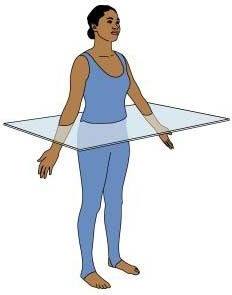
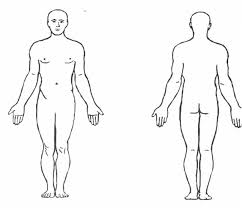
*right and left refer to "right" and "left" of the body in position.

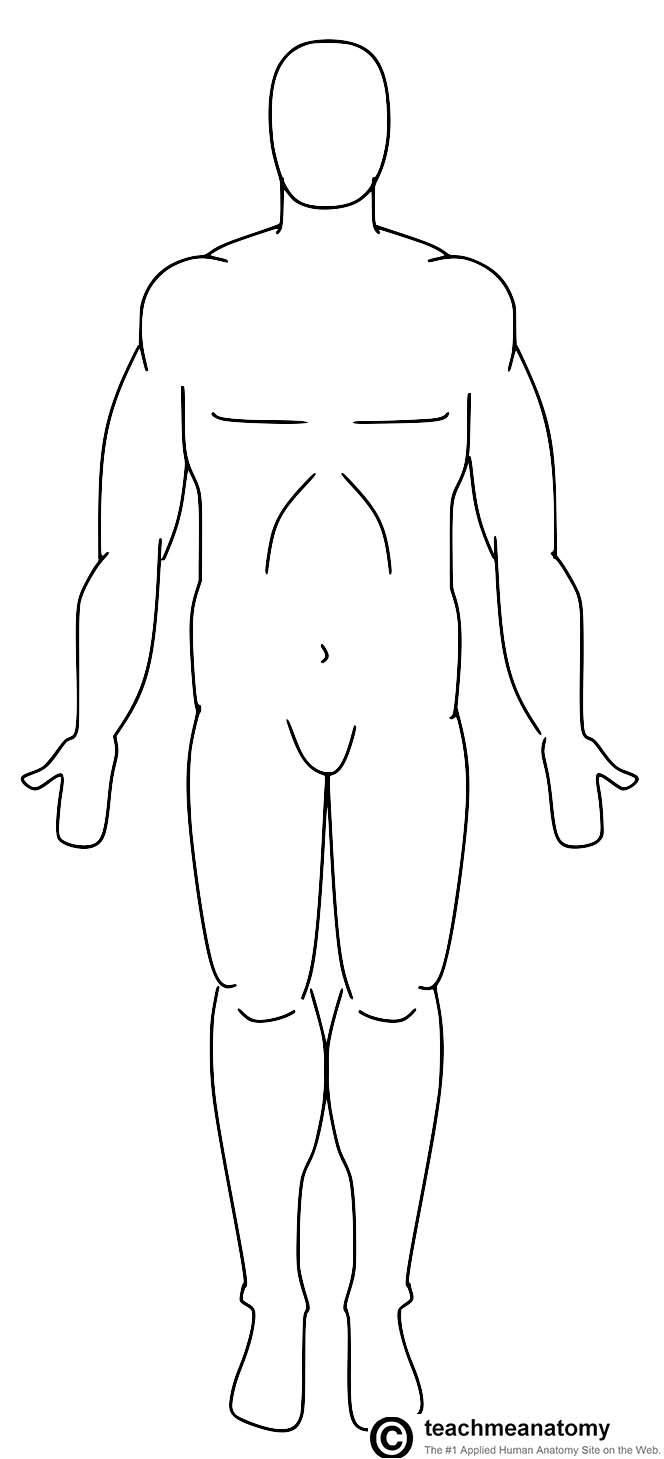
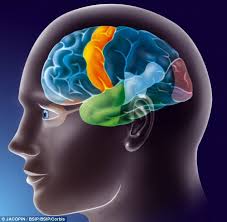
[The eyes are _______ to the brain].




What is the definition of the sagittal plane?
divides the body into left and right
divides the body into front and back
divides the body into top and bottom
A coronal plain will divide the body into which sections?
left and right
superior and inferior
anterior and posterior
cranial and caudal
What section will cut an organ into EQUAL right and left parts?
sagittal
mid-sagittal
transverse
coronal
In the _________________________ position, the body is upright, directly facing the observer, feet flat and directed forward. The upper limbs are at the body's sides with the palms facing forward.
inferior
superior
frontal
anatomical
Which body plane divides the body into anterior and posterior portions?
transverse
sagittal
frontal
occipital
Which two body cavities are DORSAL body cavities?
thoracic
cranial
abdominopelvic
spinal
Which of the following body cavities are VENTRAL body cavities?
thoracic
cranial
abdominal
pelvic

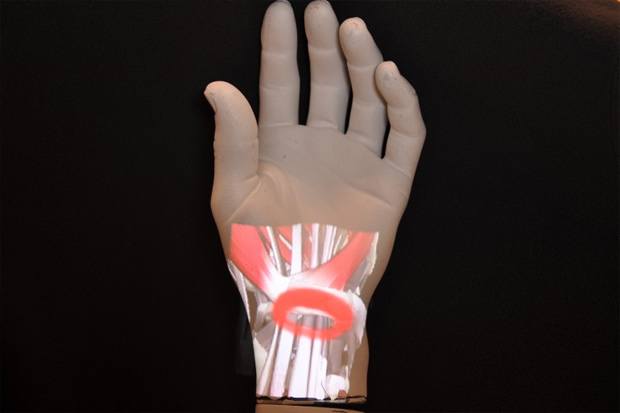
Name this body region:
femoral
gluteal
posterior
inguinal
Which organ is located in the cranial cavity?
spinal cord
brain
lungs
esophagus

What quadrant does number 3 Represent?
Right Upper
Left Upper
Right Lower
Left Lower

What is section 1?
Epigastric
Left Hypochondriac
Right Hypochondriac
Right iliac
What is section 2?
Epigastric
Left Hypochondriac
Right Hypochondriac
Right iliac
What is section 3?
Epigastric
Left Hypochondriac
Right Hypochondriac
Right iliac
What is section 5?
Umbilical
Left lumbar
Right lumbar
Right iliac
Closer to the head.
Anterior
Proximal
Superior
Medial
Away from the head.
Inferior
Lateral
Deep
Distal
Toward the front of the body.
Superficial
Anterior
Inferior
Proximal
Toward the back of the body.
Superficial
Distal
Superior
Posterior
Another term for anterior.
Dorsal
Distal
Lateral
Ventral
Toward the midline of the body
Inferior
Superficial
Proximal
Medial
Away from the midline of the body
Inferior
Distal
Lateral
Posterior
Toward the surface of the body.
Deep
Superficial
Inferior
Distal
Away from the surface of the body.
Medial
Inferior
Proximal
Deep
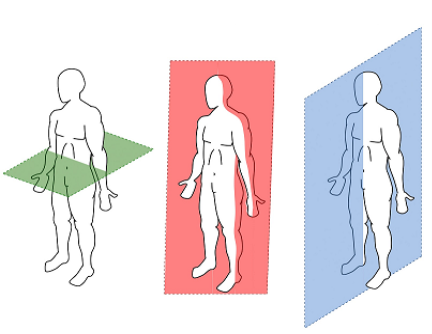
Divides the body into left and right portions.
Frontal
Transverse
Sagittal.
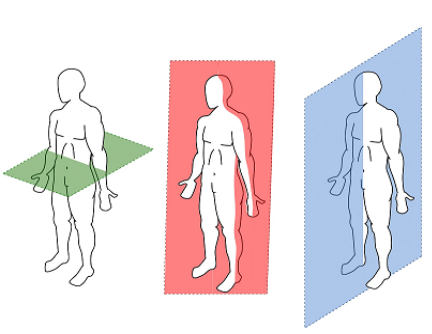
Divides the body into front and back portions.
Sagittal
Frontal
Transverse
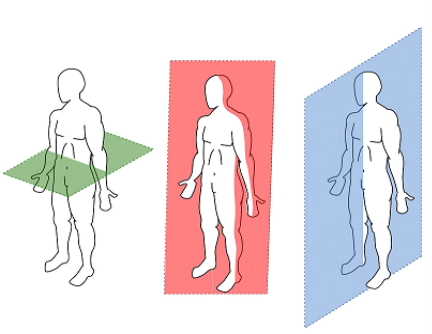
Divides the body into top and bottom portions.
Sagittal
Frontal
Transverse
The formation of an ionic bond involves the...
sharing of electrons.
transfer of electrons.
transfer of protons.
Which of the following best describes the type of bond formed when sodium reacts with chlorine?
ionic bond
metallic bond
covalent bond
Predict the type of bond that would form between oxygen and chlorine
ionic bond
covalent bond
metallic bond
Predict the type of bonding that most likely to be found in an alloy
ionic bond
covalent bond
metallic bond
Predict the type of bonding which would occur in sodium and fluorine.
ionic bond
covalent bond
metallic bond
An aluminium ion Al3+ has a mass number of 27 and an atomic number of 13. Which of the following would the ion contain:
i. 14 neutrons
ii. 10 protons
iii. 10 electrons
iv. 13 neutrons
i and ii only
i and iii only
iii and iv only
i, ii and iii only
which of the following statements best describe a metallic structure?
a metal atom held together by anions
cations held together by a sea of mobile electrons
metal atoms held together by electrons
The atomic number of an element is 15. To which group in the periodic table does it belong?
2
3
4
5

The diagram above shows:
an ionic compound
metallic bonding
sodium atoms
Cations have a (a) charge

The image above shows:
covalent bonding
ionic bonding
metallic bonding

The image above shows
covalent bonding
ionic bonding
metallic bonding
Metals like to ___________ electrons to become stable
lose
gain
share
Why do metals conduct electricity?
They are shiny
The electrons are held tightly within the lattice
The electrons are delocalised and able to move
The electrons are shared between two metal ions
Which is described as the force holding atoms together?
formula unit
cation
lattice
chemical bond
How many single covalent bonds can carbon form?
2
1
3
4
Which is the charge that results when oxygen becomes an ion?
+3
+2
-2
-3
In general, this type of bond will form a compound with a high melting point.
ionic
covalent
Covalent bonds are formed by sharing an electron from a _______ to a ________.
Metal to a metalloid
Metalloid to a nonmetal
Nonmetal to a nonmetal
Metal to a nonmetal
Typically, atoms gain or lose electrons to achieve
An exchange of energy
Ionization
A stable electron configuration.
Ionic bonds are formed by transferring an electron from a _______ to a ________.
Metal to a metalloid
Metalloid to a nonmetal
Nonmetal to a nonmetal
Metal to a nonmetal
What is an atom or group of atoms that has an electric charge?
ion
metal
nonmetal
ionic compound
Which element in Period 2 has the greatest atomic radius?
Be
C
Na
Li
Of the halogens (group 7A), which has the smallest radius?
F
Br
He
At
Electronegativity __________ from left to right within a period and __________ from top to bottom within a group.
decreases, increases
increases, increases
increases, decreases
stays the same, increases

The vertical (up and down) columns in the Periodic Table are called
groups
towers
periods
atomic numbers
The atom with the largest atomic radius in Group 8A is -
Ar
He
Kr
Rn
H or F?
N or C?
How many valence electrons does Carbon have?
4
5
6
8
The ability of an atom to attract electrons in a bond is called
Ionization energy
electronegativity
atomic radius
proton affinity
Which of the following will have a lower ionization energy than Scandium (Sc)?
Helium (He)
Titanium (Ti)
Calcium (Ca)
Magnesium (Mg)
Which of the following will have a higher electronegativity than arsenic (As)?
Carbon (C)
Neon (Ne)
Antimony (Sb)
Germanium (Ge)
As you move left to right across a period, ionization energy
increases
decreases
says the same

What group is highlighted here on the periodic table (Group 1A)?
Noble Gases
Halogens
Alkali Metals
Alkaline Earth Metals

What group is highlighted here on the periodic table (Group 8A)?
Noble Gases
Halogens
Alkali Metals
Alkaline Earth Metals

What group is highlighted here on the periodic table (Group 2A)?
Noble Gases
Halogens
Alkali Metals
Alkaline Earth Metals

What group is highlighted here on the periodic table (Group 7A)?
Noble Gases
Halogens
Alkali Metals
Alkaline Earth Metals

What group is highlighted here on the periodic table (D-block elements)?
Non-metals
Metalloids
Rare Earth Metals
Transition Metals
____________ is the branch of chemistry that would identify enzymes and determine reaction mechanisms for biochemical reactions.
Organic Chemistry
Biochemistry
Physical Chemistry
Analytical Chemistry
____________ is the branch of chemistry that would measure the amount of energy released or absorbed in chemical processes.
Inorganic Chemistry
Organic Chemistry
Biochemistry
Physical Chemistry
____________ is the branch of chemistry that would study and develop new materials to improve existing products or make new ones that in general do no contain carbon.
Organic Chemistry
Inorganic Chemistry
Biochemistry
Physical Chemistry
____________ is the branch of chemistry that would analyze new chemicals made from carbon-containing building blocks to identify its properties and use. (Select all that apply.)
Inorganic Chemistry
Organic Chemistry
Biochemistry
Analytical Chemistry
____________ is the branch of chemistry that would analyze the composition of medicines and research how it reacts in the body. (Select all that apply)
Analytical Chemistry
Organic Chemistry
Biochemistry
Inorganic Chemistry
Identifies an unknown through by determining its composition.
analytical
physical
organic
biochemistry
finding out how much nitrogen is in a sample of air
organic
inorganic
analytical
physical
studying the process of photosynthesis in plants
biochemistry
inorganic
analytical
Which among the following is a NOT MATTER?
Mars
Smoke
Steam
none of the choices
The study of the composition, structure, and properties of matter and the changes it undergoes.
Chemistry
Physics
Biology
Social Science
The study of carbon containing compounds.
Organic Chemistry
Inorganic Chemistry
Physical Chemistry
Biochemistry
The study of compounds that do not contain carbon.
Organic Chemistry
Inorganic Chemistry
Biochemistry
Analytical Chemistry
The study of substances and processes occurring in living things.
Biochemistry
organic Chemistry
inorganic Chemistry
Applied Chemistry
The identification of the components and composition of materials refers to___________________________
Biochemistry
Physical Chemistry
Organic Chemistry
Analytical Chemistry
The use of mathematics and computers to understand the principles behind observed chemical behavior and to design and predict the properties of new compounds.
Theoretical Chemistry
Biochemistry
Inorganic Chemistry
Organic Chemistry
Anything that has mass and occupies space
(a)
Study of essentially all chemicals that contain carbon
(a)
Study of the composition of substances
(a)
Study of the the mechanism, the rate, and the energy transfer that occurs when matter undergoes a change
(a)
Research that is directed toward a practical goal or application
(a)
The means by Which a society provides its members with those things needed nd desired
(a)
What is the teachers full name of his major degree
(a)
What subatomic particles are found in the nucleus and have a positive charge?
Neutrons
electron
atoms
protons
What subatomic particles are found in energy levels outside of the nucleus and have a negative charge?
Neutrons
Protons
Electrons
Isotopes
A substance formed by two or more different elements defines a/an
Isotope
Nucleotide
Compound
Elements
What type of bond is formed between atoms of different charges? (gain or lose atoms)
Covalent
Compound
Ionic
Elemental
Carbohydrates, Lipids, Proteins, and Nucleic Acids are the biomolecules/macromolecules that make you up.
True
False
__________ are organic compounds that are good sources of energy. They contain carbon, hydrogen, and oxygen
Protein
Lipids
Carbohydrates
Nucleic Acids
Simple sugars, or monosaccharides, such as glucose are the building blocks of
Lipids
Carboydrates
Protein
Nucleic Acids
The building blocks of ______ are fatty acids, which contain a carboxyl group and a hydrocarbon chain.
Proteins
Carbohydrates
Lipids
Nucleic Acids
Monomers are also known as
Building blocks
Houses
Compounds
Elements
A single subunit of a biomolecule is called a polymer, while a group of subunits of a biomolecule is called a monomer.
True
False
The 1:2:1 ratio of carbon to hydrogen to oxygen is seen in which group of organic compounds?
Protein
Carbohydrate
Lipid
Nucleic acid
None of the above
Matter is____
the pull of gravity on
an object.
Space
anything that
occupies space or has mass.
study of life
Each element of the periodic table is composed of how many atoms?
1
2
3
4
What subatomic particles are found in the nucleus and have no charge?
Protons
Elements
Neutrons
Electrons
The nucleus of an atom is composed of:
Protons/ Electrons
Electrons / Neutrons
Protons/ Neutrons/ Electrons
Protons / Neutrons
Are lipids nonpolar? (hydrophobic)
True
False
Amino Acids are monomers for
Carbohydrates
Lipids
Protein
Nucleic Acids
The function of Nucleic Acids is
Store Energy
Use energy
to store and transmit genetic
info
to transport oxygen throughout the body
Nucleotides are monomers for Nucleic Acids
True
False
Polymers are broken up and turned into monomers by which process
Covalent Bonding
Ionic Bonding
Hydrolysis
A process called ______ combines smaller molecules
together to form these larger
macromolecules.
Hydrolysis
Polymerization
Cohesion
Adhesion
Atoms share pairs of Electrons in what kind of bond
Covalent
Ionic
Electrical
Cohesive
In an Ionic bond, if you lose an electron, the charge is negative
True
False
Ion is an atom that has gained or
lost one or more electron.
True
False
Atoms that gain electrons are called ____ ion
Positive
Negative
Neutral
Which of the following is NOT a type of organic compound found in living things?
Protein
Carbohydrates
Lipids
Nucleic Acids
Water
Which of the following is a chemical reaction?
Calcium chloride dissolves in water.
A balloon pops.
Soft-drink powder mixes with water and the water turns red.
A nail is dropped in the yard and rusts.
A student mixed two saltwater solutions and weighed 50 mL of each. Solution 1 had a mass of 64 g. Solution 2 had a mass of 48 g. Which is true?
Solution 1 is less dense and less concentrated than Solution 2.
Solution 1 is less dense and more concentrated than Solution 2.
Solution 1 is more dense and more concentrated than Solution 2.
Solution 1 is more dense and less concentrated than Solution 2.
A solution has 20 g salt and 100 mL water. What would make the solution half as concentrated?
Add 10 g salt.
Add 50 mL water.
Add 20 g salt.
Add 100 mL water.
Solution A has 10 g solid. Solution B has 12 g solid. Both have equal amounts of water. Which is true?
A is less concentrated and less dense.
A is less concentrated and more dense.
B is less concentrated and less dense.
A is more concentrated and less dense.
Which is a substance made up of only one kind of atom?
element
mixture
solution
compound
Two spoons of solid are mixed in 50 mL water and the solid dissolves. The mass of one spoon of solid is 4 g. What is the mass of the solution?
8 g
58 g
52 g
54 g
Two spoons of solid are mixed in 50 mL water and the solid dissolves. The mass of one spoon of solid is 4 g. After the water evaporates, what will be the mass of the remaining solid?
4 g
52 g
8 g
58 g
A student dissolves 15 g of solid in 200 mL of water. Which is true?
The solution's mass is less than the mass of the water.
The solution's mass is greater than the mass of the water.
The solution's mass is the same as the mass of the water.
You cannot tell from the information given.
Which of these makes both a mixture and a solution?
salt and pepper
calcium chloride and salt
citric acid and water
water and sand
Why do we heat water when adding sugar to make candy?
So the solution will condense more quickly
So the solution will evaporate
So the solution will become saturated right away
So the solution is highly concentrated
A solution mixes a colorless liquid and a blue solid. Which is evidence of a chemical reaction?
The solid dissolved.
Bubbles form in the mixture.
The solution turned blue.
The solution's odor is still strong.
Which is the amount of space occupied by an object?
weight
mass
volume
density
A filter separates sand from water. Why does this work?
The holes in the filter are larger than the sand.
The holes in the filter are smaller than the sand.
The holes in the filter are the same size as the sand.
The filter does not have holes.
You filtered a mixture after a chemical reaction and have a clear liquid in the cup. How could you find out if there is a dissolved solid in the liquid?
Evaporate the liquid.
Freeze the liquid.
Condense the liquid.
Filter the liquid again.

Which of these cups contains a solid?
A
B
C
None
In which of these cups are the atoms close together and moving around one another?
A
B
C
None
In which of these cups are the atoms constantly moving?
A
B
C
All of them
In which of these cups are the particles locked in position and only able to vibrate?
A
B
C
All of them
Which of these jars contains a gas?
A
B
C
All of them
Which of these jars has the greatest density?
A
B
C
All of them
If the jars had lids and we removed them, which jar's particles would move out of the jar?
A
B
C
All of them


Which of the following word pairs correctly completes the sentence below?
_______ are corrosive substances characterized as having a strong smell, a sour taste, and a _______.
acid pH less than 7
acid pH greater than 7
base pH less than 7
base pH greater than 7
The pH of a solution is tested, and it is found to be a basic solution. Of the following choices, what could the pH have been?
3
7
9
5
Human blood has a pH between 7.35 and 7.45. Which of the following best describes human blood?
strongly acidic
slightly acidic
strongly basic
slightly basic
When using pH paper, the pH of a solution can be determined by looking at the _______ of the paper
texture
mass
colour
length
What would be considered the weakest base?
8
7.8
11.6
14
Many cleaning solutions are bases. Which of the following is a property of most bases?
feels slippery
white color
can only be liquid
tastes sour
Pure water has a pH of 7. Pure water _______.
is a base
is a neutral substance
could be either an acid or a base
is an acid
A sour taste is a characteristic of:
acid
base
neutral
pH scale
pH is the measure of the concentration of ______.
Acids
H+ ion
OH- ion
Base
If a solution is basic which ion will be more present?
H+
K+
OH-
H-
Stronger acids have a pH closer to...
7
14
0
9
Weaker bases have a pH closer to...
8
14
0
4
A pH level of 7 indicates
acid
base
neutral
non of the following
The pH scale is a range from:
1-7
1-5
0-14
1-14
Which property is not associated with acids?
Sour taste
strong acids can burn you
turns litmus paper blue
reacts with metals
Which of the following is true about acids and bases?
The lower the pH #, the stronger the acid
the higher the pH #, the stronger the acid
The lower the pH #, the more neutral the acid
The higher the pH #, the weaker the base
You test a solution with pH paper, and the paper turns blue. The solution is ______.
neutral
an acid
a base
an acid & a base
Neutralization is the process of an acid and a base reacting to form what? Select all that apply
An ionic salt
Hydronium ions
NaCl
Water
Which of the following sub-atomic particle has positive charge?
Electron
Proton
Neutron
None of the above

None of the above

None of the above


Mass remains same in all conditions
None of the above
None of the above



