
Font size
 Worksheets
Unit #2: The Structure of Matter Review
Total questions: 62
Worksheet time: 57mins
The temperature at which a substance changes from a liquid to a gas.
density
odor
boiling point
buoyancy
Characteristics that can be observed or measured directly; for example, color, melting point, and conductivity
conductivity
hardness
physical change
physical properties
Which properties are physical properties?
mass
volume
density
all of these

Molecules are tightly packed together
solid
liquid
gas
Mass is the amount of
weight in an object.
physical property in an object.
space an object occupies.
matter in an object.
Physical properties are traits that can
be measured and observed with tools and our five senses.
be measured only with your five senses.
be measured only with tools.
not be measured and observed.
Which statement is true about an apple that has been cut in half?
its density will increase
its density will stay the same
its mass will stay the same
its density will decrease

Which physical property is measured using this tool?
Mass
Solid Volume
Solubility
Liquid Volume
The 3 State of Matter are?
Idaho, Texas, and Florida
Matter, Mass, and Weight
Solids, Liquids, and Gas
Steel, Copper, and Brass
What does volume measure?
mass
the size of something
how much space something takes up.
the speed something goes
Anything that has mass and takes up space is called
volume
volume
matter
magnetism
electricity

Shape of Liquid
same as container
Volume of Liquid
definite
Movement of Liquid
slow

Volume of solid
definite
Movement of Solid
vibrates
Shape of solid
definite shape
Shape of Liquid
same as container
Volume of Liquid
definite
Movement of Liquid
slow

Match the letter in the picture with the word
A
all solid
B
melting/
freezing
C
all liquid
D
vaporizing/
condensing
E
all gas
Dry ice gets its name because it changes directly from a solid to a gas in a process called sublimation.
True
False

What state of matter does the picture below represent?
solid
liquid
gas
plasma
The state of matter that keeps its shape and volume when it is placed in a different container is called ______.
gas
liquid
solid
The state of matter that expands to fill its container is called ______.
gas
liquid
solid
What is matter made up of?
particles that are too large to be seen
tiny butter particles
particles that are too small to be seen
tiny water particles

The diagram shows arrangement of particles in a
Solid
Liquid
Gas
In which state of matter will there be the LARGEST space between molecules?
Solid
Liquid
Gas

What state is represented in the gif?
Solid
Liquid
Gas
What is the term for the change in state from solid to liquid?
Condense
Melt
Freeze
Evaporate
Particles in this state of matter are moving the slowest.
solid
gas
liquid
plasma
What is the process of converting a gas directly into a solid without passing through the liquid state called?
Sublimation
Deposition
Condensation
Evaporation

This is an example of
Melting
Condensation
Freezing
Evaporation

This is an example of
Condensation
Evaporation
Sublimation
Melting

This is an example of
Deposition
Condensation
Melting
Evaporation

This is an example of
(Hint: Dry Ice)
Deposition
Sublimation
Freezing
Melting

This is an example of
Melting
Sublimation
Deposition
Condensation

Which line segment demonstrates vaporization occurring?
B-C
C-D
D-E
E-F

As substance goes from D to E what happens to the distance between the particles?
particles get closer together
particles disappear
particles get far apart

At what temperature is this substance melting?
50C
100C
0C
Which picture shows particles in a solid?


Which of these is a pure substance?

Honey

Ocean water

Gold
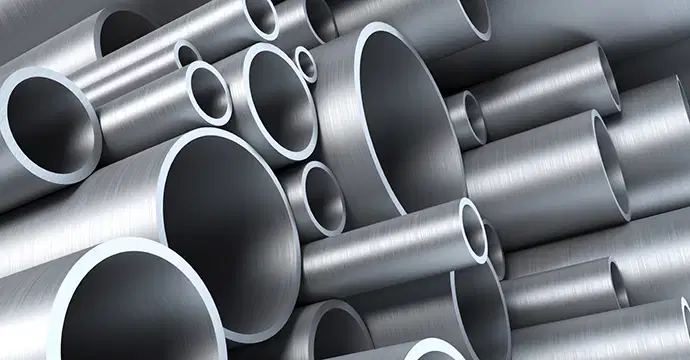
Steel

Atom or Molecule?
Atom
Molecule

Atom or Molecule?
Atom
Molecule

Atom or Molecule?
Atom
Molecule

Atom or Molecule?
Atom
Molecule

Element or Compound?
Element
Compound

Element or Compound?
Element
Compound

Element or Compound?
Element
Compound

Element or Compound?
Element
Compound?

Select the correct answer.
Element
Compound
Mixture

Select the correct option.
Element
Compound
Mixture

Select the correct answer.
Element
Compound
Mixture

Select the correct answer
Element
Compound
Mixture
Which is true about molecules?
Molecules can be made of atoms of different elements OR of the same elements
Molecules can be made of atoms of different elements ONLY
Molecules can be made of the same elements ONLY

Which of these is only a molecule and not a compound?
a
b
c
d

Which of these models can be described as a compound?
water
carbon dioxide
amonia
methane
All of them are compounds
A(n) ____________ between atoms determine whether they will bond to form a molecule.
attraction
compound
repulsion
bridge
Which of the following is different from the rest of the group? (choose the answer that best applies)
Nitrous Oxide (N₂O)
Ozone (O₃)
Carbon Dioxide (CO₂)
Dihydrogen Monoxide (H₂O)
Ozone (O₃)
Nitrous Oxide (N₂O)
Carbon Dioxide (CO₂)
Dihydrogen Monoxide (H₂O)

This substance can be separated by physical means such as filtering, sifting, and evaporating.
Mixtures
Pure Substances
Elements
Compounds
Carbon is considered an element while carbon dioxide is considered a compound. This is because carbon dioxide is –
a gas at room temperature.
made of two or more different elements.
given off by green plants.
What is a crystal?
A pure material that can’t be changed.
Material with a regular,repeating arrangement of atoms.
A foggy like material.
A varied number of one or more kinds of atom bonded together in a large network is called a(n) ____.
Molecule
Compound
Extended Structure
Life Cycle

Which sentence describes this substance (a diamond)?
An extended structure made of the same element.
An extended structure made of molecules that are attracted to each other.
A simple molecule made of different elements.
An extended structure made of different elements.

A long chain of smaller, repeating molecules bonded together.
Repeat unit
Ion
Polymer
Monomer
3-dimensional, repeated patterns make up _____.
Polymers
Crystals
Simple Molecule
Extended Structure
Crystals are _____ structures that are formed with repeating patterns of atoms or molecules.
repeated element
repeated molecules
solid
chain

The following is an example of
Extended Structure
Simple Compound
Neither

