
 Worksheets
M1L4 quiz review
Total questions: 65
Worksheet time: 1hrs 19mins
Name
Class
Date
1.
Which side of a chemical equation is the reactant side?
a)
Left (before the yields sign)
b)
Right (after the yields sign)
2.
Which problem is balanced?
a)
PbO2 + 2H2
b)
SO2 + H20 --> H2SO4
c)
2Na + 2H2O --> 2NaOH + H2
3.
What is a coefficient?
a)
The small number on the right of the chemical symbol.
b)
The large number to the left of a formula.
4.
At the end of chemical reactions, what is the total mass of the reactants compared to the total mass of the products?
a)
the product is doubled
b)
the product is half the mass of the reactants
c)
the mass is the same
d)
the mass changes depending on the reaction
5.
What is a coefficient?
a)
The small number on the right of the chemical symbol.
b)
The large number to the left of a formula.
6.
How many atoms of aluminum are on each side of the following equation: 4Al + 3O2 --> 2Al2 O3
a)
2
b)
6
c)
1
d)
4
7.

The blue numbers in the image below represent ________
a)
Charges
b)
coefficients
c)
subscripts
d)
none of the answers are correct
8.
What does the Law of Conservation of Mass state?
a)
Matter cannot be gained or lost in a chemical reaction.
b)
Matter can only be lost in a chemical reaction.
c)
Matter can only be gained in a chemical reaction.
d)
Matter can be gained and lost in a chemical reaction.
9.

This picture of a football is here for no reason.
Click CONTINUE to move on.
Click CONTINUE to move on.
a)
CONTINUE
b)
I don't follow directions.
10.
What is the left part of a chemical equation called...
H2 + O --> H2O
H2 + O --> H2O
a)
Reactants
b)
Products
c)
Yields
d)
Chemical Equation
11.
Which of these scientific tools is essential for testing the Law of Conservation of matter?
a)
Spring Scale
b)
Metric Ruler
c)
Balance
d)
Graduated Cylinder
12.
What does the Law of Conservation of Matter refer to?
a)
Matter can not be created or destroyed
b)
Matter can be created but not destroyed
c)
Matter can be destroyed but not created
d)
Matter is being lost everyday
13.
Anything that has mass and takes up space.
a)
Buoyancy
b)
Matter
c)
Density
d)
Weight
14.
A measure of the amount of matter in an object.
a)
Matter
b)
Mass
c)
Density
d)
Buoyancy
15.
How much space an object takes up.
a)
Density
b)
Buoyancy
c)
Weight
d)
Volume
16.

This appears on the left side of a chemical formula, and represents how many molecules there are.
a)
An Atom
b)
The Subscript
c)
A Molecule
d)
The Coefficient
17.

This is used to represent the number of each atom being represented.
a)
A Exponent
b)
The Coefficient
c)
A Molecule
d)
The Subscript
18.

How many hydrogen atoms are in this chemical formula:
a)
4 hydrogen atoms
b)
1 hydrogen atom
c)
2 hydrogen atoms
d)
3 hydrogen atoms
19.

How many oxygen atoms are in this chemical formula?
a)
6 oxygen atoms
b)
2 oxygen atoms
c)
3 oxygen atoms
d)
4 oxygen atoms
20.
Is this balanced?
2HgO → 2Hg + O2
a)
Yes
b)
No
21.
Law of conservation of mass states that
a)
matter is created
b)
matter is destroyed
c)
matter is neither created nor destroyed
d)
matter does not change
22.
True or false. Law of conservation of mass means that the number of atoms of the products is more than the number of atoms in the reactants.
a)
True
b)
False
23.
A chemical equation tells us...
a)
the reactants and the products.
b)
the elements that make up the reactants and the products.
c)
the number of atoms that make up the reactants and the products.
d)
All of the above.
24.
If reaction starts with 20g of reactants it should produce...
a)
a total of 40g of product
b)
a total of 10g of product
c)
a total of 80 g of product
d)
a total of 20g of product
25.
A chemical reaction is balanced when...
a)
Both sides have the same elements
b)
Both sides have the same number of atoms of each element
c)
Both sides have the same subscripts for each element
d)
Both sides have the same coefficients for each compound/molecule
26.
Which Chemical Equation is Balanced?
a)
2HgO → Hg + O2
b)
H₂+O₂-----2H₂O₄
c)
4Al+3O₂-----2Al₂O₃
27.
Molecule
a)
A group of atoms bonded together
b)
Basic unit of a chemical element
c)
Coefficient
d)
Subscript
28.
The mass after a physical change, such as ice melting into water, stays the same
a)
True
b)
False
29.
The total amount of matter (atoms) before and after a chemical reaction (change), remains the same.
a)
True
b)
False
30.
If there is no subscript, there is ______ atom(s) of that element.
a)
0
b)
2
c)
only 1
d)
1 million
31.
What is the atomic number?
a)
the number of protons
b)
the number of protons and neutrons
c)
the number of neutrons
d)
the number of protons and electrons
32.
What is the mass number?
a)
the number of protons
b)
the number of protons and neutrons
c)
the number of neutrons
d)
the number of protons and electrons
33.
What is the mass number defined as?
a)
the number of protons
b)
the number of protons and neutrons
c)
the number of neutrons
d)
the number of protons and electrons
34.
If an atom has 10 electrons, how many protons does it have?
a)
0
b)
1
c)
10
d)
5
35.
An element has the mass number 12 and atomic number 6. The number of neutrons in it is:
a)
6
b)
10
c)
4
d)
8
36.
Because atoms are neutral, the number of protons is always _______ the number of electrons
a)
greater than
b)
less than
c)
equal to
d)
proportional to
37.
Mass number is equal to
a)
Protons
b)
Neutrons
c)
Electrons
d)
Protons + Neutrons
38.
Matter can not be created nor destroyed: it can only be
a)
Destroyed a little bit
b)
Invisible
c)
Transformed, changed
d)
None of the above
39.
Which of these is not a chemical reaction?
a)
Burning of wood
b)
Milk going bad
c)
Mixing vinegar and baking soda
d)
Melting of ice
40.
A precipitate is a
a)
liquid that forms when two solids are reacted
b)
a solid that forms when two liquids are mixed
c)
a gas that forms when vinegar and baking soda react
d)
a change of color in a solution
41.

Identify the following process: Bicycles when they move.
a)
Physical change
b)
Chemical change
42.

Identify the following process: When we strike a match.
a)
Physical change
b)
Chemical change
43.

Identify the following process: When we crack an egg.
a)
Physical change
b)
Chemical change
44.

Identify the following process: When we fry an egg.
a)
Physical change
b)
Chemical change
45.

Identify the following process: When light is reflected in water.
a)
Physical change
b)
Chemical change
46.

Identify the following process: When food comes into contact with air.
a)
Physical change
b)
Chemical change
47.
A chemical reaction is a process in which one or more substances change into another or others which are different.
a)
TRUE
b)
FALSE
48.
A physical change is a process in which one or more substances change into another or others which are different.
a)
TRUE
b)
FALSE
49.

What are the initial substances in a chemical reaction called?
a)
reagents
b)
products
50.

What are the substances obtained at the end of a chemical reaction called?
a)
reagents
b)
products
51.
A chemical change is a change in:
a)
the appearance of a substance.
b)
the chemical composition of a substance.
c)
the type of matter.
d)
the way matter is created.
52.
Baking soda and vinegar combine to make carbon dioxide
a)
Chemical Change
b)
Physical Change
53.
all matter is made of what
a)
energy
b)
atoms
c)
electrons
d)
compounds
54.
The positive particles of an atom are
a)
electrons
b)
positrons
c)
neutrons
d)
protons
55.
the central region of an atom where its neutrons and protons are is its
a)
nucleus
b)
electron cloud
c)
core
d)
center
56.
an atom with atomic number 6 would have how many protons
a)
6
b)
12
c)
3
d)
cannot be determined
57.
Particles in an atom that are neutral and have no charge are
a)
negatrons
b)
electrons
c)
neutrons
d)
protons
58.
True or False? Neutrons have a negative charge
a)
True
b)
False
59.

What does the 1.00794 stand for?
a)
Hydrogen
b)
atomic number
c)
atomic mass
d)
atomic explosion
60.

What is the atomic mass of "F"
a)
9
b)
18
c)
17
d)
19
61.
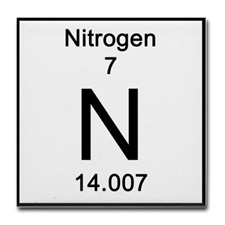
What is the number of protons that the element in this image contain?
a)
14
b)
7
c)
15
d)
18
62.
An atoms overall charge is
a)
positive
b)
depends on its mood
c)
neutral
d)
negative
63.
What is the smallest?
a)
worm
b)
molecule
c)
galaxy
d)
atom
64.
What is the atomic number?
a)
the number of protons
b)
the number of protons and neutrons
c)
the number of neutrons
d)
the number of protons and electrons
65.

What are the 3 subatomic particles that make-up the atom?
a)
protons, neutrons, and isotopes
b)
neutrons, isotopes, and electrons
c)
positives, negatives, and electrons
d)
protons, neutrons, and electrons
100 %

