
 Worksheets
Summative #1: Matter and Its Interactions Unit Assessment
Total questions: 23
Worksheet time: 13mins
1. Which claim best explains the particles in a liquid?
2.Which claim best explains which state of matter has the most energy?
3. If you leave an ice cube out, and it melts, this is an example of...
4. When a substance evaporates, the particles in the substance
A popsicle turning into a liquid and running down your hand while you eat it, the ice in your glass of tea disappearing are examples of what?
evaporation
melting
condensation
freezing
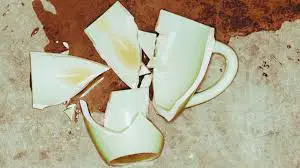
What type of change has occurred when a coffee cup is broken?
chemical
physical
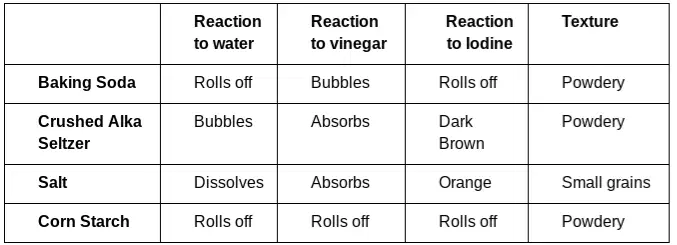
6. Kevin received a cup of a white substance that was powdery and bubbled when vinegar was added to it. Which powder did Kevin have?
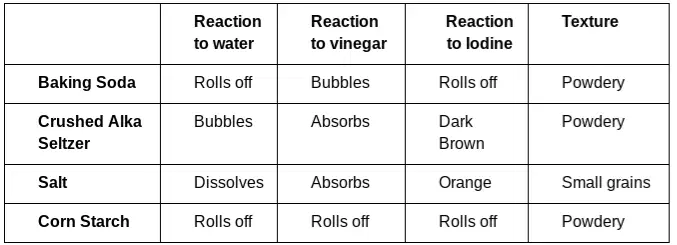
7. Stacy also received a cup of white substance that was powdery, but hers absorbed the vinegar when it was added. Which powder did Stacy have?
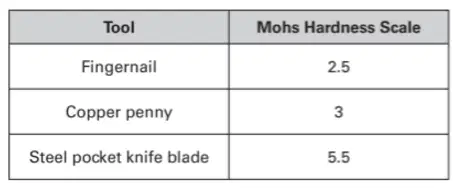
8. What conclusions can you make about the artifact’s hardness if the mineral can be scratched by the penny but not the steel pocket knife?
A. It has a hardness greater than 5.5
B. It has a hardness of 3
C. It has a hardness of 2.5
D. It has a hardness between 3 and 5.5
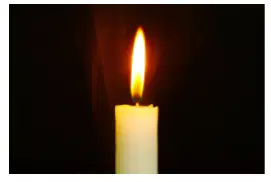
9. Was there a Chemical Reaction caused when burning the wick of the candle? (EMI)
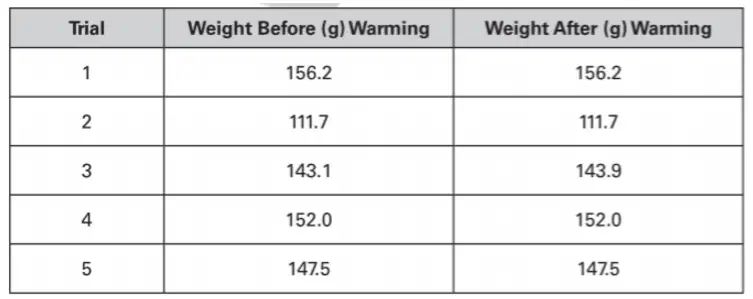
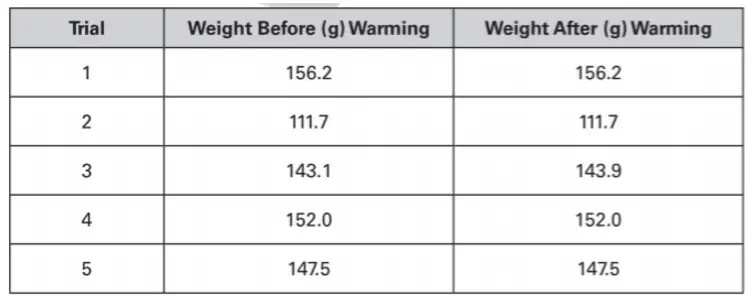
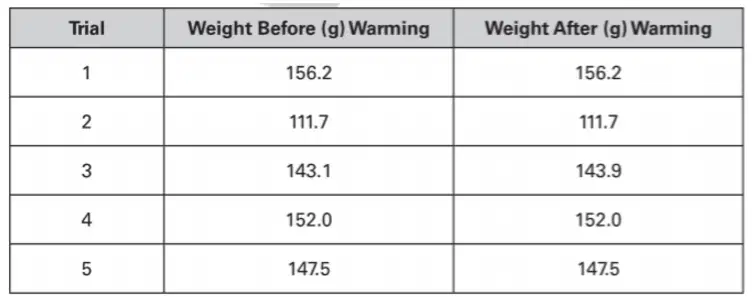
12. Based on the investigation which reason BEST explains why trial 3 did not follow the law of conservation of mass?
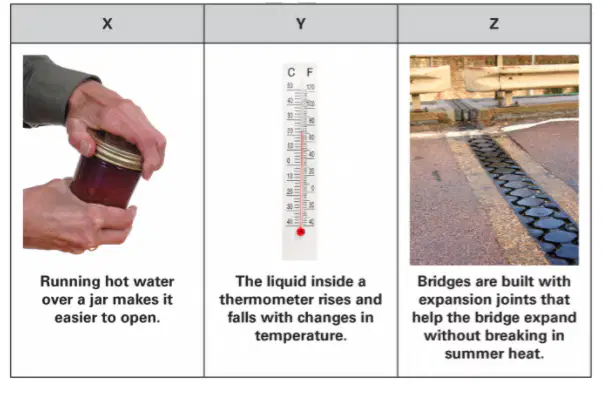
15. Which of the images above is an everyday example of thermal contraction or thermal expansion? (think about your answer for question 13)
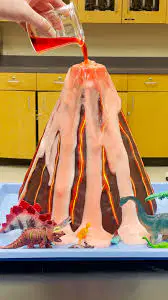
What type of reaction has happened during this homemade volcano?
physical
chemical
nothing happened
The water you put in the ice trays turning into a solid and the pond having a solid layer of ice on the top during the winter are examples of what?
evaporation
melting
condensation
freezing
Fog on a pond in the morning & fog on a mirror after a hot shower are examples of what?
evaporation
melting
condensation
freezing
A puddle disappearing during a hot day, the water boiling out of a pot you forgot on the stove are examples of what?
evaporation
melting
condensation
freezing
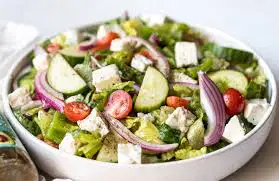
What is a mixture?
A new substance formed by a chemical change
A single pure substance made of one kind of particle
Two or more materials combined but not chemically joined so they can be separated
Something that cannot be separated
What is a property that can be seen?
How heavy something is
How it reacts with another substance
The color, shape, or size of an object
How it changes when heated
When the metal lid on a jar is stuck, why does running warm water over it help you open it?
The heat makes the lid softer.
The metal lid expands when it gets warm.
The water makes it slippery.
The glass jar shrinks when it gets warm.

Why do small gaps get left between sections of a bridge or railroad tracks?
To make it easier to build
So rainwater can drain away
To give space for the metal to expand when it gets hot
To keep animals from walking on it

