

wayground logo

Free Printable Worksheets

NEW

Font size

S
M
L
XL
Worksheets

Test Review EMS & Classifying Matter

Total questions: 68

Worksheet time: 2hrs 13mins

Name
Class
Date
1.
Which electromagnetic waves have the highest frequencies and the shortest wavelengths?
a)
microwaves
b)
visible light
c)
gamma rays
2.
Which electromagnetic waves help doctors detect broken bones inside your body?
a)
gamma rays
b)
x-rays
c)
ultraviolet rays
3.
Which of the following lists the electromagnetic waves in order of increasing wavelength?
a)
X-rays, visible light, radio waves
b)
gamma rays, microwaves, UV rays
c)
infrared rays, radio waves, x-rays
4.

Longest Wavelengths and Lowest Frequencies?

a)

Visible Light

b)

Microwaves

c)

X-Rays

d)

Radio Waves

5.
Electromagnetic waves that help your body produce vitamin D are called?
a)
ultraviolet rays
b)
x-rays
c)
gamma rays
6.
Which electromagnetic waves allow us to diagnose & treat cancer?
a)
Gamma rays
b)
X-rays
c)
Ultraviolet rays
7.
Which of the following has frequencies higher than ultraviolet rays?
a)
visible light
b)
infrared rays
c)
x-rays
8.
Which electromagnetic waves are used in devices such as heat lamps & TV remote controls?
a)
ultraviolet rays
b)
microwaves
c)
infrared rays
9.
Radar uses which type of electromagnetic waves to detect objects & measure their distance and speed?
a)
microwaves
b)
infrared rays
c)
x-rays
10.
A wave with a large wavelength will have a ______ frequency and _____ energy
a)
high, low
b)
high, high
c)
low, high
d)
low, low
11.
How are electromagnetic waves different from other waves? 
a)
They have very short wavelengths 
b)
They transmit energy instead of matter 
c)
They can travel through empty space
d)
They can change direction by reflection 
12.
Which section of the spectrum is the ONLY one we can see?
a)
X-rays
b)
Visible Light
c)
Gamma Rays
d)
Ultraviolet Rays
13.

Which wave below has the highest energy?

a)
b)
14.

Which color of light has the shortest wavelength?

a)

Red

b)

Orange

c)

Yellow

d)

Green

e)

Violet

15.
Which electromagnetic waves are used in ovens and cell phone communications?
a)
Infrared rays
b)
ultraviolet rays
c)
microwaves
16.

Which color of light has the longest wavelength?

a)

Red

b)

Orange

c)

Yellow

d)

Green

e)

Violet

17.

True or False: the EMS ALWAYS start at radio waves

a)

False

b)

True

18.
_______ carry the greatest amount of energy. 
a)
x-rays
b)
gamma rays
c)
infrared rays
d)
visible light
19.
Put the visible light colors in order from longest wavelength to shortest wavelength
a)
Violet, Indigo, Blue, Green, Orange, Yellow, Red
b)
Red, Yellow, Green, Orange, Violet, Blue, Indigo
c)
Red, Orange, Yellow, Green, Blue, Indigo, Violet
d)
Yellow, Blue, Orange, Violet, Red
20.
If you're moving from gamma rays to microwave, describe how the energy level changes
a)
Increases
b)
Decreases
c)
Energy level doesn't change
d)
We never talked about it
21.
The blue section of the wave is measuring _________________.
a)
wavelength
b)
crest
c)
trough
d)
amplitude 
22.
This type of Electromagnetic wave shows a break in bones.
a)
gamma ray
b)
x-ray
c)
brokenometer
d)
radio wave
23.

Select the correct order of waves on the Electromagnetic Spectrum from shortest wavelength to longest wavelength

a)
Radio, Micro, Infra, Visible, Ultra, X-ray, Gamma
b)
Gamma, X-ray, Ultra, Vis, Infra, Micro, Radio
c)
Vis, Micro, Infra, Ultra, X-ray, Gamma, Radio
d)
Micro, Radio, Vis, Infra, Ultra, X-ray, Gamma
24.

The number of waves that pass in a set amount of time (usually a second)

a)

Wavelength

b)

Crest

c)

Amplitude

d)

Frequency

25.
Type of matter made of two or more elements...
a)
element
b)
mixture
c)
compound
26.
Iron + oxygen = rust is an example of a ___________.
a)
physical property/change
b)
chemical property/change
c)
mass
d)
volume
27.

What term refers to "two or more substances combined physically, but are still able to be separated?"

a)

Mixture

b)

Solution

c)

Matter

d)

Combination

28.

A mixture in which the composition is NOT uniform throughout is called a _____ mixture.

a)

Heterogeneous

b)

Homogeneous

29.
Students placed a black block and a white block on each side of a balance.
Based on the results, what can the students say about the two blocks?
a)
The white block is wider and taller than the black block.
b)
The white block has more mass than the black block.
c)
The black block has a lower temperature than the white block.
d)
The black block has more mass than the white block.
30.

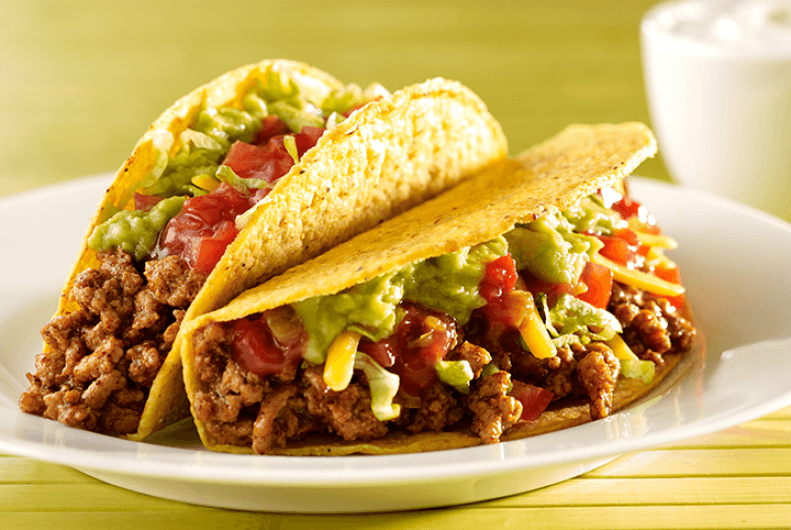
A Taco is an example of a

a)

Homogeneous Mixture

b)

Heterogeneous Mixture

31.

H2O is an example of...

a)

an atomic number

b)

an element symbol

c)

a chemical formula

32.

How are the EM waves measured on the spectrum?

a)

Just by their frequency

b)

By both their wavelength and frequency

c)

Just by their wavelength

d)

left to right

33.

What do all waves transfer?

a)

Matter

b)

Heat

c)

Electricity

d)

Energy

34.

How many elements are in H2O

a)

1

b)

2

c)

3

d)

4

35.

Which of the following statements describes an element?

a)

It contains only one kind of atom.

b)

It can be decomposed by ordinary chemical means.

c)

It is composed of atoms of two or more elements that bond together.

d)

It has unique properties that are different from the properties of its individual elements.

36.

Which of the following is an element?

a)

Gold

b)

Air

c)

Water

d)

Carbon Dioxide

e)

Nitrous Oxide

37.
What is the term for combining 2 or more atoms together?
a)
atoms
b)
elements
c)
molecules
d)
compounds
38.
Are these molecules also compounds?
a)
YES
b)
NO
39.
Are these molecules also compounds?
a)
YES
b)
NO
40.

Carbon is considered an element, while carbon dioxide is considered a compound.  This is because carbon dioxide is –

a)


a gas at room temperature.

b)

made of two different elements.

c)

given off by green plants.

d)

useful to human beings.

41.
Carbon (C) and hydrogen (H) are pure substances. Each is made of only one type of atom, but carbon atoms are different from hydrogen atoms. Carbon and hydrogen chemically combine to form methane (CH4).
a)
methane is an element and carbon and hydrogen are compounds.
b)
carbon, hydrogen, and methane are all elements.
c)
carbon, hydrogen, and methane are all compounds.
d)
carbon and hydrogen are elements and methane is a compound.
42.

Which of the following cannot be broken down into something simpler?

a)

A compound

b)

An element

c)

A mixture

43.

How many elements are in C6H12O6?

a)

1

b)

2

c)

3

d)

6

44.

How many Hydrogen atoms are present in H20?

a)

2

b)

4

c)

1

d)

0

45.

How many Nitrogen atoms are in the in 5H2C3O4N5?

a)

10

b)

5

c)

4

d)

25

46.
Which is the correct formula for:
 three hydrogen (H)
one sulfur (S)
four oxygen (O)
a)
H3SO4
b)
HSO4
c)
H4S3O
d)
H2O
47.
Which of the following is not a compound?
a)
HCl
b)
Cl
c)
NaCl
d)
CO2
48.

What is the difference between Co and CO?

a)

CO is an element but Co is a compound

b)

Nothing is different. They are the same thing.

c)

CO is two elements and Co is only one element

d)

Co is not a pure substance

49.
This picture represents which of the following?
a)
element
b)
compound
c)
mixture of elements
d)
mixture of compounds
50.
47 grams of salt is dissolved in 700 mL of water.  How much salt will remain after the water is evaporated?
a)
653 grams
b)
47 grams
c)
none
d)
37 grams
51.

A(n) _______ is a physical combination of two or more substances.

a)

sample

b)

solute

c)

mixture

d)

solvent

52.

A cake batter is an example of a __________ mixture

a)

heterogeneous

b)

homogeneous

53.
What is the Law of Conservation of mass?
a)
Mass is created in a chemical reaction
b)
Mass is created in a physical change
c)
New chemicals formed from a chemical reaction have a larger overall mass than the original reactants
d)

Mass is never created nor destroyed

54.
In a reaction A + B ----> C,  reactant A has 5g and product  C has 9g. How many grams does reactant B should have? 
a)
4g
b)
5g
c)
9g
d)
14g
55.
The number in front of a compound or element is a 
a)
Subscript
b)
Coefficient
c)
Superscript
d)
Charge
56.
A mixture that is NOT evenly distributed is called ....
a)
Compounded
b)
Homogenous
c)
Heterogenous
d)
Salty
57.
Matter can not be created nor destroyed: it can only be
a)
Destroyed a little bit
b)
Invisible
c)
Transformed, changed
d)
None of the above
58.

Which is Chemical Equation follow the Law of Conservation of Mass?

a)
CH₄+O₂------CO₂+2H₂O
b)
H₂+O₂-----2H₂O₄
c)
4Al+3O₂-----2Al₂O₃
59.

Salt water is an example of what kind of substance?

a)
homogenous mixture
b)
heterogeneous mixture
60.
If a reaction starts with a total 75g of reactants it should produce 
a)
a total of 40g of products
b)
a total of 75g of products
c)
a total of 180 g of products
d)
None of the above
61.

Which of the models of a chemical reaction best represents the Law of Conservation of Mass?

a)

A

b)

B

c)

C

d)

D

62.

The number to the lower right side of an element is a 

a)
Subscript
b)
Superscript
c)
Coefficient
d)
Charge
63.
Which of the following reactions is balanced?
a)
2CH4 + O2 -> CO2 + H2O
b)
CH4 + 2O2 -> CO2 + H2O
c)
CH4 + 2O2 -> CO2 + 2H2O
d)
None of the chemical equations are balanced.
64.
The substances listed on the right side of a chemical equation are the
a)
Yields
b)
Reactants
c)
Products
d)
Precipitates
65.

In the equation shown, what are the reactant(s)?

a)

N2 + H2

b)

NH3

66.

How many total atoms make up 4NH3?

a)

4

b)

16

c)

3

d)

12

67.

Which reactant is missing from the equation shown?

(What should go in the place of the "X"?)

a)

One hydrogen atom.

b)

Three hydrogen atoms.

c)

Four oxygen atoms.

68.
The substances listed on the left side of a chemical equation are the
a)
Products
b)
Coefficients
c)
Precipitates
d)
Reactants
