
 Worksheets
Making Marketing Decisions 2.2
Total questions: 69
Worksheet time: 29mins
(a) is NOT one of the three elements emphasized in the traditional product design mix.
Function
Aesthetics
Cost
Durability
Match the following elements with their corresponding aspects in the design mix.
The product's cost
Financial considerations
The product's reliability and performance
Operational efficiency and effectiveness
The product's aesthetic appeal
Visual and sensory design
The product's marketability
Consumer appeal and sales potential
Why is 'Aesthetics' important in the design mix?
It ensures the product is cost-effective
It appeals to customers based on looks and feel
It guarantees the product's functionality
It reduces production costs
How does 'Cost' factor into the design mix?
It determines the product's aesthetic value
It affects the product's reliability
It allows the product to be made and sold profitably
It influences the product's functionality
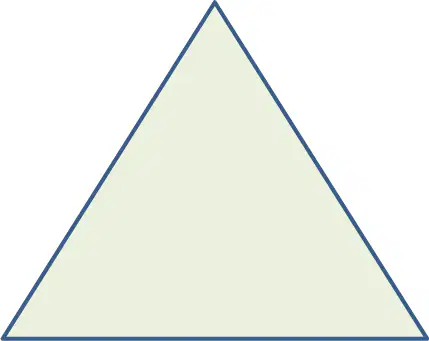
What are the three features shown in the interrelated triangle for a successful product design?
Function, Aesthetics, Cost
Quality, Price, Durability
Design, Marketing, Sales
Innovation, Efficiency, Reliability
Which feature is associated with a longer product life cycle and lower promotional costs?
Aesthetics
Function
Cost
Innovation
What is a common feature of products that emphasize aesthetics in the design mix?
High added value
Longer product life cycles
Lower promotional costs
Economic manufacturing
Match the following stages with their descriptions in the product life cycle.
Introduction
The stage where the product is launched and introduced to the market.
Growth
The stage where the product experiences rapid sales increase.
Maturity
The stage where the product's sales growth slows or levels off.
Decline
The stage where the product's sales decline and it may be phased out.
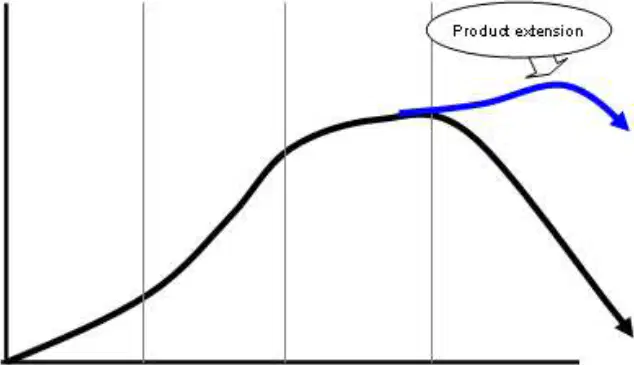
What is the final stage of the product life cycle when sales begin to fall and the product is removed from the market?
Growth
Maturity
Decline
Introduction
(a) involves adding new features to a current product to extend its life.
Advertising
Price reduction
Adding value
New packaging
The term for making a product different from competitors by using unique features is (a) .
Product extension
Product differentiation
Market saturation
Sales maximization
Match the following benefits with their corresponding business strategies.
It allows the business to decrease production costs.
Implementing cost-effective production methods.
It ensures the business properly complies with Gov. regulations
Adopting tax-efficient financial strategies.
It encourages customers to return for repeat purchases.
Building a strong brand loyalty program.
It guarantees legal protection for all products.
Securing trademarks and patents.
What can a business do if it has a unique feature?
Apply for a government subsidy.
Apply for legal protection to prevent copying.
Increase its workforce.
Decrease its marketing budget.
Why is setting the right price for a product important for a business?
It determines the color of the product.
It affects sales and cash flow.
It ensures the product is environmentally friendly.
It guarantees a monopoly in the market.
What was the result of the hotel chain decreasing its prices by 25%?
A decrease in the number of rooms booked.
A significant increase in revenue and profits.
A reduction in the number of hotels.
A decrease in customer satisfaction.
What happened to the fruit and vegetable company when it increased its prices by 10%?
Its sales increased by 50%.
Its revenue doubled.
Its sales fell by 50% and revenue dropped.
It gained more supermarket contracts.
(a) influences whether a business can set prices independently or must follow the normal market price.
Objectives
Competitors
Customers
Costs
The main aim of promotion is (a)
To increase production
To reduce costs
To improve employee satisfaction
How does the state of the economy affect pricing decisions?
It has no effect on pricing decisions.
It only affects luxury products.
Some products are more sensitive to changes in unemployment and wages.
It always leads to higher prices.
What role does the product life cycle play in pricing decisions?
It determines the quality of the product
It affects the price depending on the stage of the product life cycle
It has no impact on pricing
It only affects the initial launch price
What is the primary purpose of advertising?
To provide free information
To entertain the audience
To promote or present the product
To reduce production costs
Match the following factors with their relevance to advertising.
Reach of the media
How many people can be reached by the advertisement?
Nature of the product
What is the product being advertised?
Color of the product
Design and Packaging
Cost of advert and size of advertising budget
What is the financial plan for the advertisement?
Match the following terms with their definitions.
Advertising mix
The combination of advertising channels used by a company.
Promotional mix
The combination of methods used by a business in its promotional strategy.
Marketing mix
The overall strategy that includes product, price, place, and promotion.
Sales mix
The combination of strategies used to increase sales.
(a) tries to entice the customer by informing them of the product's benefit.
Informative advertising
Persuasive advertising
Competitive advertising
Growth advertising
What is a common mistake businesses make about promotion?
Believing promotion is only about advertising
Thinking promotion is unnecessary
Assuming promotion is free
Considering promotion as a short-term strategy
Match the following advantages and disadvantages of advertising as a method of promotion.
Wide coverage – can reach mass audiences
Advantage:
Often expensive; TV is very expensive
Disadvantage:
Impersonal and not very accurate
Disadvantage
Limited ability to close a sale
Disadvantage:
Which of the following is a disadvantage of advertising?
Control of message being promoted
Segmentation possible through choice of media
One-way communication and no guarantee the message is being received
Can be used to build brand loyalty
A benefit of having a strong brand is that it (a)
Inspires customer loyalty, leading to increased sales.
Often expensive; TV is very expensive.
Impersonal and not very accurate.
Limited ability to close a sale.
What is "brand extension"?
Using a brand for a diverse range of products
Developing a new product with some of the brand’s original characteristics
A logo that represents the business
A product with unique character
What is the purpose of a logo in branding?
To create a product with unique character
To establish brand loyalty and create a favorable image
To develop new products
To use the brand for a diverse range of products
What is the primary objective of sponsorship in business?
To build long-term customer loyalty
To emphasize social or ethical policies
To build brand awareness
To increase product prices
Which of the following is an example of a sales promotion tactic?
Sponsorship of a local sports team
Offering a free product trial
Increasing product prices
Reducing advertising costs
What does the term "point of sale" (POS) refer to in sales promotion?
The location where a product is manufactured
The place where a purchasing decision is made
The time when a product is advertised
The method of delivering a product to customers
Which sales promotion method involves offering a free product when a customer buys another product?
Competitions
Displays
Free gifts/samples
Loyalty cards
What is the purpose of loyalty cards in sales promotion?
To increase product prices
To provide free samples
To earn points for buying certain goods
To reduce advertising costs
What is one advantage of sales promotion?
It guarantees long-term sales increase.
It encourages customers to try a product or switch brands.
It reduces production costs.
It eliminates the need for advertising.
One disadvantage of sales promotion is that it (a)
It always increases brand loyalty.
It can damage brand image.
It ensures consistent sales growth.
It reduces the need for customer service.
Businesses should consider (a) when evaluating the effectiveness of a sales promotion.
The color of the product packaging.
The cost of the promotion.
The location of the business.
The age of the business owner.
How has the internet influenced promotional strategies?
It has made advertising more expensive.
It has decreased the accuracy of customer targeting.
It has allowed for cheaper and more accurate promotional strategies.
It has eliminated the need for traditional advertising.
What is a factor that influences the choice of promotional methods?
The weather conditions.
The type of product.
The color of the product.
The size of the business.
What is the main focus of the "Place" aspect in marketing?
How a business gets its products to the customers
The pricing strategy of a product
The design and packaging of a product
The quality control of a product
Which of the following is NOT a distribution channel mentioned in the text?
Retailers
Wholesalers
Manufacturers
E-commerce
What is the objective of distribution according to the text?
To increase the production of goods
To make products available in the right place at the right time in the right quantities
To reduce the cost of production
To enhance the quality of the product
The term used to describe the organizations involved in each stage of distribution is (a) .
Retailers
Intermediaries
Consumers
Producers
What is the main function of a distribution channel?
To increase production costs
To provide a link between production and the consumer
To reduce the quality of products
To eliminate the need for intermediaries
Match the following distribution channels with their characteristics.
Direct channel
Products are sold directly to consumers without intermediaries
Retail channel
Products are sold through a retailer who buys from the manufacturer
Wholesale channel
Products are sold in bulk to a wholesaler who then sells to retailers
Agent channel
Products are sold through an agent who facilitates the sale between manufacturer and retailer
The role of a wholesaler in a distribution channel is to (a)
To sell directly to consumers
To buy and store large quantities
To produce goods
To eliminate the need for retailers
Which type of distribution channel is called "direct-marketing" or "direct-sale"?
Channel with a wholesaler and retailer
Channel with only a retailer
Channel with no intermediary levels
Channel with multiple intermediaries
How can retailers be classified?
By the type of goods being sold
By the number of employees
By the color of their logo
By the age of the company
What is one advantage of using wholesalers for retailers?
They increase the profit margin for retailers.
They allow retailers to hold less stock by breaking bulk.
They provide direct sales to consumers.
They eliminate the need for intermediaries.
A disadvantage of using a retailer for producers is (a) .
Increased control over the sales process.
Higher profit margins.
Loss of profit margin.
Direct access to consumers.
Match the following distribution channels with their descriptions.
Direct selling.
Selling products directly to consumers without intermediaries.
Using online marketplaces.
Offering products on platforms like Amazon or eBay.
Partnering with retail outlets.
Collaborating with stores to sell products in physical locations.
Employing sales agents.
Hiring representatives to promote and sell products.
Match the following distribution strategies with their corresponding descriptions.
Whether to utilize retail partners.
Deciding on partnerships with retail outlets.
Whether to implement online sales.
Opting for e-commerce as a sales channel.
Whether to adjust distribution costs.
Reviewing and modifying cost structures in distribution.
Whether to diversify product offerings.
Exploring the introduction of varied products.
What is one advantage of selling direct for producers?
Sharing profit margins with intermediaries.
Complete control over the sales process.
Increased competition with other products.
Higher distribution costs.
What is a key factor to consider when choosing the best distribution channel for a product?
The color of the product
The technical complexity of the product
The size of the product's packaging
The product's warranty period
(a) works best for products that need to meet specific consumer specifications.
Mass distribution
Direct distribution
Indirect distribution
Random distribution
Why might a business choose to use intermediaries in their distribution channel?
To increase the product's price
To ensure the intermediaries are suitable and relevant for the product
To decrease the product's quality
To make the product more complex
Match the following implications with their correct statements regarding small businesses and wholesalers.
They benefit from bulk purchasing
Small businesses enjoy cost savings through large orders
They struggle with inventory management
Small businesses have challenges in handling large stock
They rely heavily on wholesalers
Wholesalers are crucial for their supply chain
They can bypass wholesalers for direct sales
Direct customer engagement is possible
In the marketing mix, what might be more critical for a high-quality perfume compared to milk?
Price
Packaging
Promotion
Distribution
What is a competitive advantage in business?
A unique product or feature that sets a business apart from its competitors
The ability to lower prices below production cost
Offering the same products as competitors
Ignoring market trends
Why might a business choose to change its competitive advantage?
To increase production costs
To adapt to market changes and remain competitive
To reduce product quality
To avoid advertising
Match the following business strategies with their corresponding examples.
Apple's exclusive design features
Product differentiation strategy
Buy one get one free offer
Sales promotion technique
Outsourcing production to cheaper locations
Cost reduction strategy
Premium pricing for luxury goods
Price skimming strategy
To remain successful and competitive over rivals, a business must (a)
The main benefit of using digital marketing over traditional marketing methods is (a)
Which of the following is a key component of a successful branding strategy?
Random pricing
Consistent messaging
Infrequent advertising
Unclear brand identity
What is a common challenge businesses face when using social media for promotion?
High production costs
Difficulty in measuring ROI
Limited content options
Low engagement rates
What is the role of 'Function' in the design mix?
To enhance the aesthetic appeal of the product
To ensure the product performs its intended purpose
To reduce the cost of production
To increase the product's market value
Which of the following is a benefit of using e-commerce as a distribution channel?
Limited customer reach
Higher operational costs
24/7 availability to customers
Increased dependency on physical stores
What is a key characteristic of a successful brand identity?
Inconsistency in messaging
Strong and recognizable logo
Frequent changes in brand colors
Complex and hard-to-remember name

