
NEW
Font size
 Worksheets
Baroque Quiz with Ornaments
Total questions: 50
Worksheet time: 27mins
What Ornament can you hear?

Apoggiatura

Acciatura

Upper Mordent

Lower / inverted Mordent
What Ornament can you hear?
Apoggiatura
Acciatura
Upper Mordent
Lower / inverted Mordent
What Ornament can you hear?
Apoggiatura
Acciatura
Upper Mordent
Lower / inverted Mordent
What Ornament can you hear?
Apoggiatura
Acciatura
Upper Mordent
Lower / inverted Mordent
What Ornament can you hear?
Apoggiatura
Acciatura
Upper Mordent
Lower / inverted Mordent
What Ornament can you hear?
Apoggiatura
Acciatura
Upper Mordent
Lower / inverted Mordent
What Ornament can you hear?
Apoggiatura
Acciatura
Upper Mordent
Lower / inverted Mordent
What Ornament can you hear?
Apoggiatura
Acciatura
Upper Mordent
Lower / inverted Mordent
What Ornament can you hear?
Apoggiatura
Acciatura

Turn

Trill
What Ornament can you hear?
Apoggiatura
Acciatura
Turn
Trill
What Ornament can you hear?
Apoggiatura
Acciatura
Turn
Trill
What Ornament can you hear?
Apoggiatura
Acciatura
Turn
Trill
Which of the following best describes the Baroque period?
1400 - 1600
1600 - 1750
1750 - 1820
1820 - 1900
What is the role of the concertino in a concerto grosso?
A smaller group of soloists
The conductor
The audience
The larger group of instruments
Which term refers to a performer with exceptional skill on their instrument?
Maestro
Virtuoso
Conductor
Composer
Which period is associated with the years 1600 - 1750?
Classical
Baroque
Romantic
Modern
Which of the following composers is associated with the Baroque period?
Johann Sebastian Bach
Ludwig van Beethoven
Wolfgang Amadeus Mozart
Franz Schubert
Which instrument was commonly used in Baroque music?
Piano
Synthesizer
Harpsichord
Electric guitar
Which of the following instruments was NOT commonly used in Baroque music?
Violin
Harpsichord
Electric guitar
Organ

Name the instrument that appears in this image.
clarinet
piccolo
flute
Bassoon

Name the instrument that appears in this image.
Oboe
English Horn
Bassoon
Clarinet

Baroque composers:
Bach, Handel, Vivaldi
Mozart, Haydn,
Ravel, Chopin, Wagner
Glass, Williams, Zimmer
A musician who has an incredibly high level of skill is known as a
virtuoso
virtuous
player a la magnifique
virtugo
What Instrument can you hear?

Violin

Cello

Harp
What Instrument can you hear?

Clarinet

Saxophone

Tuba
What Instrument can you hear?

Ukulele

Double Bass

Electric Guitar
What Instrument can you hear?

Flute

Bassoon

Tuba
What Instrument can you hear?

French Horn

Trumpet

Saxophone
What Instrument can you hear?

Viola

Violin

Cello
What Instrument can you hear?

Viola

Violin

Cello
Which musical period is this extract from>
Baroque
Classical
Romantic
What is a tutti section in a concerto?
When the soloist plays alone
When the orchestra plays all together
When the orchestra accompanies the soloist
When the soloist and orchestra play in harmony
What is the main idea of a concerto?
To showcase the orchestra
To showcase the conductor
To showcase the solo player
To showcase the composer
What is terraced dynamics in Baroque music?
Sudden changes of dynamics
Gradual changes of dynamics
No changes of dynamics
Random changes of dynamics
A very slow tempo is called what?
Adagio
presto
allergro
adante
A very fast tempo is called?
Adante
Presto
lento
Adagio
The medium tempo is called what?
lento
Moderato
adagio
presto
What does "Duration" refer to in music?
The gaps between the notes
Note length
Sound quality or tone colour
Effect or intensity of the music played together
Which vocabulary terms are associated with "Pitch"?
Rondo, Binary, Ternary, Verse Chorus
Forte, Piano
Treble Clef, Bass Clef, Octave
Monophonic, Polyphonic, Homophonic
What is the definition of "Pitch" in music?
Loud or Soft
High or Low
The speed
The Musical Plan
What does "Timbre" refer to in music?
The speed
Note length
Sound quality or tone colour
High or Low
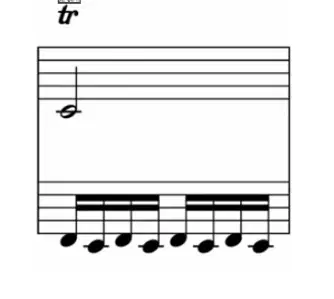
What Musical ornament can you see?
Trill
Appoggiatura
Accaciatura
Mordent
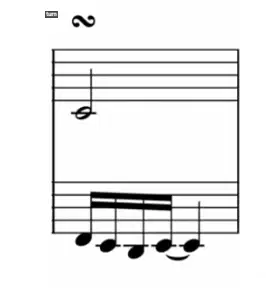
What Musical ornament can you see?
Trill
Turn
Accaciatura
Mordent

What Musical ornament can you see?
Trill
Turn
Accaciatura
Mordent
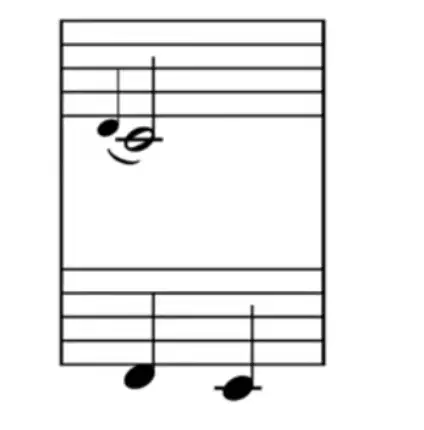
What Musical ornament can you see?
Trill
Appoggiatura
Accaciatura
Mordent
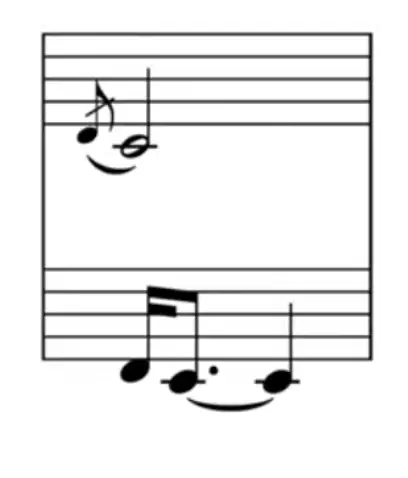
What Musical ornament can you see?
Trill
Appoggiatura
Accaciatura
Mordent

What note is this?
B
G
A
C

What note is this?
B
G
F
C

What note is this?
E
D
A
B

