wayground logo

Free Printable Worksheets

Font size

S
M
L
XL
Worksheets

Physical Science - Chemistry Semester Review

Total questions: 268

Worksheet time: 29hrs 14mins

Name
Class
Date
1.
Yolanda filled a beaker with water and measured its temperature as 12°C.  She then added some solid CaCl2 and stirred until it was completely dissolved.  After 10 minutes she read the final water temperature as 24°C.  The air temperature in the room was 26°C. 
Which of the following is a possible question Yolanda   is seeking to answer:
a)
Does air temperature in the room affect the water temperature?
b)
Does adding CaCl2 to the water affect the temperature of the water?
c)
Does stirring affect the solubility of CaCl2?
d)
Does time affect the solubility of CaCl2?
2.
The pictures below show the position of different elements on the periodic table. Which pricture has an X in the locations of the three elements that would be most similar in the way they react?
a)
A
b)
B
c)
C
d)
D
3.
These pictures show the changes that occur as a solid becomes a gas. What is added to a substance to cause these changes?
a)
force
b)
elements
c)
molecules
d)
energy
4.
Is grapefruit juice (pH=4.2) an acid or a base?
a)
Acid
b)
Base
5.
Aluminum (Al) has three electrons in its outer shell. Oxygen (O) needs two electrons to complete its outer shell. What is the chemical formula for aluminum oxide?
a)
AlO
b)
AlO2
c)
Al2O
d)
Al2O3
6.
How many protons and electrons are in a copper ion that has a charge of +2?
a)
27 protons, 29 electrons
b)
27 protons, 31 electrons
c)
29 protons, 27 electrons
d)
29 protons, 31 electrons
7.
Which atom has a net positive charge?
a)
Atom W
b)
Atom X
c)
Atom Y
d)
Atom Z
8.
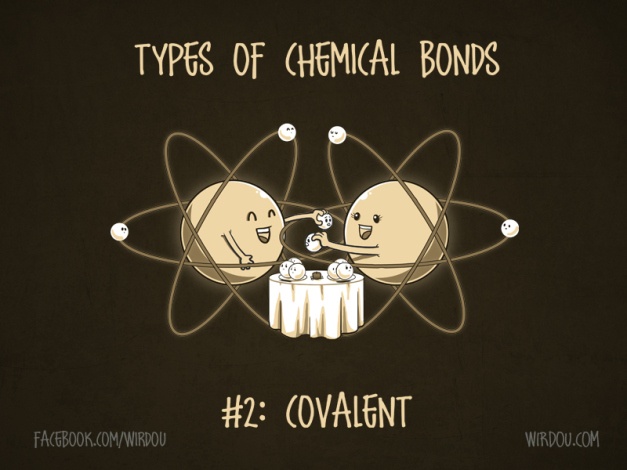
Which of the following was joined by covalent bonding?
a)
PCl3
b)
NaBr
c)
Li2S
d)
MgCl2
9.
In making a pizza, which process involves a chemical change?
a)
mixing spices for the sauce
b)
baking the dough to form the crust
c)
slicing pepperoni for the topping
d)
spreading cheese on the pizza
10.
In the following unbalanced equation, what coefficients would have to go in the blanks (left to right) in order for it to become balanced?
__ Al  +  __ HCl  -->  __AlCl +  __H2
a)
1:3:1:2
b)
3:2:1:2
c)
6:2:2:3
d)
2:6:2:3
11.
Which of the following statements describes the difference between endothermic and exothermic chemical reactions?
a)
A
b)
B
c)
C
d)
D
12.
Which list correctly describes the gases in containers R, S,and T?
a)
A
b)
B
c)
C
d)
D
13.
In general, metals react by ___.
a)
sharing valence electrons
b)
gaining valence electrons
c)
losing valence electrons
d)
sometimes gaining and sometimes losing valence electrons
14.
The pH of milk is 6.4. Based on this information, which of the following statements best describes milk?
a)
Very Basic
b)
Slightly Basic
c)
Very Acidic
d)
Slightly Acidic
15.
Which of the following best describes the location and charges of the three subatomic particles?
a)
Protons (+) / electrons (-) in the nucleus; neutrons (0) in the cloud.
b)
Protons (+) / neutrons (0) in the nucleus; electrons (-) in the cloud.
c)
Protons (+) / neutrons (-) in the nucleus; electrons (0) in the cloud.
d)
Electrons (-) / neutrons (0) in the nucleus; protons (+) in the cloud.
16.
Which of the following conditions will typically   increase the rate of a chemical reaction?
a)
increased concentration of reactants, increased        temperature, and decreased particle size
b)
use of a catalysts, decreased temperature, and increased particle size
c)
decreased concentration of reactants, increased temperature, and use of a catalysts
d)
equal concentration of reactants, increased temperature, and use of a catalysts
17.
Melissa heated a few blue crystals in a test tube.  After a few minutes, she observed that the crystals had turned white and that a film of water had formed on the inside of the test tube.  Before Melissa conducted this experiment, she most likely ______________.
a)
developed a theory
b)
developed a conclusion
c)
developed a hypothesis
d)
developed a scientific law
18.
Which group or family of the periodic table will not   naturally form compounds with any atom? 
a)
Halogens
b)
Nobel Gases
c)
Alkali Metals
d)
Alkaline Earth Metals
19.
Which best represents how electrons are arranged in the energy levels of a carbon atom?
a)
First energy level = 1 electron   Second energy level = 5 electrons
b)
First energy level = 3 electrons   Second energy level = 3 electrons
c)
First energy level = 2 electrons    Second energy level = 4 electrons
d)
First energy level = 4 electrons   Second energy level = 2 electrons
20.
A substance has a mass of 24.5 g and a volume of 10.1cm3.  What is the density of the substance?
a)
247.5 g/cm3
b)
14.4 g/cm3
c)
34.6 g/cm3
d)
2.43 g/cm3
21.
According to the diagram, what do these processes have in common?
a)
They are all examples of chemical changes.
b)
They are all examples of physical changes.
c)
They are all examples of reactions that require the addition of heat.
d)
They are all examples of unsafe laboratory   techniques. 
22.
An atom has 29 protons, 29 electrons, and 35 neutrons.  What is the mass number of the atom?
a)
29
b)
35
c)
64
d)
93
23.
Which of the following statements BEST describes   the relationship between the water pressure on an   object and the depth of the object in the ocean?
a)
A.    Water pressure has no predictable relationships to depth.
b)
A.    Water pressure does not change as the depth increases. 
c)
Water pressure decreases as the depth increases.
d)
Water pressure increases as the depth increases.
24.
Once sodium becomes an ion it is considered a?
a)
anion
b)
cation
c)
neutral atom
d)
none of the above
25.
Like salt, what other compound might come together by ionic bonding?
a)
CO2
b)
SiCl4
c)
MgBr2
d)
NO
26.
Is toothpaste (pH=8.5) an acid or a base?
a)
Acid
b)
Base
27.
Acids have a high concentrations of H+ ions.
a)
True 
b)
False
28.
Bases have a high concentration of what type of ions?
a)
H+
b)
OH-
29.
Dependent variable is the variable I measure and I have no control over the results. 
a)
True
b)
False
30.
Independent variable is...
a)
something I have no control over
b)
Something I am measuring
c)
Something I change in the experiment
31.
Which variable is affected by what is being tested?
a)
Dependent
b)
Independent
c)
Control
32.
Which variable is the one being tested?
a)
Dependet
b)
Independent
c)
Control
33.
What does the 6 represent above the C
a)
Symbol 
b)
Name 
c)
Mass Number 
d)
Atomic Number 
34.
How many electrons can be held in the first energy level ?
a)
1
b)
2
c)
8
d)
16
35.
How many electrons can the 2nd energy level hold ?
a)
2
b)
4
c)
8
d)
16
36.
The __________ of an atom is the sum of the protons and neutrons in the nucleus of that atom.
a)
mass number
b)
atomic number 
c)
atomic weuight
d)
isotope weight
37.
Cations are _______ that form ____________ ions and __________ electrons.
a)
nonmetals, positive, lose
b)
nonmetals, negative, gain
c)
metals, positive, gain
d)
metals, positive, lose
38.
Anions are _______ that form ____________ ions and __________ electrons.
a)
nonmetals, positive, lose
b)
nonmetals, negative, gain
c)
metals, positive, gain
d)
metals, positive, lose
39.
What does the following ion mean
              Na +1
a)
sodium gains an electron
b)
sodium loses an electron
c)
sodium gains a proton
d)
sodium loses a proton
40.
What does the following ion mean 
                      S-2
a)
sulfur gains 2 electrons
b)
sulfur loses 2 electrons
c)
sulfur gains 2 protons
d)
sulfur loses 2 protons
41.
What's a valence electron?
a)
electrons in the second energy level
b)
electrons in the outermost energy level
c)
the atomic number
d)
electrons in the first level
42.
What element is represented in this Bohr Model? 
a)
Carbon
b)
Hydrogen
c)
Aluminum
d)
Lithium
43.
When experimenting with the growth of a plant, a scientist uses three (of the same type of) plants, two different fertilizers, equal light, and equal water. What type of variable is the fertilizer?
a)
Dependent
b)
Independent
c)
Control
44.
A combination of substances that are not chemically combined is called a(n)____________. 
a)
mixture
b)
compound
c)
physical
45.
A solution with a pH of 3.6 would be...
a)
Acid
b)
Base
c)
Neutral
d)
Acid and Base
46.
In the equation,          2Mg + O2 ---> 2MgO, which are the reactants?
a)
Mg and O
b)
MgO
c)
Mg and MgO
d)
O and MgO
47.
Which equation obeys the law of conservation of mass?
a)
H2 + O2 ------>  H20
b)
C + 2H2 ---->  CH4
c)
2Fe2O3  ------> 2O2 + 4Fe
48.
Which coefficient will balance the following equation?
Zn + ___ HCl --> ZnCl2 + H2
a)
2
b)
6
c)
4
d)
3
49.
What is a coefficient?
a)
The large number to the left of a chemical formula.
b)
The small number on the right of the chemical symbol.
c)
The small number on the left of a chemical symbol
d)
The large number at the end of a chemical formula
50.
What is the total number of atoms present in 5Na3PO4?
a)
5
b)
40
c)
55
d)
60
51.
What two quantities are needed to calculate density?
a)
weight and mass
b)
mass and volume
c)
temperature and mass
d)
volume and temperature
52.
A change in the size, shape, or state of matter.
a)
chemical change
b)
physical change
c)
chemical reaction
d)
electron change
53.
What elements generally make a covalent bond?
a)
metal and nonmetal
b)
2 or more nonmetals
c)
metal
d)
none of the above
54.
In chemical compounds, covalent bonds form when
a)
the electronegativity difference between two atoms is very large.
b)
electrons are completely transferred between two metals.
c)
pairs of electrons are shared between two nonmetal atoms.
d)
two nonmetal atoms are attracted to each other by opposite charges.
55.
An ionic bond forms when 
a)
Valence electrons are shared
b)
a sea of mobile electrons surround the cations
c)
valence electrons are transferred between atoms
d)
none of the above
56.
Predict the bond that will form between Se and Cl.
a)
Ionic
b)
Covalent
57.
Acids are what range on the pH scale?
a)
0-14
b)
0-6.99
c)
7
d)
7.1-14
58.
Vinegar is an example of  __________
a)
A base
b)
An acid
c)
A neutral substance
59.
The table below shows the pH of several solutions. Which solution has the greatest concentration of H+ ions?
a)
vinegar
b)
milk
c)
water
d)
bleach
60.
Solution with a high pH.  Contains a lot of hydroxide ions.  
a)
Acidic
b)
Basic
c)
Neutral
61.
Should experiments be repeated over and over to see if the results are the same each time?
a)
yes
b)
no
62.
An experiment is performed on plants to see how different liquids affect plant growth. Each plant in the experiment is given a different liquid; water, apple juice, or milk. Each plant has the same amount of soil, sunlight, and listens to the same music. In this investigation, the independent variable is ...
a)
The type of plant
b)
The amount of sunlight
c)
The type of music
d)
The type of liquid
63.
An experiment is performed on plants to see how different liquids affect plant growth. Each plant in the experiment is given a different liquid; water, apple juice, or milk. Each plant has the same amount of soil, sunlight, and listens to the same music. In this investigation, what are the controlled variables?
a)
Type of plant, amount of music, and sunlight
b)
Water, apple juice, milk
c)
Plant growth
64.
This variable in an experiment is the one being deliberately changed by the scientist. 
a)
dependent variable
b)
independent variable
c)
data
d)
control group
65.
Which statement is an inference about this picture?
a)
The van is tan.
b)
The  van ran into KFC. 
c)
The driver was hungry. 
d)
An ambulance may be on the way. 
66.
Squidward found new reeds to tryout for his clarinet.  He used an APPLAUSOMETER to measure applause after playing  Under the Sea with each reed.  The results were put in the table.
What was the independent variable?
a)
The Song
b)
The Reed
c)
The Applause
67.
Squidward found new reeds to tryout for his clarinet.  He used an APPLAUSOMETER to measure applause after playing  Under the Sea with each reed.  The results were put in the table.
What was the dependent variable?
a)
The Song
b)
The Reed
c)
The Applause
68.
Squidward found new reeds to tryout for his clarinet.  He used an APPLAUSOMETER to measure applause after playing  Under the Sea with each reed.  The results were put in the table.
What was controlled?
a)
The Song
b)
The Reed
c)
The Applause
69.
Early scientists thought the shapes of birds' wings helped birds fly.  In their first experiments, they made wings the same thickness and shape from front to back. This didn't work.   What might these scientists have done after they analyzed their results?
a)
tested the same hypothesis
b)
designed new wing shapes
c)
taken a vacation
70.
Something that takes up space and has mass.
a)
volume
b)
matter
c)
mass
d)
density
71.
You can measure ______ with grams.
a)
mass
b)
volume
c)
conductivity
d)
melting point
72.

A characteristic of something that can be observed without changing it into something new is called..

a)

Mass

b)

Volume

c)

Physical property

d)

Density

73.

Which of the following determines an object’s ability to float in water?

a)

How much the object

b)

How dense an object is

c)

The amount of mass of the object

d)

The volume of an object

74.

BLUE COLOR

a)

PHYSICAL PROPERTY

b)

CHEMICAL PROPERTY

75.

FLAMMABILITY (BURNS)

a)

PHYSICAL PROPERTY

b)

CHEMICAL PROPERTY

76.

REACTS WITH ACID

a)

PHYSICAL PROPERTY

b)

CHEMICAL PROPERTY

77.

What kind of change occurs if matter changes in amount, size, or shape?

a)

substance change

b)

chemical change

c)

physical change

d)

elemental change

78.
Ice melting
a)
Chemical Change
b)
Physical Change
79.

The simplest natural substance is called a(n)

a)

Element

b)

Compound

c)

Mixture

d)

Solution

80.

Two or more elements chemically combined together are called a

a)

Element

b)

Compound

c)

Mixture

d)

Solution

81.

The smallest amount you can have of one element is a(n)

a)

Molecule

b)

Compound

c)

Atom

d)

Sprinkle

82.

Scientists use a _____________ as an abbreviation for an element name.

a)

Atom

b)

Molecule

c)

Compound

d)

Chemical Symbol

83.

H2O is an example of

a)

Compound

b)

Element

84.

Ne is an example of

a)

Compound

b)

Element

85.
These are found in the nucleus and have a positive charge. 
a)

proton 

b)

electron 

c)

neutron 

d)

moron 

86.
These are found in the nucleus and have a neutral charge. 
a)
proton 
b)
electron 
c)
neutron 
d)
moron 
87.
Isotopes are elements with a different amount of
a)
protons
b)
neutrons
c)
electrons
d)
atoms
88.
Which particle does not contribute mass to the atom?
a)
Proton
b)
Neutron
c)
Electron
d)
Nucleus
89.
an element will always have the same number of 
a)
neutrons
b)
protons
c)
isotopes
d)
atoms
90.
Which particle does not contribute mass to the atom?
a)
Proton
b)
Neutron
c)
Electron
d)
Nucleus
91.
an element will always have the same number of 
a)
neutrons
b)
protons
c)
isotopes
d)
atoms
92.
An ______________ is the same element, with the same number of protons, but different numbers of neutrons
a)
Atom
b)
Isotope
c)
Atomic Number
d)
Mass Number
93.
The smallest particle into which an element can be divided and still be the same substance
a)
neutron
b)
atom
c)
electron
94.
How many protons are in this element?
a)
79
b)
196
c)
117
d)
Cannot be determined
95.
What is the atomic mass (rounded to the nearest whole number) of this element
a)
196
b)
196.95
c)
197
d)
79
96.
Because atoms are neutral, the number of protons will be equal to the number of __________ in an atom.
a)
Positrons
b)
Neutrons
c)
Electrons
d)
Nuclei
97.
The three main subatomic particles are electrons, protons and ____________.
a)
photons
b)
neurons
c)
neutrons
d)
quarks
98.
What are the two main parts of the atom?
a)
nucleus and cytoplasm
b)
nucleus and electron cloud
c)
core and electron cloud
d)
protons and neutrons
99.
Identify letter A
a)
Nucleus
b)
Neutrons
c)
Protons
d)
Electrons
100.
Identify letter B
a)
Nucleus
b)
Neutrons
c)
Protons
d)
Electrons
101.
Identify letter C
a)
Nucleus
b)
Neutrons
c)
Protons
d)
Electrons
102.
Identify letter D
a)
Nucleus
b)
Neutrons
c)
Protons
d)
Electrons
103.
What does the nucleus of an atom contain?
a)
Electrons and neutrons
b)
Protons and neutrons
c)
Neutrinos and positrons
d)
DNA and RN
104.

Negatively charged particles within the electron cloud outside the nucleus.

a)

neutrons

b)

protons

c)

electrons

d)

isotopes

105.

If the number of protons equals the number of electrons in the atom the electrical charge is-

a)

negative

b)

neutral

c)

positive

106.

The total number of protons and neutrons in the nucleus of an atom

a)

Atomic Number

b)

Mass Number

c)

Atomic Theory

d)

Electron Cloud

107.

The particles in the nucleus of an atom that do not have a charge (neutral)

a)

Proton

b)

Electron

c)

Neutron

d)

Ion

108.

The region inside an atom where electrons are likely to be found

a)

Proton

b)

Atom

c)

Electron Cloud

d)

Neutron

109.

Identifies the number of protons in an atoms nucleus.

a)

Electron Cloud

b)

Atomic Theory

c)

Atomic Number

d)

Mass Number

110.

The smallest part of any element. Made up of protons, neutrons and electrons.

a)

Atom

b)

AMU

c)

Ion

d)

Isotope

111.
In the modern periodic table elements are arranged by:
a)
atomic mass
b)
atomic number
c)
valence electrons
d)
number of isotopes
112.
An atom is made up of protons, neutrons, and electrons.  Which is the smallest subatomic particle?
a)
Proton
b)
Neutron
c)
Electron
d)
Idontknowatron
113.
The mass of one proton is greater than the mass of one...
a)
neutron
b)
electron
114.
What type of subatomic particles are found in the cloud?
a)
neutrons
b)
electrons
c)
protons
d)
reactions
115.

Subatomic particle found in the nucleus, has a mass of 1 amu and a neutral charge

a)

Proton

b)

Neutron

c)

Electron

d)

Positron

116.

What are the green particles?

a)

Neutrons

b)

Electrons

c)

Protons

d)

Atoms

117.

Which subatomic particle tells the identity of an element?

a)

Electron

b)

Proton

c)

Neutron

d)

Nucleus

118.

Which 3 things are always equal for an atom?

a)

Electrons, protons, and neutrons

b)

Atomic number, protons, electrons

c)

Mass number, atomic number, protons

d)

Atomic number, neutrons, electrons

119.

What is the Atomic number for Oxygen, O?

a)

2

b)

5

c)

14

d)

8

120.

How many protons does Oxygen, O, have?

a)

8

b)

5

c)

14

d)

2

121.

What is the name of this element?

a)

Hydrogen

b)

Helium

c)

Lithium

d)

Beryllium

122.

How many protons are in this element?

a)

12

b)

8

c)

7

d)

6

123.

What is the mass number for this element?

a)

12

b)

8

c)

7

d)

6

124.

How many electrons are in this element?

a)

39

b)

19

c)

20

d)

21

125.

Cations have what charge?

a)

+

b)

-

126.

Valence electrons means..

a)

Electrons inside the atoms

b)

Electrons on the outer most energy level

c)

Electrons with no charge

d)

Electrons that are stable

127.

Element Chlorine [Cl] at group #17 have how many valence electrons?

a)

6

b)

7

c)

17

d)

5

128.

Cations have what charge?

a)

+

b)

-

129.

Valence electrons means..

a)

Electrons inside the atoms

b)

Electrons on the outer most energy level

c)

Electrons with no charge

d)

Electrons that are stable

130.

Element Chlorine [Cl] at group #17 have how many valence electrons?

a)

6

b)

7

c)

17

d)

5

131.

This isotope have how many neutrons?

a)

26

b)

12

c)

14

d)

16

132.

Protons are...

a)

Positive charge

b)

Negative charge

c)

Neutral/No charge

133.

What is the planetary model also known as?

a)

Thomson model

b)

Plum pudding model

c)

Bohr model

d)

Nuclear model

134.

Which particles are NOT inside the nucleus of atoms?

a)

Protons

b)

Electrons

c)

Neutrons

135.

Atoms with the same number of protons but different numbers of neutrons (Carbon 14 and Carbon 12) are called ___________.

a)

Anion

b)

Cation

c)

Isotope

136.

____________ bonds form when they share electrons.

a)

Ionic

b)

Covalent

c)

Isotope

137.

What happened to this Magnesium atom to make it an ion?

a)

It LOST electrons

b)

It GAINED electrons

c)

It GAINED protons

d)

It LOST protons

138.

An atom with the same number of protons and electrons (no charge) and the expected atomic mass or number of neutrons from the periodic table.

a)

Neutral/Normal Atom

b)

Ion

c)

Isotope

139.

An atom that has gained or lost electrons in an attempt to become stable/bond with another atom.

a)

Normal/Neutral Atom

b)

Ion

c)

Isotope

140.

A negatively charged ion that has gained electrons to satisfy the octet rule (metals do this)

a)

Anion

b)

Cation

c)

Neutral Atom

d)

Isotope

141.

A positively charged ion that has lost electrons to satisfy the octet rule (non-metals do this)

a)

Anion

b)

Cation

c)

Neutral Atom

d)

Isotope

142.

Atoms of the same element that have different mass than expected because they have a different number of neutrons.

a)

Neutral Atom

b)

Ion

c)

Isotope

d)

Cation

143.

If an atom has 9 protons and 10 electrons it has a charge of ____.

a)

0

b)

-1

c)

+1

d)

-2

144.

If an atom has 4 protons and 2 electrons it has a charge of ____.

a)

0

b)

-2

c)

+2

d)

+1

145.

If an atom has a charge of +3 and an atomic number of 5 it should have _______ electrons.

a)

1

b)

2

c)

3

d)

4

146.

If an atom has a charge of -2 and an atomic number of 16 it should have _______ electrons.

a)

14

b)

16

c)

18

d)

20

147.

If an atom has a charge of 0 (neutral) and an atomic number of 8 it should have ____ electrons.

a)

0

b)

8

c)

7

d)

9

148.
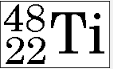
How many protons does this isotope of titanium have?
a)
48
b)
22
c)
26
d)
70
149.
How many neutrons does the isotope of lithium have?
a)
8
b)
3
c)
4
d)
5
150.

What is the mass number of bromine?

a)

35

b)

45

c)

80

d)

79.904

151.

How many neutrons does this bromine atom have?

a)

35

b)

45

c)

80

152.

What type of atom is this?

a)

Neutral atom

b)

Cation

c)

Anion

d)

Isotope

153.

How many electrons does this magnesium ion have?

a)

24

b)

12

c)

10

d)

14

154.

How many neutrons does this Neon atom have?

a)

21

b)

11

c)

10

d)

12

155.

What is the atomic number of this element?

a)

12

b)

24

c)

23

156.

What is the mass number of this element?

a)

12

b)

24

c)

23

d)

11

157.

IN AN ION THE NUMBER OF PROTONS_________ THE NUMBER OF ELECTRONS. 

a)

>

b)

<

c)

=

d)

158.

IN A POSITIVE ION, THE # OF ELECTRONS _____ # PROTONS

a)

>

b)

<

c)

=

159.

IN A NEGATIVE ION, THE # OF ELECTRONS _____ # PROTONS 

a)

>

b)

<

c)

=

160.

How many ELECTRONS does copper have if it has the following charge: Cu2+ ?

a)

64

b)

35

c)

27

d)

29

161.

If an atom has 9 protons 10 electrons and 10 Neutrons. What is the Charge of the Atom?

(a)  

162.
A ________is the force of attraction between atoms sharing electrons.
a)
Synthetic Bond
b)
Ionic Bond
c)
Molecular Bond
d)
Covalent Bond
163.
An ionic compound is held together by the _______--the force of attraction between opposite charges of the atoms.
a)
Covalent Bond
b)
Ionic Bond
c)
Synthetic Bond
d)
Molecular Bond
164.

Atoms of the an element that contain different numbers of Neutrons are know as...

a)

Ions

b)

Protons

c)

Isotopes

d)

Carbon

165.

Contains two or more atoms chemically combined Ex. O

a)

Molecule

b)

Atom

c)

Compound

d)

Electron

166.

Contains two or more different elements chemically combined Ex. NaCl or H₂O

a)

Molecule

b)

Atom

c)

Compound

d)

Electron

167.

CO₂ is a compound.

a)

True

b)

False

168.

CO₂ is a Molecule.

a)

True

b)

False

169.

N2 is a Molecule.

a)

True

b)

False

170.

N2 is a Compound.

a)

True

b)

False

171.

Which of the following are molecules?

a)

N2

b)

CO2

c)

H2O

d)

C₆H₁₂O₆

172.

Which of the following are compounds?

a)

N2

b)

CO2

c)

H2O

d)

C₆H₁₂O₆

173.

An atom that has gained or lost an electron is known as a ...

a)

Proton

b)

Isotope

c)

Ion

d)

Carbon

174.
Why do elements bond?
a)
To be friends
b)
To create a new element
c)
To become stable
175.
What is a valence electron?
a)
The sum of neutrons and protons.
b)
The # of electrons in the last shell.
c)
A type of bond.
d)
A popular compound.
176.
How are covalent bonds formed?
a)
Sharing of electrons
b)
Transfer of electrons
177.
A ________is the force of attraction between atoms sharing electrons.
a)
Synthetic Bond
b)
Ionic Bond
c)
Molecular Bond
d)
Covalent Bond
178.
The atomic number is equal to _.
a)
the number of protons and electrons
b)
the number of neutrons only
c)
the total number of protons and neutrons
d)
the number of protons neutrons and electrons
179.
Is the element shown in this image an ion, isotope or normal atom?
a)
atom
b)
isotope
c)
cation (+ ion)
d)
anion (- ion)
180.
Helium (He atomic number 2) has 2 protons, 2 neutrons, and 2 electrons) is the He element shown above an atom, an element, or an isotope?
a)
atom
b)
cation  (+ ion)
c)
isotope
d)
anion (-)
181.
The atomic mass is equal to _.
a)
the number of protons only
b)
the number of neutrons only
c)
the total number of protons and neutrons
d)
the number of protons, neutrons, and electrons.
182.
When forming an ionic bond, a metal atom
a)
Gains electrons to form a cation
b)
Loses electrons to form a cation
c)
Gains electrons to form an anion
d)
Loses electrons to form an anion
183.
What elements generally make an ionic bond?
a)
metal and nonmetal
b)
2 or more nonmetals
c)
metal
d)
none of the above
184.
What elements generally make a covalent bond?
a)
metal and nonmetal
b)
2 or more nonmetals
c)
metal
d)
none of the above
185.
In chemical compounds, covalent bonds form when
a)
the electronegativity difference between two atoms is very large.
b)
electrons are completely transferred between two metals.
c)
pairs of electrons are shared between two nonmetal atoms.
d)
two nonmetal atoms are attracted to each other by opposite charges.
186.
An ionic bond forms when 
a)
Valence electrons are shared
b)
a sea of mobile electrons surround the cations
c)
valence electrons are transferred between atoms
d)
none of the above
187.
Predict the bond that will form between Be and F.
a)
Ionic
b)
Covalent
188.
Predict the bond that will form between Se and Cl.
a)
Ionic
b)
Covalent
189.
Predict the bond that will form between Sr and S.
a)
Ionic
b)
Covalent
190.
What is a valence electron?
a)
an electron that is found in the outermost shell of an atom. 
b)
an electron found in the innermost shell of an atom.
c)
an electron found in the middle shell.
191.
What type of diagram is this?
a)

Lewis Dot Diagram, similar to Bohr

b)
Bohr Model
c)
Alkali Diagram
d)
Chemical Diagram
192.
How many valence electrons in this structure?
a)
6
b)
5
c)
4
d)
7
193.
A positively or negatively charged particle.
a)
covalent bond
b)
compound
c)
ion
d)
chemical bond
194.
A chemical bond between oppositely charged ions.
a)
compound
b)
ion
c)
covalent bond
d)
ionic bond
195.
Shows an element's combining ability or how many electrons has been gained or lost.
a)
ionic bond
b)
superscript or oxidation number
c)
chemical bond
d)
chemical formula
196.
A chemical bond formed between shared atoms.
a)
chemical bond
b)
covalent bond
c)
oxidation #
d)
ionic bond
197.
Substance made from two or more combined atoms. 
a)
ion
b)
covalent bond
c)
ionic bond
d)
compound
198.
Tells what elements a compound contains and the number of those atoms.
a)
compound
b)
ion
c)
chemical formula
d)
ionic bond
199.
Force that holds together atoms in a substance.
a)
compound
b)
ion
c)
chemical bond
d)
ionic bond
200.
How many atoms of Oxygen are in this compound?
a)
4
b)
1
c)
12
d)
7
201.
How many elements make up this compound?
a)
6
b)
4
c)
2
d)
3
202.

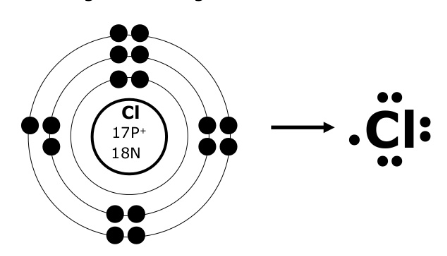
On the left is the Bohr Model of Chlorine. On the right is the Lewis Dot structure. Select the Lewis Dot for Oxygen

a)

b)

203.

In the process of ionic bonding, ions come together because

a)

opposite charges repel

b)

positive and negative ions attract

c)

salt is magnetic

d)

like charges attract each other

204.
What is the name for an ion with a positive charge?
a)
cation
b)
anion
c)
onion
d)
union
205.
What is the name for an ion with a negative charge?
a)
cation
b)
anion
c)
onion
d)
union
206.

Ionic bonds form between two ions that have

a)

negative charges

b)

positive charges

c)

opposite charges

207.
A(n) _____________ is an atom or group of atoms that has an electric charge. 
a)
ion
b)
electron
208.

Calcium LOSES electrons. Calcium is now more ______ that it was before.

a)

positive

b)

negative

209.

What are ions?

a)
Molecules with balanced electrons
b)
Protons and neutrons combined
c)
Atoms with only one electron
d)
Atoms or molecules that have gained or lost electrons
210.

Which type of bond would be most common between a metal and a nonmetal?

a)

Covalent bond

b)

Ionic bond

c)

Metallic bond

d)

Polar covalent bond

211.
Which of these is a property of metals?
a)
It's malleable
b)
It can't conduct electricity
c)
They are used in food
d)
It's very brittle
212.
Which of these is a property of metals?
a)
It's malleable
b)
It can't conduct electricity
c)
They are used in food
d)
It's very brittle
213.
Which of these grouping of elements could have the characteristic of brittle?
a)
Metal
b)
Nonmetal
214.
Which of the following is a good conductor of heat?
a)
Metal
b)
Nonmetal
c)
Metalloid
215.
Some characteristics of a metal are that it is malleable and ductile.
a)
TRUE
b)
FALSE
216.
Iron is a good conductor, malleable and magnetic. What type of element is Iron? 
a)
Metal
b)
Nonmetal
c)
Metalloid
d)
Pretty
217.
Which elements are found on the left to middle of The Periodic Table? 
a)
Metals
b)
Nonmetals
c)
Metalloids
d)
Candles
218.
Silicon is a semiconductor and has properties of both metals and nonmetals. What type of element is Silicon? 
a)
Metal
b)
Nonmetal
c)
Metalloid
d)
Pretty
219.
Which elements are found on the right side of The Periodic Table?
a)
Metals
b)
Nonmetals
c)
Metalloids
d)
Water
220.
Which element is a metalloid?
a)
Titanium
b)
Selenium
c)
Potassium
d)
Polonium
221.
Anytime you see the word SEMICONDUCTOR - what substance do you have?
a)
Metal
b)
Nonmetal
c)
Metalloid
222.

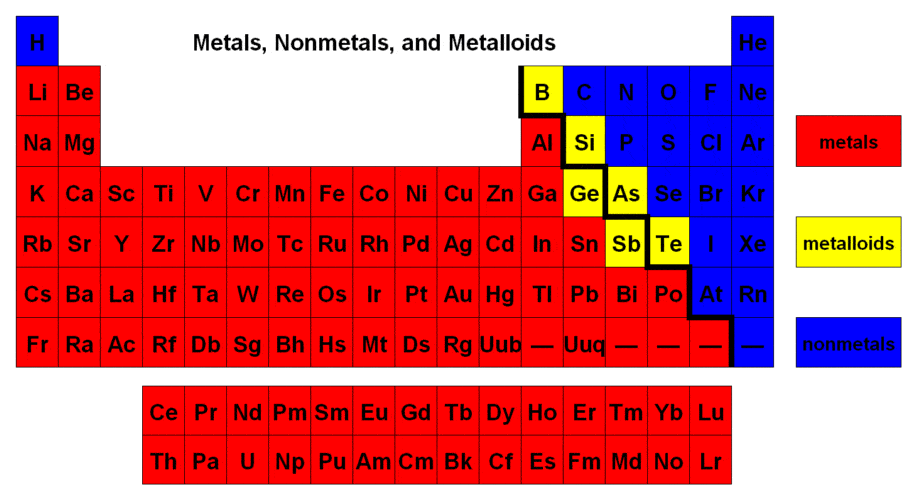
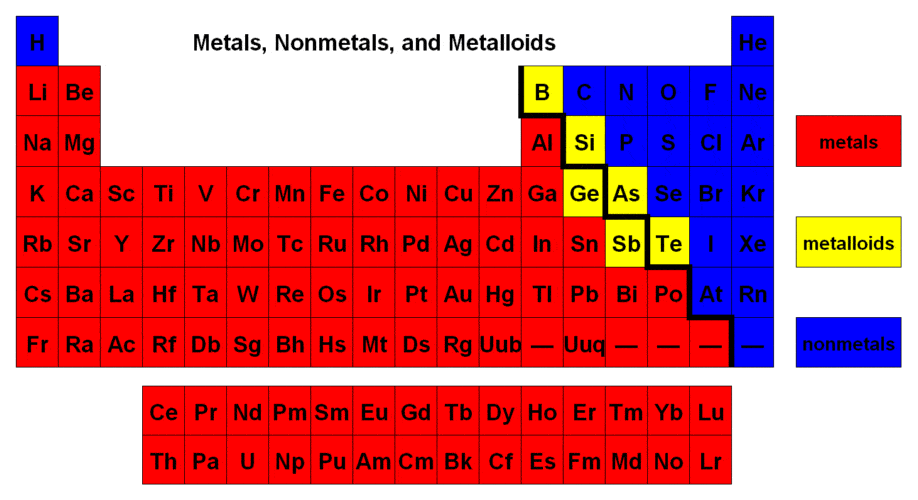
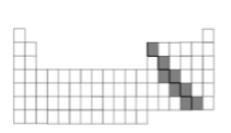
Elements in the shaded area can best be described as -

a)

Malleable

b)

Brittle

c)

Dull

d)

Insulators

223.

Elements in the shaded area can best be described as -

a)

Shiny and brittle

b)

Insulators

c)

Good conductors

224.
Look at the periodic table that is provided. Where would nonmetals be located? 
a)
to the left of the table 
b)
to the right of the table 
c)
in the zigzag line 
225.
Look at the periodic table that is provided. Where would metals be located? 
a)
to the left of the table 
b)
to the right of the table 
c)
in the zigzag line 
226.

Fill in the blank: Nonmetals have a ___________ surface, and they do not conduct heat or electricity.

a)

electricity

b)

dull

c)

changed

d)

luster

e)

metals

227.

Which elements are shiny?

a)

metals only

b)

nonmetals only

c)

metals and nonmetals

d)

metals and MAYBE metalloids

228.

Which elements are to the right of the zig zag?

a)

metals

b)

nonmetals

c)

metalloids

229.

How did you find out if an element is a good conductor?

a)

it lit up a light bulb

b)

hit it with a hammer

c)

bubbled in the presence of acid

d)

turned black

230.

ductile means...

a)

can be made into wire

b)

can be bent or hammered

c)

can light up a light bulb

d)

it's shiny

231.

copper can be used to make statues like the statue of liberty

a)

therefore copper is malleable

b)

therefore copper is ductile

c)

therefore copper is shiny

d)

therefore copper is a conductor

232.

Substances that can be hammered into thin sheets are:

a)

metals

b)

nonmetals

c)

both metals and nonmetals

233.

Which three groups of the Periodic Table contain the most elements classified as metalloids (semimetals)?

a)

1, 2, and 13

b)

14, 15, and 16

c)

2, 13, and 14

d)

16, 17, and 18

234.

The metalloids that are included in Group 15 are antimony and

a)

N

b)

P

c)

As

d)

Bi

235.

Which property is most associated with nonmetals?

a)

Malleability

b)

Ductility

c)

Brittleness

d)

Conductivity

236.

Which of the following elements is a nonmetal?

a)

Iron

b)

Oxygen

c)

Aluminum

d)

Magnesium

237.

You know that 12 inches = 1 foot.  60 inches is (a)   feet.

Choose from the below words
720 feet
5 feet
5 inches
72 feet
238.
You know 1000 mg = 1 g.  Convert 2.5 grams into milligrams.
a)
25 mg
b)
25,000 mg
c)
250 mg
d)
2500 mg
239.
You know that 12 inches = 1 foot.  Convert 60 inches to feet.
a)
720 feet
b)
5 feet
c)
5 inches
d)
72 feet
240.
You know 1000 mg = 1 g.  Convert 2.5 grams into milligrams.
a)
25 mg
b)
25,000 mg
c)
250 mg
d)
2500 mg
241.

How many inches are in 1 mile? (5280ft = 1mi; 12in = 1ft)

a)

66330in

b)

63360in

c)

63660in

d)

63066in

242.
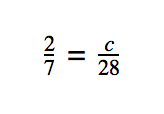
Solve the proportion:
a)
4
b)
8
c)
14
d)
10
243.
Solve the proportion.
a)
1
b)
3
c)
6
d)
5
244.
A 12-ounce bottle of shampoo lasts Enrique 16 weeks. How long would you expect an 18-ounce bottle of the same brand to last him?
a)
24 Weeks
b)
24-ounce bottle
c)
10.6 Weeks
d)
10.6-ounce bottle
245.
The class has 12 girls and 16 boys. What is the ratio of total students to boys? (simplest form)
a)
28/16
b)
7/4
c)
16/28
d)
12/16
246.

The Olympic record for the high jump is just over 2.6 yards. What is that distance in feet? (3 ft = 1 yd)

a)

0.867 ft

b)

7.8 ft

c)

8.07 ft

d)

8.27 ft

247.

The waiting time to ride a roller coaster is 20 minutes when 150 people are in line. How long is the waiting time when 240 people are in line?

a)

32 people

b)

32 minutes

c)

12.5 minutes

d)

12.5 people

248.

Convert 62 miles/hour to feet/second. (5,280 ft = 1 mi)

a)

5,456 ft/s

b)

.003 ft/s

c)

91 ft/s

d)

909 ft/s

249.
Gas costs $3.05 a gallon, and your car travels at 27 miles for each gallon of gas. How far can you travel in your car with $95 in your pocket?
a)
11 miles
b)
840 miles
c)
7800 miles
d)
870 miles
250.

Complete the statement:
5.0 cm/min = ______ m/day

a)

72

b)

840

c)

7.2

d)

5,040,000

251.
A passenger jet has a speed of 900 km/h.
What is its speed in m/s?
(1 km = 1000 m)
a)
250 m/s
b)
324 m/s
c)
1,500 m/s
d)
2,500 m/s
252.
A bicycle has a speed of 6 m/s. What is its speed in km/h?  (1 km=1000 m)
a)
21.6 km/h
b)
16.67 km/h
c)
2.16 km/h
d)
1.67 km/h
253.
5 gallons to ? L 
1gal = 3.785 L
a)
18.95
b)
.1895
c)
1895
d)
1895000
254.
How many inches are in 1 mile?
(Hint:  5280 ft = 1 mi)
a)
66,330 in
b)
63,360 in
c)
63,660 in
d)
63,066 in
255.

Choose the best buy (lowest cost per bottle)

a)

6 bottles for $3.79

b)

9 bottles for $4.50

c)

12 bottles for $6.89

256.
You know 1000 mg = 1 g.  Convert 2.5 grams into milligrams.
a)
25 mg
b)
25,000 mg
c)
250 mg
d)
2500 mg
257.

The space station is under attack and crew needs to evacuate.

Data shows that 2 space capsules together can hold 8 people. How many capsules do you need for the whole crew of 47 people?

a)
10
b)
12
c)
15
d)
20
258.

Convert 45 kilometers to meters. (1 km = 1000 m)

a)

450 m

b)

4500 m

c)

45000 m

d)

450000 m

259.

If 1 liter of water weighs 1 kilogram, how much does 3.5 liters of water weigh?

a)

3.5 kg

b)

35 kg

c)

0.35 kg

d)

350 kg

260.
__Na + __Cl2 --> __NaCl
a)
1,1,2
b)
2,1,2
c)
2,1,1
d)
already balanced
261.
Is the following equation balanced?
4Fe + 3O2 --> 2Fe2O3
a)
yes
b)
no
262.
Is the following reaction balanced?
NaHCO3 --> Na2CO3 + H2O + CO2
a)
yes
b)
no
263.
Is the following reaction balanced?
2CH3OH + 3O2 --> 2CO2 + 4H2O
a)
yes
b)
no
264.
What is the right part of a chemical equation called...
2H2 + O2 --> 2H2O
a)
Reactants
b)
Products 
c)
Yields 
d)
Chemical Equation 
265.
What is the left part of a chemical equation called?
2H2 + O2 --> 2H2O
a)
Reactants
b)
Products 
c)
Yields 
d)
Chemical Equation 
266.

The Law of Conservation of Matter

a)

tells how many atoms of an element are contained in one molecule or formula unit.

b)

the starting materials in a chemical reaction

c)

the new substances that are formed in a chemical reaction

d)

A law stating that atoms are not created or destroyed during a chemical reaction.

267.
What is a coefficient?
a)
The small number on the right of the chemical symbol.
b)
The large number to the left of a formula.
268.
What is the little number after an element in a chemical equation called.
Example: H2
a)
Coefficient 
b)
Subscript
c)
Atom
d)
Equation