Wayground logo

Free Printable Worksheets

Font size

S
M
L
XL
Worksheets

Atomic Structure, Atomic Number, Mass Number Review

Total questions: 21

Worksheet time: 11mins

Name
Class
Date
1.

What is the mass number?

a)

the number of protons in the nucleus

b)

the number of protons and neutrons in the nucleus

c)

the number of neutrons in the nucleus

d)

the number of protons and electrons in the atom
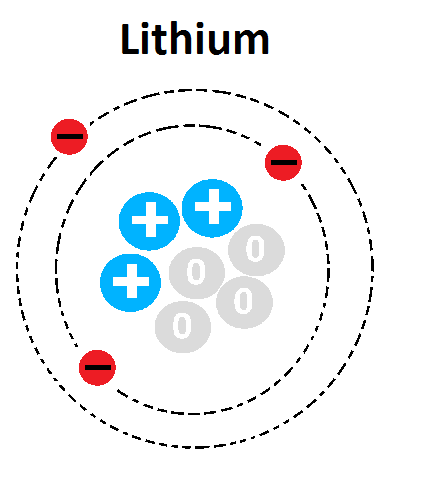
2.

What is the atomic number of this atom?

a)

1

b)

3

c)

4

d)

7

3.

What is the mass number of this atom?

a)

1

b)

3

c)

4

d)

7

4.

What is the atomic number?

a)

the number of protons in the nucleus

b)

the number of protons and neutrons in the nucleus

c)

the number of neutrons in the nucleus

d)

the number of protons in the energy levels
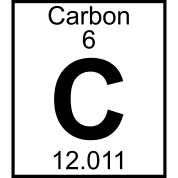
5.
In order for an atom to be neutral what has to be true?
a)
The atom has more protons than neutrons
b)
The atom has more neutrons than protons
c)
The atom has the same number of protons and neutrons
d)
The atom has the same number of protons and electrons
6.
What does the C represent?
a)
atomic mass
b)
atomic number
c)
element name
d)
chemical symbol 
7.

What does the 6 represent?

a)

Atomic mass

b)

atomic number

c)

chemical symbol

d)

element name

8.
How is the number of neutrons in the nucleus of an atom calculated?
a)
Add the number of e- and p+ together
b)
Subtract the number of e- from p+
c)
Subtract the number of p+ from the mass number
d)
Add the mass number to the number of e-
9.
What subatomic particles would you find in the nucleus of an atom?
a)
Protons only
b)
Protons and Neutrons
c)
Neutrons and Electrons
d)
Protons and Electrons 
10.
If an atom has 12 positively charged subatomic particles, which of the following must it also have to be considered a neutral atom?
a)
12 neutrons
b)
12 electrons
c)
12 protons
d)
24 protons and neutrons
11.

An atom has 10 protons, 15 neutrons and 10 electrons what is its mass number.

a)

20

b)

10

c)

35

d)

25

12.

How many electrons does this atom have?

a)

2

b)

4

c)

6

d)

10

13.
The atomic number of an element that has 9 protons, 9 electrons, and 10 neutrons is _____.
a)
9
b)
10
c)
19
d)
28
14.
An element with a mass number of 11 and an atomic number of 5 has how many neutrons?
a)
11
b)
5
c)
6
d)
16
15.
An atom has an atomic number of 15 and a mass number of 31. How many protons are there in the atom?
a)
15
b)
31
c)
16
d)
47
16.

What are the subatomic particles?

a)

Protons, Electrons, Neutrons

b)

Molecules, and atoms

c)

Electrons, Protons, Nucleus

d)

Nucleus, and Electrons

17.

What is this subatomic particle that has positive charge?

a)

Electron

b)

Neutron

c)

Proton

d)

Megatron

18.

What is this subatomic particle that has negative charge?

a)

Electron

b)

Neutron

c)

Proton

d)

Megatron

19.

What is this subatomic particle that has no charge?

a)

Electron

b)

Neutron

c)

Proton

d)

Megatron

20.

What is the small, DENSE REGION consisting of protons and neutrons at the CENTER of an atom?

a)

Molecules

b)

Nucleus

c)

Subatomic particle

d)

Atoms

21.
Where are the Electrons found in the structure of an atom?
a)
In the nucleus
b)
In spaces around the nucleus