
 Worksheets
Chapter 2- Personal Fin.- Dave Ramsey content
Total questions: 39
Worksheet time: 3hrs 25mins
Which of the following is NOT a component of a budget?
Credit score
Saving
Income
Giving
Online budgeting apps are more effective than budgeting with pen and paper.
True
False
Although the majority of Americans think budgeting is important, about _______ of Americans actually use a budget.
75%
50%
23%
35%
What are the Four Walls?
Utilities, college fund, restaurants, and car insurance
Cell phone bill, car insurance, shelter, and money for the movies
Food, utilities, transportation, and college fund
Food, utilities, shelter, and transportation
If you get married, only one person is responsible for budgeting.
True
False
How often should you create a budget?
Daily
Weekly
Monthly
Biannually
How many categories should you have in your budget?
15 or more
No limit; use as many as you need to keep your budget accurate!
No more than 10
At least 3
What does a budget show you?
How much you need to save
How much money you plan to come in and go out during the month
How much money you need to earn
How much money you spent last month
A budget says what will happen with your money, while a cash-flow statement shows what already happened.
True
False
Detailed categories on your budget will help you make better spending decisions.
True
False
Your money personality can affect your ______.
Attitude toward budgeting
Personal values
Choice of bank
Ability to budget
How many months does it usually take for your budget to start working as a budget should?
Three
Four
Five
One
Research shows that nearly half of Americans (46%) feel stress and anxiety about the amount of ______ they have.
Money
Categories in their budget
Debit cards
Personal debt
Going to the movies is an example of what types of expenses?
Intermittent and variable
Discretionary and fixed
Discretionary and variable
Intermittent and fixed
Net income is the amount you get paid before taxes.
True
False
What kind of money counts as income?
Only the money you make at your job
All money that you receive, including money from your job and gifts like birthday money
Money in your savings account
Only money deposited into your bank account
The first priority in your budget should be ______.
Giving
Spending
Saving
Investing
Why is tracking your expenses throughout the month important?
It allows you to delete categories you don't like.
It gives you insight into whether you're sticking to the budget you set.
It helps you pull money from your savings to spend in other categories.
It really isn't that important in the long run.
What is a way to stay accountable to reaching your financial goals?
Finding a person you trust to help keep you on track with your money goals
Hiring a financial advisor to make your decisions about money for you
Looking at the budget you set at the end of the month
Creating specific categories in your budget
A common misconception is that budgeting will keep you from having fun, when in reality a budget . . .
Adds more stress to your life
Means there are no rules—you are free to use your money however you want
Restricts your fun completely
Gives you permission to spend
When is the right time to start creating and living by a budget?
Right now - it's never too early!
When you start researching colleges and the costs that come along with it
Once you have a job with an income
When you decide it's time to buy a car
What is a good way to make sure you're creating a budget that's realistic?
Make sure you create a budget every single day.
Check your calendar so you can plan for upcoming monthly expenses.
Make sure your budget is perfect before starting. If it isn't just right, don't use it.
Make sure you have enough money in your savings account to pull from if you overspend.
What should you do if you overspend in one category of your budget?
Adjust your budget by removing money from other spending categories.
Just leave it. It will probably work out fine.
Take money from the Giving category. You're giving to yourself!
Ask a friend for the money you overspent.
Commission is when you make money based on the percentage of ______.
Total sales
Investments
Budgets
Items sold
The primary reason people don't budget is because they lack the behavior to stick to a budget.
True
False
Why is budgeting so important?
It's a good way to make sure all your money is spent by the end of the month.
It helps you figure out the best way to justify purchases that maybe aren't necessary.
It gives you control of your money and sets you up for financial success in the future.
It helps you brush up on your math skills.
Your monthly rent payment is an example of a variable expense.
True
False
The best way to budget is...
By using a digital app
The way that works best for you
Creating a spreadsheet
On paper
What is the envelope system?
It's a method of budgeting that uses envelopes labeled with specific budget categories for your cash.
It's a systematic approach to budgeting with a digital app that organizes categories based on qualitative amounts.
It's a way to budget that involves putting a credit card in each envelope to use for that category.
It's a system that involves writing your entire budget on an envelope.
If you have an irregular income, budgeting won't work for you.
True
False
List the Four Walls. What priority are those in your budget?
First priority
Second priority
Third priority
Fourth priority
An example of an unexpected expense that may occur is:
A sudden medical bill
Monthly rent
Grocery shopping
Regular utility bills
Which of the following best describes irregular income?
Income received at regular intervals
Income that is unpredictable and varies in amount
Income that is fixed and does not change
Income that is received monthly
What are some key components of successful budgeting?
Setting clear financial goals
Ignoring expenses
Spending without tracking
Avoiding savings
Explain the difference between a fixed expense and a variable expense, and include an example of each.
Fixed expenses remain constant each month, like rent; variable expenses fluctuate, like groceries.
Fixed expenses fluctuate each month, like groceries; variable expenses remain constant, like rent.
Both fixed and variable expenses remain constant each month.
Both fixed and variable expenses fluctuate each month.
What makes a budget a zero-based budget?
Every dollar is assigned a purpose
It starts from zero and builds up
It is based on last year's budget
It is adjusted for inflation
Which financial statement helps you understand cash inflows and outflows, and can assist in adjusting your budget for the following month?
Balance Sheet
Income Statement
Cash Flow Statement
Statement of Retained Earnings
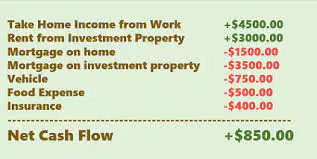
ESSAY- Pick 1 of the 3 questions here and explain what it is asking. DO NOT HIT ENTER, just keep typing and it will go to the next line!!
Question 1: What's an example of an unexpected expense that may occur? How would you adjust your budget to ensure that you don't overspend that month?
Question2: Explain cash flow statements(see image). How do they work and what specifically do they show you? Give examples of how cash flow statements will help you adjust your budget for the next month.
Question 3: Thinking about your Lisa or Jared activities and scenarios yesterday- What did you learn from their examples?(you pick 1 to explain) Then answer how are they building wealth in a positive or negative manner?
TELL me 1 thing about BUDGETING that you learned in this UNIT that you thought was pretty cool- 5 pts

