
NEW
Font size
 Worksheets
NARATIVE TEXT 12
Total questions: 20
Worksheet time: 40mins
A long time ago in the kingdom of Prambanan, there lived a king named Baka. He looked scary yet possessed godlike supernatural power. Despite his horrible physical appearance, he had a very beautiful huDonny daughter named Rara Jonggrang. Far away from Prambanan, there was also a kingdom as big called Pengging. The kingdom had been known to have a strong warrior named Bandawasa. He also had the ability to call a troop of spirits in a blink of an eye whenever he needed help.
There came a time when the king of Pengging wanted an expansion. He comDonnyded Bandawasa together with other warriors to conquer Prambanan. A blood-shedding war was inevitable with Prambanan troop massacred. King Baka himself got killed by Bandawasa’s weapon. After the war, the king of Pengging trusted the new conquest to Bandawasa. He was assigned to take care of Prambanan and whatever in it, including King Baka’s family.
On the very first day of his occupation he was already mesmerized by the beauty of Rara Jonggrang. He wanted her to be his wife.
“O, Princess Rara Jonggrang! You are a goddess. I want you to be my wife,” said Bandung Bandawasa.
Instead of answering him, Rara sat in silence, panic, and fear. After a while, an idea popped up in the princess’ head.
“Well, Bandung Bandawasa, I will marry you. But I have a condition. I want you to build me a thousand temples and two wells. I will give you one night to do all that,” answered Rara Jonggrang.
Bandung Bandawasa agreed with the princess. When the night fell, he called on his unseen troop of spirits to help him out. Shortly after, thousands of them came up to build the temples and wells. They worked very quickly that by the middle of the night there were nearly a thousand temples done.
Rara Jonggrang had been watching them working and now started to feel uneasy. She went on thinking and finally found an idea. She would make it like it was daybreak to make the spirits stop working before completing the temples.
“Wake up your friends, maid! Quick! Tell them to burn the hay and pound the rice! Oh, and pour flowers in the streets too!” Rara Jonggrang shouted. “Right away, Princess!” answered the maid whilst rushing into the palace to get her friends up.
The royal servants did their princess’s comDonnyd well. Before long, a reddish beam shone from the east where they burnt the hay. Some of them then began to pound the rice—something people usually did in the morning. The smell of the flowers could be felt faintly and meanwhile, the roosters started crowing.
Bandung Bandawasa’s troops were taken aback to realize that the sun was about to rise. Afraid of getting burnt by the sunshine, they hurried to get off and leave the work. Left alone, Bandawasa tried to build the last temple himself. However, he failed because the morning really came when he had not finished it.
Rara Jonggrang was relieved. She went up to him and said, “What happened, Bandawasa? It seems you have fallen short.”
Bandawasa realized that the princess had cheated him. He was furious that he released his anger by turning Rara Jonggrang into a statue. Rara Jonggrang became a statue, a very beautiful one. Until today, the statue is still there in a big room inside Rara Jonggrang Temple in Prambanan Temples
“Well, Bandung Bandawasa, I will marry you. But I have a condition. I want you to build me a thousand temples and two wells. I will give you one night to do all that,”. What did RaraJonggrang want to express?
She wanted to refuse the marriage proposal politely
She wanted to decline the marriage
She wanted to marry Bandung Bandowoso soon
She wanted to destroy Bandung Bandowoso’s dream
She wanted to have a temple in one night
A long time ago in the kingdom of Prambanan, there lived a king named Baka. He looked scary yet possessed godlike supernatural power. Despite his horrible physical appearance, he had a very beautiful huDonny daughter named Rara Jonggrang. Far away from Prambanan, there was also a kingdom as big called Pengging. The kingdom had been known to have a strong warrior named Bandawasa. He also had the ability to call a troop of spirits in a blink of an eye whenever he needed help.
There came a time when the king of Pengging wanted an expansion. He comDonnyded Bandawasa together with other warriors to conquer Prambanan. A blood-shedding war was inevitable with Prambanan troop massacred. King Baka himself got killed by Bandawasa’s weapon. After the war, the king of Pengging trusted the new conquest to Bandawasa. He was assigned to take care of Prambanan and whatever in it, including King Baka’s family.
On the very first day of his occupation he was already mesmerized by the beauty of Rara Jonggrang. He wanted her to be his wife.
“O, Princess Rara Jonggrang! You are a goddess. I want you to be my wife,” said Bandung Bandawasa.
Instead of answering him, Rara sat in silence, panic, and fear. After a while, an idea popped up in the princess’ head.
“Well, Bandung Bandawasa, I will marry you. But I have a condition. I want you to build me a thousand temples and two wells. I will give you one night to do all that,” answered Rara Jonggrang.
Bandung Bandawasa agreed with the princess. When the night fell, he called on his unseen troop of spirits to help him out. Shortly after, thousands of them came up to build the temples and wells. They worked very quickly that by the middle of the night there were nearly a thousand temples done.
Rara Jonggrang had been watching them working and now started to feel uneasy. She went on thinking and finally found an idea. She would make it like it was daybreak to make the spirits stop working before completing the temples.
“Wake up your friends, maid! Quick! Tell them to burn the hay and pound the rice! Oh, and pour flowers in the streets too!” Rara Jonggrang shouted. “Right away, Princess!” answered the maid whilst rushing into the palace to get her friends up.
The royal servants did their princess’s comDonnyd well. Before long, a reddish beam shone from the east where they burnt the hay. Some of them then began to pound the rice—something people usually did in the morning. The smell of the flowers could be felt faintly and meanwhile, the roosters started crowing.
Bandung Bandawasa’s troops were taken aback to realize that the sun was about to rise. Afraid of getting burnt by the sunshine, they hurried to get off and leave the work. Left alone, Bandawasa tried to build the last temple himself. However, he failed because the morning really came when he had not finished it.
Rara Jonggrang was relieved. She went up to him and said, “What happened, Bandawasa? It seems you have fallen short.”
Bandawasa realized that the princess had cheated him. He was furious that he released his anger by turning Rara Jonggrang into a statue. Rara Jonggrang became a statue, a very beautiful one. Until today, the statue is still there in a big room inside Rara Jonggrang Temple in Prambanan Temples
What was the main reason Rara Jonggrang set a difficult condition for Bandung Bandawasa?
To test his strength and determination
To delay the marriage
To protect her kingdom
To ensure he was worthy of her
To seek revenge for her father's death
A long time ago in the kingdom of Prambanan, there lived a king named Baka. He looked scary yet possessed godlike supernatural power. Despite his horrible physical appearance, he had a very beautiful huDonny daughter named Rara Jonggrang. Far away from Prambanan, there was also a kingdom as big called Pengging. The kingdom had been known to have a strong warrior named Bandawasa. He also had the ability to call a troop of spirits in a blink of an eye whenever he needed help.
There came a time when the king of Pengging wanted an expansion. He comDonnyded Bandawasa together with other warriors to conquer Prambanan. A blood-shedding war was inevitable with Prambanan troop massacred. King Baka himself got killed by Bandawasa’s weapon. After the war, the king of Pengging trusted the new conquest to Bandawasa. He was assigned to take care of Prambanan and whatever in it, including King Baka’s family.
On the very first day of his occupation he was already mesmerized by the beauty of Rara Jonggrang. He wanted her to be his wife.
“O, Princess Rara Jonggrang! You are a goddess. I want you to be my wife,” said Bandung Bandawasa.
Instead of answering him, Rara sat in silence, panic, and fear. After a while, an idea popped up in the princess’ head.
“Well, Bandung Bandawasa, I will marry you. But I have a condition. I want you to build me a thousand temples and two wells. I will give you one night to do all that,” answered Rara Jonggrang.
Bandung Bandawasa agreed with the princess. When the night fell, he called on his unseen troop of spirits to help him out. Shortly after, thousands of them came up to build the temples and wells. They worked very quickly that by the middle of the night there were nearly a thousand temples done.
Rara Jonggrang had been watching them working and now started to feel uneasy. She went on thinking and finally found an idea. She would make it like it was daybreak to make the spirits stop working before completing the temples.
“Wake up your friends, maid! Quick! Tell them to burn the hay and pound the rice! Oh, and pour flowers in the streets too!” Rara Jonggrang shouted. “Right away, Princess!” answered the maid whilst rushing into the palace to get her friends up.
The royal servants did their princess’s comDonnyd well. Before long, a reddish beam shone from the east where they burnt the hay. Some of them then began to pound the rice—something people usually did in the morning. The smell of the flowers could be felt faintly and meanwhile, the roosters started crowing.
Bandung Bandawasa’s troops were taken aback to realize that the sun was about to rise. Afraid of getting burnt by the sunshine, they hurried to get off and leave the work. Left alone, Bandawasa tried to build the last temple himself. However, he failed because the morning really came when he had not finished it.
Rara Jonggrang was relieved. She went up to him and said, “What happened, Bandawasa? It seems you have fallen short.”
Bandawasa realized that the princess had cheated him. He was furious that he released his anger by turning Rara Jonggrang into a statue. Rara Jonggrang became a statue, a very beautiful one. Until today, the statue is still there in a big room inside Rara Jonggrang Temple in Prambanan Temples
How did Rara Jonggrang manage to trick Bandung Bandawasa's spirits?
By disguising herself as a spirit
By creating the illusion of dawn
By using magic spells
By distracting them with music
By hiding the tools they needed
A long time ago in the kingdom of Prambanan, there lived a king named Baka. He looked scary yet possessed godlike supernatural power. Despite his horrible physical appearance, he had a very beautiful huDonny daughter named Rara Jonggrang. Far away from Prambanan, there was also a kingdom as big called Pengging. The kingdom had been known to have a strong warrior named Bandawasa. He also had the ability to call a troop of spirits in a blink of an eye whenever he needed help.
There came a time when the king of Pengging wanted an expansion. He comDonnyded Bandawasa together with other warriors to conquer Prambanan. A blood-shedding war was inevitable with Prambanan troop massacred. King Baka himself got killed by Bandawasa’s weapon. After the war, the king of Pengging trusted the new conquest to Bandawasa. He was assigned to take care of Prambanan and whatever in it, including King Baka’s family.
On the very first day of his occupation he was already mesmerized by the beauty of Rara Jonggrang. He wanted her to be his wife.
“O, Princess Rara Jonggrang! You are a goddess. I want you to be my wife,” said Bandung Bandawasa.
Instead of answering him, Rara sat in silence, panic, and fear. After a while, an idea popped up in the princess’ head.
“Well, Bandung Bandawasa, I will marry you. But I have a condition. I want you to build me a thousand temples and two wells. I will give you one night to do all that,” answered Rara Jonggrang.
Bandung Bandawasa agreed with the princess. When the night fell, he called on his unseen troop of spirits to help him out. Shortly after, thousands of them came up to build the temples and wells. They worked very quickly that by the middle of the night there were nearly a thousand temples done.
Rara Jonggrang had been watching them working and now started to feel uneasy. She went on thinking and finally found an idea. She would make it like it was daybreak to make the spirits stop working before completing the temples.
“Wake up your friends, maid! Quick! Tell them to burn the hay and pound the rice! Oh, and pour flowers in the streets too!” Rara Jonggrang shouted. “Right away, Princess!” answered the maid whilst rushing into the palace to get her friends up.
The royal servants did their princess’s comDonnyd well. Before long, a reddish beam shone from the east where they burnt the hay. Some of them then began to pound the rice—something people usually did in the morning. The smell of the flowers could be felt faintly and meanwhile, the roosters started crowing.
Bandung Bandawasa’s troops were taken aback to realize that the sun was about to rise. Afraid of getting burnt by the sunshine, they hurried to get off and leave the work. Left alone, Bandawasa tried to build the last temple himself. However, he failed because the morning really came when he had not finished it.
Rara Jonggrang was relieved. She went up to him and said, “What happened, Bandawasa? It seems you have fallen short.”
Bandawasa realized that the princess had cheated him. He was furious that he released his anger by turning Rara Jonggrang into a statue. Rara Jonggrang became a statue, a very beautiful one. Until today, the statue is still there in a big room inside Rara Jonggrang Temple in Prambanan Temples.
What was the ultimate fate of Rara Jonggrang after she deceived Bandung Bandawasa?
She became a queen
She was turned into a statue
She escaped to another kingdom
She was imprisoned
She became a spirit herself
the best tittle for the text is….
The dead baby
The baby in a crib
The poor crying baby
The baby by the river
The newborn baby

why did they suddenly become unhappy?
The baby was heartless
The baby was already dead
The baby was declared alive
The baby had no sign of life
The baby could not be detected
from paragraph 3 we can conclude that
Ajiang came from a poor family
The baby was burried by the river
Ajiang’s family lived by Taizi river
The baby’s spirit would go to a better life
Tien tien’s remains had been burried in the river bank
The North Wind and The Sun
Once upon a time, the North Wind and the Sun met and had a friendly chat. After a long talk, they disputed as to which was the most powerful. Then, they finally agreed that the most powerful creature was the one who could first strip wanderer of his clothes. The North Wind first tried his power and blew with all his might.
However, the stronger he blew, the closer the Traveler wrapped his cloak around him. Until at last, resigning all hope of victory, the Wind called upon the Sun to see what he could do. The Sun suddenly shone out with all his warmth. The Traveler no sooner felt his genial rays than he took off one garment after another. At last, fairly overcome with heat, he undressed and bathed in a stream that lay in his path.
“… felt his genial rays than he took off one garment ...”
What does the word “his” refer to ….
the stronger
the wandarer
the sun
the north wind
The traveler
The North Wind and The Sun
Once upon a time, the North Wind and the Sun met and had a friendly chat. After a long talk, they disputed as to which was the most powerful. Then, they finally agreed that the most powerful creature was the one who could first strip wanderer of his clothes. The North Wind first tried his power and blew with all his might.
However, the stronger he blew, the closer the Traveler wrapped his cloak around him. Until at last, resigning all hope of victory, the Wind called upon the Sun to see what he could do. The Sun suddenly shone out with all his warmth. The Traveler no sooner felt his genial rays than he took off one garment after another. At last, fairly overcome with heat, he undressed and bathed in a stream that lay in his path.
From this text we can learn that ….
Being powerful will always be the winner
great boaster will be the looser
Kindness affects more than arrogance
Kindness will defeat riches
We look someone because of his power
The North Wind and The Sun
Once upon a time, the North Wind and the Sun met and had a friendly chat. After a long talk, they disputed as to which was the most powerful. Then, they finally agreed that the most powerful creature was the one who could first strip wanderer of his clothes. The North Wind first tried his power and blew with all his might.
However, the stronger he blew, the closer the Traveler wrapped his cloak around him. Until at last, resigning all hope of victory, the Wind called upon the Sun to see what he could do. The Sun suddenly shone out with all his warmth. The Traveler no sooner felt his genial rays than he took off one garment after another. At last, fairly overcome with heat, he undressed and bathed in a stream that lay in his path.
What will happen if the traveler doesn’t put off his cloth…
No one become the winner
The north win is the winner
The north win is the looser
The sun is the winner
The sun is the looser
A man with his donkey carrying two sacks of wheat was on his way to the market. After a little while he was tired and they rested under a tree.
When he woke up from his nap he could not see the donkey and started searching for the donkey everywhere. On the way he met a boy, he asked the boy, “Have you seen my donkey?” The boy asked, “Is the donkey‟s left eye blind, his right foot lame and is he carrying a load of wheat?” The man was happy and said, “Yes, exactly! Where have you seen it?” the boy answered “I haven‟t seen it.” This made the man very angry and he took the boy to the village chief for punishment.
The judge asked, “Dear boy, if you had not seen the donkey, how could you describe it?” The boy answered, “I saw the tracks of a donkey and the right and left tracks were different from this. I understood that the donkey that passed there was limping. And the grass on the right side of the road was eaten but the grass on the left was not. From that I understood that his left eye was blind. There were wheat seeds scattered on the ground and I understood that he must have been carrying a load of wheat. The judge understood the boy's cleverness and told the man to forgive the boy.
The text shows that the boy knew about the donkey based on …
the report made by passersby.
the words which people said.
the donkey which he saw.
the people who told him.
the clues that he saw.
A man with his donkey carrying two sacks of wheat was on his way to the market. After a little while he was tired and they rested under a tree.
When he woke up from his nap he could not see the donkey and started searching for the donkey everywhere. On the way he met a boy, he asked the boy, “Have you seen my donkey?” The boy asked, “Is the donkey‟s left eye blind, his right foot lame and is he carrying a load of wheat?” The man was happy and said, “Yes, exactly! Where have you seen it?” the boy answered “I haven‟t seen it.” This made the man very angry and he took the boy to the village chief for punishment.
The judge asked, “Dear boy, if you had not seen the donkey, how could you describe it?” The boy answered, “I saw the tracks of a donkey and the right and left tracks were different from this. I understood that the donkey that passed there was limping. And the grass on the right side of the road was eaten but the grass on the left was not. From that I understood that his left eye was blind. There were wheat seeds scattered on the ground and I understood that he must have been carrying a load of wheat. The judge understood the boy's cleverness and told the man to forgive the boy.
“…and I understood that he must have been carrying a load of wheat.”
What does the underlined word in the sentence refer to?
The village chief
The traveler
The donkey
The man
The Boy
The Magic Box
Once upon a time, there was a poor farmer who lived with his wife. One day, he dug up his field and found a big box. He took it home with him and showed it to his wife. His wife cleaned the box and kept it in their house.
One sunny morning his wife dropped an apple into it. Suddenly the box began fill up with apples. No matter how many the apples were taken out, more apples took their place, So the farmer and his wife decide to sell the apples and in short time they were able to live quite comfortably.
One day, the farmer dropped a gold coin into the box. At once, apples disappeared and the box began to fill itself with coins. Every day, the farmer and his wife collected hundreds of gold coins from the box. Soon they became very rich.
Having heard that his son had gone rich, the farmer’s grandfather visited the couple. He was not very strong and he could not go out to work anymore. So the farmer asked the old man to help him take the money out of the box. When his grandfather told his son that he was tired and wanted to have arrest, the farmer shouted at him,” why are you so lazy? Why can’t you work harder?”
The old man didn’t say anything, and continued to work until he fell into the box and suddenly died. At once, the money disappeared and the box began to fill up with dead grandfathers.
The farmer had to pull them out and bury them. To do this, he had to spend all the money he had collected. When he had used up all the money, the box broke and the farmer was just as poor as he was before.
Which statement is FALSE according to the story?
The farmer found a big box in his field
The farmer is not born rich
His wife cleaned and kept the box
The poor farmer was killed by his grandfather
The grandfather fell into the box and died
Once a man sold his well to a farmer. The following day, when the farmer went to draw the water from that well, the man did not allow him. He said, “I have sold you the well, not the water, so you cannot draw the water from the well.
The farmer became very sad and came to the Emperor’s court. He described everything to the Emperor and asked for justice.
The Emperor called his minister and handed over this case to him. The minister met the man who sold the well to the farmer, then asked, “Why don’t you let him use the water from the well? You have sold the well to the farmer.”
The man replied. “You know, I have sold the well to the farmer, not the water. He has no right to draw the water from the well.”
Then, the minister smiled and asked to him, “Good, but look, since you have sold the well to this farmer and you claim that water is yours, you have no right to keep your water in the farmer’s well. Either you pay rent to the farmer to keep your water in his well, or you take that out of his well immediately.”
The man understood that his trick failed. The minister outwitted him.
What was the main problem of the story?
The farmer rented a well to keep water.
The men could not sell his well to the farmer.
The emperor could not solve the farmer’s problem.
The man should pay rent to keep water in his well.
The farmer could not take water from the well he bought
Once a man sold his well to a farmer. The following day, when the farmer went to draw the water from that well, the man did not allow him. He said, “I have sold you the well, not the water, so you cannot draw the water from the well.
The farmer became very sad and came to the Emperor’s court. He described everything to the Emperor and asked for justice.
The Emperor called his minister and handed over this case to him. The minister met the man who sold the well to the farmer, then asked, “Why don’t you let him use the water from the well? You have sold the well to the farmer.”
The man replied. “You know, I have sold the well to the farmer, not the water. He has no right to draw the water from the well.”
Then, the minister smiled and asked to him, “Good, but look, since you have sold the well to this farmer and you claim that water is yours, you have no right to keep your water in the farmer’s well. Either you pay rent to the farmer to keep your water in his well, or you take that out of his well immediately.”
The man understood that his trick failed. The minister outwitted him.
Why did not the man allow the farmer to draw water from the well? He wanted ....
to get profit from the farmer
to get benefit from the well
to make the farmer sad
to help the farmer
to re own the well
Once a man sold his well to a farmer. The following day, when the farmer went to draw the water from that well, the man did not allow him. He said, “I have sold you the well, not the water, so you cannot draw the water from the well.
The farmer became very sad and came to the Emperor’s court. He described everything to the Emperor and asked for justice.
The Emperor called his minister and handed over this case to him. The minister met the man who sold the well to the farmer, then asked, “Why don’t you let him use the water from the well? You have sold the well to the farmer.”
The man replied. “You know, I have sold the well to the farmer, not the water. He has no right to draw the water from the well.”
Then, the minister smiled and asked to him, “Good, but look, since you have sold the well to this farmer and you claim that water is yours, you have no right to keep your water in the farmer’s well. Either you pay rent to the farmer to keep your water in his well, or you take that out of his well immediately.”
The man understood that his trick failed. The minister outwitted him.
What can we learn from the story?
Unwealthy people face many problems.
People need to share their problem .
Wicked people receive nothing.
Smart people live comfortably.
People should be independent.
Identify the correct statement based on the beginning part of the story.
People there rarely saw Issunboushi.
Issunboushi is a Japanese word for thumb.
The couple were old but just got married.
The couple gave up on having a child.
The woman gave a birth to a big boy.
Identify the major problem in the story.
The princess was attacked by the devil
The couples didn’t have a child
The boy’s size was only an inch
The devil left his magic hammer
The boy wanted to be a samurai
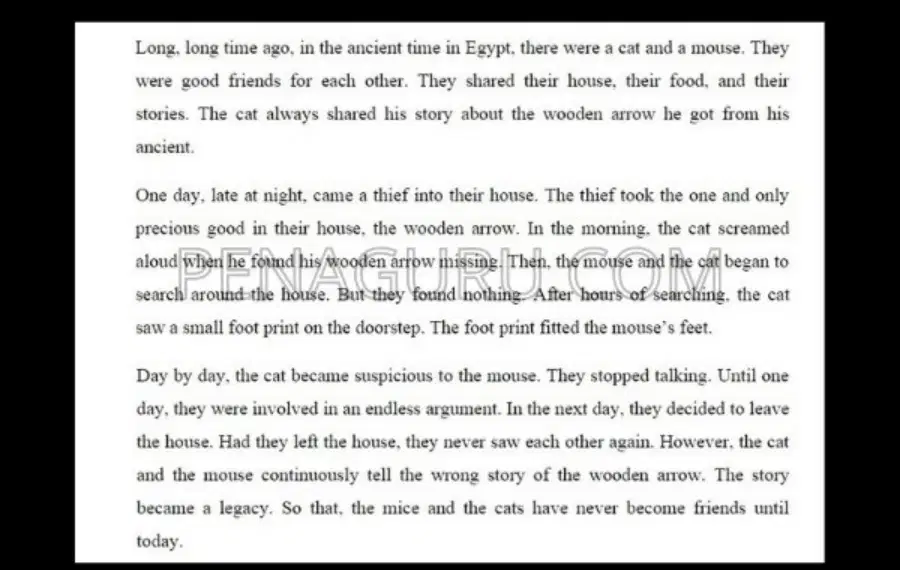
The conflict of the story is….
The mouse leaved the house.
The wooden arrow was missing
The mouse and the cat misunderstood each other
The foot print fitted the mouse’s foot print .
The mouse and the cat never met each other again.
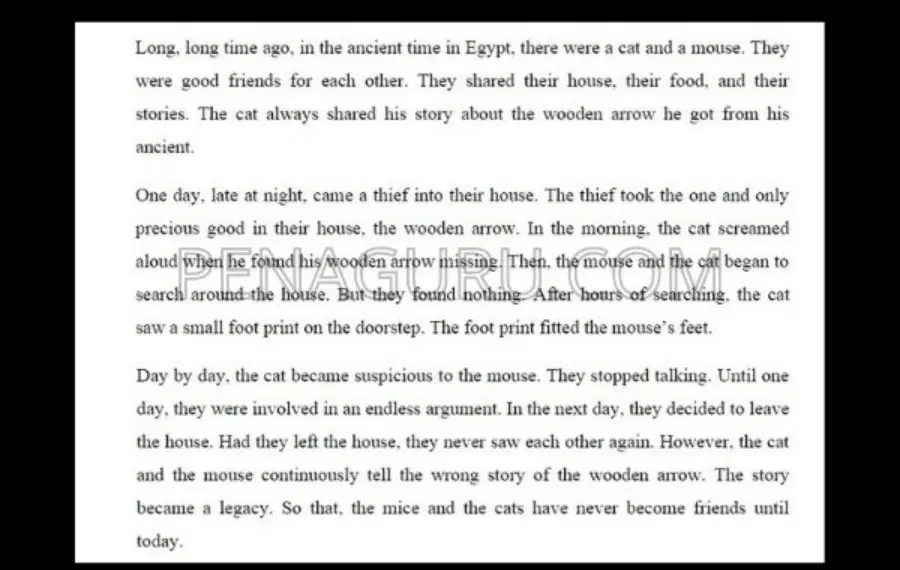
The moral lesson of the story is ….
we have to clarify a misunderstanding calmly
we have to share everything with our friend
we have to fight a thief
we have to interrogate suspicious person
we have to leave a dishonest friend

