wayground logo

Free Printable Worksheets

NEW

Font size

S
M
L
XL
Worksheets

Review Unit 2 - Matter and its Interactions

Total questions: 38

Worksheet time: 13mins
Name
Class
Date
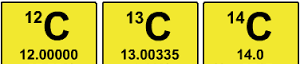
1.
What do these isotopes of carbon all have in common?
a)
neutrons & mass number
b)
atomic number and neutrons
c)
atomic number and electrons
d)
protons, atomic number, and mass number
2.
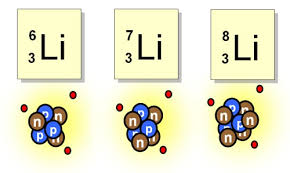
How many neutrons does the isotope of lithium have?
a)
8
b)
3
c)
4
d)
5
3.
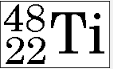
How many protons does this isotope of titanium have?
a)
48
b)
22
c)
26
d)
70
4.
In a correctly written symbol what would be located in the "A" position?
a)
number of neutrons
b)
atomic number
c)
number of electrons 
d)
mass number
5.
What quantities vary between isotopes of an element?
a)
protons, electrons, and atomic mass
b)
protons, electrons, and atomic number
c)
neutrons and electrons
d)
neutrons and atomic mass
6.
which atom has  4 neutrons?
a)
Li-6
b)
Li-7
c)
Li-8
d)
they have the same # of neutrons
7.
How many neutrons does the isotope below have?     89 36Kr
a)
53
b)
36
c)
89
d)
125
8.
An atom is electrically neutral when
a)
protons and neutrons are the same
b)
protons and electrons are the same
c)
neutrons and electrons are the same
d)
neutrons balance the protons and electrons
9.
What is the name of the pictured isotope?
a)
Chlorine-Schmorine
b)
Chlorine-17
c)
Chlorine-35
d)
Chlorine-18
10.
What is the name of the pictured isotope?
a)
Carbon-12
b)
Carbon-13
c)
Carbon-14
d)
Carbon-15
11.
Carbon has an atomic number of 6 and an atomic mass of 12. Which elements are considered isotopes of carbon?
a)
Carbon-12
b)
Carbon-13
c)
Carbon-14
d)
Both Carbon-13 and Carbon-14
12.
Adding or subtracting neutrons (charge = 0, mass = 1) makes the element change into an...
a)
ion
b)
mixture
c)
isotope
d)
neutral atom
13.

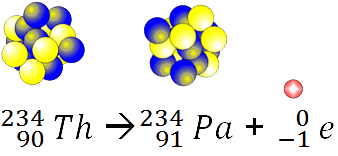
Which type of reaction does the diagram illustrate?

a)

Fission

b)

Fusion

c)

Alpha Decay

d)

Beta Decay

14.

In which process does a heavy nucleus split into two lighter nuclei?

a)

freezing

b)

condensation

c)

fission

d)

fusion

15.

In which type of reaction do two lighter nuclei combine to form one heavier nucleus?

a)

combustion

b)

oxidation

c)

nuclear fission

d)

nuclear fusion

16.
Where does fusion occur naturally?
a)
Underwater
b)
All around us
c)
In the radioactive waste
d)
On the sun
17.
In nuclear fusion, smaller atoms are forced together to create larger atoms. Does this process release, absorb or maintain energy?
a)
Absorb energy
b)
Maintain energy
c)
Release energy
18.
Which type of radioactive decay is occurring in this equation? 
a)
Alpha decay
b)
beta decay
c)
gamma decay
d)
positron emission
19.

For the balanced equation, which particle is represented by X?

a)

0-1 e

b)

11 H

c)

42 H

d)

10 n

20.

Nuclear fusion differs from nucleus fission because nucleus fusion reactions

a)

form heavier isotopes from lighter isotopes

b)

form lighter isotopes from heavier isotopes

c)

convert mass to energy

d)

convert energy to mass

21.

Which reaction represents fusion?

a)
b)
c)
d)
22.

Which reaction represents fission?

a)
b)
c)
d)
23.
What is Half-life?
a)
The amount of time it takes for some of the nuclei in a sample of the isotope to decay
b)
The amount of time it takes for half the electrons in a sample of the isotope to decay
c)
The amount of time it takes for half the nuclei in a sample of the isotope to decay
d)
the amount of time it takes to double the nuclei in a sample of the isotope to decay
24.
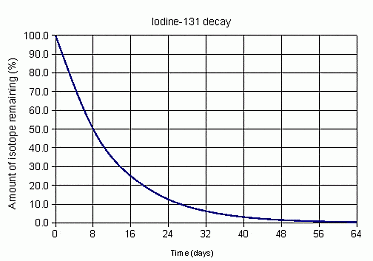
What is the half-life of iodine-131?
a)
32 days
b)
8 days
c)
16 days
d)
24 days
25.
The half-life of strontium-90 is 25 years. How much strontium-90 will remain after 100 years if the initial amount is 4.0 g?
a)
3.0g
b)
0.25mg
c)
0.3g
d)
0.25g
26.

If 25% of the carbon-14 is remaining then how many half-lives have passed?

a)
1
b)
2
c)
3
d)
4
27.
Which atom has the largest atomic radius?
a)
potassium
b)
rubidium 
c)
francium
d)
cesium
28.
The element with the largest electronegativity in the halogens is - 
a)
At
b)
F
c)
Cl
d)
Br
29.
Atomic radius generally increases as we move __________.  
a)
down a group and from right to left across a period 
b)
up a group and from left to right across a period 
c)
down a group and from left to right across a period 
d)
up a group and from right to left across a period 
30.
Electronegativity __________ from left to right within a period and __________ from top to bottom within a group.
a)
decreases, increases 
b)
increases, increases
c)
increases, decreases 
d)
stays the same, increases
31.
Which of the following pairs of elements have similar properties
a)
Barium and Calcium
b)
Sodium and Magnesium
c)
Nickel and Copper
d)
Lithium and Helium 
32.
a)
2
b)
8
c)
3
d)
13
33.
Valence electrons are the...
a)
Innermost electrons
b)
Middle electrons
c)
Outermost electrons
d)
Any electrons
34.

USE THE PERIODIC TABLE

Find the element that has 5 Valence Electrons and 4 energy levels.

a)

Arsenic - As

b)

Selenium - Se

c)

Calcium - Ca

d)

Vanadium - V

35.

USE THE PERIODIC TABLE

Find the element that has 3 Valence Electrons and 2 energy levels.

a)

Magnesium - Mg

b)

Lithium - Li

c)

Aluminum - Al

d)

Boron - B

36.

Is this the correct Lewis Dot Structure for Boron?

a)

Yes

b)

No, missing electrons

c)

No, too many electrons

d)

No, dots are in wrong place.

37.

Is this correct way to draw the Lewis Dot Structure for Carbon?

a)

Yes

b)

No, too many electrons

c)

No, not enough electrons

d)

No, each side gets one dot before they are paired up

38.
Elements in the same column of the periodic table always have the same # of _______ as one another.
a)
Protons
b)
Neutrons
c)
Electrons
d)
Valence Electrons