
 Worksheets
Natural Resources Extra Practice
Total questions: 82
Worksheet time: 1hrs 26mins
Where are fossil fuels found?
In the Earth
In the forest
In animals
In the atmosphere
Fossil fuels are produced over _____ of years.
Hundreds of millions of years
Thousands of years
hundreds of years
every year
Fossil fuels include coal, oil, and natural gas. Fossil Fuels are classified as nonrenewable because they....
take millions of years to be replaced
require expensive equipment
can be found all over Earth's surface
provide much of the energy we use

Air can be used to make (a) which is a (b) resource.
Which of the following is a nonrenewable resource?
water
oxygen
oil
wood

What does the word "resource" mean?
Another word for money.
Something that a human makes.
Something that we can use and is valuable.
Something that comes from Earth.

A Natural Resource comes from Earth. Which items are natural resources? Select ALL that apply...
wood
plastic
bricks
water
wind

The pictures show a forest before and after deforestation, a process where many trees are cut down.
Which of the following best explains why trees are called a renewable resources?
If a tree is cut down, a new tree can be planted in its place.
If a tree is cut down, the animals that depended on the tree will help the tree grow back.
Only humans use trees, so tree populations will never fall below the number that are needed.
Only paper is made from trees, so the tree population will never run out.
Geothermal energy uses heat from ____ to produce electricity.
the earth
coal
oil
natural gas
What type of power plant uses the potential energy of water trapped behind a dam?
nuclear power plant
hydroelectric power plant
solar station
tidal harness
What are fossil fuels?
coal, oil, uranium
oil, natural gas, uranium
coal, oil, natural gas
geothemals, coal, natural gas
What type of power plant uses scraps from farming and waste products to generate electricity?
Hydroelectric Power Plant
Geothermal Power Plant
Biomass Power Plant
Nuclear Power Plant
Uranium atoms are split to create a tremendous amount of energy in a _____ power plant.
biomass
geothermal
nuclear
hydroelectric
What is a disadvantage of using non-renewable resources?
They have a large carbon footprint.
They can all be used up over time.
They can lead to global warming.
All of these.
Which of the following can be a disadvantage of renewable resources?
They can be intermittent (only available at certain times or in certain places).
They release a lot of CO2 and have a large carbon footprint.
They are renewable and will always be available.
Renewable resources have no disadvantages.
As our population grows, what happens to the demand for resources
demand increases
demand decreases
there is no change
there is more recycling
Which of the following energy resources does not originally come from sunlight?
Solar power
Wind power
Biomass
Geothermal
Which of the following products is not made from a natural resource that comes from nonliving things?
Chicken parmesan
Wooden door
Aluminum can
Cotton t-shirt
Which of the following products is made from a natural resource that comes from living things?
Wood pencil
Smart phone
Diamond ring
Ceramic bowl
Which of the following resources is considered renewable?
Granite countertop
Coal
Water
Steel
Which of the following is a liquid fossil fuel?
Vegetable oil
Petroleum
Natural gas
Corn
Which of the following is a solid fossil fuel?
Coal
Gypsum
Petroleum
Granite
Which of the following forms of energy relies on turbines and generators to produce electricity?
Geothermal power
Wind power
Hydropower
Biomass
All natural resources are derived from sunlight.
True
False
Natural resources can come from living and nonliving sources.
True
False
Aluminum is a renewable resource.
True
False
All man-made resources
first come from chemicals
hurt the planet
first come from natural resources
are hard to make
How do minerals get distributed around the planet?
Geological processes like plate tectonics
Atmospheric processes like wind
Hydrological (climate) processes like rain
Which of these are activities that use non-renewable resources?
melting steel to make jewelry
growing carrots to eat
The three major fossil fuels are coal, oil, and
wood
natural gas
uranium
electricity
Fossil fuels are energy-rich because they contain
fossil fragments
heat
electricity
hydrocarbons
Wind energy is actually an indirect form of
electricity
magnetic energy
solar energy
nuclear energy
What is the most widely used source of renewable energy in the world today?
hydroelectric power
solar power
biomass fuels
tidal power
Which fossil fuel produces the lowest levels of most air pollutants?
coal
oil
petroleum
natural gas
The intense heat from Earth’s interior that warms the magma beneath Earth’s surface is called
hydrogen power
tidal energy
geothermal energy
solar energy
Any useful materials that are made by the Earth are called:
Natural Resources
Human Resources
Plants
Why is soil considered to be a nonrenewable resource?
humans can make new soil really easily
it can take 100 years for an inch of topsoil to form
soil is everywhere so it can't be in short supply
it takes one day for an inch of topsoil to form
How is most electricity made?
solar power
hydroelectric power
thermal power plants that burn fossil fuels
geothermal power
Which of these is not a disadvantage to using coal as an energy source?
it is expensive
coal mining harms the environment
burning coal releases greenhouse gasses
burning coal can cause air pollution
Which of the following is an advantage of using wind, solar or hydroelectric power ?
it is cheaper than coal
dams and wind turbines can harm wildlife
there are no harmful environmental impacts
there are no emissions
Which of the following is a disadvantage of using nuclear energy?
it is expensive
it is challenging to dispose of nuclear waste safely
there is a large potential for nuclear meltdowns
it is safe and easy to get rid of spent fuel rods
What can we best infer from the fact that some places have fossils of marine remains?
they are all coastal regions
those places where once underwater
Marine animals once lived on land
the fossils were moved there by people
Which of these are environmental benefits gained by using renewable resources?
fewer greenhouse gases emitted
fish relocated by the building of dams
migratory birds harmed by wind turbines
open space used to construct large scale solar farms
Carbon dioxide levels have significantly increased over the last 50 years. In order to see f this is causing global warming, this data should be compared to -
carbon dioxide readings taken at another station
global temperatures over the same time period
global temperatures over geologic time
automobile production over the same period

What is the most likely cause of increased carbon dioxide in the atmosphere and warming temperatures over the last 100 years?
burning fossil fuels
natural variations in Earth's orbit and tilt
increased amount of photosynthesis in oceans
decreasing amount of deforestation
Working in the best way with little wasted time or effort
Hydroelectric
Conservation
Efficient
Alternative Energy
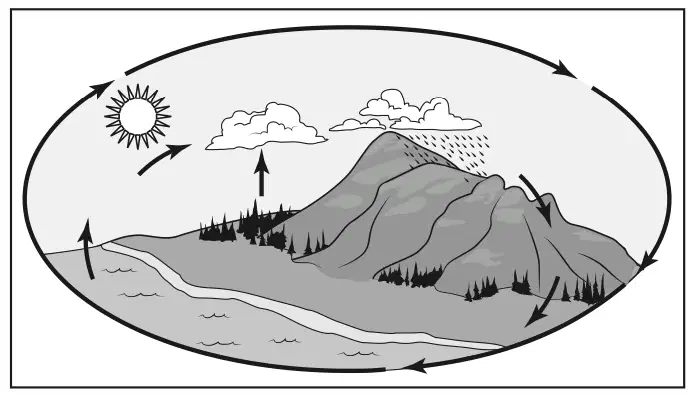
After reading about a drought in other states, a class of students began to research renewable and nonrenewable (a) . One group of students focused their research on water. The research stated that 97.5% of the water on Earth is (b) that is located mainly in the oceans. Only 2.5% of water on Earth is (c) , which is found in glaciers, ice caps, groundwater, lakes, rivers, streams, the atmosphere, and other locations where surface water is found.
Some of the fractured rock that makes up naturally occurring wells in the Appalachian Plateau region of Maryland is composed of sandstone. This type of rock was formed through
volcanic activity.
sediments compacting over time.
folding and squeezing of rock layers.
extreme pressure on and heating of rock layers.
Approximately what percent of US electricity is derived from nuclear resources?
70%
20%
35%
45%
Which is formed from the decayed, ancient remains of swamp plants?
oil
coal
natural gas
What disadvantages are there to using fossil fuels?
Climate change only
Air pollution, Climate change, oil spills, acid rain
Ocean Acidification
There are no disadvantages to fossil fuels
Wherever you find petroleum (oil), you will also find:
Coal
Natural Gas

Natural resources form in nature. Which of the following is NOT a natural resource?
oil
coal
plastic
water

Advantage or Disadvantage?
Locations for wind turbines are limited because no objects can block the wind.
Advantage
Disadvantage

Advantage or Disadvantage?
Solar panels are expensive to install.
Advantage
Disadvantage

Advantage or Disadvantage?
No solar energy is produced at night.
Advantage
Disadvantage
What is wind power?
Conversion of nuclear energy into electricity using nuclear power plants.
Conversion of water energy into electricity using hydroelectric power plants.
Conversion of solar energy into electricity using solar panels.
Conversion of wind energy into electricity using wind turbines.
Oil is used to make...
gasoline & other types of fuel
plastics, DVDs, and tires
Energy
All of the above
How can we conserve energy?
use less coal, oil, and natural gas.
use fabric bags instead of plastic.
use public transportation instead of driving a car.
All of the above

The energy of nuclear reactions between atoms that creates heat and turns turbines is _________.
Coal
Wind
Nuclear
Which of the following natural resources--select more than one--are made from dead plants AND animals?
biomass
oil
geothermal
Propane and methane are examples of __.
geothermal
biomass
natural gas
What is the main reason why fewer nuclear power plants are being built today?
Nuclear fusion plants are being built instead
Federal laws were passed prohibiting new plants
They have become too expensive
Supplies of U235 are exhausted
Which of the following is not a main use of fuel
transportation
manufacturing
heating and cooling
cooking
Much of the oil and gas in the United States is located in
Alaska, Minnesota, New York, Texas
Alaska, California, Michigan, Nevada
Texas, Colorado, New York, Gulf of Mexico
Alaska, Texas, California, Gulf of Mexico
Oil is found in and around major geologic features, such as _______, and _________, that tend to trap oil as it moves in the earth's crust.
volcanoes
faults
salt domes
folds


Which are ADVANTAGES of Biomass?
Does not create pollution and can be used all of the time.
Relatively cheap and can be replaced within a lifetime
We will never run out of these resources
The Earth can make more of these resources within 100 years
Fresh water that has been poisoned from industrial runoff to the point it is unsafe to consume
Renewable
Non-renewable
Which statement about renewable resources below is true?
Hydroelectric energy is widely used in the United States, but wind power is not
Wind is used a lot as an alternative energy source, but hydroelectric energy is not
Despite their potential, renewable resources are not used as much for energy in the U.S. yet
Natural gas powers a majority of homes in the United States, and releases no dangerous pollutants
A small town in Indiana is constructing a dam in order to use hydroelectric energy as a renewable energy source. What downside could accompany this decision?
There will not be enough water to produce electricity in the surrounding area
The dam could damage or interfere with surrounding ecosystems, and create sediment buildup
Solar energy is more common and better to use than hydroelectric energy
Hydropower is too cheap

Using the table, what could be entered into the “Cons” column?
Resource Y costs a ton of money to use since it is a renewable resource, and Resource Z can damage ecosystems
Resource Y has the potential for meltdowns and radiation exposure, while Resource Z can be very location specific
Resource Y is location specific, and Resource Z gives off dangerous pollutants into the atmosphere
Resource Y increases the Greenhouse effect, while Resource Z can only be used for transportation in the U.S.
Japan is deciding if it wants to switch and become a primarily renewable resource country. What is a downside that could accompany Japan’s decision?
There are very few renewable resources left to be used
Renewable resources can emit dangerous gases harmful to different ecosystems
Many renewable resources can be location-specific, making them hard to apply nationwide
In the long term, renewable resource costs exceed nonrenewable resource costs
A photovoltaic cell captures ____ to be used for power.
wind
water
coal
sunlight
A student was making a poster about renewable resources. Which picture would be best to use on the poster?



