
 Worksheets
Unit 2 Review
Total questions: 45
Worksheet time: 30mins
Amendment giving women the right to vote
Fourteenth
Nineteenth
Prohibition
Suffrage
journalist who writes to expose the wrongdoings of industrialization, urbanization and other social injustices
suffrage
referendum
recall
muckraker
the right to vote; a major goal of women reformers
initiative
segregation
suffrage
muckraker
winner of the 1912 Presidential election
Theodore Roosevelt
Woodrow Wilson
William Howard Taft
Upton Sinclair
President Theodore Roosevelt's program of progressive reforms designed to protect the common people against big business
Square Deal
NAACP
Seventeenth Amendment
Jim Crow Laws
Organization founded in 1909 to promote full racial equality
Progressive Movement
NAACP
NAWSA
Niagara Movement
Book that exposed the meatpacking industry's flaws
The Jungle
The Sinclair
Chicago Exposed
Unionize Now
An economic practice where the government does NOT try to control the economy.
Gospel of Wealth
laissez faire
Social Darwinism
horizontal integration
the control of an entire or most of an industry by one company
laissez faire
capitalism
monopoly
patent
In which industry did Andrew Carnegie earn his fortune?
steel
railroad
gold
oil
Which industry did Rockefeller dominate?
oil
steel
communication
railroad
the idea that industrialists exploited workers, the environment, and corrupted the gov't
captains of industry
robber barons
horizontal merger
trusts
_______ is when workers refuse to work in order to force an employer to meet their demands.
labor unions
lockouts
strike
sweatshop
During the industrial Revolution in the U.S., laissez-faire economic policies led to what?
Markets that were dominated by monopolies
The creation of strong regulations that ensured businesses did not harm the general public
Significant improvements in working conditions gained through collective bargaining by labor unions
The government placing heavy taxes on the large monopolies and truasts
Which of the following did not keep African Americans in the South from voting
literacy tests
general intimidation
poll tax
separate but equal doctrine
He said to improve themselves, African Americans should learn trades and remain patient?
Booker T. Washington
W.E.B. DuBois
What best describes the Jim Crow Laws?
They provided better opportunities for Americans
Discrimination laws that focused on African Americans
African American gaining rights in the South
They provided better opportunities for women
The power to remove elected officials before their team is up is known as:
Referendum
Initiative
Recall
Which of the following minority groups were discriminated against during the Progressive Era?
Chinese
Mexicans
Native Americans
All of the above
Progressivism is defined as:
An advanced society
A recall effort
A vote on a initiative
A series fo reform efforts that aimed to correct injustices in American life
This amendment allowed for the popular, or direct election (people voting) of U.S. Senators.
19th amendment
14th amendment
2nd amendment
17th amendment
The YMCA and Salvation Army were part of:
Moral Reform
Political Reform
Economic Reform
Social Welfare Reform
The Five Goals of Progressivism were:
Political Machines, big business, corruption, money, and prayer reform
Religion, socialism, power for the rich, more taxes, and immigration reform
Foster efficiency, moral, social, economic, and government reform
Education, immigration, political. and religious reform
Which former president was on the Supreme Court?
Teddy Roosevelt
Eugene Debs
Woodrow Wilson
William Taft
Poll taxes and literacy tests were devices used to:
deny African Americans the right to vote
extend suffrage to women and 18 year old citizens
raise money for political campaigns
prevent immigrants from becoming citizens
Which statement best describes a result of industrialization in the United States during the
mid-nineteenth century?
People moved to cities in search of economic opportunity.
Farmers began to cultivate land west of the Appalachian Mountains.
Native peoples were forcibly relocated to western territories.
Government officials began to promote the idea of Manifest Destiny.
City building and the movement of people to cities.
Industrialization
Organization
Ruralization
Urbanization
Which of the following were reasons people were leaving their countries and immigrating to the U.S.
rising taxes
Too much food
Famine
Religious and Political persecution
Escaping slavery
A tenement can be defined as
Factory producing goods without the aid of tariffs
A new type of reservoir built to collect clean water outside the city
A residential community outside the city
A low-cost apartment building designed to house as many families as the owner could pack in
Americans learned about the horrors of tenement life from whom?
John Rockefeller
Andrew Carnegie
Jacob Riis
Ida Tarbell
Which book was written to show the horrors of the tenements
The Jungle
How the Other Half Lives
Children of the Poor
The History of Standard Oil
Which of the following was a pull factor for immigrants coming to the US?
Industrial Jobs
Famine
Religious/Political Persecution
Crop Failure
Which of the following was a push factor for immigrants coming to the US?
Industrial Jobs
Religious/Political Freedom
Religious/Political persecution
Falling taxes
What was the reason for US imperialism?
To gain raw materials for industry
To create military bases around the globe
To develop markets to sell goods
All of these
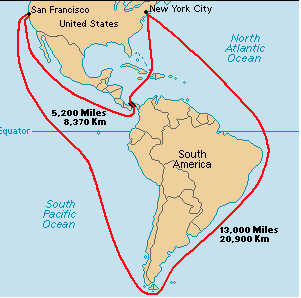
What does this map support?
The US fought the Spanish navy in the Atlantic and Pacific
The Spanish-American War led to new US territories
America became a colonial power in South America by surrounding it
The Panama Canal is critical to US trade
What was the significance of building a canal in Panama?
It would take territory away from the Spanish empire
It would allow easier economic and military access to and from the Atlantic and Pacific Oceans
It would make it easier for the US to invade countries in South America
It would allow the US to control worldwide trade
Which territory was promised independence after the Spanish-American War but was actually denied independence?
Guam
Philippines
Cuba
Puerto Rico
Most US overseas possessions in 1900 were located in the ___________ Ocean
Pacific
Atlantic
A policy in which a strong nation seeks to dominate other countries politically, economically, or socially. This led to the creation of a number of European empires which extended around the world.
annexation
imperialism
manifest destiny
expansionism
Prohibition/ Volstead Act
18
28
21
22
Congress can tax income
14
12
16
8

