
 Worksheets
Engineering Materials
Total questions: 60
Worksheet time: 1hrs 3mins
What is a subatomic particle with a positive charge that is in the nucleus of an atom?
neutron
proton
electron
valence electron
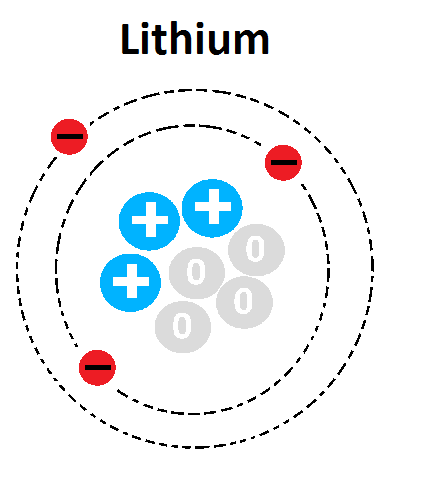
What is the atomic number of this atom?
1
3
4
7
Matter is built up of
Solid liquid gas
Atoms, Molecules , Radicals
Plastic
Small particles
Which type of bond results when one or more
valence electrons are transferred from one atom to
another?
a polar covalent bond
a nonpolar covalent bond
an ionic bond
a hydrogen bond

What is in the nucleus of an atom?
Neutrons and protons
Protons
Protons and Electrons
Neutrons and Electrons
Contains two or more different atoms combined
Elements
Compounds
Mixtures
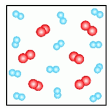

An interaction that holds two atoms together called?
Chemical Bond
Covalent Bond
Ionic Bond
Metallic Bond
Typically, atoms are more stable when they are
bonded together
apart from each other
Which type of bonding occurs between metal atoms, allowing them to conduct electricity?
Ionic bonding
Covalent bonding
Metallic bonding
Which type of bonding involves the sharing of pairs of electrons between atoms?
Ionic bonding
Covalent bonding
Metallic bonding
2. Ionic Bonding involves:
The transfer of protons
The transfer of neutrons
The transfer of electrons
None Of the above
A bond between a metal and a nonmetal is called a(n)
covalent bond
ionic bond
metallic bond
transfer bond
A bond between a nonmetal and a nonmetal is called a(n)
covalent bond
ionic bond
metallic bond
transfer bond
Metallic bonds are formed between the atoms of metals and
non-metals
metals
none of the above
all of the above
long-range order exists
Crystalline material
Amorphous Material
long-range atomic order is absent
Crystalline material
Amorphous Material
The type of solid held together by bonds in which valence electrons move throughout the solid material is known as:
amorphous solids
covalent solids
metallic solids
ionic solids
This type of soilds have ordered internal structures.
Crystalline solids
Amorphous solids
Pseudo solids
Supercooled liquids
Amorphous solids have _______ structure
Regular
Linear
Irregular
Dendritic
The crystal lattice has a _________ arrangement
One-dimensional
Two-dimensional
Three-dimensional
Four-dimensional
What are the 4 main categories of materials?
Polymers, composites, ceramics, metals
Polymers, alloys, ceramics, metals
Polymers, composites, alloys, metals
Polymers, composites, ceramics, alloys
Why are metals different from plastics?
Metals have covalent bonds, while plastics have metallic bonds.
Metals are formed by small monomers, while plastics have a crystalline structure.
Metals are chemically bonded, while plastics have free electrons.
Metals have a crystalline structure, while plastics are formed by small monomers.
Which materials are used in micro engineering?
micro processors
Ceramics such as concrete and metals such as wrought steel
Polymers and composites such as GRP, CFC
Composites such as wood and metals such as wrought iron
Which materials are used in aviation engineering?
Ceramics such as concrete
Composites such as carbon fibre and lightweight metals
Polymers such as plastics
Mild steel
What types of bonds are in ceramics?
Covalent and ionic bonds
Metallic bonds
Close compound bonds
Hydrogen bonds
What are cermets?
Compounds of ceramic particles bonded with a metallic matrix.
Compounds of metallic particles bonded with a ceramic matrix.
Compounds of plastic particles bonded with a metallic matrix.
Compounds of ceramic particles bonded with a plastic matrix.
Smallest repeating unit of crystal lattice
Lattice site
Unit cell
Crystal lattice
Lattice point
What happens to the grain size of a metal when it is annealed at a higher temperature?
The grains become smaller
The grains become larger
The grains remain the same size
The grains disappear
What is the relationship between grain size and mechanical properties?
Smaller grains make the material stronger
Larger grains make the material stronger
Grain size has no effect on strength
Grain size only affects ductility
The cause of elasticity of a substance is
deformation
large internal restoring force
low internal restoring force
less distance between the molecules

the feel or appearance of a surface or substance
texture
color
strength
uniformity

determines how easy it is to roll or hammer out the material without breaking it apart
bounce
malleability
strength
uniformity

a solid heterogeneous mixture of two or more substances that makes use of the properties of each component
composite
malleability
strength
uniformity

Which material would work best for a car tire?
rubber
glass
plastic
paper
Which of the following is not a smooth surface ?
Mirror surface
Tires of a car
Surface of a wet soap
Polished tiles
Why sodium chloride can conduct electricity in its molten or aqueous state?
State two properties that iron, zinc and copper have in common.
Which are Physical Properties and which are Chemical Properties
viscosity
conductivity
malleability
melting point
change in color
change in temperature
gas is formed
precipitate is formed
Mechanical Properties:
Select the mechanical properties of engineering materials.
Strength
Elasticity
Ductility
Hardness
Availability
Mechanical Properties -
What is the definition of strength?
The ability of a material to withstand an applied load or force without failure and/or plastic deformation.
How strong something is.
A material that once bent, will bend back.
The ability of a material to be stretched and drawn into a wire.
Mechanical Properties -
What is the definition of elasticity?
Any material that is made from an elastomer.
The ability of a material to maintain its current form after undergoing load or force.
The ability of a material to return to its original shape once the deforming load has been removed.
A material that resists oxidisation.
Mechanical Properties -
Ductility is?
A material that is really hard.
How ductile something is.
The ability of a material to be stretched and drawn out into a wire with out failure or fracture.
The malleability of a material.
Mechanical Properties -
Define hardness.
How hard a material is.
A material that is really difficult to extract out of the ground.
A materials ability to resist abrasion, scratching and surface indentation.
A material that is really tough.
Manufacturing Properties -
Select the properties below that affect manufacturing.
Malleability
Machinability
Cost
Sustainability
Tensile Strength
Manufacturing Properties -
Malleability is?
metals only.
A material that can be worked, hammered and pressed into shape without fracture.
How malleable something is.
Materials that come in liquid form.
Manufacturing Properties -
Machinability is?
Only appropriate for non ferrous alloys.
A material that fits on a conventional machine.
How machinable something is.
A materials ability to be worked by a machine tool such as drill, lathe or miller.
Manufacturing Properties -
Engineers cannot always pick the best material available. One of the reasons for this is cost. Select two important cost considerations with engineering materials.
The cost to sell the material on should be high so the product appears to he luxurious.
How expensive is the material to source, extract and purchase initially.
Cost is not important so long as the customer is happy.
Is the material expensive to work with. Does it require specialist tooling, machinery or safety measures.
Manufacturing Properties -
Sustainability of a material is?
A material that's environmental impact is significantly reduced or non existent when it is used and/or sourced.
A material that can carry a lot of weight.
The avoidance of a material to deplete (run out) with continued use at a present rate.
A material that is durable.
Manufacturing Properties -
Engineering companies need to try and use more sustainable materials.......Why?
Using sustainable materials will improve their brand image and reputation.
Companies can be penalised and fined for not complying with climate change regulations.
Developing products that use non sustainable materials will have a reduced shelf life.
Sustainable materials are stronger and less likely to corrode in the atmosphere.
Which diagram shows the structure of an alloy?



