Worksheets
Unit 1 Review
Total questions: 60
Worksheet time: 3hrs 14mins

A block of wood has a mass of 200 grams and a volume of 250 cm³. What is the density of the wood?
0.8 g/cm³
1.25 g/cm³
0.5 g/cm³
2.0 g/cm³
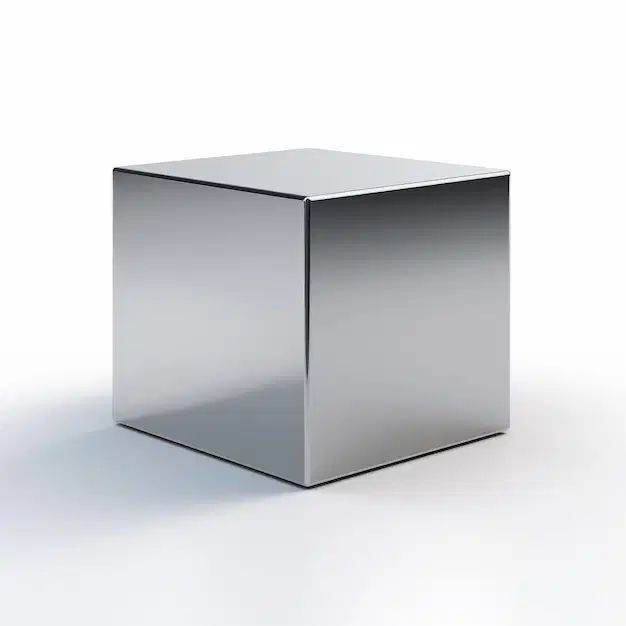
A metal cube is placed in water and sinks. What can be inferred about the density of the metal compared to the density of water?
The metal has a lower density than water.
The metal has the same density as water.
The metal has a higher density than water.
The density of the metal cannot be determined.

How does the density of a substance typically change as it transitions from a solid to a liquid state?
Density increases.
Density decreases.
Density remains the same.
Density fluctuates randomly.
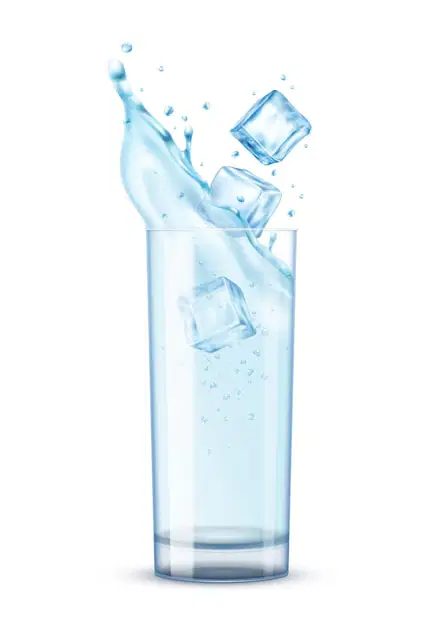
Given that the density of ice is 0.92 g/cm³ and the density of water is 1.00 g/cm³, why does ice float on water?
Ice is less dense than water.
Ice is more dense than water.
Ice and water have the same density.
Ice has a higher mass than water.
A liquid has a density of 0.85 g/cm³. If an object with a density of 0.90 g/cm³ is placed in the liquid, what will happen?
The object will float.
The object will sink.
The object will remain suspended.
The object will dissolve.
Using your Science 7 Reference Tables, Which material below has the highest density?
Aluminum
Water
Polypropylene
Copper
If a balloon is filled with helium and released, it rises in the air. What does this indicate about the density of helium compared to air?
Helium is denser than air.
Helium is less dense than air.
Helium has the same density as air.
Helium's density is irrelevant.
Why is it easier to float in the Dead Sea compared to a regular swimming pool?
The Dead Sea has a higher density due to its salt content.
The Dead Sea has a lower density than a swimming pool.
The Dead Sea has the same density as a swimming pool.
The Dead Sea has no density.
Using your Science 7 Reference Tables, Which of the following materials is likely to have the lowest density?
Oak
Pine
Water
Aluminum
A scientist measures the mass and volume of a liquid and finds its density to be 1.2 g/cm³. If the liquid is poured into a container with a liquid of density 1.0 g/cm³, what will happen?
The liquid will float on top.
The liquid will mix evenly.
The liquid will sink to the bottom.
The liquid will evaporate.

Order the liquids from least to most dense.
1,2,3,4
2,1,3,4
4,3,2,1
1,2,2,4


The mass of an unknown metal is 25 g and the volume is 1.29 ml. Caculate the density and identify the material using the chart.

The mass of an unknown object is 59 g and the volume of the object is 32 ml. Caculate the density and identify the material using the chart.

The mass of an unknown object is 15 g and the volume of the object is 30 ml. Caculate the density and identify the material using the chart.

In the picture, a can of Pepsi and a can of Diet Pepsi are put into water. The Pepsi sunk what must be true?
Pepsi is more dense than water
Pepsi is less dense than water
Pepsi has no density
Pepsi has a density of 1 g/mL

Why does the egg not sink or float?
(*Hint- There is only one liquid)
it is more dense than the water
it is less dense than the water
it has the same density as the water
it is light
A student is trying to determine if a certain beetle will help control the population of a harmful plant species. Which sequence of steps would be best suited for this investigation?
1- make conclusions 2- conduct an experiment 3- develop a question 4- state a hypothesis 5 - analyze the data
1- develop a question 2- conduct an experiment 3-state a hypothesis 4- make conclusions 5 - analyze the data
1- state a hypothesis 2-make conclusions 3-develop a question 4-analyze the data 5-conduct an experiment
1- develop a question 2- state a hypothesis 3- conduct an experiment 4- analyze the data 5- make conclusions
After Super Storm Sandy, Ashley performed an experiment in order to solve the problem, “How does salt water affect the growth of plants?”. What is the dependent variable in this investigation?
The amount of sunlight the plant receives
The amount of salt water the plant receives
The amount of soil in the containers
The growth/height of the plant
Lily is conducting an experiment to figure out if the amount of water a plant receives each day affects the plants height. What is the independent variable in this investigation?
The amount of sunlight the plant receives
The amount of water the plant receives
The amount of soil in the containers
The growth/height of the plant

Using the Table of Known Densities, Figure out what I am? Although I am a solid, I am so light that I can float on any substance listed on the chart. What am I?
Ice
Pine
Water
Copper

Using the Table of Known Densities, Identify an object made of me. I am less dense than PVC but more dense than water. What am I?
Acrylic
Copper
Polypropylene
Steel

The data table shows the yield of vegetables in a school's garden for three years. The yield is the number of pounds of vegetables harvested. The same number of each type of vegetable was planted every year. Which statement is an inference?
The onion yield was greater than the beet yield in 2013.
The butternut squash yield increased from 2011 to 2012.
The spinach yield was 102 pounds in 2011 and 137 pounds in 2012.
The acorn squash yield decreased from 2012 to 2013 due to lower temperatures.
A student preformed an experiment designed to test the rate of evaporation of different solutions. He had different beakers containing water mixed with various substances, as well as one with just water. The beaker containing only water is known as the
control
dependent variable
independent variable
hypothesis

Using the Table of Known Densities, decided how a copper block would respond if placed into liquid water.
sink to the bottom
float on the top
stay suspended in the middle
Experiment: Does changing the wing shape to make it more narrow affect the distance a paper airplane will fly?
The wing shape is the ___________ variable.
independent
dependent
A student performed an experiment that tested how many days it takes different types of grass seed to grow to a height of two inches. Four types of grass seed were tested, and the student recorded the number of days for each type to grow. Use this information to answer the next question.
What are the constants in this experiment?
amount of sunlight, amount of water, and type of soil
different types of grass seeds
growth of the grasses
height of 2 inches
What is the independent variable?
What is the dependent variable?
What is the control variable?
What is the independent variable?
What is the dependent variable?
What is the control variable?
An experiment is performed on plants to see how different liquids affect plant growth. Each plant in the experiment is given a different liquid; water, apple juice, or milk. Each plant has the same amount of soil, sunlight, and listens to the same music. In this investigation, the dependent variable is ...
The amount of growth
The amount of sunlight
The type of liquid
An experiment is performed on plants to see how different liquids affect plant growth. Each plant in the experiment is given a different liquid; water, apple juice, or milk. Each plant has the same amount of soil, sunlight, and listens to the same music. In this investigation, the independent variable is ...
The amount of growth
The amount of sunlight
The type of liquid
_______________ is the amount of matter in an object.
Volume
Mass
Weight
Temperature
_______________ is how much space an object takes up.
Volume
Mass
Density
Weight
What formula do you use to find the volume of a cube?
Length x Width x Height
Water Displacement
Length + Width + Height
Base / Height
_______________ is the distance between two points.
Volume
Mass
Length
Weight
The metric system is based on multiples of:
1
10
100
1000
What statement is true?
Mass never changes. Weight does.
Weight never changes. Mass does.
Both mass and weight change because they are affected by gravity.
Neither mass nor weight change. They are always the same.
Weight is the measure of the force of ______ on an object.
Density
Mass
Matter
Gravity
Velocity

G represents which of the following measurements?
15 millimeters
12 millimeters
120 millimeters
120 centimeters
How many millimeters are between A and C?
1.5 millimeters
15 millimeters
2.7 millimeters
42 millimeters
27 millimeters

What is the volume of the rectangular prism?
9 m
11 m3
24 m3
144 m2
Follow all __________ and _________ instructions carefully.
written/verbal
online/written
verbal/online
singing/dancing
Do not __________ any of the equipment until instructed.
trash
clean up
touch
play with
Report any accidents to your teacher ______________.
later
immediately
tomorrow
October 13th

What is the volume of the two red spheres?
4 ml
6 ml
2 ml
8 ml

What is the volume of the cylinder?
10 mL
15 mL
8 mL
5 mL
Which is the correct unit for density?
cm3
g/cm3
g/cm
cm/g


To make observations you use your _______.
senses
feet
smile
experience

The lion wants to be friends. This is an example of an
observation
inference