
 Worksheets
213 ppt10 System protection components
Total questions: 41
Worksheet time: 21mins
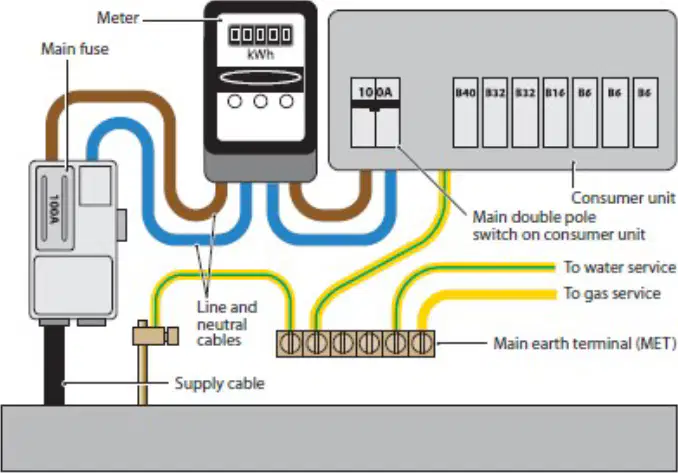
What is the correct order of electrical components from the incoming supply to appliances/circuits?
Incoming supply, Meter, Suppliers fuse, Consumer unit, Appliances/circuits
Incoming supply, Suppliers fuse, Meter, Consumer unit, Appliances/circuits
Incoming supply, Consumer unit, Suppliers fuse, Meter, Appliances/circuits
Incoming supply, Appliances/circuits, Suppliers fuse, Meter, Consumer unit
Which of the following materials is a good conductor of electricity?
Rubber
Copper
Plastic
Glass
What is the primary function of insulators in electrical components?
To allow electricity to flow
To conduct heat
To protect from electric shocks
To increase electrical resistance
What can happen if an incorrect, undersized cable is used for a circuit or an appliance?
Cable can go brown
Cable can become more flexible
Cable can cool down
Cable can become waterproof
What is one of the consequences of using an undersized cable?
Cable can become more colorful
Cable can go brittle and damage the insulation
Cable can become longer
Cable can become magnetic
What is a potential risk of using an undersized cable?
A fire can start
Cable can become invisible
Cable can become lighter
Cable can become odorless
What is generally the first item that gets damaged when an undersized cable is used?
The metal core
The insulation
The plug
The socket
What is heat resistant flex used for?
Cooling systems
Heat producing appliances
Lighting fixtures
Water pumps
What is the usual power rating for an immersion heater?
1.0-1.5kW
2.5-3.0kW
3.5-4.0kW
4.5-5.0kW
What size cable is used for an immersion heater rated at 2.5-3.0kW?
1.0mm butyl heat resistant flex
1.5mm butyl heat resistant flex
2.0mm butyl heat resistant flex
2.5mm butyl heat resistant flex
Up to what temperature can heat resistant flex be heated without damage?
75ºC
85ºC
95ºC
105ºC
Where is the consumer unit typically found in a property?
In the kitchen
Where the electrics enter the property
In the attic
In the basement
What does the consumer unit contain?
Only MCBs
Only RCDs
MCBs, residual current device, RCDs, and main isolator
Only the main isolator
What is the function of a consumer unit?
To generate electricity
To store electricity
To divide a single source into multiple circuits
To convert AC to DC
What must be isolated in the consumer unit when an MCB needs replacing?
Main isolator
MCB
Circuit breaker
Fuse
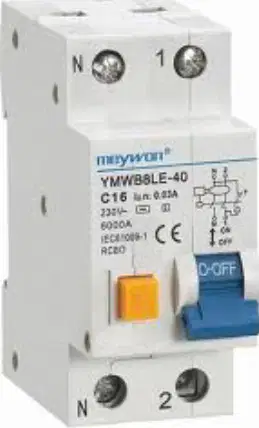
What is the primary function of a Miniature Circuit Breaker (MCB)?
To provide lighting
To protect one appliance or circuit
To increase voltage
To reduce electricity bills
What happens when an overload is detected by a Miniature Circuit Breaker (MCB)?
It increases the current
It trips out
It reduces the voltage
It emits a warning sound
What is the primary function of a Residual Circuit Breaker (RCD)?
To provide lighting
To trip out if there is an earth fault
To increase voltage
To reduce noise
Where are Residual Circuit Breakers (RCDs) commonly found?
In old electrical systems
In modern consumer units
In automotive engines
In water pipes
What voltage tools should plug-in RCDs be used with?
110v tools
230v tools
12v tools
400v tools
What is the function of a Residual Current Breaker with Overload (RCBO)?
It is used to increase the voltage in a circuit.
It is used to decrease the current in a circuit.
It contains the MCB and RCD for one appliance or circuit.
It is used to convert AC to DC.
Where is the Residual Current Breaker with Overload (RCBO) typically located?
In the main power supply.
In the consumer unit.
In the appliance itself.
In the power outlet.
What is one of the uses of a Residual Current Breaker with Overload (RCBO)?
To bring older circuits up to current standards.
To increase the speed of electrical flow.
To reduce the size of electrical components.
To convert electrical energy to mechanical energy.
What type of circuit protection are cartridge fuses?
Modern and non-rewireable
Older and rewireable
Modern and rewireable
Older and non-rewireable
Where can cartridge fuses be found?
Inside light bulbs
Inside plug tops
Inside batteries
Inside switches
What must all circuits and appliances be protected by according to modern regulations?
A fuse or MCB
A light switch
A circuit breaker
A power strip
What additional device do modern regulations require for circuit protection?
A light bulb
An RCD
A power cord
A battery
What must every circuit and appliance have according to the document?
A power source
A means of isolation
A remote control
A timer
Where is permanent de-commissioning done?
At the appliance
At the consumer unit
At the power station
At the switchboard
Where can temporary de-commissioning be done?
At the consumer unit
At the appliance
At the power station
At the switchboard
What is the definition of 'equipotential bonding' according to BS 7671?
Electrical connection maintaining various exposed-conductive-parts and extraneous-conductive-parts at substantially the same potential.
Electrical connection maintaining different potentials between conductive parts.
Electrical connection for the purpose of energy efficiency.
Electrical connection for the purpose of reducing noise.
What is the purpose of 'protective equipotential bonding'?
Equipotential bonding for the purpose of safety.
Equipotential bonding for the purpose of aesthetics.
Equipotential bonding for the purpose of cost reduction.
Equipotential bonding for the purpose of speed.
What does BS 7671 define as 'extraneous-conductive-parts'?
A conductive part that is part of the electrical installation.
A non-conductive part that introduces a potential.
A conductive part liable to introduce a potential, generally earth potential, and not forming part of the electrical installation.
A part that is always at earth potential and part of the electrical installation.
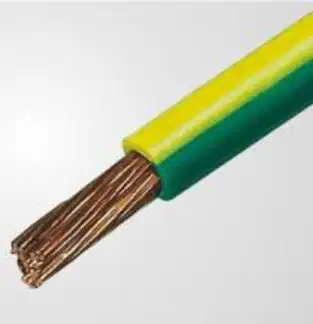
What is the minimum cross-sectional area (CSA) for the cable used for earth connection in conductive pipework?
5mm²
10mm²
15mm²
20mm²
Equipotential bonding should be connected to which of the following?
Plastic water pipes
Wooden beams
Water installation pipes
Insulated electrical wires
Which of the following is NOT typically connected to equipotential bonding?
Gas installation pipes
Central heating systems
Exposed metallic structural parts
Plastic furniture
Equipotential bonding is important for which type of systems?
Central heating and air conditioning systems
Wooden flooring systems
Plastic piping systems
Non-metallic furniture systems
What is the purpose of equipotential bonding in plumbing?
To ensure all metal parts are at the same electrical potential
To increase water pressure
To reduce water temperature
To improve water quality
Which of the following is NOT typically connected in equipotential bonding?
Structural steelwork
Oil pipes
Water pipes
Plastic pipes
What should be done before cutting into any metallic pipework to ensure earth continuity?
Install a permanent earth bond
Fit a temporary earth bond
Remove all clamps
Disconnect the power supply
When should the clamps be removed after fitting a temporary earth bond?
Immediately after cutting
After the pipework is painted
Once permanent electrical continuity is re-established
Before re-establishing electrical continuity

