
 Worksheets
ART APPRECIATION QUIZ
Total questions: 50
Worksheet time: 38mins
Name
Class
Date
1.
It is the brightness or the darkness of an image.
a)
Exposure
b)
Shutter Speed
c)
ISO
d)
Aperture
2.
It is an iris-like diaphragm that controls the amount of light passing through your lens and into your camera.
a)
Exposure
b)
Shutter Speed
c)
ISO
d)
Aperture
3.
It's like a blind or curtain that controls the duration of exposure (amount of time). Limits the amount of light.
a)
Exposure
b)
Shutter Speed
c)
ISO
d)
Aperture
4.

Identify the mode
a)
Portrait
b)
Landscape
c)
Night
d)
Macro
e)
Sports
5.
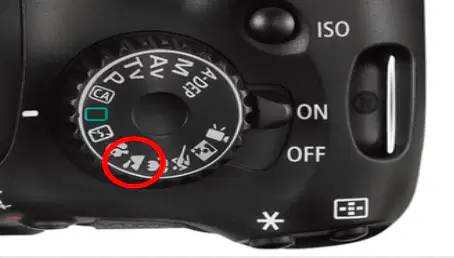
Identify the mode
a)
Portrait
b)
Landscape
c)
Night
d)
Macro
e)
Sports
6.
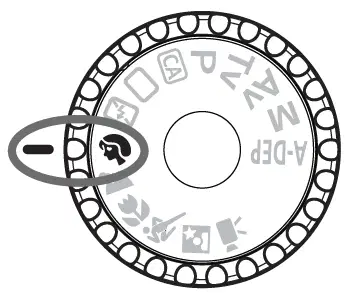
Identify the mode
a)
Portrait
b)
Landscape
c)
Night
d)
Macro
e)
Sports
7.

Identify the mode
a)
Portrait
b)
Landscape
c)
Night
d)
Macro
e)
Sports
8.
It refers to the point of focus of a photograph.
a)
White Balance
b)
Rule of Third
c)
Depth of Field
d)
ISO
9.
These cameras are also known as digicams or point-and-shoot. These cameras are ideal for taking photos because it offers automatic functionality. These are lightweight and are equipped with small sensors and fixed lenses.
a)
Compact Digital Cameras
b)
Digital Single Lens Reflex (DSLR)
c)
Bridge Cameras
d)
Compact System Cameras
e)
Rangefinder
10.
These are cameras that let you view the subject through the lens, allowing you to be versatile in taking photos since it offers various modes to choose from.
a)
Digital Single Lens Reflex (DSLR)
b)
Compact Digital Cameras
c)
Bridge Cameras
d)
Compact System Cameras
e)
Rangefinder
11.
These are cameras that look like a small DSLR. These offer lenses with a superzoom and an Electric Viewfinder (EVF). These types of cameras sit between compact and DSLR in terms of size and style.
a)
Bridge Cameras
b)
Compact Digital Cameras
c)
Digital Single Lens Reflex (DSLR)
d)
Compact System Cameras
e)
Rangefinder
12.
Unmanned Aerial Vehicles (UAV), are increasingly popular to capture images on bird's eye view.
a)
Drones
b)
Compact Digital Cameras
c)
Digital Single Lens Reflex (DSLR)
d)
Bridge Cameras
e)
Compact System Cameras
13.
These are cameras common in travel photography because it offers a different focusing system aimed for professionals and enthusiasts.These cameras are compact and virtually silent, so you can work discreetly compared to a DSLR.
a)
Rangefinder
b)
Compact Digital Cameras
c)
Digital Single Lens Reflex (DSLR)
d)
Bridge Cameras
e)
Compact System Cameras
14.
These are also known as MirrorlessInterchangeable Lens Cameras (MILC) since they can switch lenses. These cameras have features similar to a DSLR camera but in a much compact form.
a)
Compact System Cameras
b)
Compact Digital Cameras
c)
Digital Single Lens Reflex (DSLR)
d)
Bridge Cameras
e)
Rangefinder
15.
It was a tool used by artists to draw or paint realistic landscapes and architecture easily. It is done on a pinhole, and it projects the image in a dark room or a box that the artist can easily trace it over.
a)
camera obscura
b)
camera
c)
optics
d)
light
16.
During this era, the word 'photography' began to be used in the industry. From 1839, the popular process which the French inventor Louis Daguerre invented.
a)
Daguerreotype
b)
Film Cameras
c)
The First Photograph
d)
Camera Obscura
17.
Photography is derived from the Greek word, ______ ("light") and _________ ("to draw")
a)
photos and graphein
b)
light and photos
c)
graphein and to draw
d)
light and dark
18.
This white balance slightly cools up the image, similar to the daylight white balance.
a)
Tungsten
b)
Flourescent
c)
Cloudy
d)
Shade
19.
One of the elements of visual arts and is what the eyes see when the light is reflected off an object.
a)
Color
b)
Line
c)
Shape
d)
Form
e)
Space
20.
Is an element of art that refers to an object with 3D
a)
Form
b)
Color
c)
Line
d)
Shape
e)
Space
21.
It refers to the way things feel or look, as though they might feel, if touched.
a)
Texture
b)
Color
c)
Line
d)
Shape
e)
Form
22.
Defined as the path of a moving point through space
a)
Line
b)
Color
c)
Shape
d)
Form
e)
Space
23.
Refers to the distance between around, above, and within things
a)
Space
b)
Color
c)
Line
d)
Shape
e)
Form
24.
One of the ways to use color in which this relates to pattern and design which color appear as design components to enhance rhythm and sensuous appeal.
a)
Impressionist Use
b)
Decorative or Ornamental Use
c)
Personal Use
d)
Scientific Use
e)
Symbolic Use
25.
Artists uses hues to express his feelings and emotions as well as their spontaneous impulses and whims.
a)
Impressionist Use
b)
Decorative or Ornamental Use
c)
Personal Use
d)
Scientific Use
e)
Symbolic Use
26.
The meaning of colors changes from one culture to another and may also vary from one period to another
a)
Impressionist Use
b)
Decorative or Ornamental Use
c)
Personal Use
d)
Scientific Use
e)
Symbolic Use
27.
Refers to the distribution of visual weight in a composition.
a)
Balance
b)
Contrast
c)
Emphasis
d)
Movement
e)
Pattern
28.
Is about making surе different parts work well together, it’s more about balance and a sense of things fitting right.
a)
Harmony
b)
Balance
c)
Contrast
d)
Emphasis
e)
Movement
29.
It can be achieved using many different elements, like size, color, shape, texture, etc. and though it might seem quite simple to achieve, it should always be balanced with unity.
a)
Variety
b)
Balance
c)
Contrast
d)
Emphasis
e)
Movement
30.
This principle refers to the repetition of specific visual elements in a regular manner. It’s a great way of introducing rhythm and to give an artwork more structure.
a)
Pattern
b)
Balance
c)
Contrast
d)
Emphasis
e)
Movement
31.
As an art principle refers to the recurrence and repetition of visual elements in a piece creating a sense of flow and movement, guiding the viewer’s eye around the artwork.
a)
Rhythm
b)
Balance
c)
Contrast
d)
Emphasis
e)
Movement
32.
in art refers to the grouping of opposite elements near each other to highlight their differences.
a)
Contrast
b)
Balance
c)
Emphasis
d)
Movement
e)
Pattern
33.
refers to the design and composition strategy of drawing the viewer’s attention to a particular element or area within an artwork.
a)
Emphasis
b)
Balance
c)
Contrast
d)
Movement
e)
Pattern
34.
is a foundational principle that refers to the relationship of the different elements in a piece to one another and to the overall composition.
a)
Proportion
b)
Balance
c)
Contrast
d)
Emphasis
e)
Movement
35.
It refers to the main character, object, or anything else that is presented as the main focus in the work of art.
a)
Form
b)
Content
c)
Subject
d)
Hue
e)
Value
36.
Is the lightness or darkness of a color. It can be changed by adding black or white.
a)
Form
b)
Content
c)
Subject
d)
Hue
e)
Value
37.
Is referred to as the general meaning or intention
of the piece.
a)
Form
b)
Content
c)
Subject
d)
Hue
e)
Value
38.
Is the dimension of color, which is referred to as a scale ranging through red, yellow, green, and blue.
a)
Form
b)
Content
c)
Subject
d)
Hue
e)
Value
39.
Which is not true about Representational or Objective Art?
a)
Is the type of art that we see the most. It is the use of signs that stand in for and take the place of something else.
b)
Example of it is Thunder Magic by Marcia Baldwin.
c)
An example of this is the Rorschach Experiment.
d)
This is also referred to as figurative art.
40.
Which is true about Non-Representational or Non-Objective Art?
a)
Is the type of art that we see the most. It is the use of signs that stand in for and take the place of something else.
b)
Example of it is Thunder Magic by Marcia Baldwin.
c)
An example of this is the Rorschach Experiment.
d)
This is also referred to as figurative art.
41.
Therefore, the artwork is the dialogue between the artist and the viewer. A work of art may accommodate several meanings.
a)
Both statements are true
b)
Both statements are false
c)
Fist statement is true. Second statement is false
d)
First statement is false. Second statement is true
42.
Meaning is absolute. Any interpretation is valid but interpretation has to prove its point.
a)
Both statements are true
b)
Both statements are false
c)
Fist statement is true. Second statement is false
d)
First statement is false. Second statement is true
43.
The sign is a whole that is a result of the association of the signifier with the signified
a)
Basic Semiotic Planes
b)
Iconic Plane
c)
Contextual Plane
d)
Evaluative Plane
44.
As an art critic, find out what is considered as a value in your nation.
a)
Basic Semiotic Planes
b)
Iconic Plane
c)
Contextual Plane
d)
Evaluative Plane
45.
Art derives its creativity and power from their social environment, being a cultural force and the impetus for transformation.
a)
Basic Semiotic Planes
b)
Iconic Plane
c)
Contextual Plane
d)
Evaluative Plane
46.
involves the selection of the subject with political and social impacts.
a)
Basic Semiotic Planes
b)
Iconic Plane
c)
Contextual Plane
d)
Evaluative Plane
47.
Meaning is rooted in the content structure at all times.
a)
Basic Semiotic Planes
b)
Iconic Plane
c)
Contextual Plane
d)
Evaluative Plane
48.
The literal statement or the narrative content in the work which can be directly apprehended because the objects presented are easily recognized.
a)
Factual
b)
Conventional
c)
Subjective
49.
Any personal meaning consciously or unconsciously conveyed by the artist using a private symbolism which stems from his own association of certain objects, actions or colors with past experiences.
a)
Factual
b)
Conventional
c)
Subjective
50.
It refers to the special meaning that a certain object or color has a particular culture or group of people
a)
Factual
b)
Conventional
c)
Subjective
100 %

