
 Worksheets
9180 - 310- PART 1
Total questions: 53
Worksheet time: 27mins
What is the primary function of solar thermal technology?
To generate electricity
To heat water
To cool air
To store solar energy
Which of the following is a key component of a solar thermal system?
Solar panel
Wind turbine
Solar collector
Battery storage
What role does the differential temperature controller play in a solar thermal system?
It stores hot water
It controls the flow of water
It regulates temperature differences
It generates electricity
Which component is responsible for moving water in a solar thermal system?
Solar collector
Circulating pump
Auxiliary heat source
Hot water storage cylinder
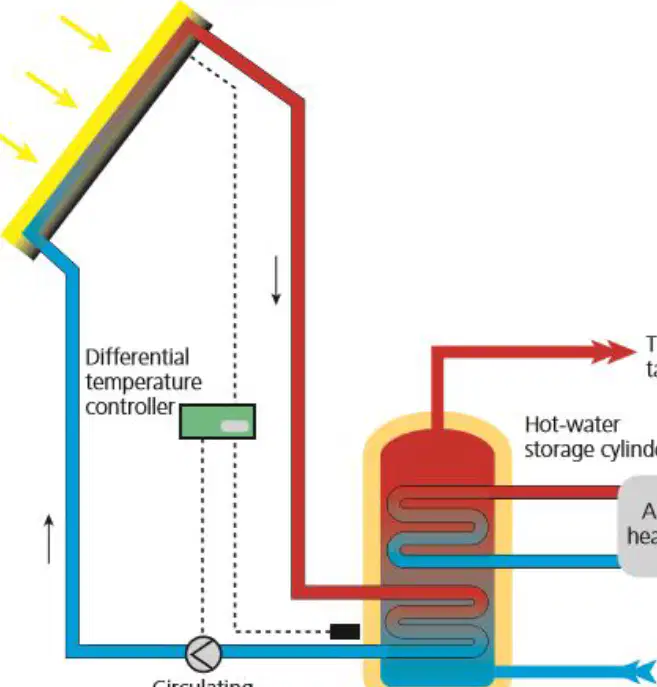
What is the primary function of a solar collector in an environmental technology system?
To store hot water
To collect and convert solar energy into heat
To pump water through the system
To provide auxiliary heating
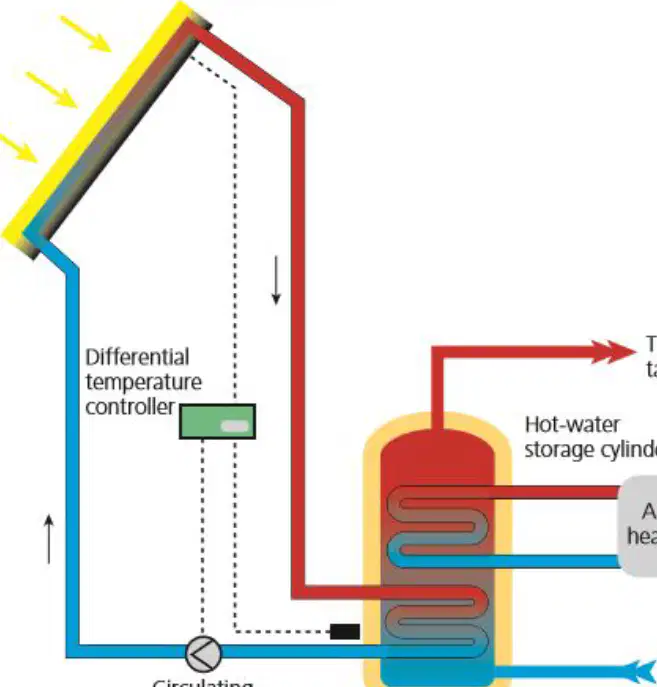
In the diagram, what role does the circulating pump play in the system?
It stores hot water
It controls the temperature
It circulates water through the system
It provides auxiliary heating
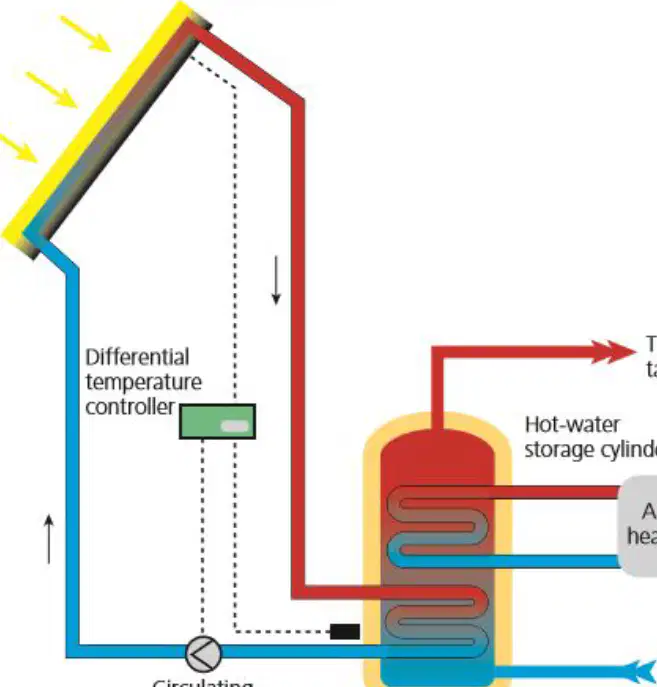
What is the purpose of the differential temperature controller in the system?
To measure the water level
To control the flow of water
To regulate the temperature difference between the solar collector and the storage cylinder
To provide auxiliary heating
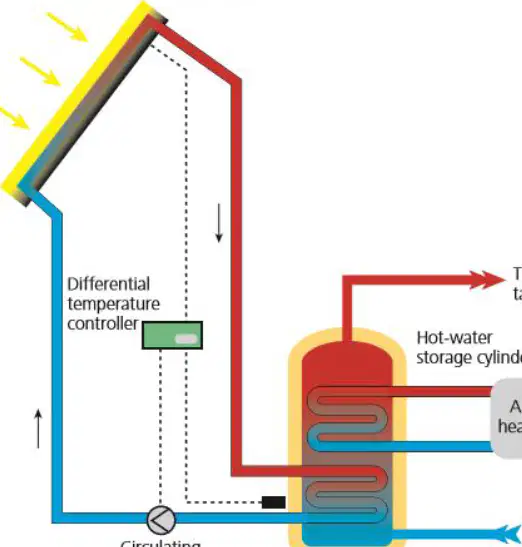
What is the primary function of a solar collector?
To generate electricity
To collect heat by absorbing heat radiation from the sun
To store solar energy in batteries
To convert solar energy into chemical energy
Which of the following is a type of thermal collector?
Photovoltaic cells
Wind turbines
Flat plate collectors
Geothermal pumps
What is solar radiation?
Heat energy from the Earth's core
Radiant energy emitted by the sun
Light energy from the moon
Electrical energy from solar panels
How is the heat transfer fluid in flat plate collectors heated?
By electricity.
By a gas burner.
Directly by the sun.
By geothermal energy.
What is a key characteristic of evacuated tube collectors that makes them more efficient?
They are made of metal.
They have a specialized glass tube with evacuated air.
They use a solid heat conductor.
They are painted black.
What is contained inside the pipe of an evacuated tube collector?
Solid metal rods
Heat-sensitive liquid
Insulating foam
Compressed air
How is the heat from the sun concentrated in an evacuated tube collector?
By using mirrors
Through a small heat exchanger
By increasing air pressure
Using electric heaters
What does the Differential Temperature Controller (DTC) do when there is enough solar energy and demand for hot water?
Activates the pump
Deactivates the pump
Shuts down the solar collector
Increases the water temperature manually
Where are the sensors of the Differential Temperature Controller (DTC) connected?
To the solar collector and hot water cylinder
To the solar panel and battery
To the wind turbine and generator
To the electrical grid and storage tank
What happens once the hot water cylinder is up to temperature in a DTC system?
The DTC deactivates the pump
The DTC activates the pump
The DTC increases the solar energy input
The DTC shuts down the entire system
What is the role of the circulating pump in the system?
To heat the water directly
To control the temperature of the room
To circulate the heat transfer fluid between the collector and the coil
To generate electricity
Why does the heat transfer fluid contain glycol?
To increase the boiling point
To prevent freezing in colder temperatures
To reduce the viscosity
To enhance the color of the fluid
What should be considered when using the circulating pump system?
The color of the fluid
The manufacturer's instructions regarding percentage dilution
The size of the pump
The type of solar collector used
What is the primary function of a hot water storage cylinder?
To store cold water for later use
To enable heat transfer from the system fluid into the stored water
To cool down the water before use
To generate electricity
How are hot water storage cylinders generally configured?
Single-coiled
Twin-coiled
Triple-coiled
Quadruple-coiled
What is the lower coil of a hot water storage cylinder connected to?
An auxiliary heat source
The solar system
The cold water supply
The hot water taps
What is the higher coil of a hot water storage cylinder connected to?
The solar system
The cold water supply
An auxiliary heat source
The hot water taps
What are the two types of heat pumps mentioned in the document?
Water source heat pump and solar heat pump
Ground source heat pump and air source heat pump
Electric heat pump and gas heat pump
Wind source heat pump and geothermal heat pump
What is the purpose of fitting heat pumps in new-build properties?
To increase water supply
To improve insulation
To increase energy ratings and reduce carbon footprint
To enhance aesthetic appeal
At what temperature is there no heat at all, according to the document?
0°C
-10°C
0°K or -273°C
100°C
What is the primary function of a heat pump?
To cool down a space
To generate electricity
To heat up a space using energy from the ground or air
To provide ventilation
What happens to the refrigerant in a heat pump when it is heated?
It turns into a solid
It turns into a gas
It remains a liquid
It evaporates completely
What role does the compressor play in a heat pump?
It cools the refrigerant
It compresses the refrigerant, causing it to heat up
It turns the refrigerant into a solid
It releases the refrigerant into the atmosphere
What happens to the refrigerant after it releases heat in the system?
It turns into a gas
It evaporates
It changes back into a liquid
It remains unchanged
What is the first component in the refrigeration process where the refrigerant is compressed?
Evaporator
Condenser
Compressor
Expansion valve
In the refrigeration process, what component follows the condenser?
Compressor
Evaporator
Expansion valve
Heating system
What is the only energy required to power the system according to the text?
Heat source energy
Compressor energy
Refrigerant energy
Electrical energy
What is the coefficient of performance (CoP) a ratio of?
Heat delivered to refrigerant power
Heat source to refrigerant power
Heat delivered to compressor power
Compressor power to heat source
What is the primary function of a ground source heat pump?
To generate electricity from geothermal energy
To transfer heat from the ground to a building
To cool the earth's surface
To extract minerals from the soil
In a ground source heat pump, what component is responsible for increasing the pressure of the refrigerant?
Evaporator
Condenser
Circulating pump
Compressor
What is the typical pressure of the refrigerant in the evaporator of a ground source heat pump?
5.5 bar
10 bar
17 bar
20 bar
What is the purpose of the underground pipe run in a ground source heat pump system?
To circulate a mixture of water and antifreeze for heat collection
To provide electricity to the heat pump
To store excess heat for later use
To cool the surrounding soil
Which of the following is NOT a type of ground loop shown in the diagram?
Horizontal ground loop
Vertical ground loop
Slinkies
Diagonal ground loop
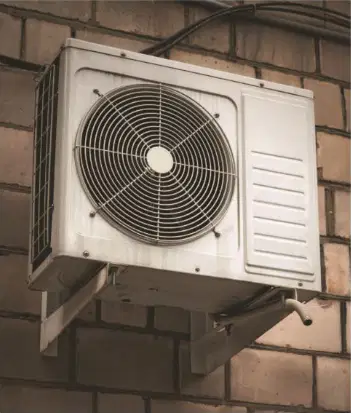
What is the primary function of an air source heat pump?
To cool the air inside a building
To heat water for domestic use
To transfer heat from outside air to inside a building
To generate electricity
Which component of the air source heat pump compresses the gaseous refrigerant?
Fan
Compressor
Expansion valve
Heating system
What happens to the refrigerant liquid when it is warmed by the outside air?
It condenses into a solid
It evaporates into a gas
It remains a liquid
It turns into ice
What is biomass?
A type of fossil fuel
A biological material that can be burnt to produce heat
A synthetic chemical used in manufacturing
A mineral used in construction
Why does burning biomass not add to global warming?
It releases stored carbon dioxide from millions of years ago
It absorbs carbon dioxide from the atmosphere
It releases carbon dioxide that was recently absorbed
It does not release any carbon dioxide
What is a key difference between biomass and fossil fuels regarding carbon dioxide?
Biomass stores carbon dioxide for millions of years
Fossil fuels do not release carbon dioxide when burnt
Biomass releases recently absorbed carbon dioxide
Fossil fuels absorb carbon dioxide while growing
What process in the carbon cycle involves plants and trees absorbing carbon?
Combustion
Photosynthesis
Respiration
Decomposition
In the carbon cycle, what happens to biomass after it is harvested?
It is absorbed by plants
It is converted into fossil fuels
It is burnt, releasing CO2
It is stored underground
Which gas is released into the atmosphere during the carbon cycle?
Oxygen
Nitrogen
Methane
Carbon dioxide
What is a disadvantage of biomass compared to fossil fuels?
Biomass is more expensive.
Biomass does not achieve the same heat output.
Biomass is not sustainable.
Biomass is more polluting.
Which of the following is NOT a biomass material?
Wood
Coal
Elephant grass
Food waste
Why is biomass considered sustainable if correctly managed?
It is cheaper than fossil fuels.
It can be replenished naturally.
It produces more energy than fossil fuels.
It requires no storage facilities.
What is a requirement for storing biomass materials?
They need to be stored in small containers.
They require large storage facilities.
They do not need any storage.
They must be stored in liquid form.

