
 Worksheets
World History Unit 3
Total questions: 70
Worksheet time: 34mins
Who founder of Buddhism?
Jesus
God
Siddhartha Gautama
Moses
Hinduism: Holy Book
Vedas
Bible
Old Testament
What is the Eight-Fold Path in Buddhism?
four noble truths
the steps Buddhist take to reach
nirvana or enlightenment
religious holiday
paths to the temple
What are the basic teachings of Buddhism called?
Ten Commandments
The Four Noble Truths
Shar'ia Law
The Five Noble Truths
What is moksha?
Union with Brahman
Being reborn in a different form
Their writing system
Their holy text

What kinds of jobs are assigned to the untouchables (dalits)? You may choose more than one answer.
removing garbage
cleaning the sewers
disposing of dead animals
herding animals
Emperor Justinian revised the Roman laws which then became known as?
Justinian's Code
Hammurani's Code
The Da Vinci Code
Chaussard's Code
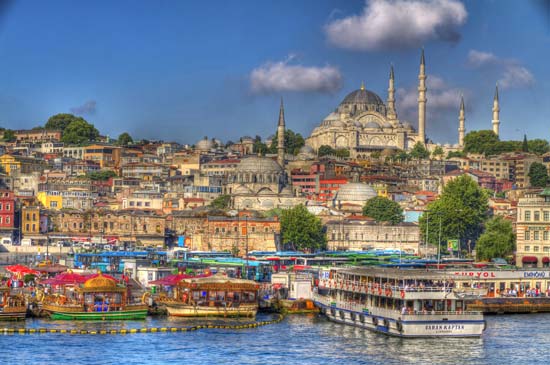

Istanbul
Byzantine Empire
Ancient Greek city; renamed Constantinople and would be the capital city of the Byzantine Empire
The Eastern Roman Empire, which survived after fall of Western Roman Empire; capital city was Constantinople
Warlike people who migrated from Asia into territory controlled by Germanic tribes, forcing them to move into areas controlled by Rome

Name this famous landmark in Constantinople?
St. Peters Basilica
Chartes Cathedral
Notre Dame
Hagia Sophia
Who is the head of the Roman Catholic Church?
The Emperor
The Triumvirate
The Pope
The Senate
What was the split in religions between Rome and Byzantine called?
The Great Schism
The Super Split
The Great Divide
The Holy Divorce
Which Christian religion remained apart of the Byzantine Empire?
Eastern Orthodox
Roman Catholic
Islam
Paganism
The major cause of the split between the Roman Catholic Church and the Greek Orthodox Church was the —
belief in the doctrine of the New Testament
use of the Ten Commandments to guide behavior
use of religious icons in church services
belief in one God versus many gods
Vocabulary: One God of Islam
Allah
Muhammad
Islam
Muslim
Vocabulary: Founder of Islam
Allah
Muhammad
Islam
Muslim
Vocabulary: Islamic house of worship
Mosque
Hajj
Qur'an
Shari'a
Vocabulary: Holy book of Islam
Mosque
Hajj
Qur'an
Shari'a
Under which system were nobles required to provide protection for serfs?
Feudalism
Communism
Manorialism
Socialism
What is one reason Islam spread during the medieval period?
Many monasteries were used as missionary outposts
Islam offered an easy pathway to paradise
Prolonged warfare left neighboring countries weak
The Holy Sacrements attracted many followers
(a) (b) and Italy were a part of Charlemagne's empire.
Who brought Christianity to the region of Gaul?
Clovis
Charlemagne
The Franks
The Church in Rome
Who became the most powerful king in western Europe and was crowned as Roman Emperor by the pope?
Clovis
Charles the Great (Charlemagne)
The Franks
The Vikings
What was one of Charlemagne's greatest accomplishments?
Conquering new lands to the south and east
Dividing the empire into three kingdoms
Encouraging learning
Stopping the Viking raids
Which group of invaders settled down in many parts of Europe, adopted Christianity, and became traders and farmers?
The Vikings
The Magyars
The Muslims
The Franks
Which group of invaders attacked from the east and reached as far as Italy and western France?
The Vikings
The Magyars
The Muslims
The Franks
Which group of invaders attacked areas along the Atlantic and Mediterranean coast?
The Vikings
The Magyars
The Muslims
The Franks
What was also known as the splitting of churches into two?
The Great Schism
Justinian Code
The Crusades
Pax Mongolica
Why is Jerusalem significant?
It was the largest and wealthiest city ever.
It is home to Judaism, Christianity, and Islam.
It was the capital of the Roman Empire.
It was the capital of the Catholic Church
Why did Pope Urban II petition Europe's monarchs to lead the Crusades?
The expand Europe's land
To exterminate all non-Christian peoples
To reach peace agreements with the Muslims
tTo retake Jerusalem and the Holy Land from the Muslims
How did the First Crusade end?
The Crusaders won and formed the Kingdom of Palestine.
The Muslims won and forced the Crusaders to retreat back to Europe.
The Crusaders won then returned home to Europe.
The Muslims won and enslaved the Crusaders.
How did the Second Crusade end?
The Crusaders fended off the Seljuk Turks and maintained their cities in the Holy Land.
The Seljuk Turks defeated the Crusaders and reclaimed their cities in the Holy Land.
After retaking Jerusalem, Saladin
Killed all the Christians and Jews
Killed only the Christian but spared the Jews
Spared the Christians and Jews but outlawed Christianity and Judaism
Spared the Christians and Jews and ensured religious freedom for everybody
During the Fourth Crusade, the Crusaders
Attempted to retake Jeruslaem
Attempted to take Damascus
Attempted to retake Constantinople
Attempted to take Egypt
How many Crusaders took place?
1
3
4
9
What was the most important result of the Crusades?
The Crusades resulted in many new religions to emerge.
The Crusades resulted in the Holy Roman Empire's permanent possession of Jerusalem.
The Crusades caused the Holy Roman Empire to isolate themselves from the rest of the world.
The Crusades led to trade and new kinds of knowledge.
How did the Crusades fail?
Crusaders failed to keep control of Jerusalem
Crusaders failed to conquer Egypt
Crusaders never won a battle in the Holy Land
Crusaders destroyed trade relations between East/West
What Muslim leader reconquered Jerusalem after the 2nd Crusade?
William the Conqueror
Saladin
Richard I
Ibn Batuta
In 1313, unusually heavy rainfall caused flooding in Europe, crops spoiled and livestock drowned in the water logged fields. The result was the ___________.
Black Death
100 Year War
Great Famine
Crusades
During the 1300s the increasing trade between Asia and Europe brought more than just trade goods, it brought rats with fleas that carried this disease.
Small Pox
Measles
Scarlet Fever
Bubonic Plague
As a result of the Black Death, there was a____________ throughout Europe.
labor shortage
overwhelming calm
food shortage
lack of work
When the French king died without leaving an heir to his throne, the King of England claimed the French throne. This claim led to a long period of warfare called _________________________.
Hapsburg War
Crusades
War of the Roses
Hundred Years War
•Some people in Europe blamed the __________ for the Plague. Others claimed it was God’s punishment for sinful behaviors.
Immigrants
Jews
Chinese
Trade merchants
When did the war start and when did it end?
1337-1453
1943-2006
1335-1856
Who was the Black Prince?
The king of france
Joanne D’arc
King Edward III
Kim Jung hyun
Without …… in the Siege of Orleans, France would’ve never survived. (a)
When did the Hundred year war start?
1342
1337
1298
1329
In the end, who won the Hundreds year war?
France
Englend
Flanders
The Holy Roman Empire
What is the name of the person who inspired the French?
Jen of Arc
Joan of Arc
Ali Siddique

