wayground logo

Free Printable Worksheets

Font size

S
M
L
XL
Worksheets

Non-Contact Forces: Magnetism & Gravity

Total questions: 50

Worksheet time: 34mins

Name
Class
Date
1.
What do the lines around this magnet represent?
a)
North Pole
b)
South Pole
c)
Magnetic Declination
d)
Magnetic Field
2.
If you cut a magnet in half, what happens to the poles?
a)
One half gets the North Pole, the other half gets the South Pole
b)
Both halves get only a North Pole
c)
Both halves get only a South Pole
d)
Both halves get a North pole and a South Pole
3.
The strongest part of a magnet is...
a)
the bars.
b)
the force field.
c)
the poles. 
d)
the middle.
4.
A magnet cannot not move which of the following objects?
a)
a paper clip
b)
a nail
c)
a toothpick
d)
a staple
5.
When two magnets repel, they ________________
a)
change color
b)
pull together
c)
push apart
d)
get colder
6.
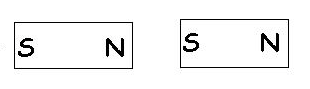
What will happen when these magnets are brought close together?
a)
They will attract each other.
b)
They will repel each other.
c)
Both magnets will turn to the left
d)
Both magnets will turn to the right
7.
Iron, Nickel and cobalt are all __________________ materials
a)
Shiny
b)
poles
c)
magnetic
d)
cold
8.
What characteristics do magnetic substances have?
a)
They can give you a "shock" when you touch them
b)
They can push or pull objects without touching them
c)
They are always black and cold to touch
d)
They fall faster than other objects when you drop them
9.
Which of the following is true of a bar magnet?
a)
Its magnetic field is strongest near its center.
b)
It is surrounded by a magnetic field.
c)
The north pole is stronger than the south pole.
d)
The south pole is stronger than the north pole.
10.
The lines on this image are called...
a)
magnetic field lines
b)
iron fillings
c)
graphite lines
d)
none of these
11.
Magnetism is a type of ____________
a)
force
b)
book
c)
plant
d)
animal
12.
When two magnets attract, they ______________
a)
push apart
b)
change color
c)
get colder
d)
pull together
13.
Magnets have a north and a south ___________
a)
shape
b)
color
c)
pole
d)
region
14.
Magnets that are arranged like this will _______. 
a)
move away from each other (repel)
b)
move towards each other (attract)
15.
These magnets will _______.
a)
move away from each other (repel)
b)
move toward each other (attract)
16.

What is a magnet?

a)

An object that repels magnetic objects

b)

An object that attracts magnetic objects

c)

An object that repels magnets

17.

How many poles are there in a magnet

a)

1

b)

2

c)

3

d)

4

18.

A magnetic object is attracted to an object when it enters the (a)  

19.

In a magnet, the magnetic field is strongest next to the (a)  

20.

Like poles (a)  

21.

Opposite poles (a)  

22.

Magnetism is the force of

a)

attraction or repulsion of magnetic materials

b)

attraction of magnetic materials

c)

earth's pull of gravity

23.

If you break a magnet in half

a)

it is destroyed

b)

each half will be a new magnet, with both north poles

c)

each half will be a new magnet, with both north and south poles

24.

The region around a magnet where the magnetic force is exerted is known as the

a)

magnetosphere

b)

magnetic field

c)

solar wind

25.

Any object with mass experiences gravity.

a)

True

b)

False

26.

Why do astronauts bounce and appear to float on the moon as they walk?

a)

The force of gravity is stronger on the moon.

b)

The force of gravity is weaker on the moon.

c)

There is no gravity on the moon.

27.

Earth's gravity pulls everything towards the ____.

a)

North

b)

South

c)

The Center

d)

The Equator

28.

Gravitational force is small between objects with ____ masses.

a)

small

b)

medium

c)

large

29.

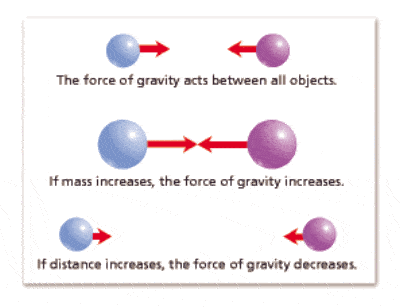
As distance increases, gravitational force _____.

a)

increases

b)

decreases

c)

disappears

d)

remains the same

30.

As mass increases, gravitational force _____.

a)

increases

b)

decreases

c)

disappears

d)

remains the same

31.

_____ is a measure of gravitational force.

a)

mass

b)

newtons

c)

weight

d)

height

32.

Saturn has 61 moons and the earth only has one. Why does Saturn have more moons? Saturn has more (a)  

33.

The Sun has more mass than the earth. If we could visit the sun what would happen to our weight?

a)

We would weigh less

b)

We would weigh more

c)

Our weight would not change

d)

We would not have weight

34.

Why do all the planets revolve around the sun?

a)

because it is so hot

b)

because it has the most mass

c)

because it is at the center of universe

d)

because it is far away

35.

What two things determine the gravity of an object?

a)

mass & weight

b)

mass & distance

c)

density & mass

d)

volume & distance

36.

When will the forces of gravity between two objects be the GREATEST?

a)

when the masses of both objects are small and the objects are far apart

b)

when the masses of both objects are large and the objects are close together

c)

when the masses of both objects are small and the objects are close together

d)

when the masses of both objects are large and the objects are far apart

37.

When will the gravity between two objects be the LEAST?

a)

when the masses of both objects is small and the objects are close together

b)

when the masses of both objects is small and the objects are far apart

c)

when the masses of both objects is large and the objects are close together

d)

when the masses of both objects is large and the objects are far apart

38.

Which statement about gravity is true?

a)

gravity causes objects to pull towards one another

b)

gravity causes objects to push away from each other

c)

gravity only takes place between planets

d)

the moon doesn't have any gravity

39.
Look at the picture.  Is the force of gravity on the boy a push or a pull? 
a)
Pull
b)
Push
40.
An object with mass has gravity.
a)
True
b)
False 
41.
The amount of matter in an object.
a)
force 
b)
mass
c)
weight 
d)
pressure 
42.
As mass increases, what happens to gravitational force?
a)
increases
b)
decreases
c)
stays the same
d)
i don't know
43.
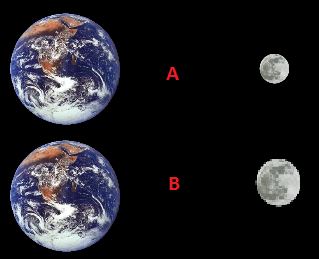
Which model has greater gravitational attraction (if any)
a)
Model A
b)
Model B
c)
Both Model A and Model B (same gravity)
44.
Which system has the greater gravitational attraction between the two objects (if any)?
a)
System A
b)
System B
c)
Same gravitational attraction fro System A and System B
45.
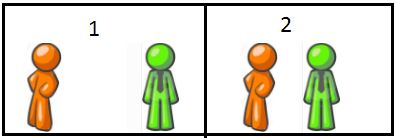
Which System has the greater gravitational pull between the two objects?
a)
System 1
b)
System 2
c)
Same: there is no gravitational attraction between the two objects
46.

More mass equals:

a)

less gravity

b)

less distance

c)

more gravity

d)

more distance

47.

Less mass equals:

a)

less gravity

b)

less distance

c)

more gravity

d)

more distance

48.
What does this tool measure?
a)
weight
b)
meters
c)
mass
d)
force
49.
Which of the following will not change in different gravitational fields?
a)
wieght
b)
force
c)
mass
d)
pounds
50.
If Earth's mass was cut in half, what would happen to your mass?
a)
increase because gravitational force increases
b)
decrease because gravitational force decreases
c)
decrease because gravitational force increases
d)
nothing, mass is not affected by gravitational force