Font size
 Worksheets
Ecosystems Unit 2
Total questions: 42
Worksheet time: 14mins
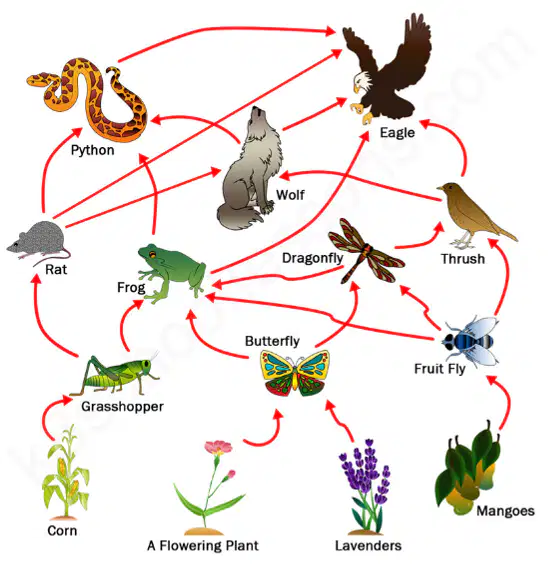
Name the four producers found in this image:
Corn, A Flowering Plant, Lavenders, Mangoes
Python, Rat, Frog, Wolf
Eagle, Thrush, Dragonfly, Butterfly
Grasshopper, Fruit Fly, Rat, Frog
True or false: The image is depicting a food chain.
True
False
Which animal eats the butterfly?
Frog and dragonfly
Frog and Thrush
Dragonfly and grasshopper
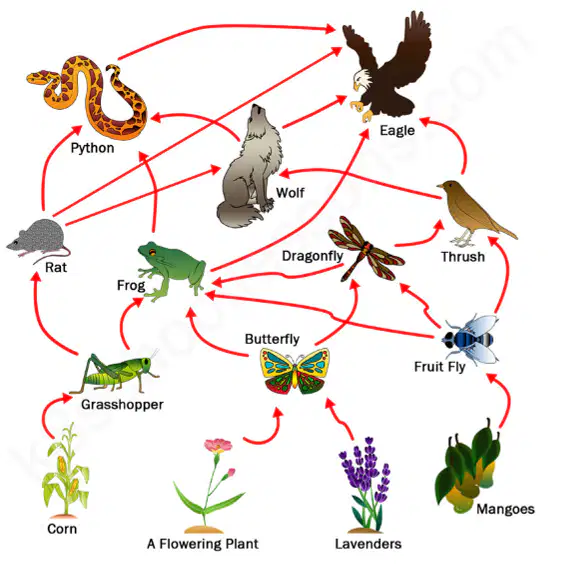
Which animal is the top predator?
Python
Eagle
Wolf
Frog

List one secondary consumer:
Python
Grasshopper
Frog
Corn
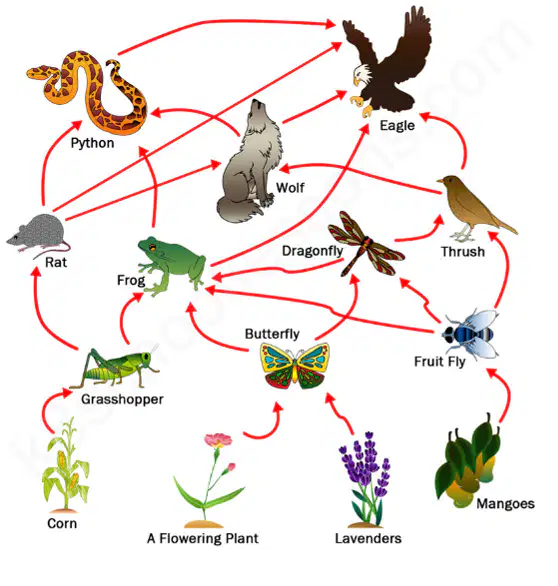
Identify the primary consumer from the following options:
Eagle
Grasshopper
Wolf
Python
Which of the following is NOT an omnivore?
a human eating salad and steak
a giraffe feeding on tree leaves and shrubs
a black bear eating berries and insects
a pig eating meat and fruit
How do carnivores' teeth differ from herbivores?
Carnivores have no teeth
Carnivores have sharper teeth
Carnivores have flatter teeth
There is no difference
A ________ shows the complex, interconnected, multi-pathway feeding relationships in an ecosystem.
Food chain
Food web
Photosynthesis
Predator
Ecosystem
Which of these is NOT an example of mutualism?
Ants protecting acacia trees from predators
Bacteria helping humans digest food
A flea living on a dog
Fungi helping plant roots absorb nutrients
Which is NOT a body part of a scorpion?
Telson
Cephalothorax
Wings
Abdomen
Which of these adaptations is NOT typically found in herbivores?
Flat teeth for grinding
Only Sharp canines for tearing meat
Long intestines for digesting plant matter
Specialized stomachs for digesting plants
When moss grows on trees, the moss benefits, the tree does not get harmed and does not benefit. This is an example of ___________.
Commensalism
Predation
Mutualism
Parasitism
Aphids are tiny insects that live on and eat the leaves of plants, removing vital nutrients from the plants. This is an example of ___________.
Parasitism
Commensalism
Mutualism
Predation
Symbiosis
Which of the following is NOT typically found at the beginning of a food web?
Grass
Algae
Eagle
Flowering plants
In a food web, how might the extinction of a producer affect tertiary consumers?
It would have no effect on tertiary consumers
It would immediately cause tertiary consumers to go extinct
It could reduce the population of tertiary consumers indirectly
It would cause tertiary consumers to switch to eating other producers
What role do decomposers play in a food web?
They eat only plants
They hunt other animals
They break down dead organisms
They produce food from sunlight
Which of the following are the two effects of invasive species on the ecosystem?
Strengthening the existing species
Disrupting food chains
Increasing biodiversity
Causing species extinction
Creating new habitats
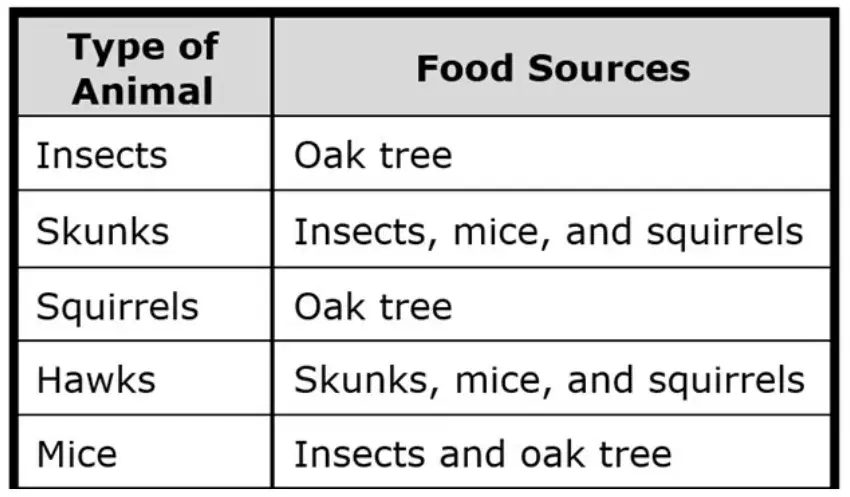
Based on the information in the table, which transfer of energy is correct?
Insects → oak tree → mice → squirrel
Hawk → oak tree → mice → insects
Oak tree → squirrel → skunk → hawk
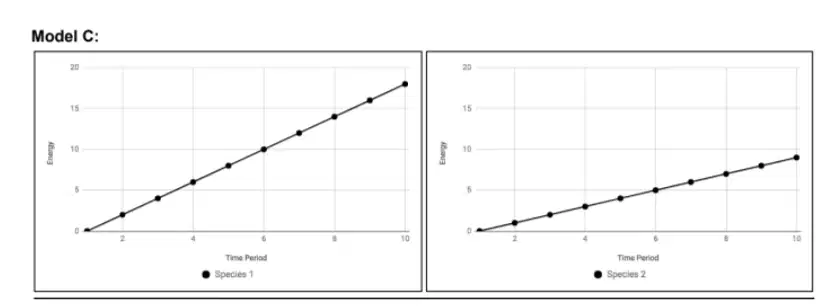
What type of symbiotic relationship is model C depicting?
Mutualism
Parasitism
Commensalism
Competition
Why is model C depicting mutualism?
Neither species is benefiting
Both species are benefiting
One species is benefiting while the other is unaffected
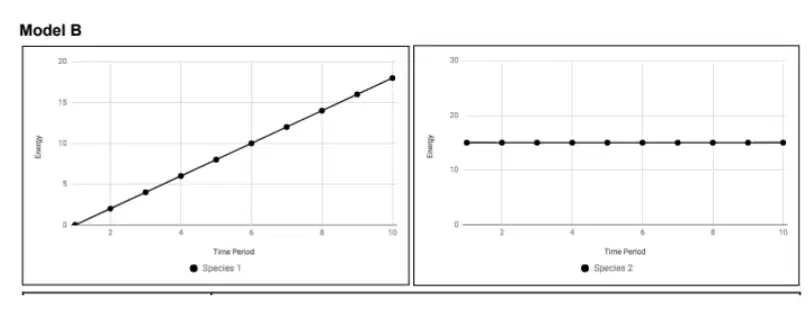
What type of symbiotic relationship is model B depicting?
Mutualism
Parasitism
Commensalism
Competition
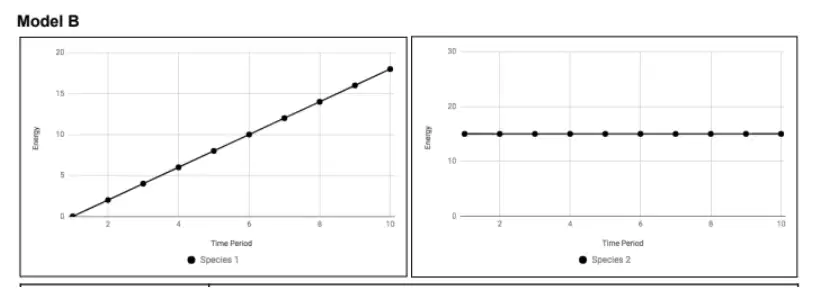
Why is model B depicting commensalism?
Neither species is benefiting
Both species are benefiting
One species is benefiting while the other is unaffected
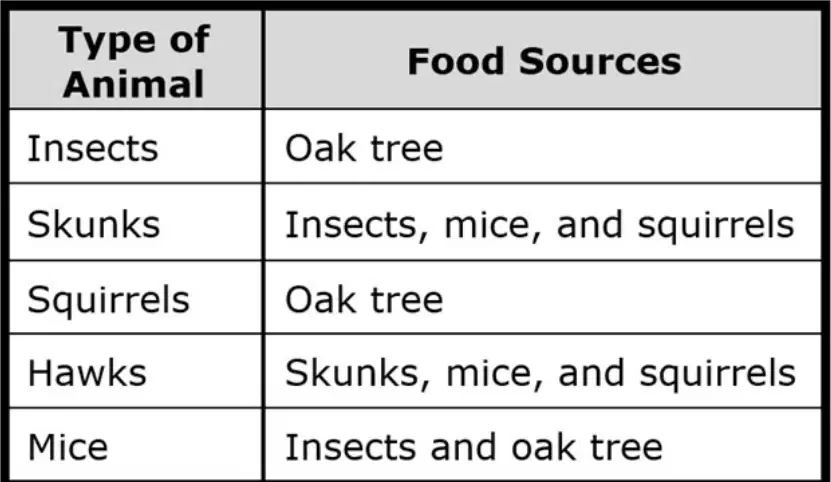
What insects eat according to the table?
Insects and oak tree
Oak tree
Skunks, mice, and squirrels
Insects, mice, and squirrels

Which animals are listed as food sources for hawks?
Insects and oak tree
Oak tree
Skunks, mice, and squirrels
Insects, mice, and squirrels
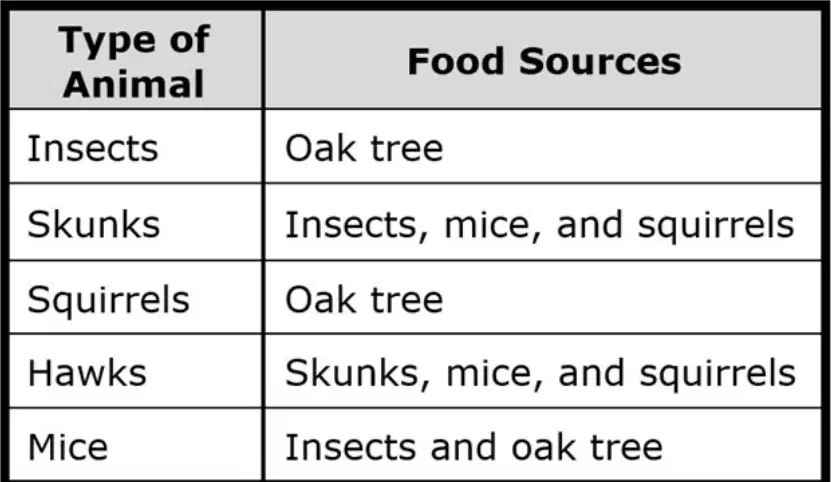
What do skunks eat according to the table?
Insects, mice, and squirrels
Oak tree
Skunks, mice, and squirrels
Insects and oak tree
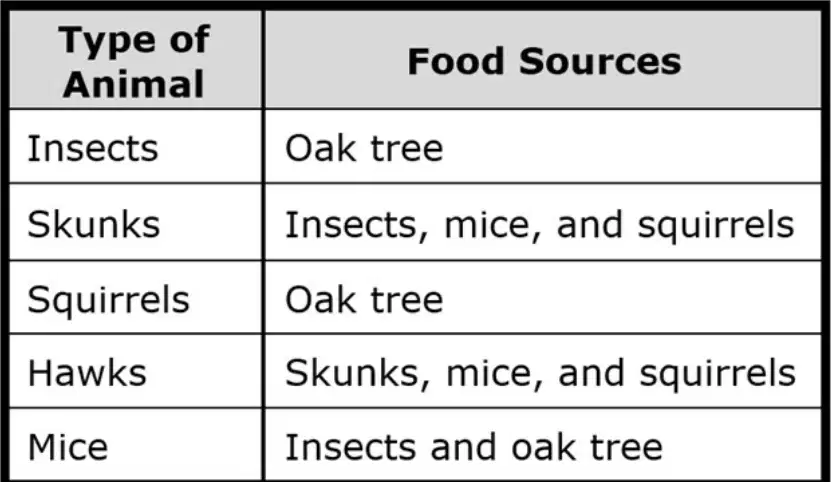
Which animal eats both insects and oak tree?
Squirrels
Mice
Hawks
Skunks
Describe how predation is different from parasitism.
A) Predation involves one organism benefiting while the other is harmed, similar to parasitism.
B) Predation involves one organism killing and eating another, while parasitism involves one organism living on or in another and causing harm.
C) Predation and parasitism both involve mutual benefit between organisms.
D) Predation involves organisms living together without affecting each other.

Which of the following matches with 1?
Oxygen
Carbon dioxide
Sunlight
Glucose
Water
Which of the following matches with 2?
Oxygen
Carbon dioxide
Sunlight
Glucose
Water
Which of the following matches with 3?
Oxygen
Carbon dioxide
Sunlight
Glucose
Water
Which of the following matches with 4 or 5?
Oxygen
Carbon dioxide
Sunlight
Glucose
Water
Breaks down dead material and uses is for energy
Producer
Keystone species
Herbivore
Decomposer
Makes its own food for energy
Producer
Keystone species
Herbivore
Decomposer
Hunts and kills for food
Carnivore
Predator
Keystone species
Parasitism
Easts only other consumers for energy
Carnivore
Predator
Keystone species
Parasitism
A species an ecosystem largely depends on, if removed would be drastic changes
Carnivore
Predator
Keystone species
Parasitism
One organism gets harmed the other benefits
Carnivore
Predator
Keystone species
Parasitism
An organism that only eats plants/producers
Carnivore
Predator
Invasive species
Herbivore
An addition to the ecosystem, causing drastic changes
Carnivore
Predator
Invasive species
Herbivore

Which questions should scientists study in order to best understand the changing deer populations throughout the last 25 years? (pick 2)
When are deer more active?
Has the average size of a deer changed?
How much deer habitat has been lost to housing development?
Has the number of deer’s natural predators changed?
Why does the color of the deer’s coat change from summer to winter?
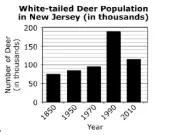
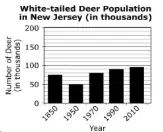
Researchers count deer at the same time and at the same locations each year. Using the data in Table 1, choose the bar graph showing the number of deer recorded for each given year.