
NEW
Font size
 Worksheets
Kitchen Safety and Sanitation
Total questions: 21
Worksheet time: 14mins
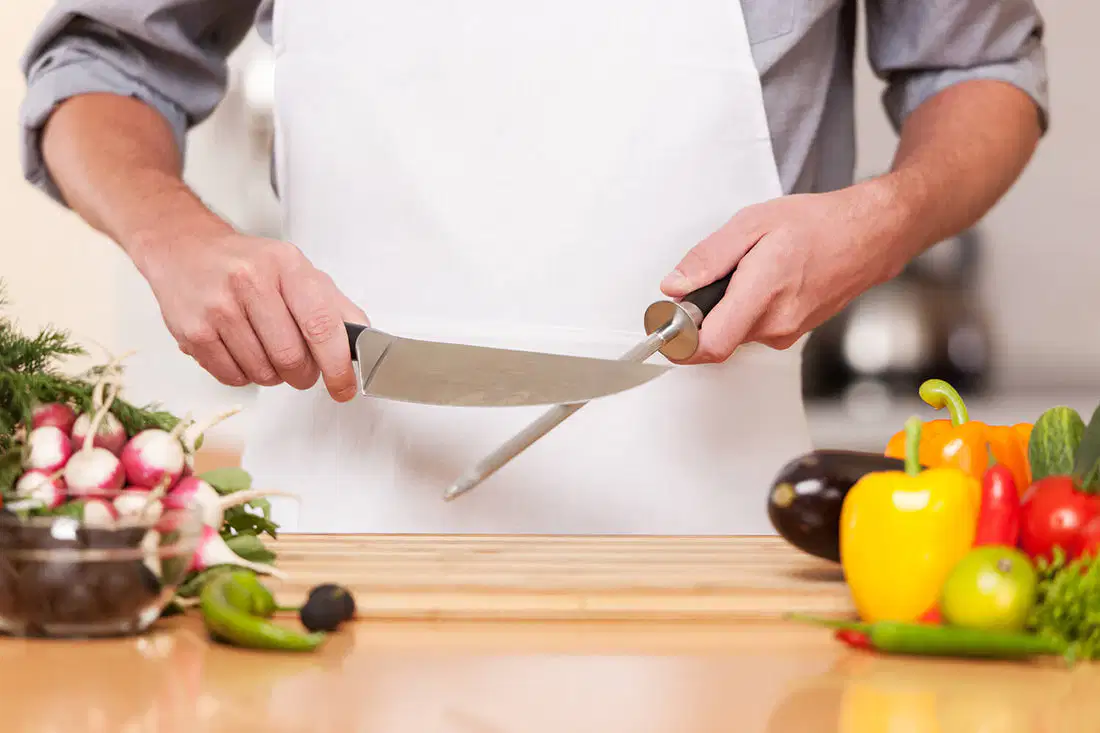
Why is a dull knife not safer than a sharp knife?
A dull knife is heavier.
A dull knife requires more force to cut, increasing the risk of slipping.
A dull knife is more likely to break.
A dull knife is harder to clean.
What should you do with your fingers when cutting with a knife?
Spread them out wide.
Tuck them under your palm.
Tuck them in, like a claw.
Keep them straight.
What is a serrated knife best used for?
Cutting meat.
Chopping vegetables.
Slicing bread.
Peeling fruits.
How high should the flame be when cooking on a stove?
Higher than the pan.
Equal to the height of the pan.
Lower than the pan.
As high as possible.
When should you use an oven mitt?
Only when baking.
When handling hot pots or pans.
When cutting vegetables.
When washing dishes.
What should you do if you spill something in the kitchen?
Leave it for later.
Clean it up immediately.
Cover it with a towel.
Ignore it.
Why is it important to keep the kitchen clean?
To make it look nice.
To prevent accidents and contamination.
To impress guests.
To avoid cooking.
What is the safest way to pass a knife to someone else?
Hand it to them blade first.
Place it on the counter for them to pick up.
Throw it to them.
Hand it to them handle first.
Don't put knives or other sharp objects in a sink full of water. Someone could reach in and get hurt
true
false
Why is kitchen safety important?
To make cooking faster
To prevent injuries and accidents
To save money on groceries
To improve the taste of food

What should you do before eating or cooking fruits and vegetables?
Boil them
Wash them
Freeze them
Peel them
Why is it important to store food at the correct temperature?
To keep it looking fresh
To prevent the growth of bacteria
To make it taste better
To save space in the fridge

The transfer of harmful bacteria from one food to another is called _____________ ______________________.
cross contamination
foodborne illness
contaminated food
yuck, gross!
You should __________ wash your hands or sanitize work surfaces and tools after using/touching raw meat.
sometimes
never
always
When should you clean?
after making all your food
clean as you go
What is the first step when entering the kitchen?
Run dishwater
Wash hands
Pre-heat oven
Gather ingredients
Over 7 billion bacteria can live in these so you should avoid using them for cleaning kitchen counters and tables
paper towels
dish cloths
kitchen sponge
clorox wipes
Be sure to pay attention to this which identifies that date by which perishable foods should be sold by
inspiration date
expiration date
exhalation date
creation date
A food-borne illness is a disease transmitted by food, the source of which is bacteria, or toxins produced by bacteria.
True
False

