
Font size
 Worksheets
Chemistry Unit Exam: REVIEW
Total questions: 55
Worksheet time: 31mins
What is a compound?
A single element
A physical blend of substances
A mixture of elements
A substance composed of atoms of 2 or more elements chemically combined
What is the chemical formula for water?
CH3COOH
NaCl
H2O
CH4
What is the chemical formula for salt?
CH4
H2O
NaCl
CH3COOH
What type of bond is formed when atoms share electrons?
Covalent bond
Hydrogen bond
Ionic bond
Metallic bond
What is an ionic bond?
A bond formed by the attraction of two similar atoms
A bond formed by the attraction of two oppositely charged atoms
A bond formed by the sharing of protons
A bond formed by sharing electrons
Which of the following is an example of an ionic compound?
Sodium chloride (NaCl)
Oxygen (O2)
Methane (CH4)
Water (H2O)
What property of water makes it a universal solvent?
Viscosity
Polarity
Temperature
Density
Which of the following is NOT a particle found in an atom?
Molecule
Neutron
Proton
Electron
What is the charge of a neutron?
Negative
Neutral
Positive
Variable
What happens to the charges of protons and electrons in a standard atom?
They amplify each other
They attract each other
They repel each other
They cancel each other out
How is the mass number of an element calculated?
Number of protons + neutrons
Number of protons + electrons
Number of electrons + neutrons
What is the atomic number of chlorine?
35
17
7
53
What does the mass number indicate about an atom?
Total number of protons and neutrons
Total number of protons
Total number of electrons
Total number of neutrons
What is the mass number of a standard, neutral, stable sodium atom?
11
12
22
23
What is anything that takes up space and has mass?
Melting
Volume
Mass
Matter
Select ALL 3 states of matter.
Earth
Solid
Liquid
Fire
Gas
What state of matter is ice in?
Solid
Thermo
Liquid
Gas
Which two subatomic particles hang out in the center of the atom?
Protons and neutrons
Electrons and protons
Neutrons and electrons
Quarks and leptons
What is the center of the atom called?
Nucleus
Electron
Proton
Neutron
Which subatomic particles have a positive charge?
Protons
Neutrons
Electrons
Photons
Which subatomic particles have a negative charge?
Electrons
Protons
Neutrons
Positrons
Which subatomic particles have a neutral charge?
Neutrons
Protons
Electrons
Positrons
Why is water considered a polar molecule?
Because it is held together by ionic bonds
Because the hydrogen atoms hog the electrons
Because it has an uneven balance of charge
Because there is a lot of frozen water at the North Pole
How do you calculate an atom’s mass number?
Add the number of protons and neutrons
Subtract the number of electrons from protons
Multiply the number of protons by neutrons
Divide the number of protons by electrons
What can you use to determine how many protons an atom has?
Atomic number
Atomic mass
Electron configuration
Neutron count
Imagine you have an atom with the following components: 6 protons, 6 neutrons, 7 electrons. What is this atom’s atomic number?
6
7
12
13
Imagine you have an atom with the following components: 6 protons, 6 neutrons, 7 electrons. What is the mass number of this atom? Show your work.
12
13
14
11
Imagine you have an atom with the following components: 6 protons, 6 neutrons, 7 electrons. What is the name of this element?
Carbon
Nitrogen
Oxygen
Helium
Imagine you have an atom with the following components: 6 protons, 6 neutrons, 7 electrons. What is the charge of this atom?
-1
0
+1
+2
Imagine you have an atom with the following components: 6 protons, 6 neutrons, 7 electrons. Is this atom an ion?
Yes
No, it is a neutral atom
No, it is a cation
No, it is an anion
If you wanted to change the element of an atom, what step or steps could you take? Choose all that apply.
Change the amount of protons
Change the amount of neutrons
Change the amount of electrons
It is not possible.
If you wanted to change the charge of an atom, what step or steps could you take? Choose all that apply.
Change the amount of protons
Change the amount of neutrons
Change the amount of electrons
It is not possible.
If you wanted to change the mass of an atom, what step or steps could you take? Choose all that apply.
Change the amount of protons
Change the amount of neutrons
Change the amount of electrons
It is not possible.

How many total electrons does this atom have?
7
6
8
10
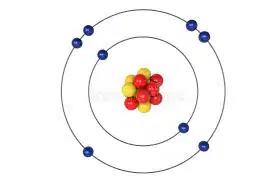
How many valence electrons does this atom have?
2
4
6
8

This atom is known as oxygen. How many protons does oxygen have?
7
8
6
5
How many neutrons would a stable atom of oxygen have?
8
6
10
12

What is this atom's charge if it has 8 protons, 8 neutrons, and the amount of electrons you see in the image ?
-1
-2
+1
0
What is a rule for making a neutral atom (one with 0 overall charge)?
The number of protons equals the number of electrons
The number of neutrons equals the number of electrons
The number of protons equals the number of neutrons
The number of protons is double the number of electrons
If you start with a stable, neutral atom, what can you do to make a positive ion of that same atom?
Add electrons to the atom
Remove electrons from the atom
Add protons to the atom
Remove protons from the atom
If you start with a stable, neutral atom, what can you do to make a negative ion of that same atom?
Add electrons to an atom
Remove electrons from an atom
Add protons to an atom
Remove protons from an atom
Which amount of particles is correct for an atom of carbon-14, with a charge of -2?
6 protons, 8 neutrons, 8 electrons
6 protons, 8 neutrons, 6 electrons
6 protons, 6 neutrons, 8 electrons
6 protons, 6 neutrons, 6 electrons
In this chemical equation, which are the reactants and which are the products: Mg + 2HCl → MgCl2 + H2?
Reactants: Mg, 2HCl; Products: MgCl2, H2
Reactants: MgCl2, H2; Products: Mg, 2HCl
Reactants: Mg, MgCl2; Products: 2HCl, H2
Reactants: H2, MgCl2; Products: Mg, 2HCl
Which two steps need to take place for an ionic bond to occur, using the formation of table salt as an example?
Transfer of electrons from sodium to chlorine and the attraction of two oppositely charged atoms.
Sharing of electrons between sodium and chlorine, and then a transfer of electrons.
Sodium and chlorine become oppositely charged, and then the formation of a covalent bond between sodium and chlorine occurs.
Transfer of electrons from chlorine to sodium and the attraction of two oppositely charged atoms.
Water is a polar molecule because:
It has a symmetrical shape.
It has an unequal distribution of charge.
It is composed of covalent bonds.
It has an equal distribution of charge.
What is the difference between a mixture and a compound? Choose the correct example of each.
A mixture is a combination of substances that retain their individual properties, like sand and salt. A compound is a substance formed when two or more elements are chemically bonded, like water (H2O).
A mixture is a substance formed when two or more elements are chemically bonded, like water (H2O). A compound is a combination of substances that retain their individual properties, like sand and salt.
A mixture is a combination of substances that lose their individual properties, like water (H2O). A compound is a combination of substances that retain their individual properties, like sand and salt.
A mixture is a combination of substances that retain their individual properties, like water (H2O). A compound is a substance formed when two or more elements are chemically bonded, like sand and salt.
In a lab activity, a student is testing an unknown substance to see if it is an acid, base or neutral. They use red and blue litmus paper to test the substance. After the test, the red paper remained red, and the blue paper turned red. Based on this evidence, do you think the substance is an acid, base, or neutral?
Acid
Base
Neutral
What are two substances this unknown substance could be, based on its pH?
Orange juice
Water
Soap
Vinegar
An ion is formed when an atom:
gains or loses electrons
gains or loses protons
gains or loses neutrons
combines with another atom
Stomach tablets have a pH of 10 and soap has a pH of 12. Which is the stronger base?
Stomach tablets
Soap
Which of the following are greenhouse gases? Choose all that apply
Carbon Dioxide
Oxygen
Methane
Calcium carbonate
The greenhouse effect that naturally occurs on Earth is primarily due to which of the following gases?
Oxygen
Nitrogen
Carbon Dioxide
Hydrogen
Which of the following is a human activity that does NOT contribute to global warming?
Burning fossil fuels
Deforestation
Industrial emissions
Recycling
Identify two negative effects on the environment caused by climate change.
Rising sea levels and increased frequency of extreme weather events
Improved air quality and increased biodiversity
Decreased global temperatures and reduced ocean acidity
Stabilized weather patterns and enhanced agricultural productivity
Which sentence best describes how levels of carbon dioxide in the atmosphere have changed over the past 150 years?
We don't have enough data to know for sure.
The amount of carbon dioxide in the atmosphere has decreased during the past 150 years.
The amount of carbon dioxide has gone up and down over the past 150 years. On average, the levels have remained about the same.
The amount of carbon dioxide in the atmosphere has increased rapidly, and it continues to increase.

