
 Worksheets
Exploring Food Chains and Ecosystems
Total questions: 37
Worksheet time: 2hrs 49mins
What is the primary role of producers in a food chain?
To decompose organic matter
To convert solar energy into chemical energy
To consume other organisms
To recycle nutrients
Which of the following is an example of a producer?
Lion
cheese
Grass
Eagle
What is the role of consumers in a food chain?
To produce energy
To break down dead organisms
To consume other organisms for energy
To recycle nutrients
Which of the following is a consumer?
cheese
tree
Snake
grass
What is the role of decomposers in a food chain?
To produce food
To consume producers
To break down dead organisms and recycle nutrients
To provide energy to primary consumers
Which of the following is an example of a decomposer?
Eagle
Bacteria
Cow
Grass
How does energy flow in an ecosystem?
From consumers to producers
From decomposers to producers
From producers to consumers
From consumers to decomposers
Which of the following best describes a food chain?
A network of interconnected food webs
A linear sequence of organisms through which energy flows
A cycle of nutrient recycling
A group of organisms that live in the same habitat
Which of the following statements about decomposers is true?
They are at the top of the food chain
They produce their own food
They break down dead material and waste
They are primary consumers
Which of the following shows the levels of organization in order from simple to complex?
1. Cell
2. Tissue
3. Organ
4. Organ System
5. Organism
1. Cell
2. Tissue
3. Organelle
4. Organ
5. Organ System
1. Tissue
2. Organelle
3. Cell
4. Organ
5. Organism
1. Organ
2. Tissue
3. Cell
4. Organism
5. Organ System
Cells combine to form...
tissue
organs
organ systems
organisms
Tissues combine to form...
cells
organs
organ systems
organelles
Organs combine to form...
organ systems
organs
tissues
organisms
Organs combine to form...
organ systems
organs
tissues
organisms
Organ systems combine to form...
cells
tissues
organs
organisms
Which level of organization is the smallest and simplest?
Cell
Tissue
Organ
Organ System
Organisms
Which of the following is considered the smallest unit of life?
Atom
Cell
Organelle
Molecule

Organs that work together are part of a(n) ________________________.
cells
tissue
organ system

Groups of cells with similar functions.
Organs
Molecules
Tissues
Organelles
True or false: Ecosystems are made up of both living and non-living things.
True
False
All the alligators in a swamp are an example of a(n) _______________.
organism
community
population
group
A group of only one type of organism is a
Population
Community
Ecosystem
Niche
Several populations living and interacting with other populations in an ecosystem is a(n)
Population
Community
Niche
Ecosystem
When bluejays, mice, trees, and squirrels live in the same area, this is an example of a
Niche
Community
Population
Ecosystem

Is this an example of a population or community?
Population
Community

Is this an example of a population or community?
Population
Community
The living and nonliving things in an environment and all the interactions
population
food chain
ecosystem
community
What are some non-living things?
Sun
Water
Plants
Trees
air
Abiotic means
living
nonliving
What is the difference between the biotic and abiotic factors?
Biotic factors are living things and abiotic factors are nonliving things.
Biotic factors are nonliving things and abiotic factors are living things.
What is a example of a ABIOTIC factor?
Panda
Bacteria
Butterfly
Weather
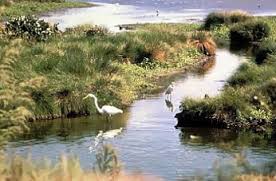
What are the ABIOTIC factors in this image?
water
sunlight
birds
grasses
mud

Which biome is hot all year with wet and dry seasons?
tropical rainforest
arctic tundra
temperate grassland
desert


