
Font size
 Worksheets
October Science
Total questions: 32
Worksheet time: 16mins
Which tool can be used to compare the mass of a large rock to the mass of two wooden blocks?
Graduated cylinder
Thermometer
Spring scale
Pan balance

Why would the student shake the salad dressing well before using it? Select TWO correct answers.
Vinegar and oil have different densities.
Oil and vinegar have the same density.
Vinegar and oil both contain water.
Vinegar and oil are both liquids.
Oil and water have different densities.
A hand lens refracts light. When light rays shine on the lens, most of the light rays —
disappear
bend
will bounce
are blocked

A student drew this model to show what happens when sugar dissolves in water. Black circles represent particles of sugar. White circles represent particles of water. What change would make the model more accurate?
Show the black circles and white circles evenly mixed.
Remove all the white circles.
Move all the black circles to the bottom row.
Show the black circles clumped together in the middle.

For a science experiment, a class used a penny, vinegar, and water. They made and recorded several observations. If the students made a second round of observations on Day 2, which one would least likely change from Day 1?
Mass of penny
Temperature of lab water
Room temperature of vinegar
Volume of vinegar

Look at the picture. A student sets up an investigation to see how the number of books affects how far the car rolls after going down the ramp. When the toy car is released, it rolls down the ramp. Which force is responsible for causing the car to roll down the ramp?
Friction
Magnetism
Gravity
Contact force
Students test the effects of forces that act from a distance, causing objects to move. They discover that two forces have this effect on objects. These forces are –
friction and gravity
gravity and magnetism
magnetism and friction
gravity and density
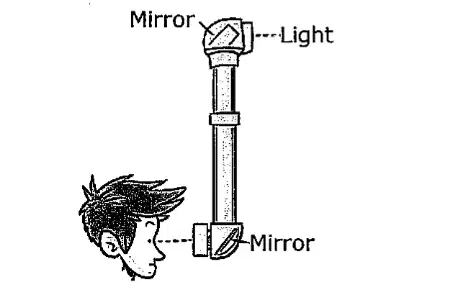
This student has built a periscope using a tube and two mirrors. This periscope works because of —
reflection only
refraction only
neither reflection nor refraction
a combination of reflection and refraction
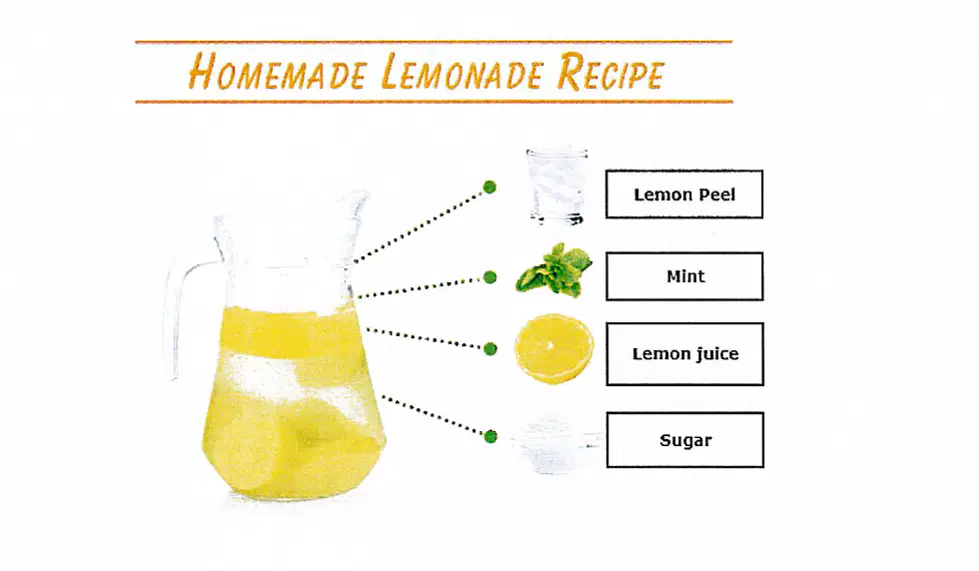
A lab investigation called for the following items to be mixed together. Which ingredients in the image will dissolve in water? Select TWO correct answers.
Lemon Peel
Mint
Lemon Juice
Sugar
Eric stirs two tablespoons of sugar with one cup of warm water in a glass until the sugar is no longer visible. He calls the resulting liquid Substance J. Next, he stirs together two tablespoons of sugar with two tablespoons of cinnamon until thoroughly mixed. He calls this substance, Substance K. Which describes how Substance J differs from Substance K?
One is a solution, and the other is a mixture.
One is a mixture, and the other is a compound.
One is an element, and the other is a solution.
One is a compound, and the other is an element.
Burning a candle creates —
thermal and light energy
light energy only
sound and electrical energy
electric and thermal energy

Gabriella is using a thermometer to collect information about temperatures at different times of the day. She made and recorded several observations. The chart below shows some of the observations.
25° C
26° C
33° C
38° C
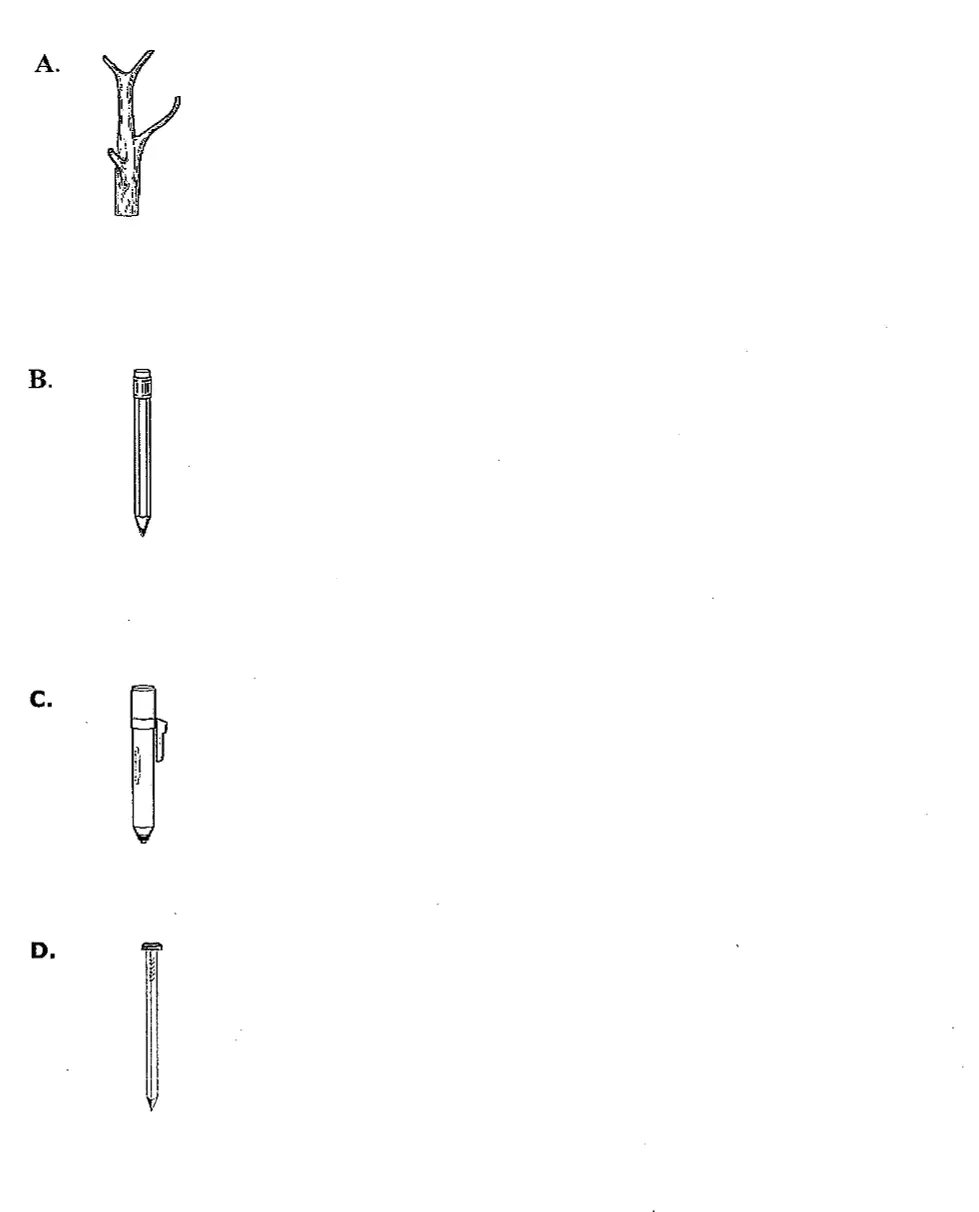
Which of the following objects is the best conductor of electrical energy?
Branch
Pencil
Pen
Nail

Which of the substances shown in the chart could be sugar?
Substance W
Substance X
Substance Y
Substance Z

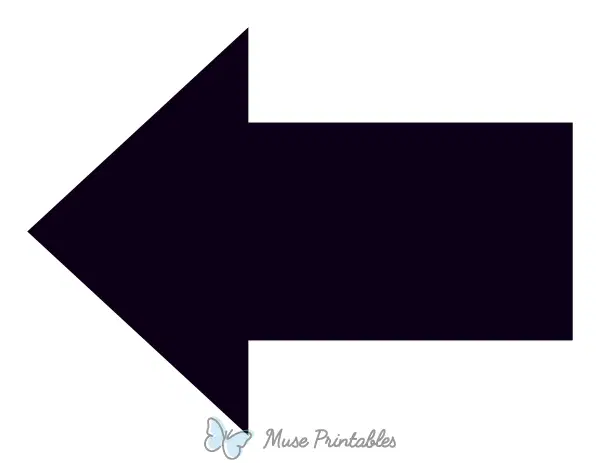
Look at the picture. A force is acting on the car that makes it move to the right. Which arrow shows the direction for the force of friction?
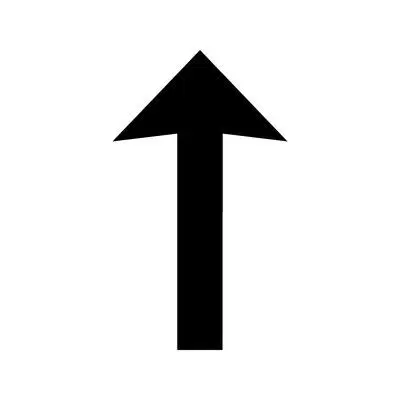
A
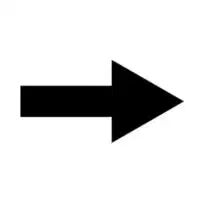
B
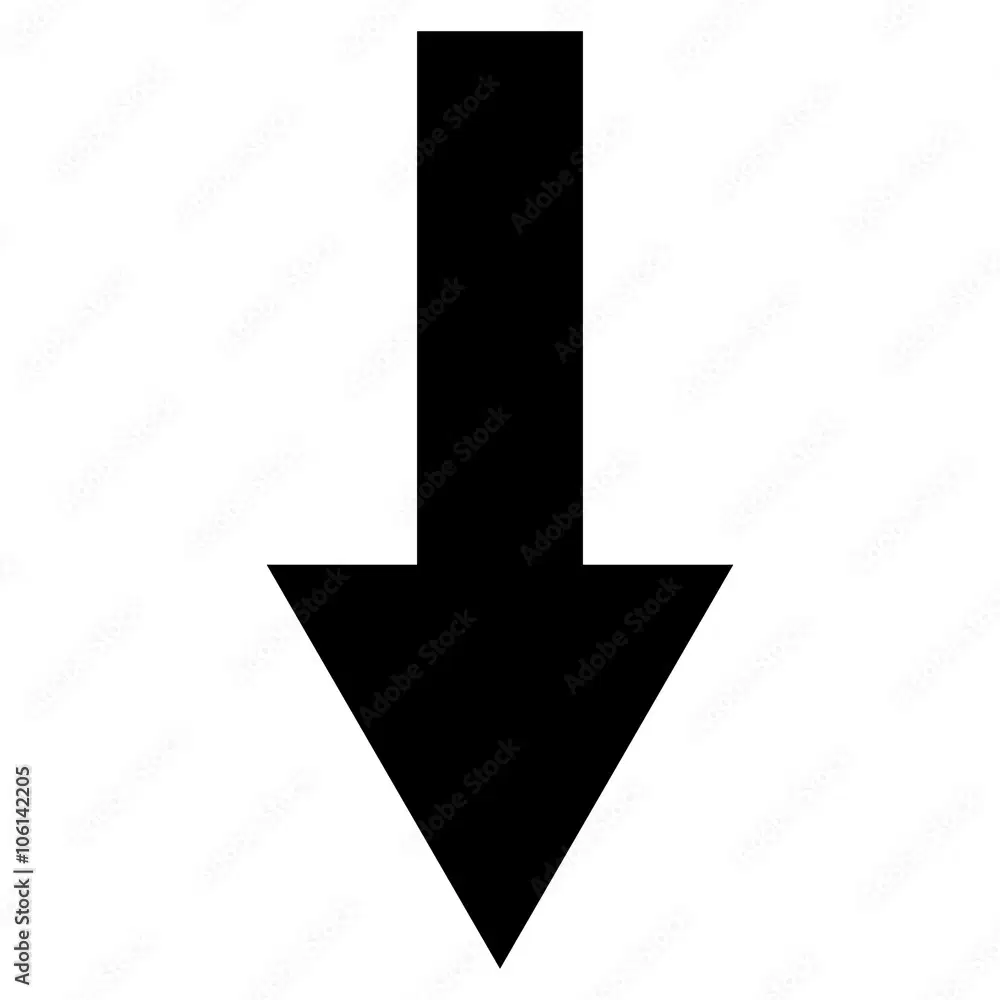
C
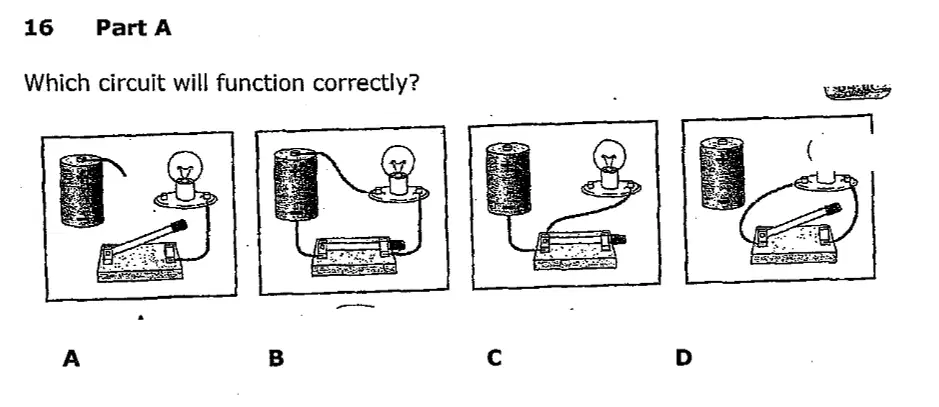
Part A: Which circuit will function correctly?
A
B
C
D
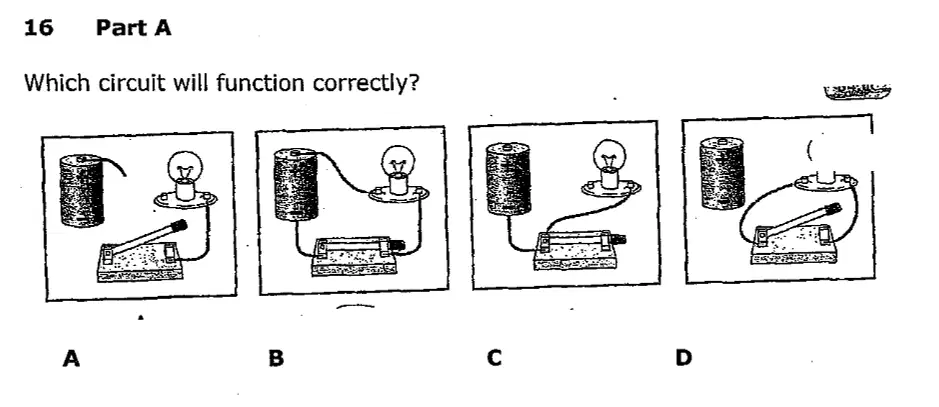
Part B: Which statement best explains the answer to Part A?
The bulb lights up when the switch is open.
The bulb lights up when the switch is closed.
The wire is connected only to the battery from one side.
The wire is connected only to the lightbulb and the switch.
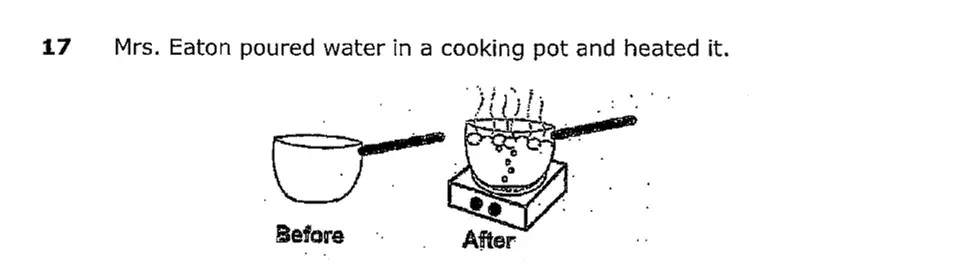
Mrs. Eaton poured water in a cooking pot and heated it. Mrs. Eaton asked her students to draw a picture to show the water molecules before and after they were heated. Which of the following drawings would be correct?
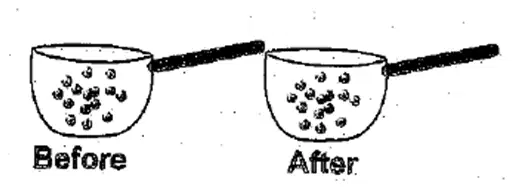
A
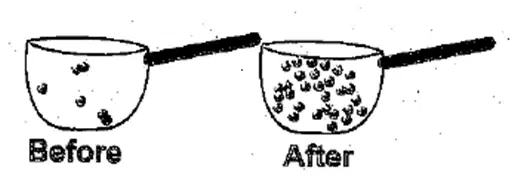
B
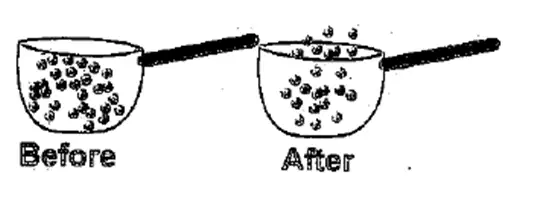
C
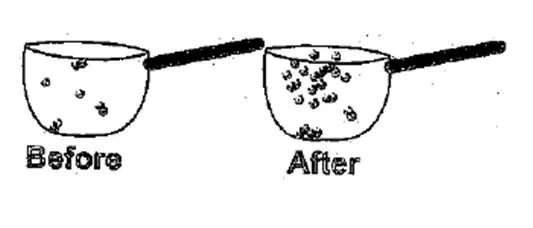
D
A student wants to investigate how forces can cause motion. A toy car is placed on a table. Which action explains what would make the toy car move forward?
Apply balanced forces pushing down and pushing up on the car.
Apply balanced forces to the front and back of the toy car.
Apply an unbalanced force to pull the toy car.
Apply an unbalanced force pushing down on the toy car.
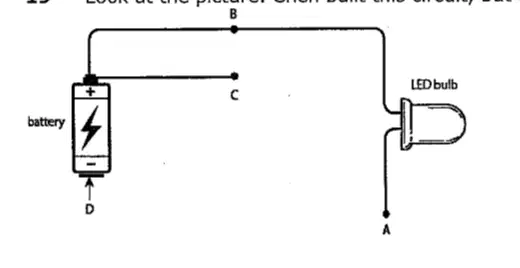
Look at the picture. Chen built this circuit, but the LED bulb does not light up. Chen’s circuit is not working. Look back at his circuit. Between which two points on the circuit should Chen place a wire in order to make the LED bulb light up?
A to B
D to A
B to C
D to C

A student was learning about electromagnets. He decided to run an experiment and coiled wire around a nail. As he completed the experiment, he created the data table shown below.
The less you rotate the coil the higher the number of paperclips you pick up.
As the number of coils increase, the strength of the electromagnet increases.
As the number of coils increase, the strength of the electromagnet decreases.
The more nails you add the higher the number of paperclips you pick up.
Which substances, when mixed together, maintain their original physical properties?
Gravel, sugar, water
Wood chips, water, sand
Sand, sugar, water
Water, pepper, sugar
Which describes what happens to light when it enters and exits a prism?
It is reflected
It is refracted
It is absorbed
It continues in a straight line.
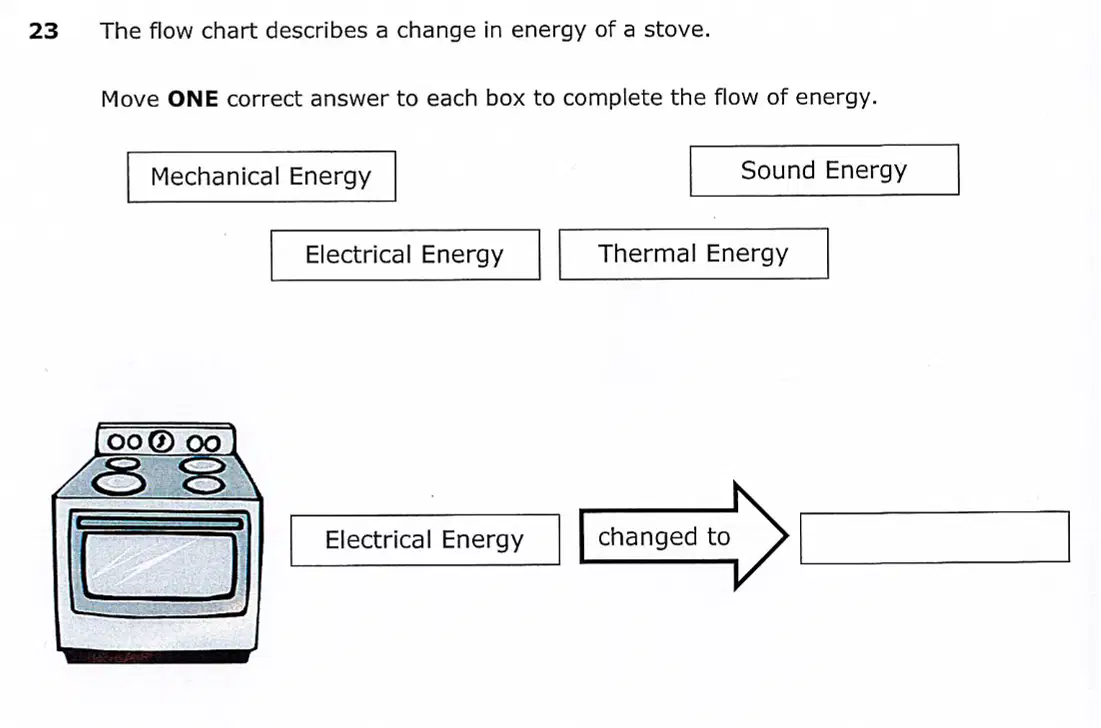
The flow chart describes a change in energy of a stove. Move ONE correct answer to each box to complete the flow of energy.
Electrical Energy
Thermal Energy
Chemical Energy
Mechanical Energy
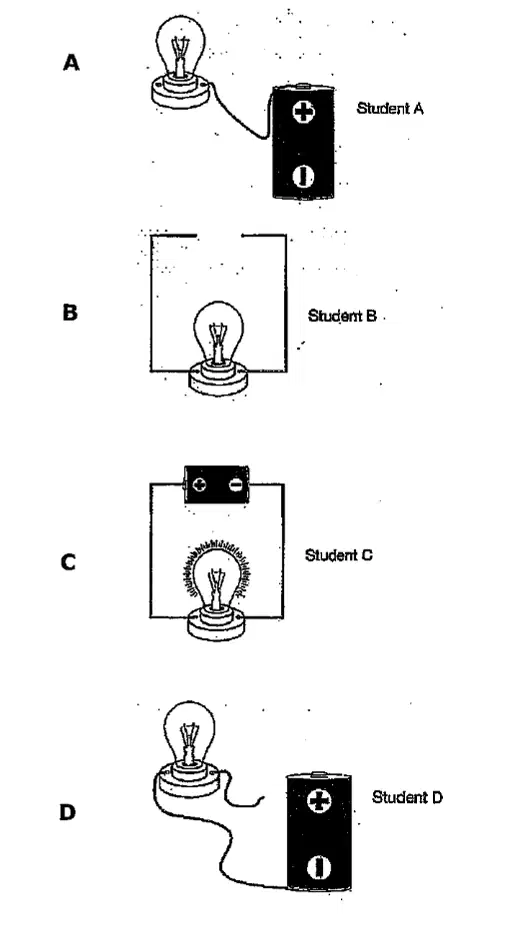
After an investigation demonstrating that a circuit requires a complete path so a current can pass, four students were asked to draw a diagram representing the experiment. Which student designed an accurate diagram of a closed circuit?
Student A
Student B
Student C
Student D
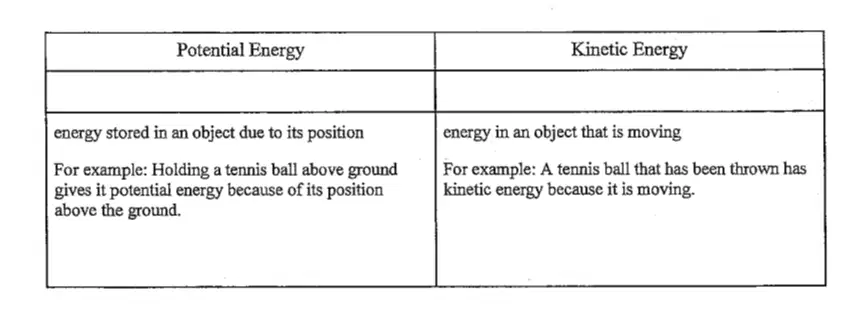
A student investigates how potential and kinetic energy can change in an object. The student holds a rock and then releases it. At which point is the potential energy in the rock the greatest?
When the rock hits the floor
When the student is holding the rock
When the rock is first released
Just before the rock hits the floor
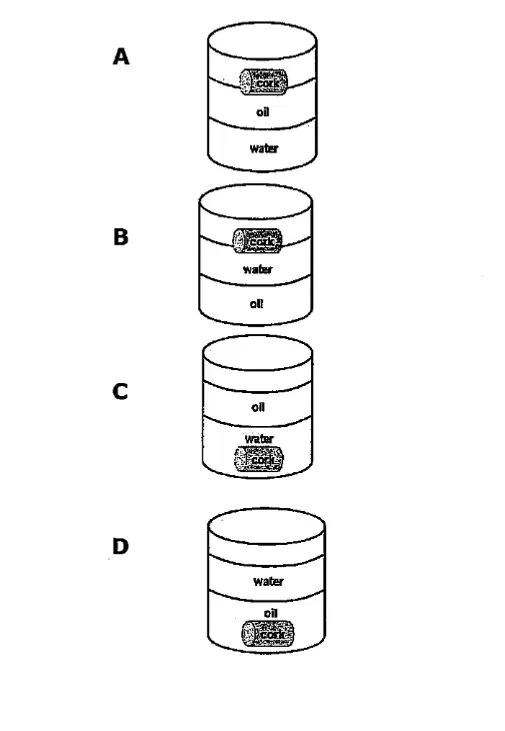
Oil is less dense than water. A cork is less dense than oil. Which illustration below is correct if oil, water, and a cork are mixed together?
A
B
C
D
Which of the following is an example of refraction?
You can see yourself when you look into a mirror.
You can’t see an object if it is hidden behind another object.
A pencil in a jar of water appears to be broken, even though it is not.
The sky seems to be different color when viewed through a stained-glass window.
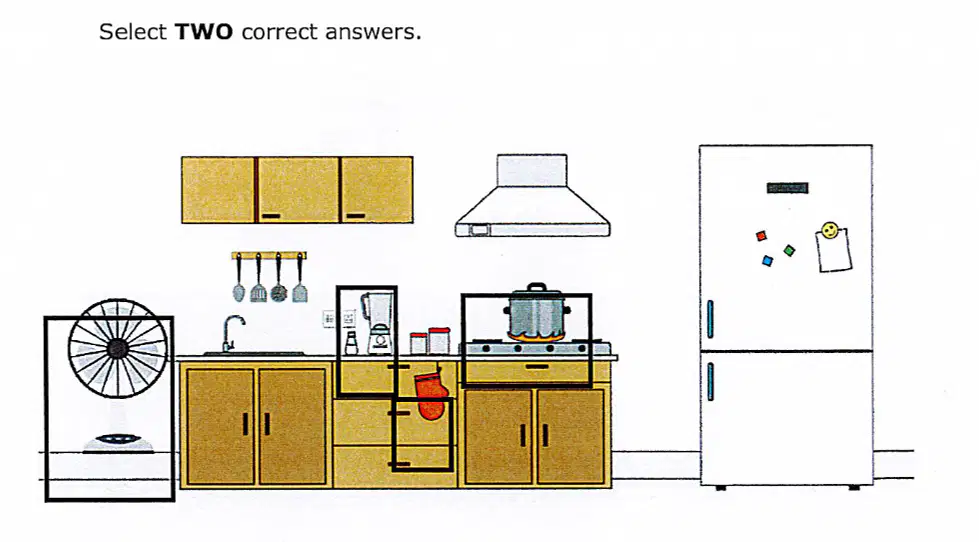
Which of these objects can convert electrical energy to mechanical energy? Select TWO correct answers.
Fan
Refrigerator
Stove
Cabinet
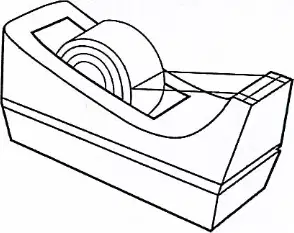
Look at the object below. Why is it called transparent tape?
Light travels through it.
It emits light.
It absorbs all light.
It causes light to bend.
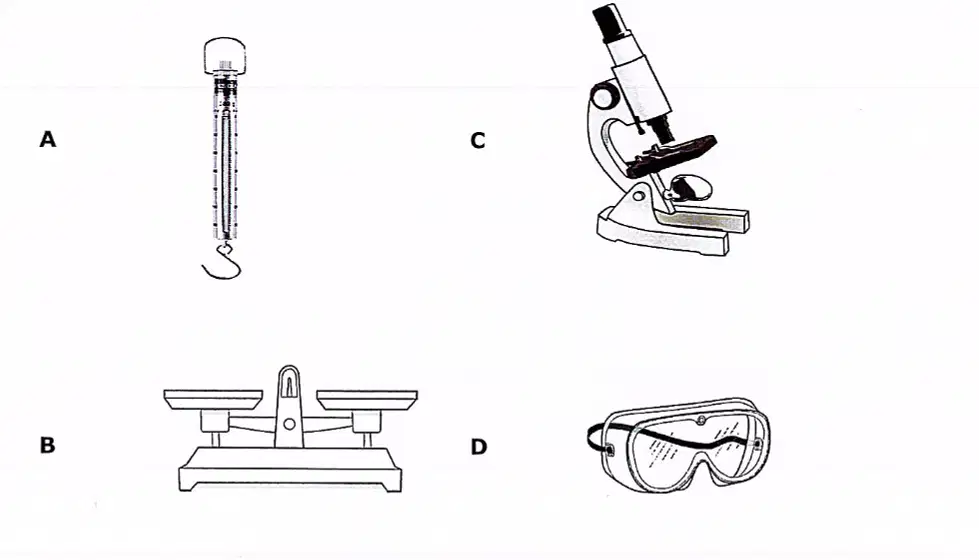
Which of these tools is used primarily for safety?
Thermometer
Balance scale
Microscope
Safety goggles
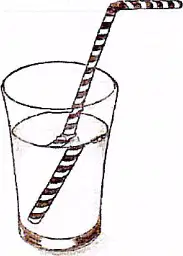
A student and his younger brother observed the straw and glass. The younger brother asked why the straw looks bent. What causes the straw to appear bent?
Reflection of light
Refraction of light
Diffraction of light
Absorption of light

