
 Worksheets
Atomic Structure and Electrons
Total questions: 73
Worksheet time: 1hrs 6mins
What is the electron configuration for Arsenic?
1s2 2s2 2p6 3s2 3p6 4s2 4p3
1s2 2s2 2p6 3s2 3p6 4s2 3d10 4p6
1s2 2s2 2p6 3s2 3p6 4s2 3d10 4p3
1s2 2s2 2p6 3s2 3p6 4s2 4d10 4p3
Which element has the following electron configuration: [Ar] 4s2 3d10 4p4?
Bromine
Gold
Iodine
Selenium
Which element has the electron configuration, 1s2 2s2 2p6 3s2 3p6 4s23d10?
Phosphorus
Zinc
Potassium
Copper

This Lewis dot structure for Oxygen is accurate
True
False

This Lewis dot structure for Nitrogen is accurate
True
False

If an atom of Fluorine has 10 neutrons, which of the following is FALSE?
The mass number is 19.
There are 10 total electrons.
There are 7 valence electrons.
There are 9 protons.

Name this element.
Argon
Chlorine
Aluminum
Boron
Which of the following is a p block element?
Ca
Ar
Re
Au
What is this element?
1s22s22p63s23p6
4s23d104p6
Argon (Ar)
Krypton (Kr)
Selenium (Se)
Bromine (Br)
An orbital can at most hold how many electrons?
1 electron
2 electrons
3 electrons
4 electrons
An orbital can at most hold how many electrons?
1 electron
2 electrons
3 electrons
4 electrons
An orbital can at most hold how many electrons?
1 electron
2 electrons
3 electrons
4 electrons

How many electrons can the d subshell hold?
8
10
2
4
There are 4 different types of orbitals, s, p, d, & f.
true
false
As the wavelength of a wave increases, which is also true?
The energy of the wave will increase.
The speed of the wave will increase.
The frequency of the wave will decrease.
Planck's constant will decrease.
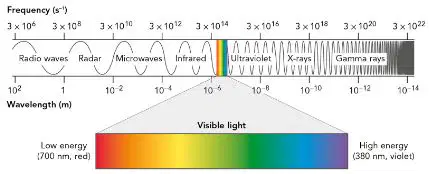
Which set correctly lists the types of electromagnetic radiation in order, from least to most energetic?
ultraviolet, visible, infrared, microwave
infrared, microwave, ultraviolet, x-rays
ultraviolet, visible violet, visible red, infrared
radio, microwave, ultraviolet, gamma
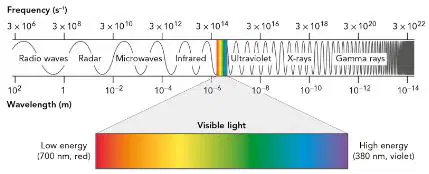
Which of the following choices lists electromagnetic radiation in order from shortest wavelength to longest wavelength?
X-rays, microwaves, visible light, infrared
X-rays, visible light, infrared, microwaves
microwaves, infrared, visible light, X-rays
infrared, visible light, microwaves, X-rays
Which factors of the electromagnetic radiation have an inverse relationship? (as one increases, the other decreases) SELECT ALL THAT APPLY
amplitude and frequency
energy and frequency
frequency and wavelength
wavelength and energy
Which of the following statements about electromagnetic radiation is true?
Electromagnetic waves with high frequency are more energetic than electromagnetic waves with low frequency.
All electromagnetic radiation carries the same amount of energy.
Electromagnetic waves with long wavelengths are more energetic than electromagnetic waves with short wavelengths.
Electromagnetic radiation in a vacuum can change frequency to become more or less energetic.
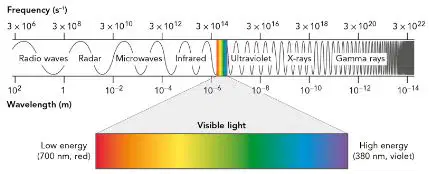
True or false: as you move along the spectrum, left to right, the wavelengths decrease in size (get smaller)
true
false
A wave with a long wavelength will have a ______ frequency and _____ energy
high, low
high, high
low, high
low, low
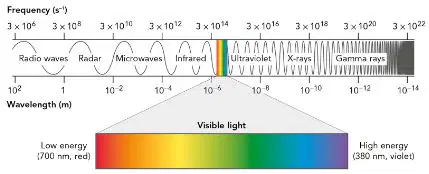
Which color of light has the highest frequency?
red
orange
green
violet
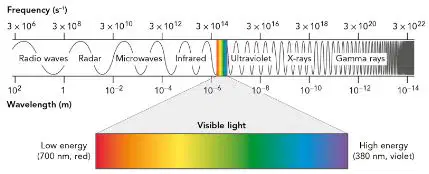
Which color has the least amount of energy?
red
orange
green
blue

High frequency waves have _________ wavelengths.
varying
long
the same
short
The distance between two crests or two troughs of a wave is called:
frequency
amplitude
wavelength
hertz
All electromagnetic waves have the same...
frequency
speed
wavelength
energy
How much of the electromagnetic spectrum is visible?
All of it
None of it
Most of it
Only a small part
The height of the wave is known as the _____________.
amplitude
crest
trough
wavelength
How many electrons can the first energy level hold?
1
2
8
0
How many electrons can the p subshell hold?
8
10
2
6
The highest point on a wave is:
the crest
the trough
the top
the coast
The lowest point on a wave is the:
Amplitude
Crest
Trough
Wavelength
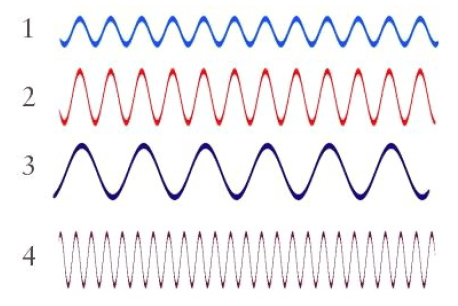
Which wave in the diagram has the greatest frequency?
1
2
3
4
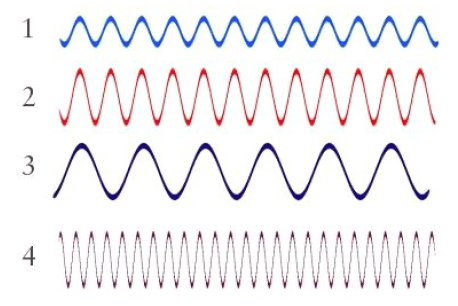
Which wave in the diagram has the greatest wavelength?
1
2
3
4
Which subshell has the highest energy?
s
p
d
f
Which subshell has the lowest energy?
s
p
d
f
Which subatomic particle is not found in the nucleus of an atom?
Proton
Neutron
Electron
All of the above are found in the nucleus
What does the atomic number of an element represent?
The number of protons in the nucleus
The number of neutrons in the nucleus
The total number of protons and neutrons in the nucleus
The total number of protons and electrons in an atom
What is the charge of a proton?
Negative
Positive
Neutral
Variable
How can you determine the number of neutrons in an atom if you know its atomic number and mass number?
Subtract the atomic number from the mass number
Add the atomic number to the mass number
Multiply the atomic number by the mass number
Divide the mass number by the atomic number
Which of the following is true about isotopes?
They have different atomic numbers but the same mass number
They have the same atomic number but different mass numbers
They have different numbers of electrons but the same number of protons
They are always ions
What is the maximum number of electrons that the f subshell can hold?
14
10
6
2

violet waves compared to red waves SELECT ALL THAT APPLY
have more energy
have greater frequency
have less frequency
have less energy
have a longer wavelength
Which energy shell has the lowest energy and is closest to the nucleus?
1
2
3
4
5
How many orbitals does an s subshell have?
1
3
5
7
How many orbitals does a d subshell have?
1
3
5
7
How many orbitals does an f subshell have?
1
3
5
7
Electrons fill energy shells and subshells in order of the ______ energy first.
lower
higher
Which of the following statements is true about the 3s and the 4s subshells?
These subshells have the same energy
These subshells are the same distance from the nucleus
These subshells hold different amounts of electrons
These subshells have orbitals of the same shape
The emission of colors by metallic ions is the result of "excited" electrons
becoming protons
being absorbed by the nucleus
being annihilated by protons
releasing energy as they return to ground state
According to the Bohr model, what are energy levels in atoms?
The fixed energies an electron can have in an atom.
The specific frequencies of light emitted by an element.
The distances between crests of waves.
The different colors of light in the atomic emission spectrum.
What is a quantum of energy in the context of the Bohr model?
The energy required to move an electron from one energy level to another.
The specific amount of energy gained or lost by an electron in an atom.
The size of a step in climbing stairs.
The energy difference between any two energy levels in an atom.
What does the Bohr model represent with its orbits?
The different elements in the periodic table.
The energy levels of the electrons in the atom.
The specific wavelengths of light emitted by the element.
The distances between crests of waves.
How many electrons can be represented in the second energy shell of an atom?
Up to two electrons.
Up to four electrons.
Up to six electrons.
Up to eight electrons.
Which principle states that we cannot know the location AND speed of an electron at the same time?
Bohr
Hesienberg
Shrodinger
Einstein

Light is emitted when electrons ...
move from high to low
move from low to high
either of these
none of these

The unknown emissions spectra belongs to the element
Hydrogen
Mercury
Neon
Helium
How many subshells are contained in the 3rd energy shell?
1
2
3
6
Ground state means that an electron is...
at its lowest possible potential energy
in the first shell of an atom
laying low for the weekend
removed from an atom
In order to go from ground state to an excited state, an electron must
emit energy
absorb energy
rotate
wiggle
Which type of orbital is shaped like a sphere?
s orbital
p orbital
d orbital
f orbital
What does the 1 in "1s" stand for?
energy shell
s orbitals
p orbitals
the number of electrons
Assuming the wave shapes are drawn to scale, which electromagnetic radiation waves would you expect to carry the most energy?


Who discovered electrons?
Rutherford
Bohr
J.J. Thompson
Democritus
What experiment was used to discover electrons?
Cathode Ray Tube
Gold Foil
Chromatography
Gel Electrophorese
Who discovered the nucleus?
Rutherford
Bohr
J.J. Thompson
Democritus
Which model was created after the discovery of the nucleus?

Dalton's

Rutherford's

Quantum Mechanical

Plum Pudding
Which model was created after the discovery of the electron cloud?
Dalton's
Rutherford's
Quantum Mechanical
Plum Pudding
Which one of these is Dalton's Model?
What experiment was used to discover the nucleus?
Cathode Ray Tube
Gold Foil
Chromatography
Gel Electrophorese

Emission spectra (bright line spectra) are created when electrons move from ___.
higher to lower energy levels.
lower to higher energy levels.
s orbitals to p orbitals.
one atom to a different atom.
What is the electron configuration of a neutral oxygen atom?
1s2 2s2 2p4
1s2 2s2 2p6
1s2 2s2 2p5
1s2 2s2 2p3
Which of the following elements has the electron configuration [Ne] 3s2 3p5?
Chlorine
Argon
Sulfur
Phosphorus

