
 Worksheets
Subnetting Workbook
Total questions: 91
Worksheet time: 51mins
Fill in the blank: An IP address is made up of four numbers called ______ separated by dots.
octets
bytes
segments
blocks
What does the subnet mask 255.255.255.0 indicate?
What is the subnet mask example given in the Subnetting Workbook?
255.255.255.0
255.255.0.0
255.0.0.0
255.255.255.255
The network 192.168.1.0 can be split into two smaller networks by:
Using a subnet mask of 255.255.255.128
Using a subnet mask of 255.255.255.0
Using a subnet mask of 255.255.255.192
Using a subnet mask of 255.255.255.224
How many computers can be accommodated in the network 192.168.1.0 with the subnet mask 255.255.255.0?
254
256
255
253
Given network: 192.168.2.0 Current subnet mask: 255.255.255.0 Task: Split this network into two subnets. What will be the network address for each subnet?
192.168.2.0 and 192.168.2.128
192.168.2.0 and 192.168.2.64
192.168.2.0 and 192.168.2.32
192.168.2.0 and 192.168.2.16
Given network: 192.168.2.0 Current subnet mask: 255.255.255.0 Task: Split this network into two subnets. 2. What will be the first and last usable address in each subnet?
Subnet 1: 192.168.2.1 to 192.168.2.126, Subnet 2: 192.168.2.129 to 192.168.2.254
Subnet 1: 192.168.2.1 to 192.168.2.62, Subnet 2: 192.168.2.65 to 192.168.2.126
Subnet 1: 192.168.2.1 to 192.168.2.126, Subnet 2: 192.168.2.128 to 192.168.2.254
Subnet 1: 192.168.2.1 to 192.168.2.64, Subnet 2: 192.168.2.65 to 192.168.2.128
Given network: 192.168.2.0 Current subnet mask: 255.255.255.0 Task: Split this network into two subnets. 3. What will be the broadcast address for each subnet?
192.168.2.127 and 192.168.2.255
192.168.2.63 and 192.168.2.191
192.168.2.255 and 192.168.3.255
192.168.2.95 and 192.168.2.223
Subnet 1: Network Address: ____________
Subnet 1: Network Address
Subnet 1: 192.168.1.0
Subnet 1: 10.0.0.0
Subnet 1: 172.16.0.0
Subnet 1: First Usable Address: ____________
First Usable Address
Last Usable Address
Network Address
Broadcast Address
Subnet 1: Last Usable Address: ____________
192.168.1.254
192.168.1.1
192.168.1.255
192.168.1.0
Subnet 1: Broadcast Address: ____________
Broadcast Address
Network Address
Subnet Mask
Default Gateway
Subnet 2: Network Address: ____________
Subnet 2: Network Address
Subnet 1: Network Address
Subnet 3: Network Address
Subnet 4: Network Address
Subnet 2: First Usable Address: ____________
First Usable Address
Second Usable Address
Third Usable Address
Fourth Usable Address
Subnet 2: Last Usable Address: ____________
192.168.1.254
192.168.1.253
192.168.1.252
192.168.1.251
Subnet 2: Broadcast Address: ____________
Broadcast Address
Subnet Mask
Default Gateway
Network Address
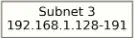
What is the network address for Subnet 3?
192.168.1.128
192.168.1.129
192.168.1.130
192.168.1.131

Fill in the blank: The broadcast address for Subnet 4 is ____.
192.168.1.255
192.168.1.0
192.168.1.128
192.168.1.64
How many bits are needed for 8 subnets in a Class B network?
2 bits
3 bits
4 bits
5 bits
Fill in the blank: In a Class B network with 8 subnets, there are ____ bits left for hosts.
13 bits
12 bits
14 bits
15 bits
How many usable addresses does each subnet have?
254
256
512
1024
What is the goal of Practice Problem 2 in the Subnetting Workbook?
To understand subnetting concepts
To practice IP addressing
To learn about network security
To configure routers
How many bits are needed for creating 16 subnets?
2
3
4
5
What is the new subnet mask for creating 16 subnets?
255.255.255.0
255.255.255.128
255.255.255.192
255.255.255.240
What should be ensured about routers and switches to handle new subnets?
They should be updated to support new protocols.
They should be configured to handle additional traffic.
They should be replaced with newer models.
They should be checked for compatibility with new subnets.
What should be verified in routing tables and VLAN configurations?
IP addresses and subnet masks
VLAN IDs and port assignments
Routing protocols and metrics
All of the above
The first and last addresses in a subnet should be remembered because:
They are used for network and broadcast addresses.
They are used for assigning to hosts.
They are used for DNS resolution.
They are used for routing protocols.
What should not be assigned to devices in a subnet?
IP addresses outside the subnet range
Correct subnet mask
Default gateway
DNS server
How can duplicate IP addresses within the same subnet be checked?
By using a network scanner
By manually checking each device
By using a subnet mask
By changing the IP address
What should be verified about all devices on the correct subnet?
IP address configuration
Subnet mask
Default gateway
DNS server settings
What should be confirmed about routing tables?
The size of the routing table
The accuracy of the routing entries
The update frequency of the routing table
The security of the routing table
What should be ensured about VLANs on all relevant ports?
VLANs should be configured correctly.
VLANs should be disabled.
VLANs should be ignored.
VLANs should be removed.
How should network traffic be monitored for excessive broadcasts?
By using a network sniffer
By increasing bandwidth
By installing more routers
By disabling DHCP
What should be implemented on switches to control broadcast storms?
Spanning Tree Protocol
VLANs
Port Security
Storm Control
What is the subnet mask for dividing the network 192.168.5.0/24 into 8 subnets?
255.255.255.224
255.255.255.240
255.255.255.248
255.255.255.192
Activity 2: Designing a Network - You are tasked with designing a network for a small office with 3 departments. - Each department needs its own subnet with at least 30 hosts. - Use the network 10.0.0.0/24 and determine the subnet mask and address ranges. What is the subnet mask for each department?
255.255.255.192
255.255.255.224
255.255.255.240
255.255.255.248
Subnetting is a process used in networking. Why is it important?
It increases the number of available IP addresses.
It improves network security and performance.
It allows for faster internet speeds.
It reduces the need for network hardware.
How many usable host addresses are available in a /24 network?
254
256
255
253
3. What is the purpose of a subnet mask?
To divide an IP address into network and host portions
To encrypt data packets
To increase internet speed
To provide a backup connection
4. Given the network 172.16.0.0/16: a) How many /24 subnets can you create? ______________ b) How many hosts per subnet? ______________________ c) What would be the first three subnet ranges? _______
a) 256 subnets b) 254 hosts per subnet c) 172.16.0.0/24, 172.16.1.0/24, 172.16.2.0/24
a) 128 subnets b) 510 hosts per subnet c) 172.16.0.0/24, 172.16.2.0/24, 172.16.4.0/24
a) 512 subnets b) 126 hosts per subnet c) 172.16.0.0/24, 172.16.1.0/24, 172.16.3.0/24
a) 64 subnets b) 1022 hosts per subnet c) 172.16.0.0/24, 172.16.4.0/24, 172.16.8.0/24
What subnet mask would you use? ______________
255.255.255.0
255.255.0.0
255.0.0.0
255.255.255.128
Design a network for a small business with: - Marketing department (needs 15 hosts) - Sales department (needs 30 hosts) - IT department (needs 10 hosts) Starting network: 192.168.1.0/24 Complete the following: a) Subnet mask for each department: ______________ b) Network ranges: ________________________ c) Number of unused addresses: _________________
a) Subnet mask for each department: ______________ b) Network ranges: ________________________ c) Number of unused addresses: _________________
a) Subnet mask for each department: 255.255.255.0 b) Network ranges: 192.168.1.0-192.168.1.255 c) Number of unused addresses: 0
a) Subnet mask for each department: 255.255.255.128 b) Network ranges: 192.168.1.0-192.168.1.127 c) Number of unused addresses: 128
a) Subnet mask for each department: 255.255.255.192 b) Network ranges: 192.168.1.0-192.168.1.63 c) Number of unused addresses: 192
7. How would you modify your design if the business expected 50% growth in each department within a year?
Increase resources and budget allocation
Maintain current design
Reduce department size
Focus on cost-cutting measures
What is the purpose of subnetting in a network?
To increase the number of available IP addresses
To improve network security
To reduce network congestion
To divide a network into smaller, more manageable pieces
Which of the following is a CIDR notation for subnet masks?
/24
255.255.255.0
192.168.1.1
10.0.0.0
Calculate the number of subnets for a /24 to /26 conversion using the formula 2^n.
4 subnets
2 subnets
8 subnets
16 subnets
How many usable hosts are there in a /26 subnet?
62 usable hosts
30 usable hosts
126 usable hosts
14 usable hosts
Match the following subnet masks with their usable addresses:
254 usable
/24
126 usable
/25
62 usable
/26
30 usable
/27
What should you always subtract for network and broadcast addresses?
Subnet mask
Host addresses
Two addresses
Default gateway
What is the formula to calculate available hosts in a subnet?
(2^n) - 2
2^n
n^2 - 2
(n^2) - 2
For 13 host bits, how many usable host addresses are available?
8,190
8,192
8,000
8,100
In a /19 subnet, if the total bits are 32 and network bits are 19, how many host bits are there?
13
12
14
15
How many subnets can be created with 5 bits?
16
32
8
64
Calculate the number of usable hosts in a /28 subnet.
14
16
30
32
If you have 6 bits for hosts, how many devices can you support?
32 devices
64 devices
128 devices
256 devices
Given a /22 network, how many /26 subnets can you create?
4
8
16
64
How many hosts per /26 subnet?
32
64
128
256
Enhance your subnetting skills with these additional practice problems. Subnetting a Class B Network: Given the network 172.16.0.0/16, divide it into 64 subnets. What is the new subnet mask?
255.255.255.192
255.255.255.128
255.255.255.0
255.255.254.0
Enhance your subnetting skills with these additional practice problems. Subnetting a Class B Network: What is the subnet mask for each subnet?
255.255.0.0
255.255.255.0
255.255.255.128
255.255.255.192
Enhance your subnetting skills with these additional practice problems. Subnetting a Class B Network: How many hosts per subnet?
256
512
1024
65534
Enhance your subnetting skills with these additional practice problems. Variable Length Subnet Masking (VLSM): You need subnets for 50, 20, and 10 hosts. What subnet masks would you use?
/26, /27, /28
/25, /26, /27
/24, /25, /26
/23, /24, /25
Calculate the total number of addresses used in a subnet.
256
512
1024
2048
A company has a /24 network and needs 5 subnets with at least 30 hosts each. How many addresses will be wasted?
2 addresses
14 addresses
16 addresses
18 addresses
What subnet mask should a company use if it has a /24 network and needs 5 subnets with at least 30 hosts each?
255.255.255.224
255.255.255.240
255.255.255.248
255.255.255.192
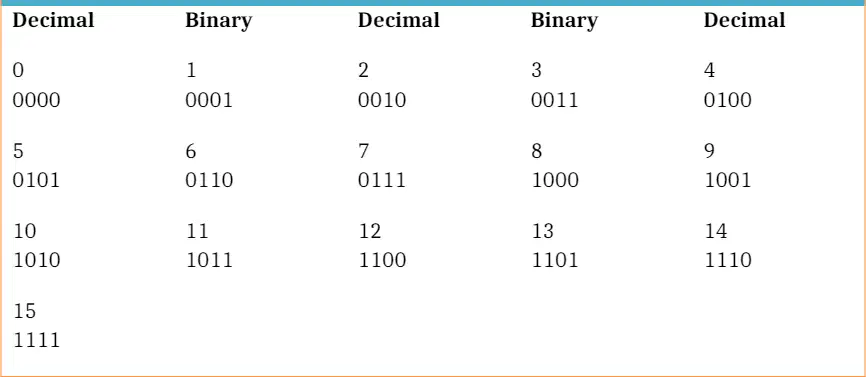
What is the binary representation of the decimal number 7?
A) 0110
B) 0111
C) 1000
D) 1001
What is the value of 2^0?
1
0
2
4
What is the value of 2^1?
2
1
4
0
What is the value of 2^2?
4
2
6
8
What is the value of 2^3?
8
6
4
10
What is the value of 2^4?
16
8
12
20
What is the value of 2^5?
32
16
64
8
What is the value of 2^6?
64
32
128
16
What is the value of 2^7?
128
64
256
32
What is the value of 2^8?
256
128
512
1024
What is the value of 2^9?
512
256
1024
128
What is the value of 2^10?
1,024
512
2,048
256
What is the value of 2^11?
2,048
1,024
4,096
512
What is the value of 2^12?
4,096
2,048
8,192
1,024
What is the value of 2^13?
8,192
4,096
16,384
1,024
What is the value of 2^14?
16,384
8,192
32,768
4,096
What is the number of addresses for a /24 subnet?
256 addresses (2^8)
128 addresses (2^7)
512 addresses (2^9)
64 addresses (2^6)
What is the number of addresses for a /25 subnet?
128 addresses (2^7)
64 addresses (2^6)
256 addresses (2^8)
32 addresses (2^5)
What is the number of addresses for a /26 subnet?
64 addresses (2^6)
32 addresses (2^5)
128 addresses (2^7)
16 addresses (2^4)
What is the number of addresses for a /27 subnet?
32 addresses (2^5)
64 addresses (2^6)
16 addresses (2^4)
128 addresses (2^7)
What is the number of addresses for a /28 subnet?
16 addresses (2^4)
32 addresses (2^5)
64 addresses (2^6)
8 addresses (2^3)
What is the number of addresses for a /29 subnet?
8 addresses (2^3)
16 addresses (2^4)
32 addresses (2^5)
64 addresses (2^6)
What is the number of addresses for a /30 subnet?
4 addresses (2^2)
2 addresses (2^1)
8 addresses (2^3)
16 addresses (2^4)
What is the total number of bits in an IP address?
In a /16 network, how many bits are available for hosts/subnets?
16 bits are available for hosts/subnets.
8 bits are available for hosts/subnets.
24 bits are available for hosts/subnets.
32 bits are available for hosts/subnets.
Using 3 bits for subnets, how many hosts can be accommodated per subnet?
The number of hosts that can be accommodated per subnet is calculated using the formula 2^n - 2, where n is the number of host bits. In this case, if 3 bits are used for subnets, then 5 bits are left for hosts (since there are 8 bits in total for an octet). Therefore, the number of hosts per subnet is 2^5 - 2 = 32 - 2 = 30.
The number of hosts per subnet is 2^3 - 2 = 6.
The number of hosts per subnet is 2^4 - 2 = 14.
The number of hosts per subnet is 2^6 - 2 = 62.
What is an IPv4 address made up of?
16 bits of data
32 bits of data
64 bits of data
128 bits of data

