
 Worksheets
Marine science chapter 5 oceans and atmosphere
Total questions: 50
Worksheet time: 39mins

What process brings the deep cold ocean currents up to the surface?
Conduction
Global Wind Patterns
Upwelling
Temperature and salinity
What is an example of how a large body of water, such as an ocean, can influence climate?
Rushing water from tides cools the land.
There is no influence on climate from an ocean.
Cool ocean air causes a cool climate.
Warm ocean air causes a dry climate.
The Gulf Stream is a warm water current that flows away from the equator to northern Europe. Which of these does this cause?
crashes of warm and cool water in the ocean
colder climates near the equator
warm climates in northern Europe
large waves on the coast of Europe
A periodic reversal of the pattern of ocean currents and the water temperatures in the mid Pacific region
El Nino
windward
leeward
rain shadow
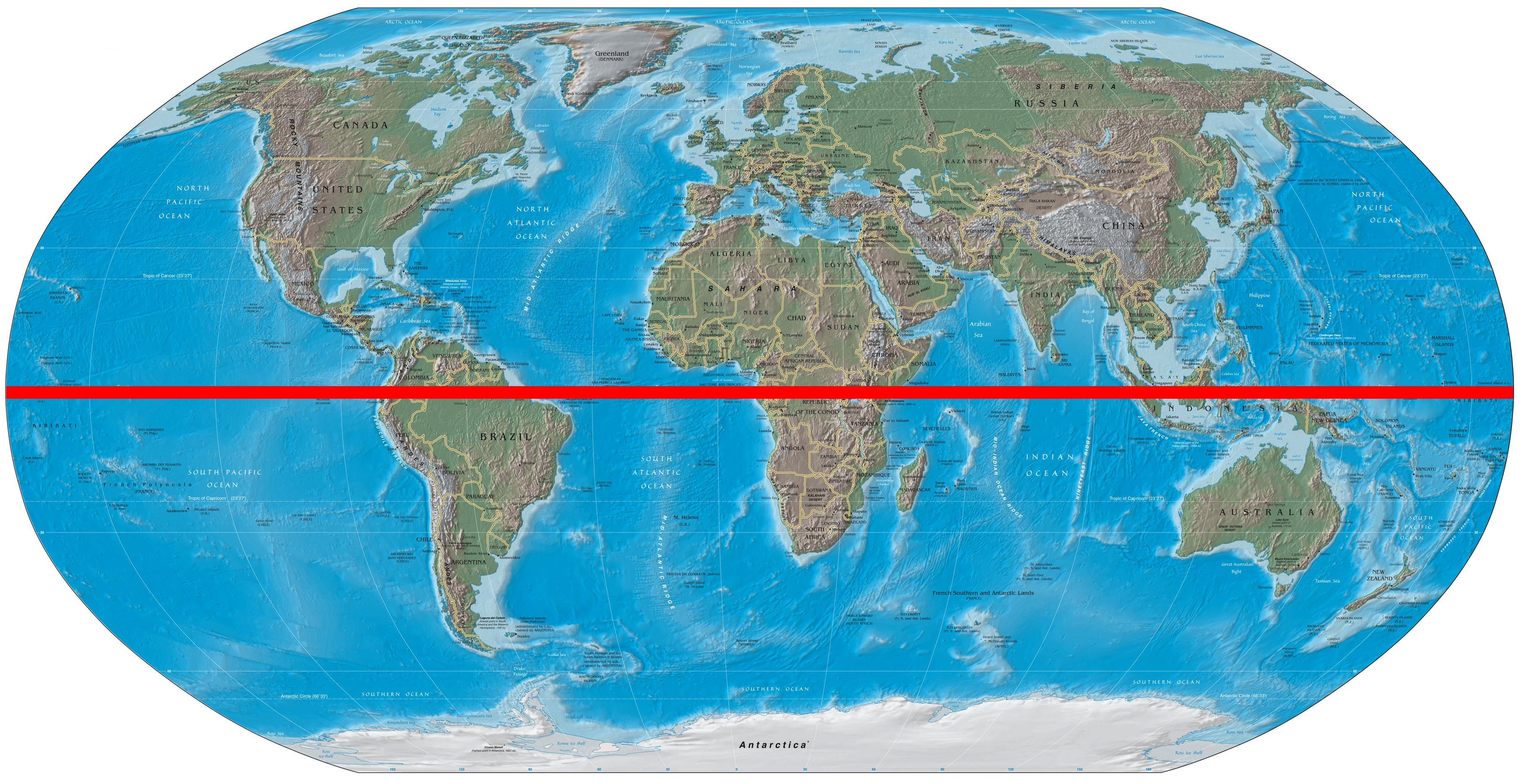
The Coriolis effect causes ___________.
the Earth to rotate on its axis
earthquakes
global winds and ocean currents to move in a curved path instead of a straight line
the Earth to revolve around the sun
Which statement below is correct?
Ocean water stores heat, and currents circulate the heat around the world, affecting the climate all
over the world.
Ocean water is cold, and currents circulate the cold water to the poles, affecting the climate at the
poles.
Ocean water is warm, and currents circulate the warm water to the equator, affecting the climate at
the equator.
Ocean water releases heat quickly, and currents circulate the cooling water around the world,
affecting the climate all over the world.
When air is heated it becomes
More dense
Less dense
Moist
Dry

This map shows the flow of ocean currents. Which is a reason for the flow? Check all that apply
Wind
Decreasing temperatures increasing density
Volcanoes on the Ocean Floor
Increased Salinity increasing density
Ocean currents are created by
Dense cold water sinking
Dense cold water rising
Less dense water sinking
Less dense warm water rising and more dense cold water sinking
_______ is created by unequal heating of the Earth’s surface. Check all that apply
Conduction
Radiation
Wind
Ocean Currents
River movement
Heat flow in the oceans and the atmosphere is
Cool flows down – warm flows up
Cool flows up – warm flows down
Cool flows up – warm flows up
Cool flows down – warm flows down
What is the driving force of currents in the oceans and atmosphere?
Equal hating of the Earth by the Sun
Solar radiation heating only the oceans
Solar radiation heating only the land surfaces
Unequal heating of the Earth by the Sun
Ocean currents move warm water:
From the equator to the poles
From the poles to the equator
From the Atlantic to the Pacific
Along the Antarctic flow
Upwelling is where:
Well water is pumped to the surface
Nutrients are moved from the surface to the bottom of the ocean
Nutrients move up from the ocean bottom to the surface
Excessive nutrients are added to the water (Eutrophication)
What causes deep ocean currents
Wind
Large schools of fish swimming below the surface
the Coriolis effect
Differences in temperature and salinity
What causes Surface currents
Differences in Salinity
Winds
The Coriolis effect
Both the wind and the Coriolis effect
What are the large surface currents that rotate due to winds and The Coriolis effect called
Spinners
Gyres
Whirpools
Cyclones
Another currents which carry water around the planet are called the thermohaline or
The Great Ocean Conveyor Belt
The Ocean Gyre
The Pycnocline
The Temperature/Salinity difference current

The reason ocean temperatures stay relatively constant (the same) all year round:
Water has a low specific heat
Deep water upwelling mixes the warm and cold water together
The water is salty and keeps the temperature warm
Water has a high specific heat
________________ is the transmission of heat energy through space by electromagnetic waves.
Convection
Thermocline
Radiation
Conduction

The five (5) circular surface currents in the ocean are called: ___________.
Upwellings
Gyres
Thermohalines
Thermoclines
The total amount of dissolved salt in water is referred to as its: ______________________.
Density gradient
pH
Specific gravity
Salinity
Which factors affect the density of seawater?
Wind and gravity
Salinity and pH
Temperature and salinity
pH and temperature
When the ocean water absorbs too much carbon dioxide from the atmosphere, it: _______________________.
lowers the pH and becomes more acidic
makes the water more alkaline
raises its overall temperature
slows the Great Ocean Conveyor Belt
One of the major ways oceans contribute to weather systems is that the oceans -
provide a diverse habitat for many organisms.
store and transport the Sun’s heat energy.
experience changes in amounts of dissolved salt.
reach depths that can be as much as 12,000 meters.
A system of low pressure with rotating clouds was forming over an ocean. Which weather event will likely result?
Monsoon
Hurricane
Blizzard
Tornado
Which of the following correctly identifies the major source for the energy that creates hurricanes?
A Sun's radiation
Ocean currents
Moon's gravity
Earth's rotation
Where do hurricanes typically form?
Over land
Over deserts
Over cold oceans
Over warm oceans
Why are hurricanes given categories, such as Category 1, Category 2, etc.?
To confuse people
To determine their color
To measure their strength
To name them
How is the strength of a hurricane measured?
By its name
By the number of people it affects
By its category on the Saffir-Simpson scale
By its speed
What is a storm surge, and why is it dangerous during a hurricane?
A type of dessert
A strong wind
A rapid temperature drop
A rise in sea level due to hurricane winds
Which are greenhouse gases?
Oxygen
Carbon Dioxide
Nitrogen
Methane
So if greenhouses gasses are normal, what's the problem?
Too many greenhouse gasses can cause the Earth to warm up too much
Too many greenhouse gasses can cause the Earth to cool down too much
They are turning everything on Earth green
There isn't a problem with greenhouse gases
If greenhouse gases increase, the atmosphere will turn green in color.
Which of the following does NOT happen to solar energy when it reaches Earth?
Some solar energy reflects off the atmosphere, back to space
Some solar energy passes through Earth and comes out the other side
Some solar energy is absorbed by land and water
Some solar energy is radiated from the Earth's surface and trapped by the atmosphere

