
 Worksheets
History of the Fez
Total questions: 60
Worksheet time: 33mins
Where did the fez originate from?
What is the fez also known as?
The modern fez is made of _______.
fabric
metal
plastic
wood
The fez is significant in Moorish culture because:
It represents a symbol of national identity.
It is used as a religious headwear.
It is a traditional dance accessory.
It is worn during agricultural festivals.
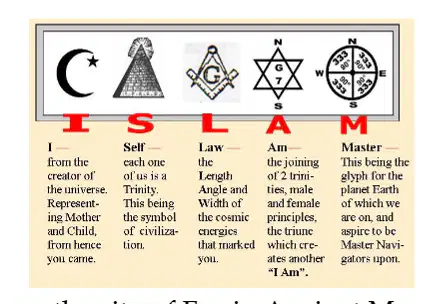
What does the 'S' in the symbolic representation of 'ISLAM' stand for?
What does the Red Fez represent according to the passage?
Modernity
Practical Wisdom
Europeanization
Nationality
In which countries is the original form of the fez still worn?
The original form of the fez is still worn in countries such as Morocco, Turkey, and parts of the Middle East.
The original form of the fez is still worn in countries such as France, Germany, and Italy.
The original form of the fez is still worn in countries such as Japan, China, and Korea.
The original form of the fez is still worn in countries such as Brazil, Argentina, and Chile.
Who was the leader of the Young Turks who banned the fez in 1925?
The leader of the Young Turks who banned the fez in 1925 was Mustafa Kemal Atatürk.
The leader of the Young Turks who banned the fez in 1925 was Enver Pasha.
The leader of the Young Turks who banned the fez in 1925 was Talat Pasha.
The leader of the Young Turks who banned the fez in 1925 was Cemal Pasha.
The fez was considered a symbol of nationality in Turkey because:
It was a traditional headwear adopted by the Ottoman Empire.
It was introduced by Mustafa Kemal Atatürk as a symbol of modernization.
It was worn by the Turkish military exclusively.
It was a symbol of Western influence in Turkey.
The discovery of synthetic aniline dyes had what impact on the fez industry?
It led to a decline in the fez industry.
It caused an increase in fez production.
It had no impact on the fez industry.
It improved the quality of fezzes.
The Fez is known for being:
A type of hat
A musical instrument
A traditional dance
A famous landmark
Who wore the Black Fez in 'The Mummy Returns'?
Rick O'Connell
Ardeth Bay
Imhotep
Jonathan Carnahan
From which years did Moorish Americans wear fezzes every day?
1920-1930
1930-1940
1940-1950
1950-1960
What is the most common color of the Fez?
Red
Blue
Green
Yellow
The free flowing tassel of the Fez symbolizes:
Freedom
Tradition
Authority
Unity
What is the Fez typically made of?
Silk
Red felt
Cotton
Wool
The BODY at the FEZ symbolizes:
A historical event
A cultural tradition
A political movement
An artistic expression
The Fez is a symbol of which eternal concept?
Eternal Life
Eternal Zodiac
Eternal Peace
Eternal Wisdom
The cord extending from the Eye symbolizes:
Connection to the soul
A lifeline
A spiritual journey
An artistic expression
Is Fez, the city in Europe? (True/False)
True
False
The Fez is the national headdress of which group?
Europeans
Moors

Identify who is wearing the Fez only by ritual, and who should be wearing the Fez by right of natural dress and culture.
The individual's to the right are wearing the Fez by ritual, and individuals to the left by natural dress.
Person B is wearing the Fez by ritual, and Person A by natural dress.
Both Person A and Person B are wearing the Fez by ritual.
Neither Person A nor Person B should be wearing the Fez.
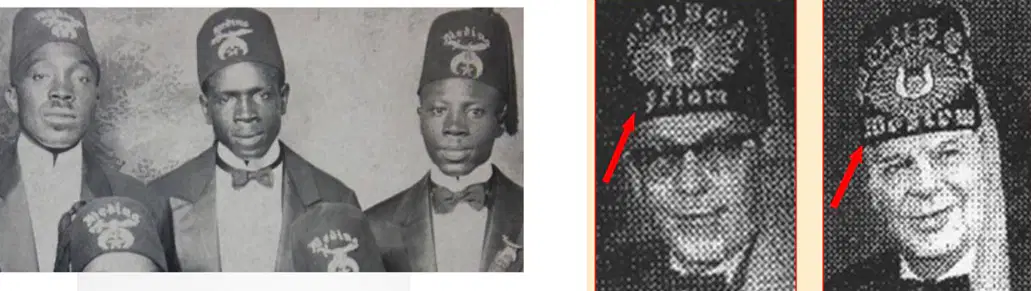
Who is who in this great controversy of who is worthy to wear the Fez and who is not?
Person A is worthy to wear the Fez.
Person B is worthy to wear the Fez.
Person C is worthy to wear the Fez.
No one is worthy to wear the Fez.
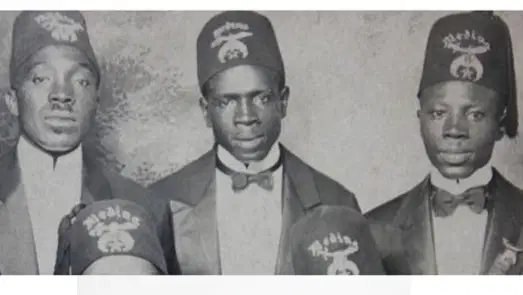
Identify who is honoring their ancient Mothers and Fathers.
The true owners of the national headwear
A person ignoring cultural heritage
A community preserving historical sites
An individual disrespecting family traditions

Who is denying connection to Ruth the Moabites and who is not, by way of recognizing or not recognizing the origins of the great philosophies and wisdom found in the halls of learning called Masonry?
The scholars of Masonry deny the connection.
The historians recognize the connection.
Both scholars and historians deny the connection.
Neither scholars nor historians deny the connection.
The Fez is a symbol of what according to the passage?
Tradition
Modernity
Rebellion
Unity
The original Turks according to the passage are:
A group of nomadic tribes
A modern nation-state
A historical empire
A cultural movement
According to the passage, what did the Europeans do with the Fez?
They adopted it as a fashion statement.
They banned it in their colonies.
They used it as a symbol of rebellion.
They ignored it completely.
One of the reasons Prophet Noble Drew Ali stated about the Fez is:
It represents the sun.
It symbolizes wisdom.
It is a sign of authority.
It signifies peace.
What did the Europeans teach through Masonic orders according to the passage?
Art and architecture
Science and technology
Philosophy and ethics
Political governance

What is written atop the Fez to show awareness of Morocco and Islam?
A) Islam, El Bey, Moslem, Morocco
B) Christianity, El Bey, Moslem, Morocco
C) Judaism, El Bey, Moslem, Morocco
D) Buddhism, El Bey, Moslem, Morocco
The modern fez is made of ______ and shaped roughly like a canister or truncated cone.
felt.
cotton.
silk.
wool.
What are the 3 Noble Titles mentioned in the passage?
A) Moslem Ali, El
B) Bey Ali, Islam
C) Ali, El, Morocco
D) Bey Ali, El,
The significance of the four circles on top of the fez is:
They represent the four seasons.
They symbolize unity and eternity.
They are purely decorative.
They indicate the rank of the wearer.
The original wearers of the Fez according to the passage were:
The Ottomans
The Egyptians
The Greeks
The Romans
In what year was the hajj interrupted, leading pilgrims to Fez?
930
983
1010
1048
The Moorish Fez symbolized:
A traditional headwear of the Ottoman Empire
A symbol of rebellion against colonial rule
A fashion statement in the 19th century
A religious symbol in Moorish culture
Sultan Mahmud II reconsidered the three-cornered hat of European descent because:
It was a symbol of modernity.
It was uncomfortable.
It was too expensive.
It was not suitable for the climate.
What was the main center of the fez industry at the beginning of the 20th century?
Fes, Morocco
Istanbul, Turkey
Cairo, Egypt
Tunis, Tunisia
Who was the leader of the Young Turks who banned the fez in 1925?
The leader of the Young Turks who banned the fez in 1925 was Mustafa Kemal Atatürk.
The leader of the Young Turks who banned the fez in 1925 was Enver Pasha.
The leader of the Young Turks who banned the fez in 1925 was Talat Pasha.
The leader of the Young Turks who banned the fez in 1925 was Cemal Pasha.
What does the White of the Fez represent?
The White of the Fez represents purity and peace.
The White of the Fez represents strength and courage.
The White of the Fez represents wisdom and knowledge.
The White of the Fez represents wealth and prosperity.
Which movie is mentioned in the passage that features the Black Fez worn by the Mufti's?
Indiana Jones and the Last Crusade
The Mummy
Lawrence of Arabia
Casablanca
The significance of the Fez as described in the passage is:
A symbol of cultural identity
A fashionable accessory
A religious artifact
A historical relic
What is the significance of the 'miracle Son' in the context of the passage?
He represents hope and renewal.
He is a symbol of despair.
He signifies the end of an era.
He is a metaphor for conflict.
According to the passage, when did the Daughters of the American Revolution begin their charters?
1890
1900
1910
1920
The Moorish Nation flag represents:
A symbol of unity and heritage
A historical artifact
A religious emblem
A national flag of Morocco
The Daughters of America were revolting against:
British colonial rule
High taxes
Lack of representation
Social inequality
What is the significance of the number '9' in the context of the Moabite/Moorish/Asiatic/African woman as described in the passage?
It represents completion and divine wisdom.
It is a symbol of material wealth.
It signifies a connection to the earth.
It denotes a period of transition.
How did the Daughters of the American Revolution utilize the 'science of the womb' in their revolt, according to the passage?
By using it to strategize their movements
By incorporating it into their educational programs
By applying it to their political campaigns
By leveraging it to gain public support
The passage suggests that the relationship between the Moorish Sons and the European Daughters is:
harmonious and cooperative
conflict-ridden and tense
indifferent and distant
competitive and aggressive
According to the passage, how did the Albion Daughters of the American Revolution view their past history and accomplishments?
With pride and reverence
With indifference
With regret
With skepticism
The main theme discussed in the passage titled 'History of the Fez' is:
The cultural significance of the Fez
The manufacturing process of the Fez
The economic impact of the Fez
The fashion trends involving the Fez
According to the passage, who are the Daughters of the American Revolution?
A group of women who fought in the American Revolution
An organization for women descended from individuals involved in the United States' independence
A fictional group from a popular novel
A modern political movement
In the passage, what is said to be in the DNA of the Albion Sons?
Courage
Innovation
Tradition
Unity
The passage suggests that the relationship between modern man and ancient man is:
completely different
somewhat similar
exactly the same
unrelated
What is the significance of the Moabite/Moorish woman according to the passage?
She represents a cultural exchange.
She is a symbol of resistance.
She signifies a historical alliance.
She is an example of integration.
Who is referred to as the 'Mother of all civilizations' in the passage?
Mesopotamia
Ancient Egypt
Indus Valley
Ancient China
According to the passage, Venus the Cosmic Mother rules over:
Love and beauty
War and conflict
Wisdom and knowledge
Time and space
What subjects are suggested to be taught to daughters, who are the direct descendants of the founders of Civilization?
Mathematics and Science
History and Philosophy
Art and Music
Leadership and Governance
It has already been established that the Fez represents the womb. The 4
sets of breather holes, count up to, or spell out numerologically, the sacred
number of ___________, the cycle of the Moon and the cycle of the woman in
harmony with the Moon.
9 + 9 = 18
9 + 4 = 13
15 + 15 =30
3 + 12 = 15

