
 Worksheets
untitled
Total questions: 64
Worksheet time: 36mins
Which of the following issues divided the Western and Eastern Churches?
practices of animal sacrifices
practices such as scalping
authority of the pope
belief in Jesus

Who was the leader of the church in the Byzantine empire, Eastern Orthodox Church?
The pope
The patriarch
The emperor
The people

In 1054, the Eastern Orthodox Church and the Roman Catholic Church formally split. This is called:
Justinian's Code
Patriarch
Western Icons
East-West Schism

What emperor had the law code re-written and organized?
Charlemagne
Justinian
Theodora
Constantine
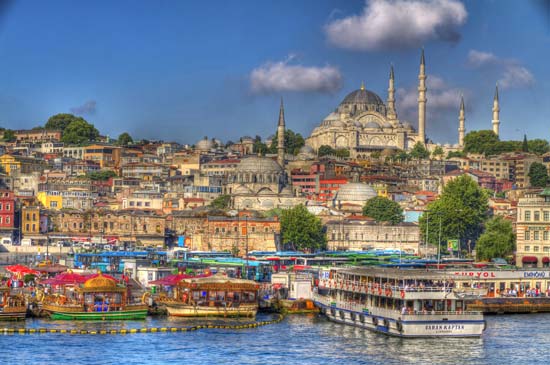
Why was Justinian's Code of laws important?
It established all rules regarding taxation.
It established codes regarding the Eastern Orthodox Church.
It formed the basis of European Law.
It established what entertainment acts were at Hippodrome.
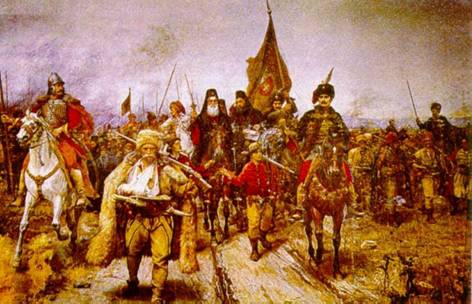
Who conquered the Byzantines in 1453?
The Franks
The Ottoman Turks
The Holy Roman Empire
The Mongols
What is the Muslim capital of the Byzantine Empire?
Byzantium
Constantinople
Istanbul
How many terra-cotta soldiers were created?
8000
4300
200
10000
Who was the first emperor to rule the qin ?
Qin shi huang
Kangxi emperor
Xianfeng emperor
Shi Huangdi ruled using which philosophy?
Buddhism
Confucianism
Legalism
Daoism
This philosophy was based on the idea that people have to be forced to be good using harsh laws.
Buddhism
Confucianism
Legalism
Daoism
This philosophy taught that getting back to respect and family values would fix China.
Buddhism
Confucianism
Taoism
Legalism


What type of Buddhism emerged during the Heian period?
Mahayana Buddhism
Theravada Buddhism
Zen Buddhism
Heian Buddhism
Which social class made up 90% of Japan's population?
Samurai
Daimyo
Peasants (farmers and fishermen)
Emperor
Which social class was simply a figurehead but also worshipped as a god?
Samurai
Emperor
Daimyo
Peasant
The person in Japanese society that was the figurehead was the
Emperor
Samurai
Leader
Decorative Japanese writing is
Cursive
Calligraphy
A form of religion other than Shintoism that became popular in Japan is:
Zen Buddhism
Catholicism
Hinduism
The traditional religion of Japan is
Bushido
Shintoism
Confucianism
What is the name for Japanese poetry with the 5-7-5 syllable pattern?
Diamyo
Haiku
Noh

The Mongols were _______ who originally lived in the dry grasslands of Central Asia. (6.1A)
Nomads
Ranchers
Farmers
Hermits
What positive things happened during the Pax Mongolica? (select all that apply)
Trade expanded because it became easier and safer.
Trade slowed because of war and fighting.
Knowledge and Technology began to spread between empires.
Knowledge and Technology were lost because people were fighting.
How was Kublai Khan related to Genghis Khan?
son
brother
wife
grandson
What did Genghis Khan use to promote his generals?
their wealth (the richest would get the jobs)
who their parents were. (sons of generals would get the job)
Merit (how well they performed the job)
Nepotism (he only chose his own children to be in charge)
Who was the European traveler that served Kublai Khan?
Genghis Khan
Marco Polo
Genghis Polo
Pope Urban II
A circular tent of felt or skins on a collapsible framework, used by nomads in Mongolia
nomad
steppe
yurt
yak
Constantinople
wealthiest city in Africa
former capital of Ottoman empire; became capital of Mongolian empire
poorest city in Asia
former capital of Byzantine empire; became capital of Ottoman empire
Invented in China in 800's CE; militaries used this to expand empires; used against walls of Constantinople in 1453
bow & arrows
gunpowder
cannons
chariots
Ottoman Empire
Muslim empire based in Italy from 1300's-1922
Christian empire based in Italy from 1300's-1500's
Muslim empire based in Turkey from 1300's-1922
Christian empire based in Turkey from 1300's-1500's
This person united the Mongols
Marco Polo
Kublai Khan
Genghis Khan
This person conquered all of China
Marco Polo
Kublai Khan
Genghis Khan
The Yuan dynasty
was started by Kublai Khan
lasted about 100 years
was dominated by Mongol leaders
All of the above

Who is the prophet or founder of Islam?
Jesus
Muhammad
Moses
Agustus

What is the holy book of Islam?
Bible
Torah
Analects
Qu'ran

In what city was the prophet Muhammad born?
Jerusalem
Antioch
Mecca
Medina

The fundamental beliefs of Islam are called the:
The Five Pillars
The Ten Commandments
The Four Noble Truths
The Beatitudes

What is the language of Islam?
Greek
Hebrew
Arabic
Latin

What is the Islamic word for God?
Yaweh
Infadel
Allah
Buddah

The cities of Mecca and Medina are located on the
Greek Peninsula
Arabian Peninsula
Italian Peninsula
Balkan Peninsula

What is the name of this structure?
Kaaba
Colosseum
Pantheon
Great Pyramid of Giza
________________ was allegedly the most famous European to visit China during years of Mongolian rule.
Columbus
Marco Polo
John Wayne
Tom Brady
-Faith
-Prayer
-Charity
-Fasting
-Pilgrimage
What is being described?
Eightfold Path
Five Pillars of Islam
Four Nobel Truths
Ten Commandments
The followers of Islam are divided into two groups, Shia and Sunni. What makes them different?
They are located in different areas of Saudi Arabia
They disagreed on who should lead Islam after Muhammad died
The Shia follow the 5 Pillars of Islam, while the Sunni do not
The Sunni honor the holy month of Ramadan, while the Shia do not
Select all of the monotheistic religions below.
Judaism
Hinduism
Christianity
Islam
Muslims pray _________ times a day.
3
7
1
5
What is a caliph?
Title of the highest Islamic leader
A form of writing
A place of trade
An act of worship required of Muslims

